25 friendship story ideas for kids
25 creative friendship story ideas for kids — each with a free AI prompt to generate the full illustrated story instantly.
✦ Key Takeaways
- •Friendship stories for kids support social-emotional growth because they let children rehearse big feelings in a safe, playful way.
- •The best friendship story prompts match a child’s stage of development.
- •You can turn any of these friendship story ideas into a custom bedtime story in minutes.
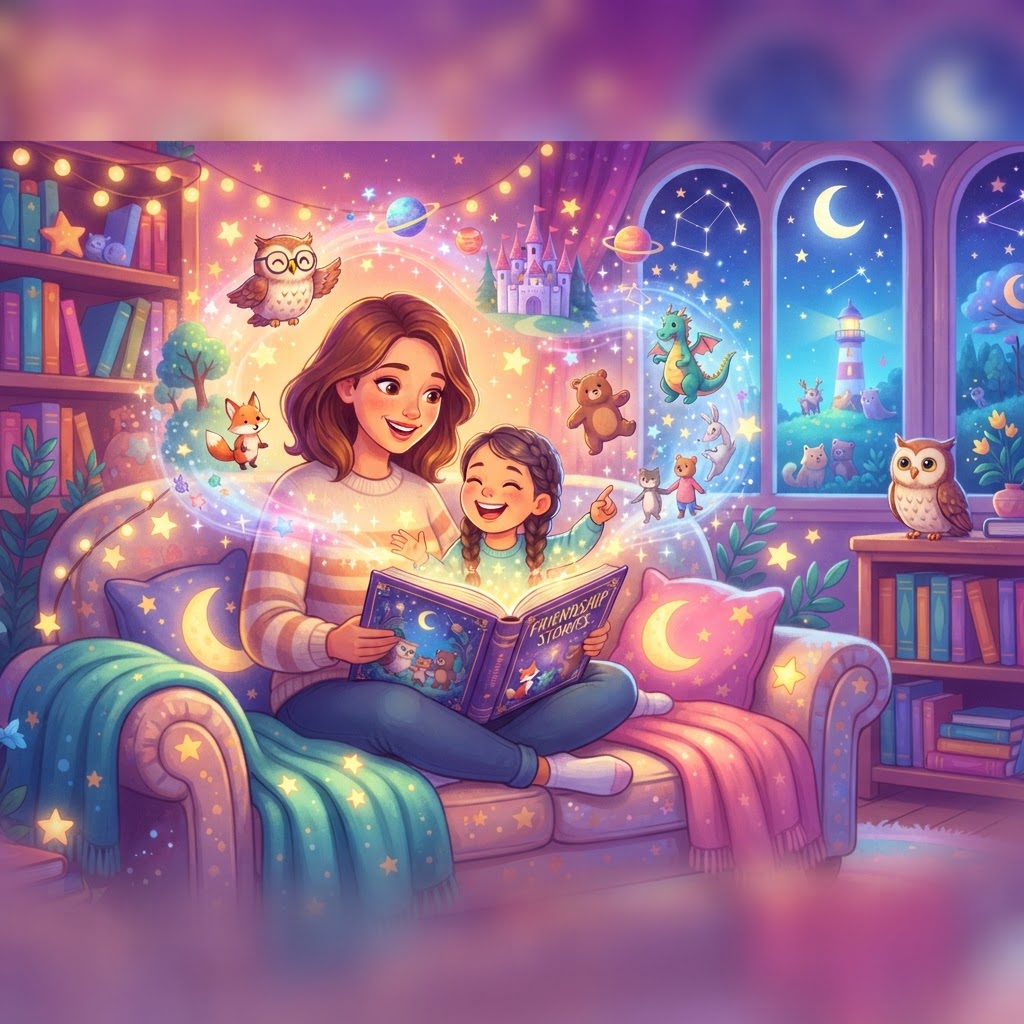
Strong friendship story ideas help children picture what kindness, sharing, listening, and repair can look like in real life. If you want fresh friendship stories for kids that feel personal, imaginative, and easy to create at bedtime or in the classroom, this list gives you 25 simple concepts plus a ready-to-use AI prompt for each one. If you’d like even more inspiration, you can also browse more quick friendship ideas or explore gentle bedtime story ideas.
Why are friendship stories so helpful for children?
Friendship stories for kids support social-emotional growth because they let children rehearse big feelings in a safe, playful way. When kids hear stories about sharing, misunderstandings, apologies, and teamwork, they build language for real relationships.
This matters in early childhood. The CDC’s developmental guidance highlights social and emotional milestones as a core part of healthy development, and CASEL identifies relationship skills as a key area of social-emotional learning. In practice, I’ve found that the best kids friendship stories are simple, specific, and emotionally clear: one problem, one caring choice, and one satisfying resolution.
Stories also work especially well at bedtime or read-aloud time because children can pause, ask questions, and connect the plot to their own lives. That kind of back-and-forth conversation supports comprehension and emotional insight, which the Harvard Center on the Developing Child notes is central to early learning.
Which friendship story ideas work best for different ages?
The best friendship story prompts match a child’s stage of development. Younger children enjoy repetition and concrete actions, while older children can handle perspective-taking, conflict, and more layered plots.
Ages 1-3: simple, reassuring friendship stories
-
The lost teddy helper. A bunny helps a bear find a missing teddy, and they become friends through a kind act.
AI prompt: “Write a very simple illustrated bedtime story for ages 1-3 about [Child Name], a gentle bunny, helping a little bear find a lost teddy and making a new friend. Use repetition, soft language, and a happy ending.” -
Snack-sharing at the park. Two toddlers learn that sharing apple slices makes playtime more fun.
AI prompt: “Create a short friendship story for a toddler about [Child Name] sharing a snack at the park with a new friend. Include simple dialogue, bright illustrations, and a calm bedtime tone.” -
The puddle jump team. A duckling feels scared of a puddle until a friend holds a wing and jumps too.
AI prompt: “Generate a cozy story for ages 1-3 where [Child Name] and a duckling friend learn bravery together by jumping over a puddle. Keep it rhythmic, warm, and reassuring.” -
The block tower builders. Two children knock down a tower by accident, then laugh and rebuild it together.
AI prompt: “Write a gentle kids friendship story about [Child Name] building blocks with a friend, knocking them over, and rebuilding together. Use clear emotions and a playful ending.” -
The bedtime moon wave. Two neighbors wave to each other every night and feel less lonely.
AI prompt: “Create a sleepy friendship story for toddlers about [Child Name] and a neighbor friend who wave goodnight to the moon together. Make it soothing and repetitive.” -
The shy puppy hello. A shy puppy hides at first but joins the game after one kind invitation.
AI prompt: “Write a very short illustrated story about [Child Name] kindly inviting a shy puppy to play. Focus on welcome, warmth, and simple emotional language.” -
The matching rain boots. Two kids discover they have matching boots and become instant puddle friends.
AI prompt: “Generate a cheerful friendship bedtime story where [Child Name] meets a new friend because they both wear matching rain boots. Include colorful scenes and easy words.” -
The song on the swing. One child teaches another a simple swing song, and they sing it together.
AI prompt: “Create a sweet story for ages 1-3 about [Child Name] learning a little swing song from a new friend. Keep the plot simple and the ending cozy.”
Ages 4-6: playful stories with feelings and problem-solving
-
The crayon mix-up. Two friends both want the glitter crayon and learn to take turns.
AI prompt: “Write a friendship story for ages 4-6 about [Child Name] and a friend solving a disagreement over a glitter crayon by taking turns. Include clear feelings and a positive resolution.” -
The dragon who forgot manners. A tiny dragon scares others by grabbing toys, then learns how to ask.
AI prompt: “Generate a playful story where [Child Name] helps a little dragon learn to ask before borrowing toys. Make it funny, kind, and age-appropriate.” -
The rainy-day fort club. Kids stuck indoors create a blanket fort and make room for everyone.
AI prompt: “Create an illustrated story for young children about [Child Name] building a rainy-day fort and learning how inclusion makes friendship stronger. Add cozy details and teamwork.” -
The misunderstood monster note. A scribbly note causes hurt feelings until friends talk face to face.
AI prompt: “Write a gentle story about [Child Name] and friends misunderstanding a note, then using honest conversation to fix the problem. Keep it light and reassuring.” -
The first-day lunch buddy. A nervous child finds a friend by offering half a sandwich and a smile.
AI prompt: “Generate a first-day-of-school friendship story about [Child Name] feeling nervous at lunch and making a friend through kindness. Use a warm, encouraging tone.” -
The garden rescue team. Friends save a wilted plant by working together every day.
AI prompt: “Write a story for ages 4-6 where [Child Name] and friends care for a tiny garden together, learning responsibility and teamwork. Include cheerful illustrations.” -
The pirate map compromise. Two friends want different treasure routes and invent a plan using both ideas.
AI prompt: “Create a fun adventure story about [Child Name] and a friend using both of their treasure-map ideas to solve a disagreement. Make compromise the key lesson.” -
The parade for the lonely cat. Neighborhood kids plan a mini parade to cheer up a lonely cat next door.
AI prompt: “Write an uplifting friendship story where [Child Name] notices a lonely cat and gathers friends to help it feel included. Keep the tone joyful and caring.” -
The costume swap surprise. Two children worry their costumes are too plain, then discover friendship matters more than winning.
AI prompt: “Generate a story about [Child Name] and a friend preparing costumes, feeling insecure, and encouraging each other with kind words. End with confidence and fun.”
Ages 7-10: richer friendship stories with empathy and growth
-
The team project turnaround. A bossy classmate learns to listen when the project goes wrong.
AI prompt: “Write a longer friendship story for ages 7-10 where [Child Name] works on a school project with a bossy classmate, faces conflict, and learns collaboration. Include realistic emotions and growth.” -
The secret clubhouse rule. Friends debate whether a new child should join and learn what fairness really means.
AI prompt: “Create a story about [Child Name] and a clubhouse group deciding whether to welcome a new member. Focus on empathy, belonging, and respectful discussion.” -
The soccer apology. One child blames a friend after a lost game and must make things right.
AI prompt: “Generate a kids friendship story about [Child Name] feeling upset after losing a soccer game, blaming a friend, and then giving a sincere apology. Make the repair feel honest.” -
The library mystery duo. Two very different kids become friends while solving a small mystery in the library.
AI prompt: “Write an illustrated mystery story where [Child Name] teams up with an unlikely friend to solve a missing-library-book puzzle. Highlight cooperation and appreciating differences.” -
The pen pal across the sea. A child learns friendship can grow through letters, curiosity, and respect for another culture.
AI prompt: “Create a thoughtful story about [Child Name] becoming pen pals with a child in another country and discovering shared interests. Keep it age-appropriate and culturally respectful.” -
The friendship repair recipe. After a hurtful joke, two friends rebuild trust step by step.
AI prompt: “Write a story for older kids about [Child Name] making a joke that hurts a friend’s feelings and learning how to repair trust through listening, apology, and action.” -
The midnight meteor watch. Friends with different personalities bond while waiting for a meteor shower.
AI prompt: “Generate a reflective bedtime story where [Child Name] and a very different friend watch a meteor shower and discover what they admire in each other. Use wonder and emotional warmth.” -
The quest for the missing music. A group of friends must combine talents to restore music to their town.
AI prompt: “Create an imaginative adventure about [Child Name] and a group of friends using different strengths to bring missing music back to their town. Emphasize teamwork, courage, and belonging.”
How can you turn these friendship story prompts into personalized stories with InstaTales?
You can turn any of these friendship story ideas into a custom bedtime story in minutes. The easiest approach is to choose one prompt, add your child’s name, age, favorite animal or hobby, and then create your own personalized bedtime story.
For the best result, keep these details in the prompt:
- Child’s name and age
- Favorite character type: animal, child, dragon, robot, fairy
- Reading mood: silly, sleepy, adventurous, gentle
- Lesson focus: sharing, empathy, turn-taking, apology, inclusion
If your child likes re-reading the same story, save favorites in your story library so you can revisit them later. For educators, friendship themes work beautifully in SEL lessons, partner reading, and writing centers, and InstaTales for teachers can help you adapt prompts for classroom use. If you want a faster starting point, browse the built-in story templates and then layer in your own friendship theme.
A simple educator tip: after reading, ask three questions—“How did the character feel?”, “What choice helped the friendship?”, and “What would you do?” That short reflection turns friendship stories for kids into practical social learning.
Frequently Asked Questions
What makes a good friendship story for kids?
A good friendship story has a clear feeling, a relatable problem, and a caring resolution. Children connect most with stories that show specific actions like sharing, listening, inviting, apologizing, or working together.
How long should a friendship bedtime story be?
For ages 1-3, keep it very short and repetitive. For ages 4-10, a 5-10 minute story usually works well, especially if there is one simple conflict and a calm ending.
Can I use these friendship story prompts for different ages?
Yes. You can make the same idea younger by using simpler words and fewer plot points, or older by adding more dialogue, motivation, and emotional nuance.
Are AI-generated friendship stories okay for classroom use?
They can be very useful when adults guide the content. Review the story first, keep the language age-appropriate, and use it to support discussion, writing, or SEL goals rather than replace teacher interaction.
How can I personalize kids friendship stories so my child cares more?
Use familiar details: your child’s name, favorite toy, school setting, pet, or bedtime routine. Personal touches make the story feel emotionally relevant, which increases attention and recall.
What themes should friendship stories include?
The most helpful themes are inclusion, empathy, cooperation, honesty, repair after conflict, and celebrating differences. Those are the building blocks children use in real friendships every day.
Ready to Create a Personalized Bedtime Story?
Use our free AI bedtime story generator to create a personalized illustrated story for your child in 30 seconds — no credit card needed.
Popular story types:
Maya Rodriguez
Lead Content Editor & Early Literacy Specialist
Maya is a former early childhood educator and literacy specialist with over a decade of experience helping children develop a love of reading. She leads content at InstaTales, where she writes about the science of storytelling, child development, and how families can use personalized AI stories to build literacy and emotional resilience.
instatales.ai