25 space story ideas for kids
25 creative space story ideas for kids — each with a free AI prompt to generate the full illustrated story instantly.
✦ Key Takeaways
- •Space stories for kids work well because they turn big ideas into gentle adventures children can understand.
- •For toddlers, the best kids space stories are simple, repetitive, and comforting.
- •For ages 4-6, the strongest space stories for kids add humor, teamwork, and easy problem-solving.
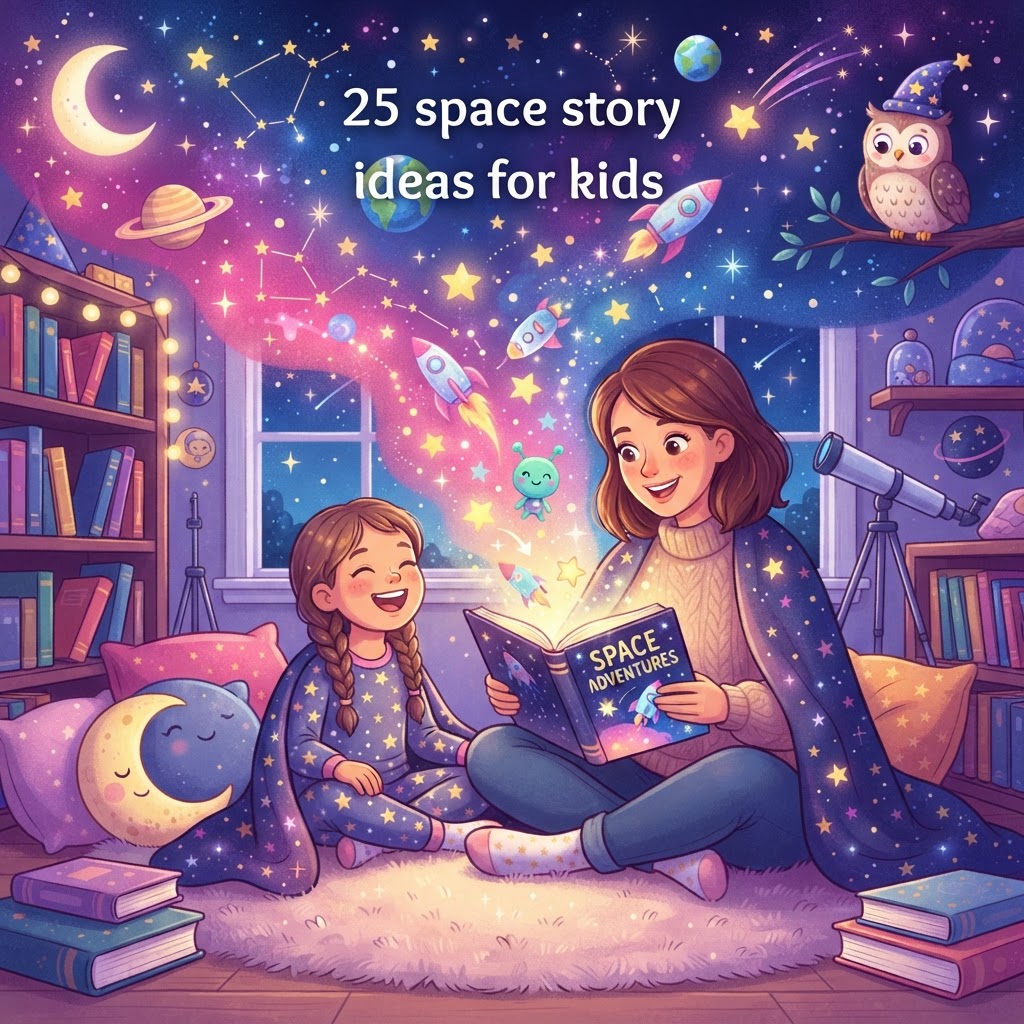
If your child lights up at rockets, planets, or twinkling stars, these space story ideas can make bedtime feel magical without feeling too busy. Below you’ll find 25 creative space stories for kids, grouped by age, and each includes a simple space story prompt you can use to create your own personalized bedtime story in seconds.
Space themes are especially useful because they blend wonder, curiosity, and emotional safety. If you want even more inspiration after this list, you can also explore 10 more space adventures or 15 extra space prompts.
Why are space stories such a powerful choice for kids?
Space stories for kids work well because they turn big ideas into gentle adventures children can understand. A moon can feel sleepy, a star can feel shy, and a young astronaut can practice bravery in a safe, playful way.
That matters for development. Storytelling supports language growth, memory, and flexible thinking, and responsive shared reading is strongly supported by the Center on the Developing Child at Harvard University and the American Academy of Pediatrics. When children start asking real questions about planets, gravity, or stars, you can also build accurate details into your stories using kid-friendly resources like NASA Space Place.
Which space story ideas work best for ages 1-3?
For toddlers, the best kids space stories are simple, repetitive, and comforting. Friendly characters, bedtime routines, and small problems with happy endings work best.
1. The Moon Who Lost Its Yawn
The moon cannot fall asleep until a tiny helper finds its missing yawn.
AI prompt: Write a soothing bedtime story for age 2 about [child name] helping the moon find its yawn.
2. Rocket in Pajamas
A little rocket feels nervous before its first night flight and learns to go slow.
AI prompt: Create a gentle story for a toddler about a pajama rocket learning calm breathing before takeoff.
3. The Star with No Twinkle
A shy star thinks it is too dim until its friends help it glow.
AI prompt: Write a short bedtime story about [child name] helping a shy star find its twinkle.
4. Comet’s Blanket Tail
A baby comet loses its warm tail blanket just before bedtime.
AI prompt: Tell a calm story for ages 1-3 about a baby comet searching for its cozy tail blanket.
5. Planet Parade Goodnight
Each planet says goodnight in a different silly voice.
AI prompt: Write a repetitive bedtime story where the planets take turns saying goodnight to [child name].
6. Peekaboo Alien
A friendly alien plays gentle hide-and-seek behind moon rocks.
AI prompt: Create a playful, cozy story about [child name] meeting a kind alien who loves peekaboo.
7. The Quiet Astronaut Boots
Loud astronaut boots must learn soft tiptoes so the space station can sleep.
AI prompt: Write a bedtime story about noisy astronaut boots learning to walk quietly at night.
8. The Sleepy Satellite
A little satellite circles Earth looking for the perfect lullaby.
AI prompt: Tell a peaceful story for toddlers about a sleepy satellite listening to songs from Earth.
Which space story ideas keep ages 4-6 engaged?
For ages 4-6, the strongest space stories for kids add humor, teamwork, and easy problem-solving. Children this age enjoy a clear mission, a funny twist, and a character they can imagine being.
9. Mail Carrier to Mars
A child must deliver a birthday card across dusty red hills before sunset.
AI prompt: Write a fun story about [child name] delivering an important birthday card on Mars.
10. Saturn’s Ring Rescue
Saturn’s rings start slipping, and a clever crew must put them back in place.
AI prompt: Create a story about friends working together to fix Saturn’s wobbly rings.
11. The Lost Puppy on the Space Station
A puppy floats away during zero-gravity playtime.
AI prompt: Write a lighthearted space adventure where [child name] finds a lost puppy on a space station.
12. The Alien Who Couldn’t Roar
A tiny alien wants a big roar but discovers a different special talent.
AI prompt: Tell a story about a small alien learning confidence and finding its own unique gift.
13. Meteor Shower Music Night
A group of space friends turns falling meteors into a sparkling concert.
AI prompt: Write a magical story about [child name] making music during a meteor shower.
14. The Solar System Birthday Party
Every planet brings a strange gift to the sun’s surprise party.
AI prompt: Create a cheerful story where the planets throw a surprise birthday party in space.
15. Rainbow Map on Jupiter’s Moons
A colorful map leads to a hidden message of friendship.
AI prompt: Write a story about [child name] following a rainbow treasure map across Jupiter’s moons.
16. The Black Hole Hiccup
A tiny black hole gets hiccups and accidentally slurps up socks, snacks, and songs.
AI prompt: Tell a funny, child-friendly story about a black hole with hiccups causing silly trouble.
17. Moon Garden Helpers
Children plant glowing seeds in a garden under a silver sky.
AI prompt: Write a gentle adventure about [child name] growing a magical moon garden with friends.
Which kids space stories inspire ages 7-10?
For older children, the best space story ideas usually include mystery, bigger choices, and a little science-rich wonder. Ages 7-10 often enjoy stories that mix imagination with discovery.
18. The Library on the Moon
A hidden moon library stores stories from every planet.
AI prompt: Write an imaginative story about [child name] discovering a secret library on the moon.
19. The Rover’s Secret Message
A lonely rover keeps sending clues from a dusty valley on Mars.
AI prompt: Create a mystery story where [child name] decodes messages from a Mars rover.
20. The Time-Travel Telescope
A telescope shows the sky as it looked long ago.
AI prompt: Write a space adventure about a child using a telescope that can see the past.
21. The Garden Ship to Mars
A spaceship survives a long trip by growing fruit, flowers, and hope.
AI prompt: Tell a story about [child name] caring for a floating garden on a mission to Mars.
22. The Planet That Spoke in Riddles
A distant planet only answers visitors with puzzles.
AI prompt: Write a clever story where [child name] must solve riddles to make a new space friend.
23. Rescue at the Edge of Saturn
A research team gets trapped in an ice storm near Saturn.
AI prompt: Create a suspenseful but age-appropriate story about teamwork during a rescue near Saturn.
24. Space Archaeologists of Europa
Young explorers search beneath the ice for clues from an ancient world.
AI prompt: Write a discovery story about [child name] exploring Europa for hidden signs of past life.
25. The Last Lantern in the Galaxy
One fading star lantern may guide lost travelers home.
AI prompt: Tell an emotional adventure about a child protecting the last lantern in the galaxy.
How can you turn these space story prompts into personalized InstaTales stories?
The easiest way to use these space story prompts is to start with one idea, then personalize it around your child. A small change, like adding their name, favorite planet, or a real-life worry, can make the story feel deeply meaningful.
Here’s a simple method:
- Pick one story idea that matches your child’s age and mood.
- Paste the prompt into InstaTales and add your child’s name, age, and favorite things.
- Ask for a specific tone, such as “gentle bedtime,” “funny adventure,” or “classroom read-aloud.”
- If your child likes facts, add one or two real science details from NASA.
- Save finished stories in your story library so children can revisit their favorites.
- If you’re planning literacy activities, InstaTales for teachers can help turn these prompts into writing warm-ups, reading centers, or themed assignments.
As an educator’s rule of thumb, younger children usually respond best to repetition and emotional comfort, while older children like a stronger plot. That’s why personalized space stories for kids often work better than one-size-fits-all tales.
Frequently Asked Questions
What age are space stories best for?
Space stories can work from toddlerhood through late elementary years. The key is matching the complexity, vocabulary, and emotional tone to the child’s age.
How long should a bedtime space story be?
For ages 1-3, 2-5 minutes is often enough. Older children may enjoy 5-10 minute stories, especially if there is a mystery or adventure.
Can AI-generated space stories still be educational?
Yes, especially when you add accurate details about planets, stars, or space travel. A strong story can blend imagination with real facts in a way children remember.
How do I make a space story feel personal?
Include your child’s name, age, favorite color, favorite planet, or a current interest like rockets or robots. You can also weave in gentle themes such as bravery, friendship, or bedtime calm.
Are space story prompts useful in classrooms?
Absolutely. Teachers can use them for creative writing, read-alouds, science tie-ins, or small-group storytelling, especially during space units.
What if my child wants more than space stories?
That’s a great sign they enjoy themed storytelling. After space, many families naturally move into animal, ocean, or nature story ideas to keep reading fresh.
Ready to Create a Personalized Bedtime Story?
Use our free AI bedtime story generator to create a personalized illustrated story for your child in 30 seconds — no credit card needed.
Popular story types:
Maya Rodriguez
Lead Content Editor & Early Literacy Specialist
Maya is a former early childhood educator and literacy specialist with over a decade of experience helping children develop a love of reading. She leads content at InstaTales, where she writes about the science of storytelling, child development, and how families can use personalized AI stories to build literacy and emotional resilience.
instatales.ai