Restaurant Stories for Kids: 5-Minute Wait Ideas
Waiting for food at a restaurant? These 5-minute stories will keep kids entertained and well-behaved.
✦ Key Takeaways
- •Short stories work because they match a child’s attention span and give them a clear beginning, middle, and end before boredom takes over.
- •The best way to use stories at restaurants is to keep them interactive, brief, and tied to the table around you.
- •The easiest restaurant stories are simple, visual, and connected to what children can already see.
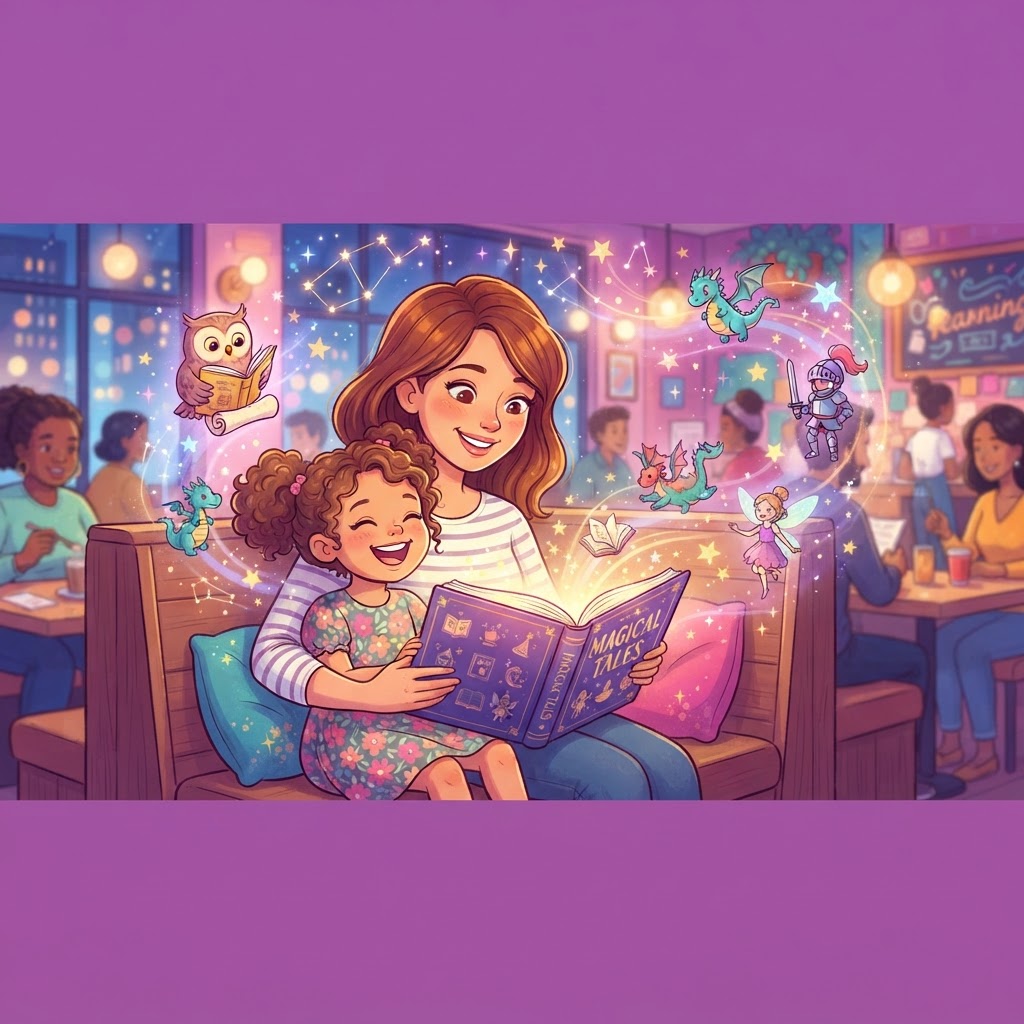
Waiting for food can feel long to a child, even in a family-friendly restaurant. The good news is that restaurant stories for kids can turn that in-between time into something calm, connected, and even educational. A short, playful story often works better than repeated reminders to “sit still,” because it gives children a job for their imagination.
If you need 5 minute restaurant stories that are easy to tell from memory, this guide will help. You’ll find simple ways to use waiting for food stories, five ready-to-use story ideas, and a practical look at how InstaTales can help when you want on-the-go entertainment without handing over a device for passive scrolling.
Why do 5-minute restaurant stories work so well while waiting for food?
Short stories work because they match a child’s attention span and give them a clear beginning, middle, and end before boredom takes over. In a restaurant, that matters because children are managing noise, hunger, excitement, and the challenge of waiting.
Storytelling also supports development. The American Academy of Pediatrics recommends shared reading and language-rich interaction because it helps build vocabulary, attention, and parent-child connection. The Harvard Center on the Developing Child also explains that back-and-forth interaction strengthens early brain development through responsive “serve and return” communication (Harvard Center on the Developing Child).
In practical terms, 5 minute restaurant stories help by:
- giving children something predictable to focus on
- reducing fidgeting during long waits
- turning “don’t do that” moments into cooperative play
- building listening and language skills
- helping siblings share one activity together
For many families, this works especially well in the same way that short stories help during grocery store outings or other “hurry up and wait” parts of the day.
How can parents use stories at restaurants without adding more chaos?
The best way to use stories at restaurants is to keep them interactive, brief, and tied to the table around you. You do not need a big performance. A calm voice, a simple character, and one tiny problem to solve are enough.
Try this easy routine when you sit down:
- Start before children get restless, not after
- Keep the story under five minutes
- Use familiar objects like cups, napkins, spoons, or menus
- Let your child fill in one repeated phrase
- End when the drinks or appetizers arrive
A helpful formula is:
- Name a character
- Give them a small problem
- Let your child suggest a solution
- End with a happy, funny payoff
For example: “Once there was a tiny pancake chef who lost his strawberry hat. Where should he look first?” That one prompt invites your child to listen, answer, and stay engaged.
If you want the experience to stay calm, avoid stories that make kids want to stand up, roar loudly, or act out chase scenes. At restaurants, the best waiting for food stories are imaginative but physically quiet.
You can also adjust the story to the setting:
- Fast-casual restaurants: playful and silly works well
- Longer sit-down meals: use gentle mystery or problem-solving
- Siblings together: choose a team quest
- Tired toddlers: use repetition and predictable phrases
This same “quick and cozy” approach can also help on other busy days, like rainy-day indoor stretches when kids need a calm reset.
What are five easy restaurant story ideas you can tell in five minutes?
The easiest restaurant stories are simple, visual, and connected to what children can already see. These five ideas are designed to be told with no prep, no props, and no pressure.
Could a runaway pea become tonight’s tiny hero?
A single pea rolls off a plate and decides it wants to help the kitchen. On its journey, it meets a kind spoon, a sleepy bread roll, and a nervous carrot stick. In the end, the pea helps everyone remember that even small helpers matter.
Why it works:
- great for ages 3-7
- encourages noticing table items
- easy to retell with different foods
You can repeat: “Tiny pea, big idea!”
What if the menu were a treasure map?
The menu becomes a secret map with clues hidden in the appetizers, main dishes, and desserts. Your child chooses which “path” to follow, and each choice leads to a silly discovery, like a kingdom made of noodles or a milkshake mountain.
Why it works:
- ideal for children who like choices
- turns reading the menu into a game
- can support early literacy skills
If your child enjoys making up settings, this is also a great time to save future ideas in your story library for reuse on other outings.
How could a shy napkin become brave?
A folded napkin feels too shy to join the busy restaurant table. But when a drop of spilled water appears, the napkin finds its courage and saves the day. The story ends with everyone thanking the napkin for being quietly helpful.
Why it works:
- gentle and reassuring
- good for sensitive or tired children
- models confidence without being preachy
This type of story is especially effective for children who feel overwhelmed in noisy spaces.
Why would a spoon want to start a band?
A spoon hears the sounds of the restaurant and imagines a grand concert. The glass makes a soft chime, the ice cubes shake, and the bread basket keeps the beat. Your child helps decide what each object’s “music” sounds like, all while staying seated.
Why it works:
- playful and sensory
- invites imagination without loud behavior
- works well for siblings
Keep it quiet by making the sounds whispered rather than acted out.
What happens when the chef needs one perfect idea?
A friendly chef wants to create the happiest meal in town, but not for royalty or celebrities. The special meal is for one thoughtful child at your table. Your child helps choose the ingredients, the plate color, and the final surprise ending.
Why it works:
- feels personal and flattering
- supports expressive language
- can easily become a custom AI story later
This is one of the easiest restaurant stories for kids to expand when you get home and want to create your own personalized bedtime story.
How can InstaTales help when you need waiting-for-food stories on the go?
InstaTales can help by turning a restaurant wait into a fast, personalized story moment without requiring lots of parent prep. When energy is low and the service is slow, that convenience matters.
Here’s a practical way to use it:
- open a story idea before or just after ordering
- choose your child’s name, age, and favorite theme
- keep the prompt simple: “a 5-minute restaurant story about a brave napkin”
- read it aloud together
- save favorites for future outings in your story library
If you want a faster start, browsing ready-made story templates can save time when you are already juggling menus, drinks, and restless children.
InstaTales is especially helpful because personalized stories tend to hold attention longer. When a child hears their own name, favorite animal, or familiar routine in the story, they often feel more invested. That means less aimless squirming and more shared focus.
For families who want more short-read ideas beyond restaurants, the InstaTales blog also has seasonal and situational inspiration, including hot summer day story ideas.
What should parents keep in mind for different ages and restaurant settings?
Children of different ages need different kinds of stories, and matching the story to the child is more important than making it clever. A toddler usually needs repetition and rhythm, while an older child may enjoy humor, puzzles, or choosing the ending.
A simple age guide can help:
- Ages 1-3: use one character, repeated phrases, and familiar objects
- Ages 4-6: add a tiny problem and one or two choices
- Ages 7-10: try mysteries, teamwork, or “what happens next?” twists
It also helps to keep expectations realistic. The CDC developmental milestones remind parents that attention, self-control, and communication skills develop gradually, not all at once (CDC milestones). Hunger, noise, and late meal times can make waiting harder, even for children who usually do well.
The goal is not perfect silence. The goal is a calmer, more connected wait.
How can stories become part of a healthy restaurant routine?
Stories work best when they are part of a predictable family routine rather than a last-second rescue tool. If your child knows, “We order, then we do one story while we wait,” the routine itself becomes reassuring.
That structure supports emotional regulation. Research-informed organizations like Zero to Three emphasize that predictable routines help young children feel secure and ready to cooperate (Zero to Three). A brief story can become the bridge between ordering and eating.
A simple restaurant routine might look like this:
- wash hands or settle at the table
- order drinks and food
- tell one 5-minute story
- let your child retell their favorite part
- switch to quiet table talk until the food arrives
Over time, children often begin asking for specific waiting for food stories, and that is a good sign. It means they are using language, memory, and imagination to handle waiting in a positive way.
Frequently Asked Questions
What are the best restaurant stories for kids?
The best restaurant stories for kids are short, interactive, and connected to things children can see at the table. Stories about menus, napkins, spoons, or tiny food characters work especially well because they feel immediate and fun.
How long should a restaurant story be?
A restaurant story should usually last about three to five minutes. That is long enough to engage a child, but short enough to fit naturally between ordering and the food arriving.
Are 5 minute restaurant stories good for toddlers?
Yes, as long as they are simple. Toddlers do best with repetition, gentle voices, familiar objects, and one clear action or emotion in the story.
Can personalized AI stories help in public places?
Yes, personalized stories can help because children often pay closer attention when they hear their own name or favorite themes. The key is to use AI as a shared reading tool, not just passive screen time.
What if my child is too hungry or overstimulated to listen?
If a child is very hungry or overwhelmed, shorten the story and lower the demands. A one-minute repeating story, a snack if available, or simply naming what happens next may work better than a full narrative.
Should I use stories instead of screens while waiting for food?
Stories are often a helpful first choice because they build language, connection, and self-regulation. Screens can still have a place, but many families find that a quick shared story creates a calmer and more social restaurant experience.
Ready to Create a Personalized Bedtime Story?
Use our free AI bedtime story generator to create a personalized illustrated story for your child in 30 seconds — no credit card needed.
Popular story types:
Maya Rodriguez
Lead Content Editor & Early Literacy Specialist
Maya is a former early childhood educator and literacy specialist with over a decade of experience helping children develop a love of reading. She leads content at InstaTales, where she writes about the science of storytelling, child development, and how families can use personalized AI stories to build literacy and emotional resilience.
instatales.ai