Aboriginal Stories for Kids: Tales, Themes & Tips
Exciting Aboriginal stories for kids — gods, heroes, monsters, and adventures from Aboriginal mythology, retold for young readers.
✦ Key Takeaways
- •Aboriginal stories for kids are child-friendly retellings inspired by the oral traditions of Aboriginal peoples in Australia.
- •The most child-friendly characters in Aboriginal tales are often animals, ancestors, helpers, tricksters, and young learners.
- •Age-appropriate Aboriginal tales are gentle, concrete, and emotionally secure.
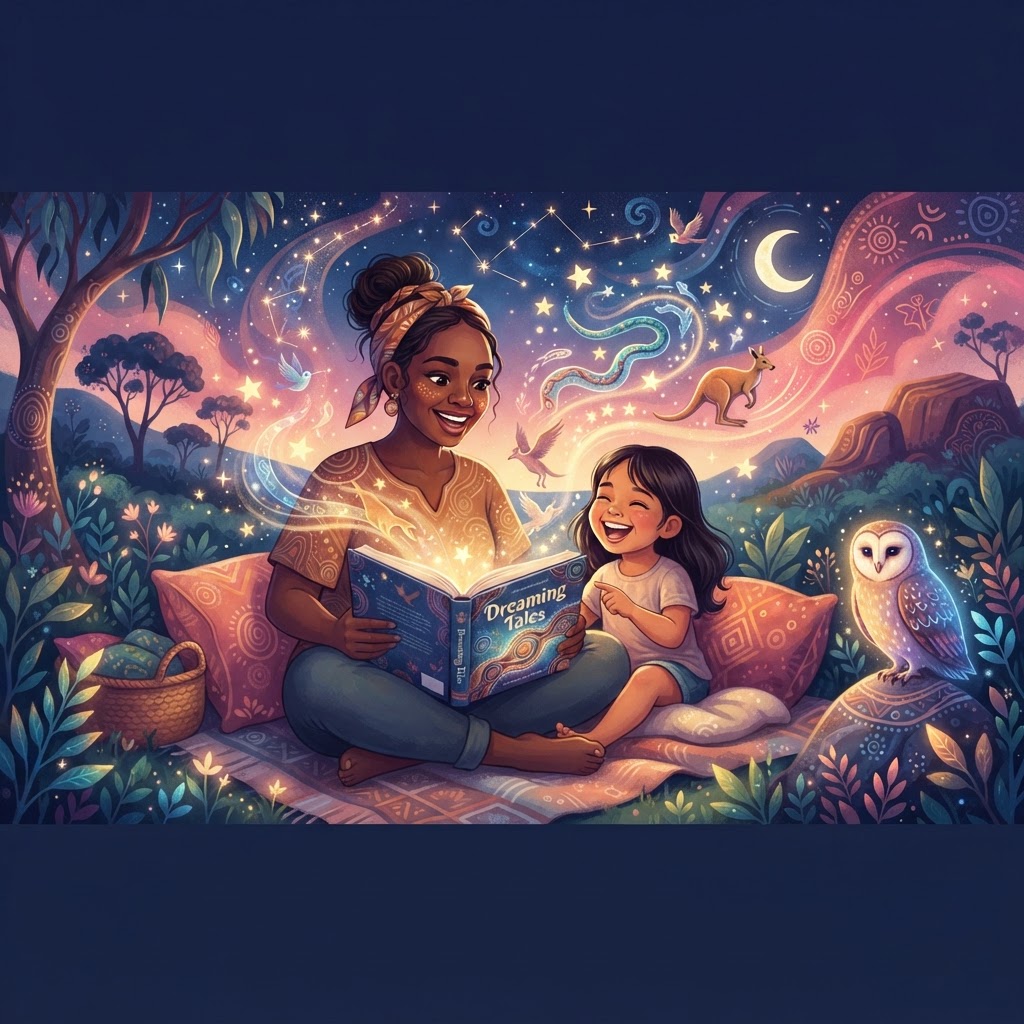
When families search for Aboriginal stories for kids, they usually want something magical, meaningful, and safe for young readers. The most helpful place to start is with respect: Aboriginal story traditions are living cultural knowledge from many different Nations across Australia, not one single set of legends.
That matters for children. A good retelling keeps the wonder of creation, animals, land, and belonging, while avoiding sacred details, stereotypes, or “mix-and-match” versions of cultures. With thoughtful adaptation, kids Aboriginal stories can become rich bedtime reading that supports empathy, listening, and language development. The American Academy of Pediatrics recommends shared reading from early childhood, and the Harvard Center on the Developing Child highlights how warm back-and-forth storytelling builds strong learning relationships.
What are Aboriginal stories for kids?
Aboriginal stories for kids are child-friendly retellings inspired by the oral traditions of Aboriginal peoples in Australia. The best versions are simple, respectful, and clear that they are adaptations, not replacements for community-told stories.
Many adults use the term Aboriginal mythology children can understand, but it helps to be precise. These are not “myths” in the sense of made-up fairy tales. For many communities, they are connected to Country, ancestors, law, identity, and relationships. That is why respectful retellings often focus on public themes—how a bird got its call, why waterholes matter, or how a child learns to care for land—rather than private or ceremonial knowledge.
A helpful family rule is this: choose stories that honor land, animals, kinship, and community without claiming to tell a sacred tradition “exactly as it was.” For background on respectful language and cultural protocols, the Australian Institute of Aboriginal and Torres Strait Islander Studies is an excellent starting point.
Which characters and themes appear in Aboriginal mythology for children?
The most child-friendly characters in Aboriginal tales are often animals, ancestors, helpers, tricksters, and young learners. The strongest themes are creation, responsibility, courage, sharing, and connection to place.
When parents look for Aboriginal mythology children will enjoy, these are the elements that usually work best:
- Creator beings or ancestral figures who shape rivers, hills, stars, or seasons
- Animals with purpose, such as clever birds, patient turtles, or brave kangaroos
- Trickster energy, where a boastful character learns humility
- Journeys across Country, where children notice tracks, weather, and water
- Lessons about community, including listening to Elders, taking only what is needed, and caring for others
These themes are powerful because they match what child development research tells us. Young children remember stories better when they include repetition, emotional safety, and clear cause-and-effect. In practice, that means Aboriginal tales for ages 5-8 often work best when one problem leads to one lesson, with vivid natural imagery and a calm ending.
If you want a university-based resource on Indigenous knowledge and storytelling context, the University of Melbourne’s Indigenous Knowledge Institute offers useful cultural background.
How can you choose age-appropriate Aboriginal tales?
Age-appropriate Aboriginal tales are gentle, concrete, and emotionally secure. For ages 5-8, look for short plots, memorable animal characters, and one clear idea per story.
A simple checklist can help:
- Choose public-facing themes, not sacred or ceremonial material
- Prefer stories about nature, animals, family, or kindness
- Avoid frightening punishments, graphic conflict, or spiritual details children cannot process
- Keep language concrete: footprints, moonlight, gum trees, waterholes, songs
- Name the story as “inspired by Aboriginal storytelling traditions” unless it comes directly from a cited community source
It also helps to remember that children this age are still building cultural understanding. They may enjoy the wonder of kids Aboriginal stories, but they also need adults to explain that Aboriginal cultures are diverse. There is no one “Aboriginal legend book” that represents everyone.
For families who like comparing story traditions respectfully, the InstaTales blog can be a useful place to explore other world mythology guides written for children.
What Aboriginal-inspired story ideas work well for ages 5-8?
The best Aboriginal-inspired story ideas for ages 5-8 are nature-based, gentle, and rooted in belonging. They should feel adventurous without becoming scary or culturally overreaching.
Here are 6 age-appropriate story ideas you can use for bedtime or classroom discussion:
A child who follows the laughing kookaburra
A curious child hears a kookaburra at dawn and follows the sound through the bush. Along the way, they learn when to walk quietly, when to listen, and why morning belongs to many living things.
The little kangaroo who learns patience
A young kangaroo wants to hop faster than everyone else. After getting lost, they are guided home by stars, tracks, and the calm advice of a grandparent figure.
Why the river bends near the old gum tree
In this gentle creation-style tale, a thirsty group of animals must work together to protect a water source. The story can end with a simple environmental message: water is shared, not owned.
The night sky emu and the brave sister
A child notices an emu shape in the dark sky and asks what it means. An older sibling explains that the sky can teach people when to watch, wait, and care for eggs, seasons, or journeys.
The possum who wanted every shiny thing
This is a light trickster tale. A greedy possum gathers shells, berries, and stones, then learns that beauty is greater when it is left in nature for everyone to enjoy.
The wind that carried a message home
A child feels homesick while visiting relatives and learns to notice signs of home in wind, scent, birdsong, and dust after rain. The emotional theme is reassurance and connection.
These story seeds are especially useful if you want to create your own personalized bedtime story while keeping the tone gentle and child-centered.
What should adults adapt carefully for children?
Adults should adapt sacred, violent, or culturally specific elements with great care. If you are not using a story shared directly by a community-approved source, it is safest to create an Aboriginal-inspired tale rather than present it as a traditional one.
Be especially careful with:
- Sacred knowledge linked to ceremony, initiation, or restricted teaching
- Pan-Aboriginal generalizations that blend many Nations into one
- Scary transformation or punishment scenes that may upset children
- Token imagery that uses dot painting, boomerangs, or “tribal” language as decoration
- False claims of authenticity, especially when using AI
A respectful retelling can still be beautiful. You can keep the values—listening, caring for Country, sharing food, learning from Elders—while changing the structure into a soothing bedtime plot. Raising Children Network and similar child-development organizations often remind adults that young children handle new cultural material best when it is explained simply, warmly, and without overload.
How can parents and teachers use InstaTales to create Aboriginal-inspired stories?
Parents and teachers can use InstaTales best by giving clear, respectful prompts and keeping stories local, gentle, and educational. The goal is not to imitate sacred tradition, but to help children explore themes like nature, belonging, and care.
A strong prompt might say:
- “Write a gentle bedtime story for a 6-year-old inspired by Aboriginal storytelling themes of land, animals, and respect. Use an original child character, avoid sacred or ceremonial details, and end with a calm lesson about sharing water.”
You can make story creation easier by starting with story templates, then saving favorite versions in your story library for rereading. For classroom work, InstaTales for teachers can support literacy activities such as sequencing, vocabulary building, and compare-and-contrast across cultures.
Here are a few practical tips I recommend as an educator:
- Ask for one animal guide and one clear lesson
- Set the tone to gentle, bedtime-friendly, and non-scary
- Request Australian landscape details without copying sacred material
- Add a note that says “inspired by, not a retelling of, a specific cultural story”
- Review each draft for accuracy, warmth, and respectful language before sharing
That approach protects children, respects culture, and still gives families the magic they are hoping for from Aboriginal stories for kids.
Frequently Asked Questions
Are all Aboriginal stories the same across Australia?
No. Aboriginal cultures are diverse, and story traditions vary across Nations, languages, and regions. It is more respectful to think of many storytelling traditions rather than one single mythology.
Can I tell Dreaming-inspired stories at bedtime?
Yes, but carefully. It is safest to use gentle, original stories inspired by themes like nature, kinship, and responsibility unless you are using a community-approved retelling.
What age are these stories best for?
Many Aboriginal tales can be adapted well for ages 5-8. At this age, children do best with short plots, animal characters, and calm emotional endings.
How do I avoid stereotypes in kids Aboriginal stories?
Avoid mixing all Aboriginal cultures together, using decorative clichés, or claiming a story is “ancient” when it is AI-generated. Focus on respect, place, family, and learning rather than exotic details.
Can teachers use Aboriginal-inspired stories in class?
Yes, if they frame them carefully and use reliable sources. Teachers should explain cultural diversity, choose public themes, and pair stories with discussion about land, community, and respectful listening.
Ready to Create a Personalized Bedtime Story?
Use our free AI bedtime story generator to create a personalized illustrated story for your child in 30 seconds — no credit card needed.
Popular story types:
Maya Rodriguez
Lead Content Editor & Early Literacy Specialist
Maya is a former early childhood educator and literacy specialist with over a decade of experience helping children develop a love of reading. She leads content at InstaTales, where she writes about the science of storytelling, child development, and how families can use personalized AI stories to build literacy and emotional resilience.
instatales.ai