Astronauts Stories for Kids: 7 Space Adventures
Exciting astronauts stories for kids — adventures, lessons, and imagination with your child's favorite characters.
✦ Key Takeaways
- •Children love astronaut stories because space turns big questions into exciting adventures.
- •Children can learn resilience, curiosity, and emotional confidence from astronaut stories.
- •The best astronauts bedtime stories are calm, imaginative, and reassuring.
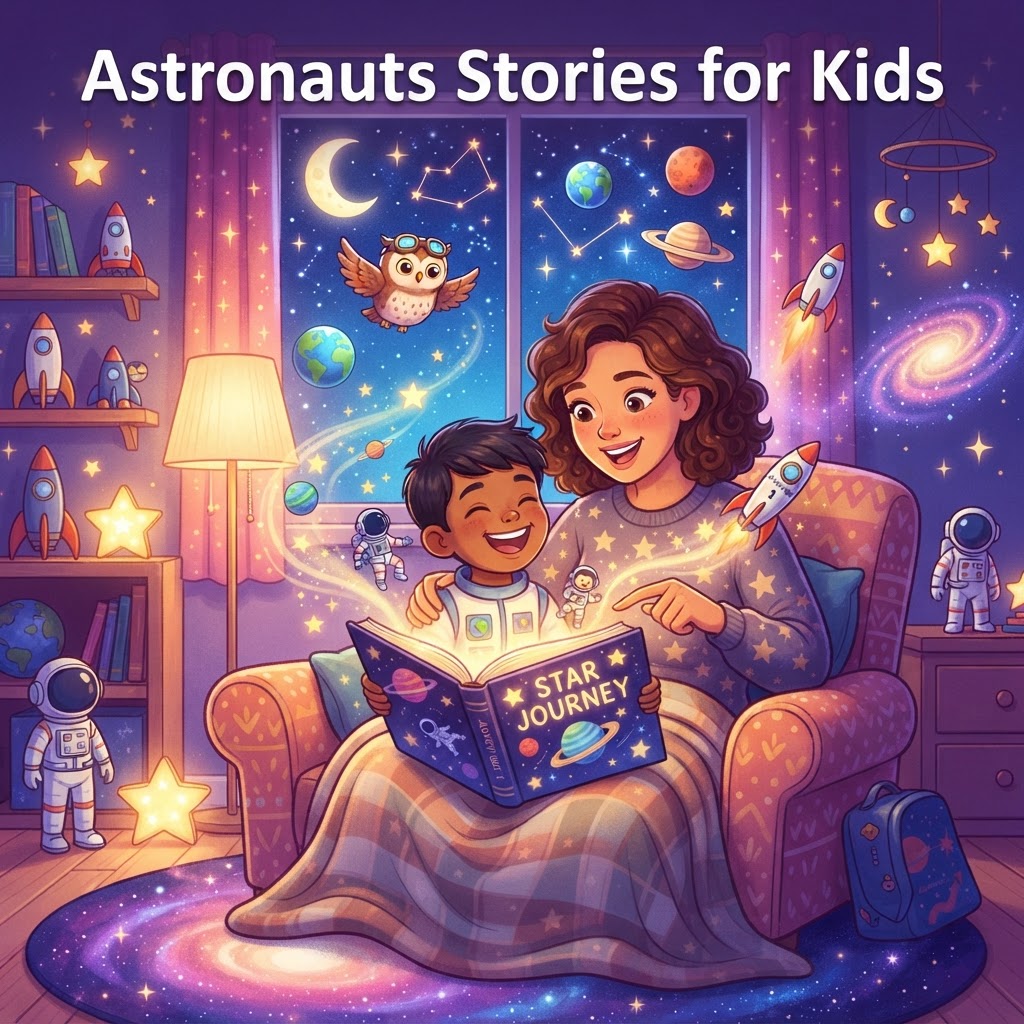
Space stories spark wonder fast. Astronauts stories for kids combine adventure, science, courage, and imagination in one exciting theme, which makes them ideal for bedtime, classroom read-alouds, or quiet reading time. When children follow a young explorer into a rocket, onto the moon, or past the stars, they are not just being entertained—they are practicing curiosity, empathy, and problem-solving too.
Parents and teachers often look for astronauts bedtime stories because space feels big, hopeful, and full of possibilities. In this guide, you’ll find why children connect so strongly with stories about astronauts, seven creative story ideas, simple character-building tips, and practical ways to use InstaTales to create personalized space adventures your child will want to hear again and again.
Why do children love astronauts stories so much?
Children love astronaut stories because space turns big questions into exciting adventures. Stories about astronauts help kids imagine what is possible while giving them a safe way to explore bravery, discovery, and the unknown.
From a child development perspective, this makes sense. Research from the Center on the Developing Child at Harvard University shows that imaginative play supports flexible thinking, self-regulation, and learning. Space themes are especially powerful because they invite children to ask, “What’s out there?” and “What would I do?”
Astronaut-themed stories often appeal to children because they include:
- A clear mission or goal
- New worlds to discover
- Friendly teamwork
- Manageable challenges
- A strong sense of wonder
They also blend fantasy with real science. Children can dream about moon gardens and singing satellites while also learning that astronauts train hard, solve problems, and work together. That mix of fact and imagination is one reason astronauts tales children enjoy often become repeat favorites.
What can children learn from stories about astronauts?
Children can learn resilience, curiosity, and emotional confidence from astronaut stories. The best stories about astronauts entertain kids while also showing them how to stay calm, ask questions, and keep trying when something feels hard.
Space stories naturally support social-emotional learning. An astronaut may miss home, feel nervous before launch, or need help from a team member. When children hear these moments in a story, they practice understanding emotions and solutions. The American Academy of Pediatrics has long highlighted the value of shared reading for language growth, bonding, and emotional development.
Astronaut adventures can also introduce early STEM concepts in a gentle, age-appropriate way, such as:
- Gravity and floating
- Planets and stars
- Tools and problem-solving
- Observation and experimentation
- Team roles and communication
For educators, space stories can connect beautifully to science units. If you use themed reading in class, InstaTales for teachers can help you tailor stories to reading level, topic, or lesson goal.
Which astronauts stories for kids work best at bedtime?
The best astronauts bedtime stories are calm, imaginative, and reassuring. At bedtime, children usually respond best to space adventures that feel exciting but not overwhelming, with a gentle ending that brings the character safely home or into restful sleep among the stars.
A good bedtime astronaut story usually includes:
- One main problem, not too many twists
- Soft sensory details, like glowing stars or quiet moon dust
- A comforting companion, such as a robot, sibling, or parent
- A peaceful ending with safety, success, or rest
This is also where personalization matters. A child is often more engaged when the main astronaut shares their name, favorite color, or best friend. You can create your own personalized bedtime story with a space theme so the adventure feels familiar as well as magical.
What are some fun astronauts stories for kids to try?
If you want fresh astronauts stories for kids, start with simple, vivid story hooks. The best ideas give children a mission, a feeling, and a memorable setting.
1. The Lost Moon Teddy
A young astronaut lands on the moon and realizes their teddy has floated away. The mission becomes a gentle search-and-rescue adventure about responsibility, love, and staying calm.
2. The Planet of Singing Crystals
An astronaut child discovers a planet where crystals hum when someone tells the truth. This story supports honesty, listening, and emotional expression.
3. The Friendly Mars Mechanic
A small astronaut meets a clever robot on Mars who can fix anything except loneliness. Together, they learn that friendship matters as much as skill. If your child also loves robots, try these robot bedtime adventures next.
4. The Sleepy Star Delivery
An astronaut has a very important job: returning sleepy baby stars to their proper constellations before dawn. This works especially well as an astronauts bedtime story for younger children ages 3-6.
5. The Space Garden Mission
A child astronaut is chosen to grow the first flower on a space station. Inspired by real science from NASA, this story can explore patience, care, and hope.
6. The Little Comet That Felt Different
An astronaut meets a comet that moves in an unusual way and worries it does not belong. The story becomes a warm lesson about identity, confidence, and celebrating differences.
7. The Moon Map Mystery
A team of child astronauts finds an old map hidden inside a lunchbox. The treasure is not gold, but a message from earlier explorers about courage, teamwork, and wonder.
These ideas work because they pair action with emotion. That balance is what makes astronauts tales children remember long after story time ends.
How can you build a strong astronaut character children care about?
Children connect with astronaut characters when they feel real, capable, and relatable. A memorable astronaut does not need to be perfect—they need a clear goal, a few human feelings, and a chance to grow.
When creating your own stories about astronauts, try these character development tips:
- Start with a trait: Is your astronaut curious, cautious, silly, shy, or determined?
- Add a small fear: Maybe they worry about the dark, loud countdowns, or being far from home.
- Give them a mission: Find a moon flower, fix a rocket, help a friend, or explore a new planet.
- Include a helper: A co-pilot, robot, grandparent, or talking star keeps the story social.
- Show growth: By the end, the astronaut has learned something about bravery, kindness, or patience.
This approach reflects what early literacy experts often recommend: children stay engaged when characters have feelings, choices, and consequences. It also helps adults move beyond generic space plots and create stories that support emotional development.
For example, instead of “Emma goes to space,” try: “Emma, a careful young astronaut who worries about making mistakes, must repair a moon lantern before the stars disappear.” That gives the child a reason to care.
How can parents and teachers create personalized astronauts adventures with InstaTales?
Personalized space stories are one of the easiest ways to boost engagement. When a child becomes the astronaut, the adventure feels more meaningful, and that often increases attention, recall, and joy.
With InstaTales, you can shape a story around a child’s interests, age, and developmental needs. You might choose a quiet moon mission for a toddler, a teamwork challenge for early elementary readers, or a science-rich Mars adventure for older kids. If you want a fast starting point, browse the story templates and adapt one into an astronaut mission.
Here are a few prompts that work well:
- “Create a gentle bedtime story where Maya becomes an astronaut and helps sleepy stars get home.”
- “Write a funny astronaut adventure for a 6-year-old who loves dinosaurs and the moon.”
- “Make a classroom story about three student astronauts solving a problem together on Mars.”
Personalization can also support repeated reading, which is valuable for language development. Save favorite stories in your story library so children can revisit beloved adventures and notice new details each time.
How can you make astronauts stories even more meaningful for children?
Astronaut stories become more meaningful when adults connect the adventure to a child’s real life. A space tale is not just about rockets—it can also be about courage before school, patience with siblings, or trying something new.
After reading, ask simple reflection questions like:
- What was the astronaut brave enough to do?
- When did the character need help?
- What would you pack for a space mission?
- Which planet would you visit first, and why?
You can also extend the theme through play and reading variety. If your child enjoys imaginative worlds, mixing space stories with fantasy and adventure keeps reading fresh. The InstaTales blog has more themed ideas, from magical kingdoms to animal adventures.
For families, a weekly routine can help. Read one new astronaut story, draw the planet from the story, and then invent a new mission together. That kind of shared storytelling supports language, creativity, and connection.
Frequently Asked Questions
What age are astronauts stories for kids best for?
Astronaut stories can work well for ages 1-10 when the language and plot match the child’s stage. Younger children usually enjoy gentle, repetitive bedtime stories, while older kids often like longer missions and problem-solving.
Are astronauts bedtime stories good for anxious children?
Yes, they can be very helpful when the story is calm and reassuring. Choose stories that include a safe ending, supportive companions, and a character who manages worry successfully.
How do I make a personalized astronaut story for my child?
Start with your child’s name, age, favorite things, and one simple space mission. Then use InstaTales to turn those details into a custom adventure that feels familiar, fun, and emotionally meaningful.
What lessons can children learn from stories about astronauts?
Children can learn curiosity, teamwork, persistence, and emotional resilience. Many astronaut stories also introduce early science ideas in a way that feels playful and accessible.
Can astronaut stories be used in the classroom?
Yes, astronaut stories work well for literacy time, STEM units, and social-emotional learning. Teachers can use them to spark writing prompts, science questions, and group discussions about courage and cooperation.
Where can I find more themed story ideas like this?
You can explore more creative reading inspiration on the community story gallery and across InstaTales resources. Related themes, such as pirates, robots, or dragons, can keep children excited about reading night after night.
Get a new bedtime story every week
Free, personalized, and delivered to your inbox. No spam, ever.
Ready to Create a Personalized Bedtime Story?
Use our free AI bedtime story generator to create a personalized illustrated story for your child in 30 seconds — no credit card needed.
Popular story types:
Maya Rodriguez
Lead Content Editor & Early Literacy Specialist
Maya is a former early childhood educator and literacy specialist with over a decade of experience helping children develop a love of reading. She leads content at InstaTales, where she writes about the science of storytelling, child development, and how families can use personalized AI stories to build literacy and emotional resilience.
instatales.ai