Bedtime Stories Afraid of the Dark: Gentle Help
When your child afraid of the dark, bedtime can be tough. These bedtime stories and strategies can help turn things around.
✦ Key Takeaways
- •Yes, bedtime often makes fear of the dark feel bigger because children are tired, separated from parents, and surrounded by more silence and shadows.
- •Afraid of the dark bedtime stories help by giving children a safe way to face scary feelings in small, manageable steps.
- •The best story is calm, reassuring, and emotionally honest.
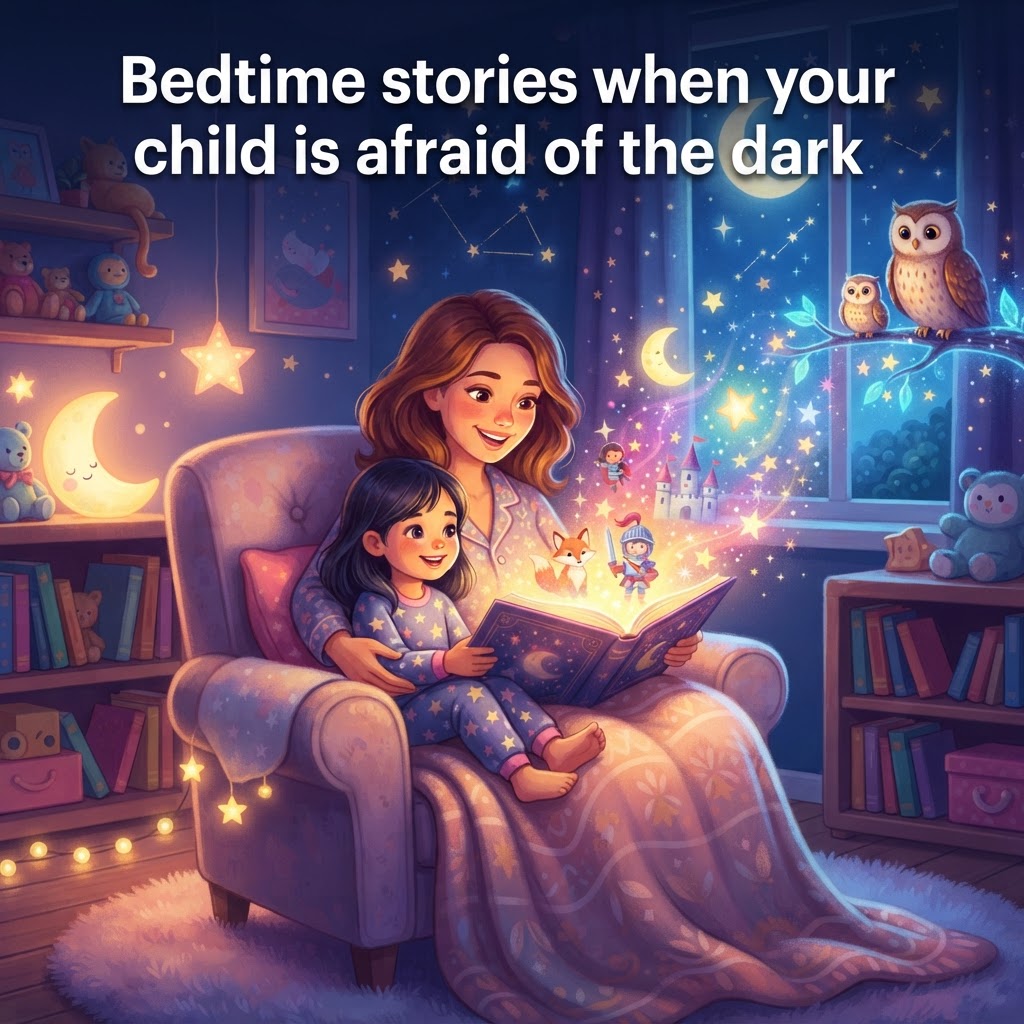
When your child is afraid of the dark, bedtime can quickly become the hardest part of the day. The good news is that bedtime stories afraid of the dark can do more than distract—they can help children feel safe, understood, and gradually more confident at night.
Fear of the dark is common in early childhood, especially when imagination is growing fast. Many children between ages 3 and 8 struggle with afraid of the dark at bedtime, even if they seem brave during the day. A calm story, paired with a predictable routine, can lower stress and help bedtime feel manageable again.
Why does fear of the dark get worse at bedtime?
Yes, bedtime often makes fear of the dark feel bigger because children are tired, separated from parents, and surrounded by more silence and shadows. Their brains are also more likely to turn ordinary sounds into scary ideas when they are winding down.
This is developmentally normal. Organizations like the American Academy of Pediatrics note that bedtime fears are common in young children, and the Child Mind Institute explains that imagination can make darkness feel threatening even when a child knows they are safe.
A few common bedtime triggers include:
- Shadows on walls or ceilings
- Separation from a caregiver
- Overtiredness
- Scary media seen earlier in the day
- Big life changes, such as starting school or moving rooms
If your child resists sleep, you may also find it helpful to read about bedtime stories for children who won’t go to sleep, because fear and sleep resistance often overlap.
How can bedtime stories help when your child is afraid of the dark at bedtime?
Afraid of the dark bedtime stories help by giving children a safe way to face scary feelings in small, manageable steps. A well-chosen story can normalize fear, model coping skills, and end with safety and calm.
Stories work well because children learn through narrative. They see a character feel worried, try a strategy, and discover that the night is not dangerous. That process helps them rehearse bravery without pressure.
Effective stories can help children:
- Name the feeling: “I feel scared when it gets dark.”
- See that fear is common and temporary
- Learn calming tools like deep breathing or calling to mind a safe image
- Replace scary mental pictures with gentle ones
- Build positive expectations around sleep
There is also strong support for bedtime routines in child sleep research. Pediatric sleep researcher Jodi Mindell and colleagues have found that consistent bedtime routines are linked with better sleep outcomes in young children. The CDC’s sleep guidance also reinforces the importance of healthy, regular sleep habits.
What makes a good bedtime story for a child afraid of the dark?
The best story is calm, reassuring, and emotionally honest. It should acknowledge the fear without making the darkness seem magical, dangerous, or full of hidden threats.
Look for these qualities in bedtime stories afraid of the dark:
- A gentle main character who feels nervous but not overwhelmed
- A low-stakes plot with comfort, not suspense
- Simple sensory details like moonlight, soft blankets, quiet stars, or sleepy animals
- A helpful coping tool such as a night light, breathing, or a comforting phrase
- A soothing ending where the child feels safe and ready for sleep
Try to avoid stories with:
- Monsters, even “friendly” ones, if your child is very sensitive
- Sudden surprises or dramatic tension
- Busy illustrations or overstimulating language
- Lessons that feel preachy or dismissive
If you want more examples, our guide to stories for kids who are afraid of the dark offers extra ideas for different ages and personalities.
Which calming story ideas work best for children afraid of the dark?
The most effective story ideas are the ones that make the night feel familiar, predictable, and safe. Here are five that work especially well.
A moonlight helper story?
In this story, the moon is a quiet friend that watches over the child, bedroom, and house. Nothing dramatic happens; the moon simply lights small safe things—the pillow, bookshelf, teddy bear, and sleeping family.
This works because it shifts attention from “What if something scary is out there?” to “Look how many safe things I can notice.”
A brave little animal story?
A small rabbit, bear, or fox feels nervous when the sun goes down, then learns a simple comfort habit. Maybe the animal listens to crickets, snuggles into a den, and takes three slow breaths before sleep.
Animal stories create distance. Children often talk more openly about feelings when the fear belongs to a character first.
A night sounds story?
The story introduces ordinary nighttime sounds one by one: the air vent, the tree outside, a neighbor’s car, soft footsteps in the hallway. Each sound gets a calm explanation.
This is especially useful for children who fear the unknown. It teaches that many “mystery” sounds have safe, everyday causes.
A glowing bedroom story?
The main character takes a slow tour of their room and notices all the comforting things still there in the dark. The blanket is soft, the stuffed animal is near, and the night light glows gently.
This kind of story supports body regulation. It helps children orient to their environment and feel grounded at afraid of the dark at bedtime.
A bedtime protector ritual story?
The story includes a repeated safety ritual: closing curtains, hugging a stuffed animal, saying a calming phrase, and turning on a small light. The character sleeps peacefully after the same steps each night.
Repetition matters. Familiar patterns reduce uncertainty, and predictability is one of the strongest tools in a bedtime routine afraid of the dark.
For more gentle inspiration, you can also browse the InstaTales blog or start with ready-made story templates.
What is a simple bedtime routine for a child afraid of the dark?
A short, predictable routine is one of the best supports for nighttime fear. Aim for 20 to 30 minutes, and keep the order the same most nights.
Here is a sample bedtime routine afraid of the dark:
- Bath or wash-up to signal the day is ending
- Dim lights gradually instead of switching from bright to dark all at once
- Pajamas and bathroom before getting into bed
- Two minutes of connection like cuddling or talking about one good part of the day
- One calming story focused on safety, comfort, or sleep
- One coping tool such as belly breathing, a comfort object, or a short phrase like “My room is safe”
- A consistent goodnight with the same final words each night
A few practical tips make this work better:
- Keep screens off for at least an hour before bed when possible
- Use a soft night light if needed
- Avoid long reassurance loops such as checking every corner repeatedly
- Validate feelings without strengthening fear: “I know dark feels hard. You are safe, and I’m here.”
If your child also struggles to settle even without fear, these gentle story ideas for kids who won’t go to sleep may help.
How can you use InstaTales’ lullaby type and kind tone for afraid of the dark bedtime?
Use InstaTales’ lullaby story type and kind tone when you want the story to feel soft, rhythmic, and emotionally safe. This combination works well because it reduces excitement and builds a sense of comfort.
When you create your own personalized bedtime story, try prompts like:
- “Write a lullaby-style bedtime story for a 4-year-old who feels nervous in the dark but learns their room is safe.”
- “Use a kind tone, gentle repetition, and a calm ending with moonlight and deep breaths.”
- “Include a favorite stuffed animal and a small warm night light.”
A few best practices:
- Keep the story short for younger children
- Use the child’s name for connection
- Add familiar details from home, like a blanket color or pet name
- End with sleep, not adventure
- Re-read favorite stories often
If one story works especially well, save it in your story library so you can reuse it during rough bedtime phases. Repetition can be deeply reassuring, especially for children who feel anxious at night.
When should parents get extra support for fear of the dark?
Most fear of the dark is temporary and developmentally typical. But it is worth seeking extra support if the fear is intense, lasts for many months, or affects daily life beyond bedtime.
Talk with your pediatrician or a child mental health professional if your child:
- Has frequent panic at night
- Cannot sleep alone at all for an extended period
- Shows anxiety in many other settings
- Has recurring nightmares or significant sleep loss
- Suddenly develops fear after a stressful event
Support early if you are worried. Gentle bedtime stories help a lot, but some children need a bigger plan that includes anxiety support, sleep coaching, or family guidance.
Frequently Asked Questions
What kind of bedtime story is best for a child afraid of the dark?
The best story is calm, simple, and reassuring. Choose one that names the fear gently, offers a coping tool, and ends with safety and rest.
Should I avoid talking about fear at bedtime?
No. It helps to acknowledge the feeling briefly and calmly. The goal is to validate your child without turning bedtime into a long discussion about scary possibilities.
Can a night light make fear of the dark worse?
Usually, no. For many children, a soft night light is a practical comfort tool, especially during a temporary phase of afraid of the dark at bedtime.
How long does fear of the dark usually last?
It varies, but many children move through this stage with steady support and a predictable routine. If the fear is severe or continues for many months, talk to your pediatrician.
How often should I repeat the same bedtime story?
As often as your child wants, as long as it stays calming. Repetition helps children feel in control and know what to expect next.
Can personalized stories really help at bedtime?
Yes, they can be especially effective because familiar names, places, and comfort objects feel more real to children. Personalized stories can make coping strategies easier to remember and practice.
Ready to Create a Personalized Bedtime Story?
Use our free AI bedtime story generator to create a personalized illustrated story for your child in 30 seconds — no credit card needed.
Popular story types:
Maya Rodriguez
Lead Content Editor & Early Literacy Specialist
Maya is a former early childhood educator and literacy specialist with over a decade of experience helping children develop a love of reading. She leads content at InstaTales, where she writes about the science of storytelling, child development, and how families can use personalized AI stories to build literacy and emotional resilience.
instatales.ai