Stories for Kids Who Afraid of the Dark: 5 Ideas
If your child afraid of the dark, the right story can help. Here are story ideas and tips for parents dealing with afraid of the dark.
✦ Key Takeaways
- •Children are often afraid of the dark because darkness removes visual certainty, and a child’s imagination fills in the gaps.
- •Stories help because they let children practice courage at a safe distance.
- •The most helpful stories about darkness are gentle, realistic in feeling, and reassuring in tone.
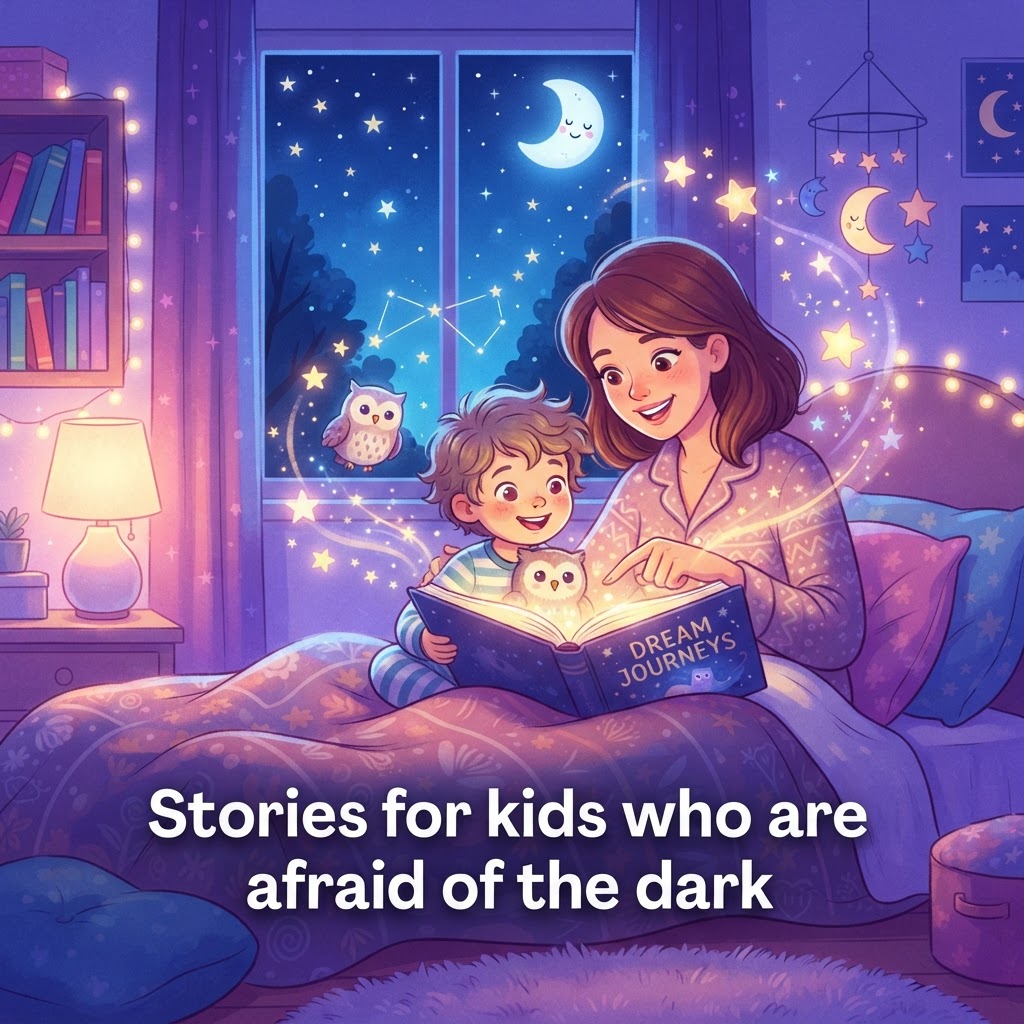
If you’re looking for stories for kids who afraid of the dark, you’re far from alone. Fear of the dark is one of the most common childhood worries, especially in the preschool and early elementary years. The good news is that the right story can do more than distract at bedtime—it can help a child feel understood, calmer, and more capable of coping with the dark.
When parents search for afraid of the dark stories or afraid of the dark children stories, what they usually need is something gentle, not dramatic. Below is a practical guide to helping kids who afraid of the dark with stories, routines, and personalized prompts you can use with InstaTales.
Why are young children often afraid of the dark?
Children are often afraid of the dark because darkness removes visual certainty, and a child’s imagination fills in the gaps. This is especially common between ages 3 and 7, when pretend play is rich but logical thinking is still developing.
The American Academy of Pediatrics notes that common childhood fears include darkness, separation, and imaginary threats. As children grow, their brains become better at telling the difference between “I imagined it” and “it is happening,” but that skill takes time. The AAP’s guidance on childhood fears at HealthyChildren.org is a helpful reference for parents.
Developmentally, this fear makes sense. The CDC’s developmental milestones show that young children are rapidly building language, memory, and imagination. Those skills are wonderful for play and storytelling—but at night, they can also make shadows, sounds, and ordinary darkness feel bigger than they are.
That means nighttime fear is not usually a sign that something is wrong. More often, it is a sign that a child needs support, predictability, and calm practice.
Why do stories help kids who are afraid of the dark?
Stories help because they let children practice courage at a safe distance. A gentle story gives fear a name, offers comfort, and shows a child what coping can look like without putting pressure on them in the moment.
Research on child development consistently shows that children regulate emotions through relationships first. The Harvard Center on the Developing Child explains that warm, responsive interactions help children build self-regulation over time. Shared reading works well because it combines closeness, repetition, and language for feelings.
A well-chosen bedtime story can help by:
- normalizing the feeling of fear
- showing a character using simple coping tools
- replacing scary mental images with safe ones
- making bedtime feel predictable
- giving parents a calm way to connect, not just correct
The best stories do not say, “There is nothing to be scared of.” They say, “It feels scary sometimes, and you are safe, supported, and learning what helps.”
Which afraid of the dark stories work best for children?
The most helpful stories about darkness are gentle, realistic in feeling, and reassuring in tone. Good afraid of the dark stories do not erase fear instantly—they show a child moving from worry to calm with support.
Here are five story ideas that work especially well.
A little explorer who learns the night has helpers?
This story follows a child who notices that nighttime has friendly helpers: the moon, a hallway light, a favorite blanket, and a parent’s voice. Instead of “defeating” the dark, the child learns to spot signs of safety within it.
This works well for ages 3-6 because it turns the unknown into something knowable. It also helps children build a mental checklist they can use in real life.
A bedroom sounds map that makes noises less mysterious?
In this story, a child and caregiver discover that each nighttime sound has a simple explanation: the heater hums, the house creaks, the cat stretches, the rain taps the window. By the end, the child has a “map” of familiar sounds.
This is one of the best afraid of the dark children stories for kids who startle easily at night. It replaces mystery with meaning, which often lowers anxiety fast.
A moonbeam friend who stays nearby all night?
A child imagines a moonbeam, star, or soft glowing firefly as a quiet nighttime companion. The friend does not fight monsters; it simply stays nearby and reminds the child to breathe, snuggle, and rest.
This kind of story is powerful because it supports emotional regulation without adding new scary characters. For sensitive children, that matters.
A brave-by-practice story instead of a brave-all-at-once story?
In this version, the main character practices one tiny step at a time: sleeping with the door cracked, turning off one lamp, holding a comfort toy, or counting three calm breaths. The child succeeds through repetition, not pressure.
That “small steps” structure reflects what we know from child development and anxiety support: confidence grows from manageable success. It is especially useful if your child says, “I want to be brave, but I can’t.”
A comfort object adventure that ends back in bed?
A stuffed animal, blanket, or pillow becomes the hero of a quiet nighttime adventure and returns to show the child how safe the room really is. The comfort object might “visit” the closet, window, and hallway, then report back: all calm.
This story works well because it uses a familiar attachment object. If your child already sleeps with a toy, the story extends the comfort they already trust.
If bedtime is hard for more than one reason, you may also like these gentle ideas for kids who resist sleep or these more bedtime story strategies.
What should parents avoid when choosing stories about fear of the dark?
Parents should avoid stories that intensify fear, shame children, or force a quick emotional turnaround. The goal is not to make a child “tougher” by exposing them to more scary content at bedtime.
Try to skip stories that include:
- monsters, villains, or jump-scare moments
- teasing language like “babies are scared of the dark”
- dramatic danger that needs rescuing
- a sudden “See? It was silly” ending
- overstimulating visuals right before bed
- long explanations that feel like lectures
Also avoid using the story as a test. If you say, “We read the story, so now you should stay in your room,” the story becomes pressure instead of support.
A better approach is to treat stories as one part of a calming bedtime routine. Read, cuddle, validate, and repeat. Children usually need the same reassuring message many times before it sticks.
How can parents use bedtime stories to make night fears feel smaller?
Bedtime stories help most when they are predictable, interactive, and brief. The best routine uses the story before fear peaks, so your child can absorb comfort while already calm.
A simple routine might look like this:
- Read the same reassuring story for several nights in a row.
- Pause to ask, “What helped the character feel safe?”
- Connect the story to real life: “Your nightlight helps too.”
- End with one repeatable coping step, like three slow breaths.
- Keep the tone soft and unhurried.
If your child wants the same story again and again, that is usually a good sign. Repetition helps young children feel mastery. What sounds repetitive to adults often feels organizing and soothing to kids.
How can you prompt InstaTales for stories about being afraid of the dark?
The best prompts are specific, age-matched, and emotionally clear. When you create your own personalized bedtime story, include your child’s age, what exactly feels scary, and what kind of comfort you want the story to build.
A strong prompt usually includes:
- your child’s age
- the fear trigger, such as shadows or being alone
- a favorite character, animal, or comfort object
- the emotional goal, such as “feel calm” or “practice brave steps”
- a gentle ending with reassurance, not excitement
Here are a few prompt examples:
- “Write a bedtime story for a 4-year-old who is afraid of the dark and nervous about shadows. Include a bunny nightlight and a parent who helps name safe things in the room.”
- “Create a calm story for a 6-year-old about hearing house noises at night. Make the sounds understandable and end with the child feeling sleepy and safe.”
- “Write a short, reassuring story for a 5-year-old who wants to be brave at bedtime. Include a stuffed dinosaur, a moonbeam, and three deep breaths.”
- “Create an afraid of the dark story for a sensitive 7-year-old. Avoid monsters and danger. Focus on confidence through small steps.”
If you want a faster starting point, browse the built-in story templates. Once you find a version your child loves, save it in your story library so you can re-read it during the week.
When should parents get extra help for fear of the dark?
Most fear of the dark is normal and temporary. Parents should seek extra support when the fear is intense, lasts for weeks, or starts interfering with sleep, school, or daily routines.
Talk with your pediatrician if your child:
- panics regularly at bedtime
- has frequent nightmares or night waking
- avoids dark rooms even in daytime
- becomes distressed far beyond bedtime
- shows a sudden increase in fear after a stressful event
Sometimes nighttime fear is part of a bigger stress response, and sometimes it is simply a phase that needs more support. Either way, getting guidance early can make bedtime easier for everyone.
For more parent resources, you can also explore the InstaTales blog, where we cover other emotional and bedtime challenges in a child-friendly way.
Frequently Asked Questions
At what age are children most afraid of the dark?
Fear of the dark often peaks between ages 3 and 7. That is when imagination grows quickly, but children still need help separating imagined threats from real ones.
Can stories really reduce bedtime anxiety?
Yes, especially when stories are calm, repetitive, and read with a trusted adult. Stories help children name feelings, picture safety, and practice coping in a low-pressure way.
Should I tell my child there is nothing to be afraid of?
Usually, no. It is better to say, “It feels scary, and I’m here with you,” because validation lowers distress more effectively than dismissal.
Is it okay to use a nightlight along with stories?
Yes. A nightlight can be a useful support while your child builds confidence. Stories and practical comforts often work best together.
What if my child asks for the same afraid of the dark story every night?
That is common and often helpful. Repetition gives children predictability and a sense of control, which can make bedtime fears feel smaller over time.
Ready to Create a Personalized Bedtime Story?
Use our free AI bedtime story generator to create a personalized illustrated story for your child in 30 seconds — no credit card needed.
Popular story types:
Maya Rodriguez
Lead Content Editor & Early Literacy Specialist
Maya is a former early childhood educator and literacy specialist with over a decade of experience helping children develop a love of reading. She leads content at InstaTales, where she writes about the science of storytelling, child development, and how families can use personalized AI stories to build literacy and emotional resilience.
instatales.ai