Best animals bedtime stories for 2-year-olds
Discover the best animals bedtime stories for 2-year-olds — themes, tips, and story ideas that will delight your child at bedtime.
✦ Key Takeaways
- •At age 2, the best bedtime stories are simple, rhythmic, and emotionally safe.
- •Animal stories work especially well because they make emotions easier to understand.
- •For most 2-year-olds, the ideal bedtime story is short: usually 3 to 7 minutes, or roughly 200 to 500 words.
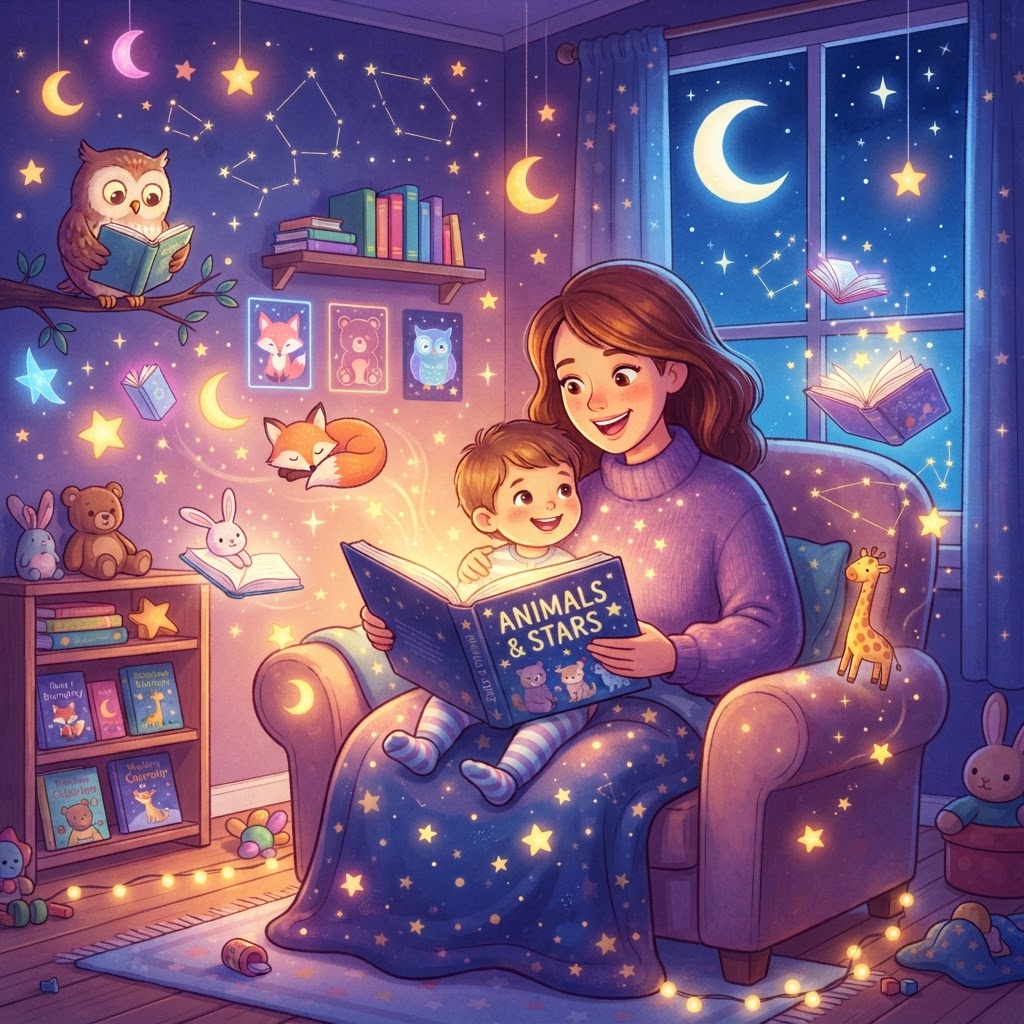
Finding the right animals bedtime stories for a 2-year-old can make the end of the day feel calmer, sweeter, and far less rushed. At this age, children love familiar sounds, simple plots, and cozy characters, which is why animals stories for 2 year olds often work so well. If you are looking for bedtime stories for 2 year olds that support development and genuinely hold attention, animal tales are one of the safest and most effective places to start.
What developmental milestones matter when choosing bedtime stories for 2-year-olds?
At age 2, the best bedtime stories are simple, rhythmic, and emotionally safe. Most toddlers this age are building vocabulary quickly, following short directions, and starting to engage in pretend play, but they still have very short attention spans.
According to the CDC’s developmental milestones for 2-year-olds, many children around this age begin using two-word phrases, pointing to familiar objects, and copying adults and peers. That matters for reading because toddlers enjoy stories they can name, repeat, and predict.
When choosing kids animals stories, look for:
- Clear, familiar characters
- One simple problem and one gentle solution
- Repetition of sounds, actions, or phrases
- Pictures or descriptions that are easy to imagine
- Everyday feelings like sleepiness, curiosity, or missing a parent
A 2-year-old does not need a complicated message. They need language they can absorb, a pace they can follow, and a story world that feels secure.
Why do animal stories work so well for 2-year-olds?
Animal stories work especially well because they make emotions easier to understand. A shy bunny, sleepy bear, or curious duckling gives toddlers a simple way to explore feelings without the story feeling too close or too intense.
This is one reason animals stories for 2 year olds stay so popular across generations. Young children are naturally drawn to animals because they are visually distinct, easy to label, and rich in sounds and movement. A cow mooing, an owl hooting, or a puppy tumbling across the page invites participation.
Animal characters also support early learning in ways parents often notice right away:
- They encourage sound play and imitation
- They build early vocabulary around animals, habitats, and actions
- They help toddlers understand emotions through gentle distance
- They connect easily to routines like bedtime, bath time, and feeding
The American Academy of Pediatrics has long emphasized the value of reading aloud for language and bonding. Animal tales are often ideal for this because they invite pointing, repeating, and cuddling all at once.
If your child already enjoys very simple animal tales, you may also like these gentle animal stories for younger toddlers as a stepping stone for shorter, calmer reading sessions.
How long should bedtime stories for 2-year-olds be?
For most 2-year-olds, the ideal bedtime story is short: usually 3 to 7 minutes, or roughly 200 to 500 words. The goal is not to fit in a lot of plot. The goal is to help your child settle, connect, and transition toward sleep.
Parents often assume longer stories are “better,” but for this age, shorter is usually more effective. Toddlers benefit from repetition and re-reading far more than from complexity. A story that feels slightly too short is often perfect, because it leaves space for cuddles, questions, and a second read.
A good bedtime pace looks like this:
- Start with a calm opening
- Introduce one animal character or a small group
- Keep the action gentle and easy to follow
- End with safety, sleep, or reunion
If your child is especially active at bedtime, pick stories with fewer scene changes and softer language. If your child wants “more,” it is often better to read the same short story twice than to switch to a long one.
Which themes are best in animals bedtime stories for this age?
The best themes for 2-year-olds are comforting, familiar, and rooted in early emotional life. Think routine, love, discovery, and reassurance rather than suspense or big lessons.
Strong themes for bedtime stories for 2 year olds include:
- Going to sleep: a bear finding its den, a bird settling into its nest
- Family connection: a baby fox looking for mama, then finding her
- Gentle curiosity: a duckling exploring puddles and returning home
- Friendship: two small animals helping each other in a simple way
- Daily routines: washing paws, tidying toys, saying goodnight
- Confidence in small steps: a timid mouse trying something new
These themes match what child development experts at Zero to Three often highlight: toddlers learn best through repetition, warm interaction, and familiar emotional experiences.
You can also branch into nearby story types once your child is ready. For example, some 2-year-olds enjoy slightly more active plots, like these adventure stories for 2-year-olds, as long as the tone stays gentle.
What should parents avoid in animal bedtime stories for 2-year-olds?
At this age, it is best to avoid stories that are overstimulating, confusing, or emotionally intense. A bedtime story should regulate your toddler, not wake them back up.
Try to steer clear of:
- Scary villains, chasing, or separation that lasts too long
- Loud, chaotic humor right before sleep
- Too many characters or subplots
- Long moral speeches
- Unpredictable endings
- Sad or threatening animal situations
Even if a story is marketed for toddlers, trust your child’s cues. If they become clingy, restless, or ask for reassurance after the story, it may be too intense for bedtime.
Also watch for overstimulation in the language itself. Fast, bouncy stories can be wonderful earlier in the day, but evenings usually call for softer verbs, slower rhythm, and a strong sense of safety. If you want stories that fit your child’s mood exactly, it can help to create your own personalized bedtime story using calm prompts like “sleepy woodland animals,” “gentle farm friends,” or “a bunny saying goodnight to everyone.”
What are five great animal bedtime story ideas for 2-year-olds?
The best story ideas for this age are simple enough to follow and rich enough to repeat. Here are five cozy options parents can use tonight.
1. The Sleepy Little Bear
A small bear cannot settle down until he says goodnight to the moon, his blanket, and his family. This works well because it mirrors bedtime routines and uses repetition.
2. Bunny’s Missing Slipper
A bunny looks for one soft slipper under the bed, behind the chair, and beside the toy basket. The problem is tiny, the search is familiar, and the happy ending feels safe.
3. Duckling and the Quiet Pond
A duckling notices the pond getting still as frogs, fish, and birds prepare for sleep. This story naturally slows the body and introduces bedtime cues from nature.
4. The Puppy Who Wanted One More Hug
A puppy tries to say goodnight but keeps returning for another hug, another kiss, and one more tuck-in. Many 2-year-olds love this because it reflects their real bedtime behavior with warmth and humor.
5. Owl’s Gentle Night Walk
A baby owl takes a very short walk with a parent owl, noticing stars, leaves, and sleepy animals before returning to the nest. The calm sensory details make it ideal for winding down.
If you want to save favorites for easy re-reading, keeping them in your story library can help create a more predictable bedtime routine. You can also start from ready-made story templates if you want quick inspiration without building every story from scratch.
How can parents use personalized AI animal stories well at bedtime?
Personalized AI stories can be a wonderful bedtime tool when they are kept simple, calm, and age-appropriate. The key is to guide the story with the same care you would use when choosing a picture book.
For 2-year-olds, good prompts include:
- “A sleepy lamb who says goodnight to the barn”
- “A tiny panda looking for her blanket”
- “A friendly turtle getting ready for bed”
- “A baby elephant who takes a quiet bath and falls asleep”
With InstaTales, parents can generate kids animals stories that match a child’s favorite animal, bedtime routine, or emotional need. That means if your toddler loves foxes, trucks, rain, or saying goodnight to grandma, you can build a gentle story around those familiar details.
A few practical tips make AI storytelling more effective:
- Keep the plot to one event
- Ask for soothing language and a happy ending
- Use recurring character names for familiarity
- Re-read favorite stories often instead of always making new ones
For more reading ideas and age-based guides, explore the InstaTales blog. Personalized stories work best when they support, rather than replace, the warm back-and-forth connection that toddlers need most.
Frequently Asked Questions
What makes a good animal bedtime story for a 2-year-old?
A good story is short, calm, and easy to follow. It usually has one lovable animal character, simple repetition, and a reassuring ending.
Are animals stories for 2 year olds good for language development?
Yes, they can strongly support language growth. Animal names, sounds, actions, and repeated phrases give toddlers many chances to hear and practice new words.
How many bedtime stories should I read to my 2-year-old?
One to three short stories is usually plenty. Many toddlers do best with the same familiar story repeated rather than several new ones in a row.
Can personalized AI stories be safe for toddlers?
Yes, if parents guide the content carefully. Keep prompts gentle, avoid scary themes, and choose simple plots that match your child’s age and bedtime routine.
What if my child only wants the same animal story every night?
That is very normal at age 2. Repetition helps toddlers feel secure, predict language, and process meaning more deeply.
Should bedtime stories always be about sleep?
Not always, but calm topics usually work best. Stories about gentle animals, family closeness, or quiet discovery can be just as effective as explicitly sleepy plots.
Ready to Create a Personalized Bedtime Story?
Use our free AI bedtime story generator to create a personalized illustrated story for your child in 30 seconds — no credit card needed.
Popular story types:
Maya Rodriguez
Lead Content Editor & Early Literacy Specialist
Maya is a former early childhood educator and literacy specialist with over a decade of experience helping children develop a love of reading. She leads content at InstaTales, where she writes about the science of storytelling, child development, and how families can use personalized AI stories to build literacy and emotional resilience.
instatales.ai