Best Astronauts Bedtime Stories for Kids
The best astronauts bedtime stories for children — magical tales that make bedtime an adventure.
✦ Key Takeaways
- •Astronauts for kids are exciting because they make learning feel magical while keeping the child at the center of the adventure.
- •The best astronauts bedtime stories are gentle, rhythmic, and emotionally safe.
- •The most bedtime-friendly astronaut themes are awe, kindness, routine, and gentle discovery.
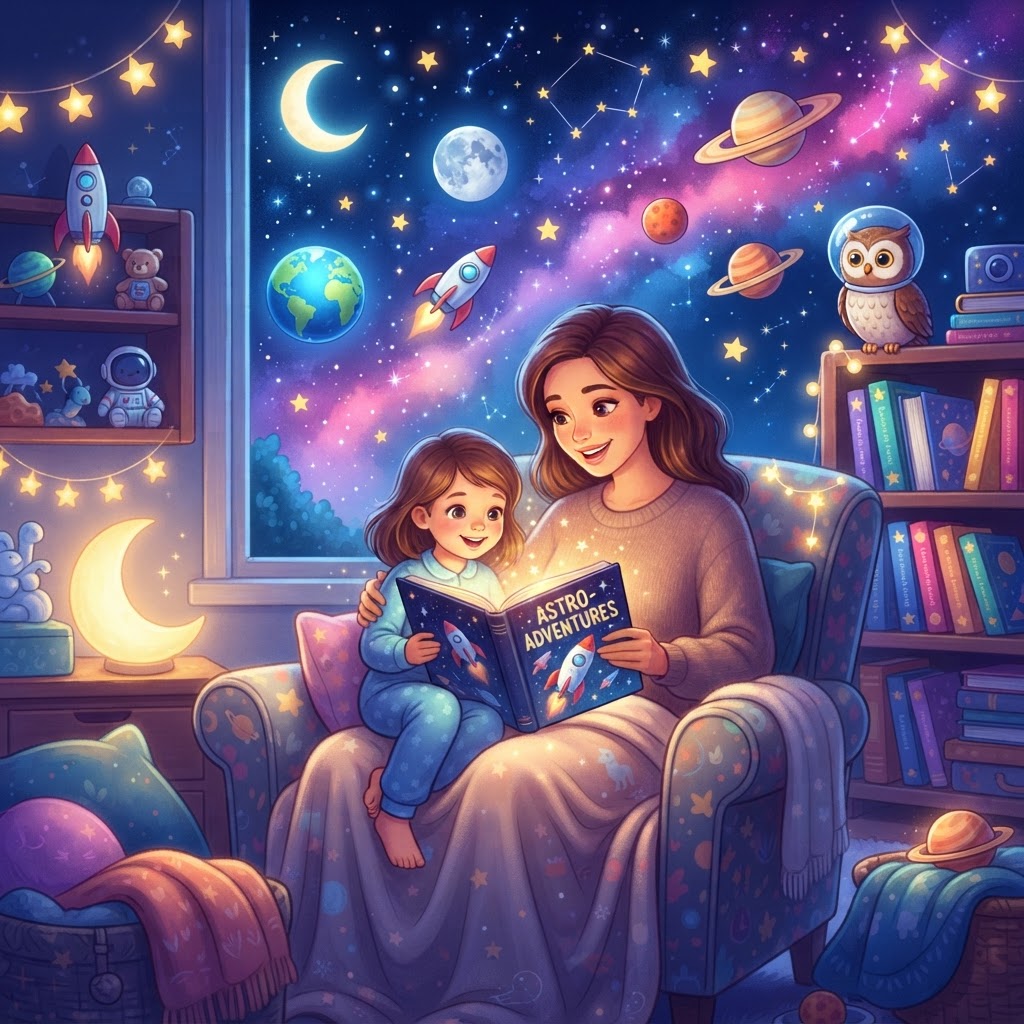
If your child dreams about rockets, moon dust, and glowing stars, astronauts bedtime stories can turn those big interests into calm, cozy end-of-day routines. The best astronauts stories mix wonder with reassurance: a gentle mission, a kind space crew, and a safe return home before lights out.
For children ages 1-10, astronaut stories work especially well because they combine imagination with structure. A child can explore Mars, float past Saturn’s rings, or help a sleepy robot fix a spaceship—while still hearing the comforting rhythms that make bedtime feel secure. If your child also enjoys imaginative themes closer to Earth, you may like these talking animal bedtime stories or these magical wizard adventures for bedtime.
Why do astronauts bedtime stories appeal so strongly to children?
Astronauts for kids are exciting because they make learning feel magical while keeping the child at the center of the adventure. Space stories answer a child’s natural questions—What is the moon? Can I fly? What is beyond the clouds?—in a playful, emotionally safe way.
Children are drawn to themes of exploration and mastery. In a bedtime story, an astronaut child can solve a problem, discover something beautiful, and still return to a warm bed. That “adventure-then-safety” pattern is ideal for nighttime reading.
There is also a developmental reason these stories work. The American Academy of Pediatrics recommends shared reading from infancy because it supports language development, emotional connection, and early literacy skills. Calm, predictable reading routines also help children settle before sleep, especially when stories are soothing rather than overstimulating. You can explore more family reading guidance at HealthyChildren.org, an AAP resource.
Space stories can also spark early STEM curiosity. Sites like NASA’s Kids’ Club show just how naturally children connect to astronauts, planets, and rockets when the material is age-appropriate and playful.
What makes the best astronauts stories work at bedtime?
The best astronauts bedtime stories are gentle, rhythmic, and emotionally safe. At bedtime, children need wonder without worry, so the story should feel adventurous but never chaotic.
A strong astronaut bedtime story usually includes:
- A calm mission: delivering moonlight, counting stars, or visiting a sleepy planet
- A reassuring guide: a parent, kind captain, soft robot, or friendly alien
- Simple structure: takeoff, discovery, return, bedtime
- Soft sensory details: twinkling lights, floating blankets, whispering comets
- A safe ending: homecoming, cuddles, sleep, or stars watching over the child
For toddlers and preschoolers, repetition matters. Repeated phrases like “Up, up, softly through the stars” help children predict what comes next, which builds comfort. Research from early childhood organizations such as Zero to Three consistently highlights the value of predictable routines and responsive interactions for emotional security.
For older children, the story can add richer plot while staying calm. Instead of danger, use low-stakes challenges: finding a missing moon map, helping a nervous star shine, or delivering dreams to sleeping planets.
Which astronaut themes help children wind down at night?
The most bedtime-friendly astronaut themes are awe, kindness, routine, and gentle discovery. These themes let children enjoy space adventure without triggering fear or overstimulation.
The best calming themes include:
A peaceful journey through space
This theme works because travel feels exciting but steady. A rocket can hum softly, the stars can blink like night-lights, and each planet can feel like a quiet stop on the way to sleep.
Helping others in small ways
Children love feeling capable. An astronaut who helps a baby comet find its glow or tucks sleepy satellites into orbit models empathy and competence.
Wonder over danger
Space can be vast, but bedtime stories should focus on beauty, not threat. Think shimmering nebulae, moon gardens, and singing stars rather than crashes or alien battles.
Returning home
A bedtime story should end with emotional closure. The astronaut may finish the mission, land gently, brush moon dust off their boots, and snuggle into bed.
This pattern mirrors what sleep experts recommend: a consistent, predictable wind-down routine supports healthy rest. The CDC’s sleep guidance reminds families that children need enough sleep and dependable routines to thrive.
What are five astronauts tales children ask for again and again?
The best astronauts tales for bedtime are simple enough to follow and magical enough to revisit. These five story ideas work well across a range of ages and can be easily personalized.
-
The Moon Mail Delivery
A child astronaut delivers sparkling letters to the moon, the stars, and a sleepy cloud. Each stop includes a tiny act of kindness and a calm goodnight. -
The Lost Little Comet
A small comet feels scared because it has lost its tail shimmer. The astronaut helps it search the sky, only to discover the glow was inside all along. -
The Planet Pajama Parade
Every planet wears different pajamas—striped Jupiter, glittery Venus, fuzzy Neptune. The astronaut visits each one before leading a giant yawn across the solar system. -
The Rocket That Ran on Lullabies
Instead of fuel, this rocket moves through space with songs, whispers, and bedtime wishes. It is especially lovely for younger children who enjoy repetition and sound play. -
The Star Garden on Mars
On a quiet red planet, a child astronaut plants dream seeds that bloom into soft starlight flowers. This idea works well for ages 5-10 because it mixes imagination with gentle problem-solving.
These ideas can also pair nicely with other fantasy favorites. If your child enjoys brave-but-cozy adventures, you might also explore knightly bedtime tales or even softer dragon bedtime stories.
What does a gentle sample astronaut story sound like?
A good sample astronaut story sounds soothing, visual, and emotionally secure from the first lines. The language should be simple enough to follow and soft enough to slow the pace of bedtime.
Here is a short excerpt:
Captain Mira zipped up her silver pajamas and stepped into the Moonbeam Rocket.
“Tonight,” whispered Mama, “you are delivering one tiny star to the sleepiest corner of the sky.”The rocket lifted with a hush—no roaring, only a soft hum like a lullaby.
Past the blinking moon, past the cotton-cloud comets, Mira floated with her glowing star cupped safely in her hands.At last she found a little planet tucked behind Saturn’s rings. It was dark and quiet there.
“This one is for you,” Mira said, placing the star on a hill of blue dust.
The whole planet shimmered gold, sighed a happy sigh, and closed its eyes for the night.Mira steered home through the velvet sky. When her rocket landed, Mama tucked her into bed.
Outside, the stars sparkled once for thank you. Inside, Mira yawned, snuggled deep, and drifted into dreams.
Notice what makes this excerpt bedtime-friendly:
- No real peril
- Soft sounds and sleepy imagery
- A clear mission
- A loving adult presence
- A calm return home
That combination is often what separates entertaining space stories from the best astronauts stories for sleep.
How can parents use InstaTales to create custom astronaut adventures?
Parents can use InstaTales to turn a child’s interests into personalized, age-appropriate astronaut stories in minutes. Personalization helps children feel seen, and that often increases attention, joy, and re-reading.
With InstaTales, you can create your own personalized bedtime story by choosing details such as:
- Your child’s name
- Age or reading level
- Favorite space elements like rockets, planets, or stars
- Bedtime tone: cozy, funny, adventurous, or extra calming
- Gentle lessons like courage, kindness, or curiosity
If you want a faster starting point, the platform’s story templates can help you build a moon mission, star safari, or Mars garden story without starting from scratch. Once you have a few favorites, save them in your story library so your child can revisit beloved astronauts for kids stories again and again.
For educators, personalized space stories can support literacy and topic engagement during science units. Teachers exploring community reading or writing extensions may find InstaTales for teachers especially useful for classroom storytelling, independent reading, or creative prompts.
A few practical tips from an educator’s perspective:
- Keep bedtime versions calmer than daytime versions
- Match sentence length to your child’s age
- Let your child choose one story detail to increase buy-in
- Re-read favorites often; repetition supports language and confidence
- If a child is sensitive, avoid black holes, getting lost, or loud takeoffs at night
Personalized storytelling can be powerful because it combines emotional relevance with literacy practice. When a child hears themselves as the hero of an astronaut tale, the story often becomes more memorable—and more comforting.
Frequently Asked Questions
What age are astronaut bedtime stories best for?
Astronaut bedtime stories can work well from ages 1-10 when the language and plot match the child’s stage. Younger children usually prefer repetition and simple imagery, while older children enjoy richer missions and world-building.
Are astronauts stories too exciting for bedtime?
Not if they are written with a calm tone. The best bedtime versions focus on wonder, kindness, and safe returns home rather than danger, speed, or conflict.
Can astronaut stories help children learn?
Yes. Space-themed stories can build vocabulary, sequencing, imagination, and early science interest, especially when children ask questions about planets, stars, and rockets after reading.
How long should an astronaut bedtime story be?
For toddlers, 3-5 minutes is often enough. For older children, 5-10 minutes usually works well, especially if the story has a clear beginning, middle, and peaceful ending.
How can I make astronauts for kids feel more personal?
Use your child’s name, favorite color, preferred spaceship style, or a beloved toy as a sidekick. Personalized details make astronauts tales more engaging and often encourage re-reading.
Where can I find more themed bedtime story ideas?
You can browse more inspiration on the InstaTales blog, where you’ll find guides for different interests and ages. It’s a helpful way to discover themes your child may love next.
Ready to Create a Personalized Bedtime Story?
Use our free AI bedtime story generator to create a personalized illustrated story for your child in 30 seconds — no credit card needed.
Popular story types:
Maya Rodriguez
Lead Content Editor & Early Literacy Specialist
Maya is a former early childhood educator and literacy specialist with over a decade of experience helping children develop a love of reading. She leads content at InstaTales, where she writes about the science of storytelling, child development, and how families can use personalized AI stories to build literacy and emotional resilience.
instatales.ai