Best bedtime bedtime stories for 1-year-olds
Discover the best bedtime bedtime stories for 1-year-olds — themes, tips, and story ideas that will delight your child at bedtime.
✦ Key Takeaways
- •At age 1, children are learning through repetition, sound, and familiar routines, so their bedtime stories should be simple and sensory-rich.
- •Bedtime stories appeal to 1-year-olds because they combine closeness, repetition, and a calming routine.
- •For most 1-year-olds, the ideal bedtime story is very short: around 2 to 5 minutes, or one brief board book or mini story.
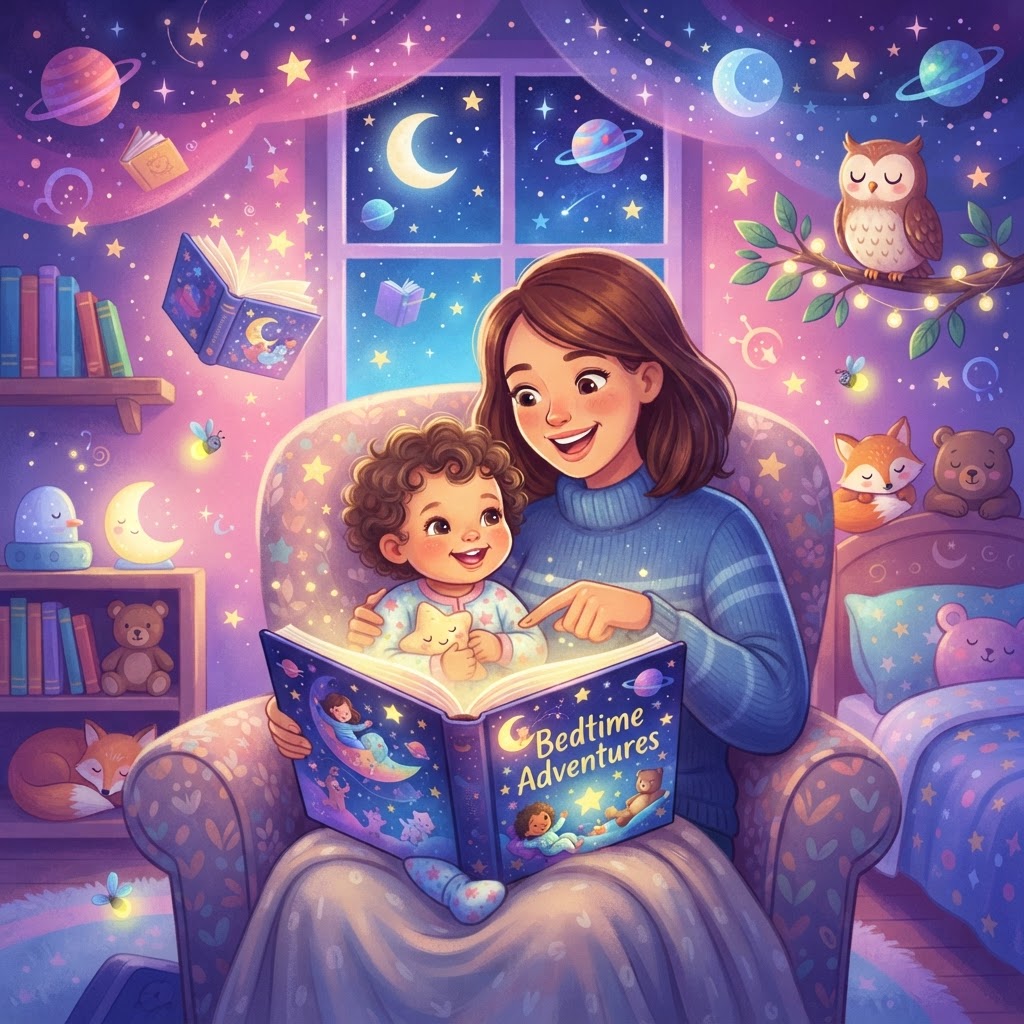
Choosing the best bedtime stories for 1 year olds is less about plot twists and more about comfort, rhythm, and connection. At this age, a great bedtime story helps your child feel safe, builds early language, and turns the end of the day into a predictable, loving routine. If you have ever searched for “bedtime bedtime stories” and felt overwhelmed by options, the good news is that 1-year-olds do best with simple, soothing stories that match their stage of development.
What developmental milestones shape bedtime stories for 1-year-olds?
At age 1, children are learning through repetition, sound, and familiar routines, so their bedtime stories should be simple and sensory-rich. Most 1-year-olds are building first words, understanding more than they can say, and becoming more aware of people, objects, and everyday patterns.
According to the CDC developmental milestones, many 1-year-olds are starting to use gestures, respond to simple words, and explore the world through movement and touch. That means stories land best when they include:
- familiar people like Mama, Daddy, Grandma, or a favorite toy
- simple actions such as waving, cuddling, splashing, or yawning
- repeated sounds and phrases
- clear emotional cues like happy, sleepy, cozy, or calm
This is also an age when separation anxiety can appear. A soothing story at bedtime can help your child move from active play to rest with a sense of security.
Why do bedtime stories work so well for 1-year-olds?
Bedtime stories appeal to 1-year-olds because they combine closeness, repetition, and a calming routine. Even when your child cannot follow a full plot, they can enjoy your voice, facial expressions, and the familiar flow of a nightly ritual.
The American Academy of Pediatrics has long encouraged reading aloud because it supports language, bonding, and early literacy skills. As HealthyChildren.org explains, shared reading helps children build vocabulary and emotional connection long before they can read on their own.
For 1-year-olds, the real magic of kids bedtime stories often comes from:
- hearing the same comforting words night after night
- anticipating what comes next
- connecting pictures or sounds with real-life experiences
- relaxing into a slower pace before sleep
In other words, a bedtime story is not just entertainment. It is a powerful cue that says, “You are safe, and the day is done.”
How long should bedtime stories for 1 year olds be?
For most 1-year-olds, the ideal bedtime story is very short: around 2 to 5 minutes, or one brief board book or mini story. Attention spans are still developing, so shorter is usually better than longer.
A one-year-old may happily listen to the same 60-word story every night but lose interest in a longer tale with multiple scenes. That is completely normal. The goal is not to finish a “big story.” The goal is to create a calm, successful reading moment.
A good length for bedtime stories for 1 year olds often includes:
- 50 to 150 words for a simple custom story
- 1 to 3 repeating phrases
- one clear setting, like a bedroom, garden, or moonlit sky
- a gentle ending, such as falling asleep or saying goodnight
If your child is overtired, even a one-minute story can be enough. What matters most is consistency.
Which themes are best for bedtime bedtime stories?
The best bedtime themes for 1-year-olds are familiar, gentle, and emotionally reassuring. Stories should help children wind down, not rev them up.
Research from ZERO TO THREE emphasizes that babies and toddlers learn best through warm back-and-forth interactions and everyday experiences. That is why the strongest story themes at this age are usually simple slices of life.
Try themes like these:
- Goodnight routines: bath time, pajamas, cuddles, lights dimming
- Animals: sleepy bunnies, quiet bears, baby owls, calm kittens
- Family love: hugs, kisses, and being tucked in safely
- Nature: stars, moon, soft rain, clouds, or a gentle breeze
- Familiar daily moments: waving bye-bye, finding a blanket, rocking in a chair
- Soft sensory details: warm milk, fuzzy pajamas, quiet footsteps, glowing nightlights
If your child loves animals, these animal bedtime stories can be a lovely fit. If they enjoy a tiny bit more movement without overstimulation, these gentle adventure stories can also work well.
What should parents avoid in kids bedtime stories for this age?
Avoid stories that are too scary, too busy, or too complicated for a 1-year-old to process calmly. At bedtime, overstimulation is the enemy.
Parents often assume more excitement equals more engagement, but bedtime is different. A story that works at 10 a.m. may be a poor choice at 7:30 p.m.
Try to avoid:
- Scary images or tension: monsters, getting lost, loud conflict
- Fast-paced plots: too many events, locations, or characters
- Overly bright or noisy themes: racing, shouting, chaotic silliness right before sleep
- Long moral lessons: 1-year-olds learn through tone and repetition, not lectures
- Abstract concepts: stories need to connect to what they know and feel
A helpful rule is this: if the story makes your child more alert than sleepy, save it for daytime.
What are five bedtime story ideas that work beautifully for 1-year-olds?
The best story ideas for 1-year-olds are tiny, tender, and easy to repeat. You do not need a complicated plot to create a memorable bedtime moment.
Here are five simple bedtime story ideas parents can use tonight:
-
1. The Sleepy Bunny Finds Her Blanket
A little bunny hops from room to room looking for her soft blue blanket. She finds it, snuggles close, and falls asleep under the moon. -
2. Goodnight, Little Toes
A gentle body-based story that says goodnight to toes, knees, tummy, nose, and sleepy eyes. This works especially well for toddlers who like naming body parts. -
3. Baby Bear’s Quiet Walk
Baby Bear takes a short evening walk with Mama Bear, sees stars, hears crickets, and returns to a warm bed. The calm pattern makes it perfect for repeat reading. -
4. The Moon Visits Maya
The moon peeks through the window and watches over a child as she puts on pajamas, hugs her teddy, and closes her eyes. Personalized stories like this feel especially comforting. -
5. Ollie and the Yawning Owl
A child meets a friendly owl who teaches everyone in the forest how to yawn, stretch, and settle down. This is a sweet way to model bedtime cues.
These story ideas are easy to personalize with your child’s name, favorite toy, or beloved animal.
How can parents make bedtime stories more engaging and personal?
Personalized bedtime stories are often more engaging because 1-year-olds respond strongly to familiar names, routines, and objects. When a story includes your child’s name, favorite stuffed animal, or real bedtime steps, it feels meaningful right away.
You do not need to be a professional storyteller. Small changes make a big difference:
- use your child’s name in the story
- repeat one key phrase, like “time to rest” or “goodnight, little star”
- pause to point at pictures or mimic a yawn
- keep your voice slow and warm
- end with the same final line each night
If you want help, you can create your own personalized bedtime story with InstaTales using your child’s interests, age, and bedtime routine. Parents who want a faster start can browse story templates, and favorite stories can be saved in your story library for easy re-reading. For more age-based reading ideas, the InstaTales blog is also a useful resource.
How can parents build a bedtime reading habit that actually sticks?
A bedtime reading habit sticks when it is short, predictable, and easy to repeat every night. For 1-year-olds, consistency matters more than variety.
The strongest routines usually follow the same order each evening:
- bath or wash-up
- pajamas
- dim lights
- one short story
- cuddle and sleep
The Harvard Center on the Developing Child highlights how responsive, repeated interactions shape early brain development. A calm reading ritual supports that process by pairing language with emotional safety.
If your child wiggles, turns pages too fast, or wants the same story again and again, that is not a failure. It is exactly how young toddlers learn. Repetition is not boring to them; it is reassuring.
Frequently Asked Questions
What makes bedtime stories for 1 year olds different from stories for older toddlers?
Stories for 1-year-olds should be shorter, simpler, and more repetitive than stories for 2- or 3-year-olds. They work best when they focus on familiar routines, soothing sounds, and one gentle idea.
How many bedtime stories should I read to my 1-year-old?
One short story is often enough, especially if your child is tired. If your child is calm and engaged, two brief stories can also work well.
Is repetition good for a 1-year-old at bedtime?
Yes, repetition is excellent for this age. Hearing the same words and story patterns helps young children feel secure and supports early language learning.
Can personalized AI stories be safe for 1-year-olds?
Yes, if parents choose simple, age-appropriate prompts and review the story before reading. Keep the language gentle, the plot calm, and the length short.
What if my child will not sit still for a story?
That is very common at age 1. Try shorter stories, let your child hold the book, and focus on a warm routine rather than perfect attention.
Are animal stories good bedtime stories for 1-year-olds?
Yes, animal stories are often ideal because they are familiar, soft, and easy to simplify. Sleepy bunnies, bears, owls, and kittens are especially popular choices.
Ready to Create a Personalized Bedtime Story?
Use our free AI bedtime story generator to create a personalized illustrated story for your child in 30 seconds — no credit card needed.
Popular story types:
Maya Rodriguez
Lead Content Editor & Early Literacy Specialist
Maya is a former early childhood educator and literacy specialist with over a decade of experience helping children develop a love of reading. She leads content at InstaTales, where she writes about the science of storytelling, child development, and how families can use personalized AI stories to build literacy and emotional resilience.
instatales.ai