Best brave bedtime stories for 4-year-olds
Discover the best brave bedtime stories for 4-year-olds — themes, tips, and story ideas that will delight your child at bedtime.
✦ Key Takeaways
- •Brave stories fit 4-year-olds well because children this age are learning to handle fear, try new things, and make sense of a bigger world.
- •The best stories for 4-year-olds match their attention span, emotional sensitivity, and growing love of pretend play.
- •Brave stories appeal to preschoolers because they make scary or uncertain moments feel manageable.
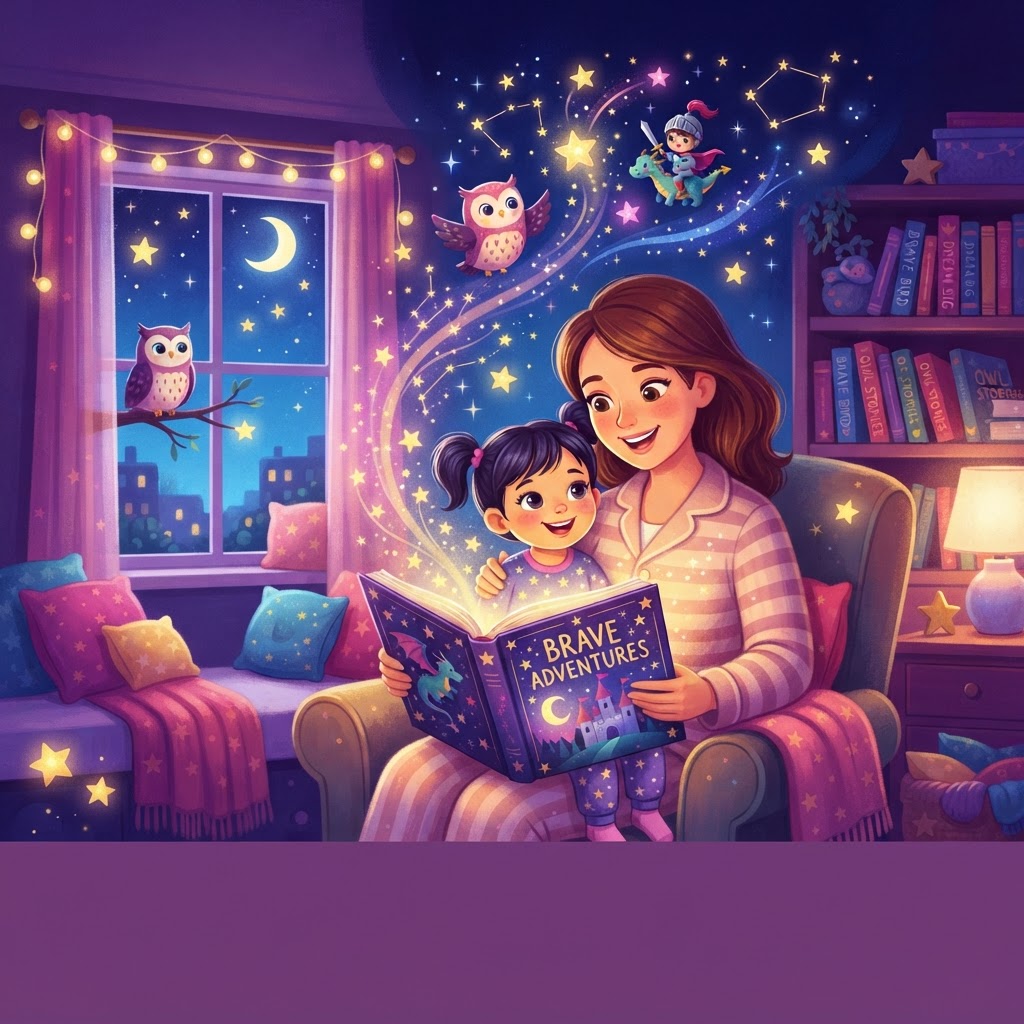
If your 4-year-old wants stories about lions, firefighters, dragons, or children who “aren’t scared anymore,” that is completely age-appropriate. Brave bedtime stories for 4 year olds work especially well because they let preschoolers explore big feelings from the safety of a warm, predictable bedtime routine.
At this age, children are curious, imaginative, and often more aware of fears than they were at three. A gentle brave story can help them practice confidence, problem-solving, and emotional language without becoming overstimulating before sleep. Below, you’ll find what makes bedtime stories for 4 year olds feel just right, what themes help most, what to avoid, and five story ideas you can use tonight.
Why are brave bedtime stories such a good fit for 4-year-olds?
Brave stories fit 4-year-olds well because children this age are learning to handle fear, try new things, and make sense of a bigger world. They often want reassurance that scary feelings are normal and manageable.
According to the CDC’s 4-year developmental milestones, many children at this age are growing quickly in language, imagination, and social understanding. They can tell simple stories, enjoy pretend play, and begin to understand that characters have feelings, goals, and problems.
That matters at bedtime. A brave main character gives your child a model they can understand:
- “I felt nervous.”
- “I asked for help.”
- “I tried anyway.”
- “I was proud afterward.”
This is why kids brave stories often resonate so deeply with preschoolers. They turn courage into something concrete, small, and relatable.
What developmental milestones matter when choosing bedtime stories for 4 year olds?
The best stories for 4-year-olds match their attention span, emotional sensitivity, and growing love of pretend play. At four, children can follow a simple plot, but they still need emotional clarity and a reassuring ending.
Many preschoolers are developing these key skills:
- Better understanding of simple cause and effect
- Stronger memory for repeated phrases and familiar routines
- More interest in friendship, fairness, and helping
- Increased awareness of fears like darkness, separation, or loud noises
- A richer imagination, which can be delightful but also intense
The American Academy of Pediatrics’ HealthyChildren.org preschool resources note that routines, connection, and language-rich experiences support healthy development. Bedtime reading checks all three boxes.
When choosing brave bedtime stories, look for stories that help your child name feelings and see a safe solution. If your child also enjoys stories with a clear lesson, you might like these moral bedtime stories for 4-year-olds.
Why do brave stories appeal so strongly to preschoolers?
Brave stories appeal to preschoolers because they make scary or uncertain moments feel manageable. A four-year-old rarely wants terror; they want tension that ends in comfort, mastery, or laughter.
At this age, common fears often include:
- The dark
- Sleeping alone
- New experiences
- Costumes, shadows, or imagined creatures
- Getting lost or separated
- Loud sounds like thunder
A well-crafted brave story says, in effect, “Something felt hard, but the child was not alone.” That message supports emotional resilience.
Research and guidance from the Center on the Developing Child at Harvard University consistently highlight how responsive relationships help children build coping skills. In story form, that means the bravest moments often include a trusted helper: a parent, grandparent, sibling, teacher, or kind animal friend.
How long should brave bedtime stories for 4 year olds be?
For most 4-year-olds, the ideal bedtime story length is about 5 to 10 minutes. That is usually long enough to feel satisfying but short enough to keep bedtime calm.
A simple structure works best:
- A clear setting
- One mild problem or fear
- One or two attempts to solve it
- A warm, successful ending
In word count, that often means roughly 500 to 900 words when read aloud slowly. Some children enjoy a bit more, especially if the story uses repetition. But if a story has too many twists, characters, or intense stakes, it can backfire at bedtime.
If your child gets silly or wired late in the evening, pair bravery with regulation. Our guide to calming bedtime stories for 4-year-olds can help you strike that balance.
What themes work best in brave stories for 4 year olds?
The best themes for brave stories at age four are small, everyday acts of courage. Preschoolers connect more with “I tried the slide” than “I saved the kingdom.”
Strong themes include:
- Trying something new: first swim lesson, first school performance, first sleepover at Grandma’s
- Speaking up: asking for help, saying “I don’t like that,” telling the truth
- Facing bedtime fears: shadows, thunder, creaky sounds, sleeping in their own bed
- Helping others: comforting a friend, rescuing a toy, being kind when someone feels scared
- Using tools for bravery: deep breaths, a song, a flashlight, a special phrase, a cuddly companion
These themes keep courage realistic. They also give parents practical language to use after the story: “You were brave like Maya when you walked into class even though you felt shy.”
Some families also like to mix brave themes with giggles. If that sounds like your child, these funny bedtime stories for 4-year-olds can soften anxiety while keeping the bedtime mood light.
What should parents avoid in brave bedtime stories?
Avoid stories that are too intense, confusing, or visually scary for a preschooler’s imagination. Four-year-olds often absorb emotional tone more strongly than adults expect.
Try to avoid:
- Graphic danger or threatening villains
- Long scenes of helplessness
- Punishment-heavy endings
- Fast, chaotic plots
- Ambiguous endings that leave the problem unresolved
- Shame-based messages like “big kids aren’t scared”
Instead, choose stories where fear is acknowledged kindly. The goal is not “don’t be scared.” The goal is “you can feel scared and still be safe, supported, and capable.”
This is especially important for highly imaginative children. A dragon can be fine; a dragon lurking outside the bedroom window may not be.
How can parents make brave bedtime stories more effective at night?
Brave stories work best when parents read them slowly, warmly, and with room for brief conversation. The story itself matters, but the shared reading experience matters just as much.
A few practical tips:
- Read with a calm voice and slower pacing than daytime reading
- Pause to name feelings: “He felt nervous before the cave”
- Link the story to real life gently: “That reminds me of when you tried soccer”
- End with reassurance: “And now everyone is safe, cozy, and ready for sleep”
- Re-read favorites for several nights in a row
Repetition is powerful at this age. Children do not always need new content; often, they need the same reassuring pattern until it feels internalized.
If you want stories tailored to your child’s fears, interests, and name, you can create your own personalized bedtime story with InstaTales. Personalized stories can be especially helpful when a child is working through a specific challenge, like being nervous about preschool, the dark, or trying something new.
What are five great brave bedtime story ideas for 4-year-olds?
The best story ideas for this age combine a gentle challenge, a lovable main character, and a comforting ending. Here are five simple ideas parents can use right away.
1. The little bunny who heard thunder
A bunny feels worried when a storm begins at bedtime. With Mama Bunny’s help, he learns to count between lightning and thunder, cuddle under a blanket, and discover that storms pass.
2. The shy lion at singing circle
A little lion wants to join the jungle singing circle but feels too nervous to roar. He starts with a whisper, then a hum, then one brave tiny roar that makes him beam with pride.
3. The child who checked the shadows
A preschooler notices “strange shapes” in the bedroom at night. With a flashlight and a grown-up, they discover the shapes are only a chair, a sweater, and a stuffed giraffe.
4. The dragon who asked for help
A friendly dragon wants to cross a wobbly bridge but feels unsure. Instead of pretending to be fearless, he asks a friend to go with him and learns that brave people ask for help too.
5. The bear who tried the big slide
A young bear feels excited and scared at the playground. After watching, breathing, and climbing one step at a time, she takes the slide and wants to try again tomorrow.
These simple plots also work beautifully for personalized storytelling. You can adapt the setting, add your child’s favorite animal, or include a familiar routine. If you want more skill-building inspiration, browse educational bedtime stories for 4-year-olds or explore more ideas on the InstaTales blog.
How can InstaTales help families create better brave bedtime stories?
InstaTales helps parents create brave stories that feel personal, age-appropriate, and repeatable. That matters because children often respond best when the story reflects their real world.
For example, you can create a story where:
- Your child is the main character
- The fear is realistic and gentle
- The ending is soothing and successful
- Favorite elements like dinosaurs, fairies, trucks, or kittens are included
This makes brave stories for 4 year olds more relevant and engaging. It also helps parents revisit the same emotional theme in fresh ways. Afterward, you can save favorite stories in your story library for easy re-reading on future bedtimes.
The goal is not to “fix” fear in one night. It is to give children practice with courage, comfort, and confidence, one cozy story at a time.
Frequently Asked Questions
What makes a bedtime story “brave” for a 4-year-old?
A brave bedtime story shows a character feeling nervous, getting support, and trying anyway. The challenge should be mild and the ending should feel safe and reassuring.
Are brave bedtime stories too stimulating before sleep?
Not usually, if they are gentle and comforting. Avoid high-stakes danger, loud action, or scary imagery, and choose stories with calm pacing and a peaceful ending.
How often should I read the same brave story?
Repeated reading is excellent for 4-year-olds. Hearing the same story several nights in a row can build familiarity, emotional security, and confidence.
Can personalized stories help with real bedtime fears?
Yes, personalized stories can be very effective because they reflect your child’s own experiences and interests. A story about your child facing the dark, thunder, or preschool nerves can feel more meaningful than a generic one.
What if my child asks for scary stories instead?
Many preschoolers want the feeling of suspense without truly scary content. Offer “brave, not frightening” stories that include a challenge, a helper, and a cozy ending.
Should brave stories always teach a lesson?
They do not need to feel preachy to be helpful. The best kids brave stories model courage through the plot, letting children absorb the message naturally.
Ready to Create a Personalized Bedtime Story?
Use our free AI bedtime story generator to create a personalized illustrated story for your child in 30 seconds — no credit card needed.
Popular story types:
Maya Rodriguez
Lead Content Editor & Early Literacy Specialist
Maya is a former early childhood educator and literacy specialist with over a decade of experience helping children develop a love of reading. She leads content at InstaTales, where she writes about the science of storytelling, child development, and how families can use personalized AI stories to build literacy and emotional resilience.
instatales.ai