Best calming bedtime stories for 4-year-olds
Discover the best calming bedtime stories for 4-year-olds — themes, tips, and story ideas that will delight your child at bedtime.
✦ Key Takeaways
- •Bedtime stories are especially helpful for 4-year-olds because they match how preschoolers learn, connect, and calm down.
- •Calming stories work well for 4-year-olds because they help children shift from active play to quiet connection.
- •The ideal story length for most 4-year-olds is about 5 to 10 minutes.
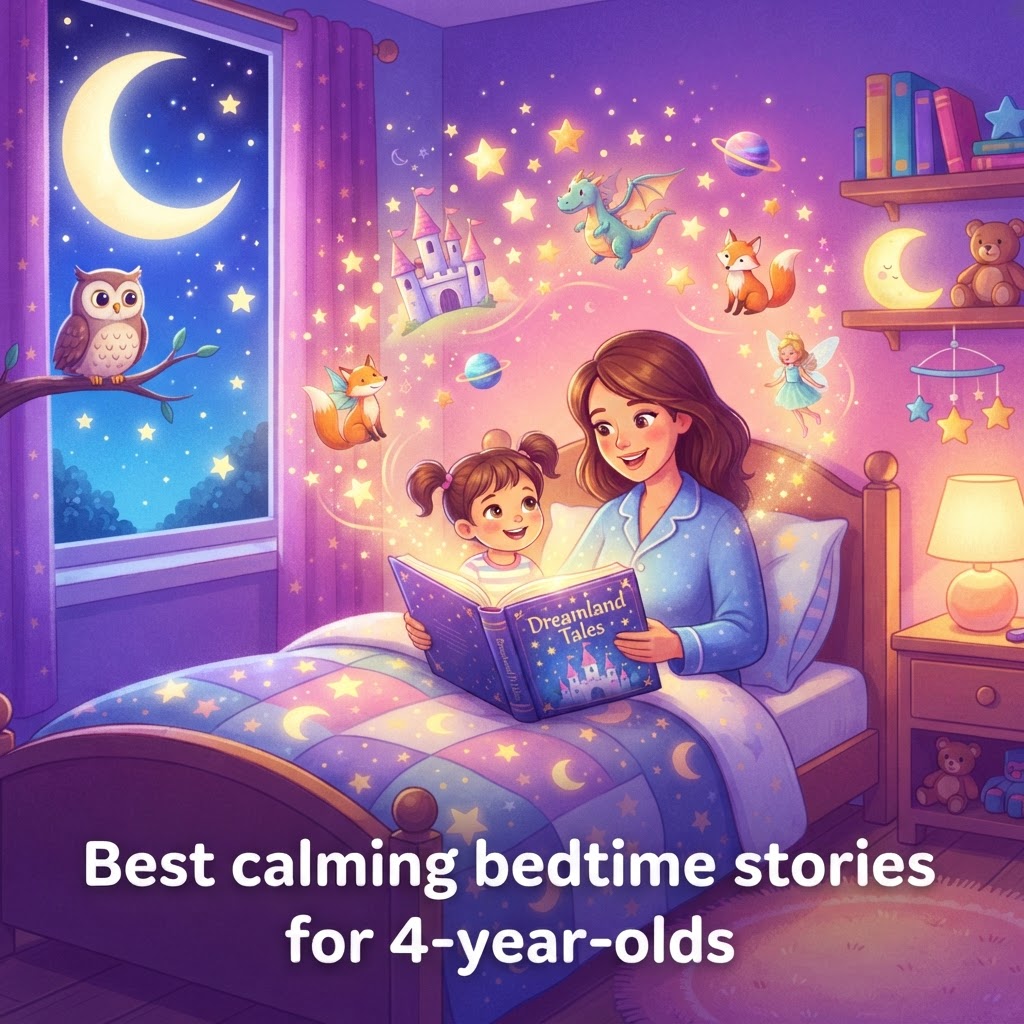
Finding the right bedtime stories for 4 year olds can make evenings feel softer, smoother, and far less rushed. At this age, children are full of imagination, but they also still need help settling their bodies and minds. The best calming bedtime stories meet both needs: they feel magical enough to hold a preschooler’s attention, yet gentle enough to support sleep. In this guide, you’ll find what makes calming stories for 4 year olds work so well, how long they should be, which themes help children unwind, what to avoid, and five soothing story ideas you can use tonight.
What makes bedtime stories especially helpful for 4-year-olds?
Bedtime stories are especially helpful for 4-year-olds because they match how preschoolers learn, connect, and calm down. At age 4, many children can follow a short plot, remember repeated phrases, and enjoy talking about feelings and daily routines.
According to the CDC’s developmental milestones for 4-year-olds, children this age often use longer sentences, engage in pretend play, and tell simple stories. That means they are ready for richer story experiences than toddlers, but they still benefit from clear structure and predictable endings.
A good bedtime story also supports attachment. When a parent reads in a calm voice, pauses for cuddles, and repeats familiar phrases, the child gets both language input and emotional reassurance. That combination matters at the end of the day, when many children are tired but not yet fully settled.
For many families, kids calming stories become part of a predictable routine. The American Academy of Pediatrics notes that consistent bedtime routines help children prepare for sleep and feel secure, especially in the preschool years. A story is often one of the easiest and most enjoyable parts of that routine.
Why do calming stories work so well at this age?
Calming stories work well for 4-year-olds because they help children shift from active play to quiet connection. They slow the pace of the evening without demanding too much effort from a tired child.
Four-year-olds often have big feelings, busy imaginations, and a growing need for independence. A soothing story gives those feelings somewhere safe to go. Instead of “stop moving” or “go to sleep,” the story gently leads them toward rest through rhythm, repetition, and imagery.
This age also loves patterns. Repeated lines such as “the moon glowed softly” or “everyone was cozy and safe” can have a regulating effect. Familiar story structures help children predict what comes next, and predictability is calming.
There is also a sensory piece. Slower language, lower stakes, and peaceful settings reduce stimulation. Organizations like Zero to Three emphasize that young children sleep best when adults support them with consistent, soothing routines. A calm story is one of the most effective tools for that transition.
How long should bedtime stories for 4-year-olds be?
The ideal story length for most 4-year-olds is about 5 to 10 minutes. In word count, that is often around 400 to 800 words, depending on how interactive your reading style is.
A story that is too short may not fully help your child unwind. A story that is too long can wake them up again, especially if they start asking lots of questions or the plot becomes more exciting.
A good rule of thumb is to watch your child, not just the clock. The right story length usually means:
- your child stays engaged without getting silly or restless
- the plot has one gentle problem and one simple resolution
- the ending feels quiet, safe, and complete
- your child seems sleepier by the end, not more alert
If your child is particularly tired, a very short story may be perfect. If they need more transition time, you can read one calming story followed by a brief lullaby or cuddle. The National Sleep Foundation also highlights that preschoolers benefit from enough nighttime sleep and a consistent wind-down routine.
Which themes make the best calming bedtime stories?
The best calming themes for preschoolers are gentle, familiar, and sensory-soft. Stories do not need to be boring to be soothing; they simply need low tension and a peaceful emotional tone.
Some of the most effective themes include:
- Nature at night: moonlight, stars, breezes, sleepy gardens, quiet forests
- Animal routines: a bunny getting cozy, a bear settling into a cave, a kitten finding the warmest blanket
- Comfort and home: bedtime rituals, family closeness, favorite toys, safe spaces
- Slow adventures: a floating cloud ride, a quiet boat trip, a lantern walk with a trusted grown-up
- Gentle wonder: soft magic, glowing fireflies, friendly stars, sleepy castles
These themes work because they offer novelty without threat. They give a child something lovely to picture, while keeping their nervous system out of “alert mode.”
If your child already loves a specific interest, you can still make it calming. For example, some children relax with gentle fairy tale stories, while others enjoy quiet ocean adventures. Even bigger interests can be softened with the right tone, such as peaceful dinosaur bedtime tales.
What should parents avoid in kids calming stories?
Parents should avoid anything that raises tension, speeds up the pace, or leaves the ending unresolved. A bedtime story should help the body slow down, not create one more emotional hurdle before sleep.
Common things to avoid include:
- Scary imagery: monsters, getting lost, loud storms, dark shadows with unclear meaning
- Fast-paced action: racing, chasing, battling, or constant problem-solving
- Overly silly endings: lots of chaos or laughter can be fun, but not always calming right before sleep
- Heavy lessons: bedtime is not the best time for strong moral pressure or big correction
- Unresolved conflict: stories that end with “to be continued” can keep children mentally activated
It also helps to avoid language that sounds sharp or urgent. A phrase like “hurry, quick, run” feels very different in the body than “slowly, gently, softly.”
This does not mean every story must be whisper-quiet. Some children actually settle best after a little lightness first. If that sounds like your child, you might use playful stories earlier in the evening, then switch to a calmer read. For example, save funny bedtime stories for 4-year-olds for pre-bath or post-dinner, rather than the final minutes before lights out.
Which calming story ideas can you try tonight?
Simple story ideas often work better than complicated plots at bedtime. The best ones give your child a peaceful image to carry into sleep.
1. The sleepy little cloud
A small cloud drifts across the sky looking for the coziest place to rest. Along the way, it floats over quiet rooftops, moonlit trees, and yawning animals before settling beside the stars.
2. The bunny who packed a bedtime basket
A bunny gathers tiny comforting things for sleep: a soft leaf blanket, a warm pebble, a goodnight song, and a moonbeam. Each item helps another forest friend get ready for bed too.
3. The boat on the quiet pond
A child and a friendly duck ride slowly across a still pond at dusk. They notice gentle ripples, sleepy frogs, and lantern-like fireflies before drifting back home.
4. The teddy bear’s nighttime check-in
A teddy bear walks through the bedroom making sure everything is cozy. The blanket is smooth, the pillow is puffed, the moon is shining, and every toy is safe and resting.
5. The star who learned to shine softly
One tiny star wants to help children sleep, not wake them up. It learns to glow in a calm, golden way and sends peaceful dreams to homes below.
These story shapes are flexible. If your child loves rockets, castles, or sea creatures, you can keep the same soothing structure and simply change the setting. Some children may even enjoy calm versions of bigger themes, such as dreamy sky journeys or slow space walks.
How can parents use InstaTales to create personalized calming stories for 4-year-olds?
InstaTales can help parents create calming stories that feel personal, familiar, and bedtime-ready. Personalized stories often hold a 4-year-old’s attention better because the child hears their own name, favorite animal, or beloved comfort object inside the story.
For bedtime, personalization works best when you keep the prompt simple and soothing. You might include:
- your child’s name
- one favorite theme, like bunnies, moonlight, or the ocean
- one calm emotion, such as cozy, peaceful, or sleepy
- a gentle ending, like “falls asleep safely at home”
With InstaTales, you can create your own personalized bedtime story in minutes and shape it around your child’s current interests. If you want a quick starting point, the ready-made story templates can help you build a calm bedtime flow without starting from scratch.
It is also helpful to save the stories your child asks for again and again. Repetition is soothing at this age, so keeping favorites in your story library makes bedtime easier on busy evenings.
For more inspiration, you can browse the InstaTales blog and mix calming themes with whatever your child already loves. The goal is not to impress your child with a dramatic plot. It is to help them feel seen, safe, and ready to sleep.
Frequently Asked Questions
What are the best calming stories for 4 year olds?
The best calming stories for 4 year olds are short, gentle, and predictable. Stories about sleepy animals, nighttime nature, cozy routines, and soft magic usually work very well.
How long should bedtime stories for 4 year olds be?
Most 4-year-olds do best with stories that last about 5 to 10 minutes. That is long enough to settle in, but short enough to avoid overstimulation.
Why do some children get more excited during bedtime stories?
Some stories are too funny, suspenseful, or action-filled for the final part of the bedtime routine. If your child gets energized, try choosing slower language, fewer plot twists, and a more peaceful ending.
Can personalized stories help children sleep better?
Yes, they often can. Personalized stories feel familiar and emotionally safe, which can make it easier for children to stay engaged and relax at the same time.
What themes should I avoid at bedtime?
Avoid scary characters, loud adventures, chasing scenes, and unresolved endings. These elements can keep a child thinking, worrying, or asking for reassurance after the story ends.
Is it okay to read the same calming bedtime story every night?
Yes. Repetition is comforting for preschoolers, and hearing the same story again can support language development, emotional security, and an easier bedtime transition.
Ready to Create a Personalized Bedtime Story?
Use our free AI bedtime story generator to create a personalized illustrated story for your child in 30 seconds — no credit card needed.
Popular story types:
Maya Rodriguez
Lead Content Editor & Early Literacy Specialist
Maya is a former early childhood educator and literacy specialist with over a decade of experience helping children develop a love of reading. She leads content at InstaTales, where she writes about the science of storytelling, child development, and how families can use personalized AI stories to build literacy and emotional resilience.
instatales.ai