Best fairy tales bedtime stories for 4-year-olds
Discover the best fairy tales bedtime stories for 4-year-olds — themes, tips, and story ideas that will delight your child at bedtime.
✦ Key Takeaways
- •The most important milestones to consider are language growth, imagination, emotional awareness, and a still-developing sense of fear and reality.
- •Fairy tales appeal to 4-year-olds because they blend wonder with structure.
- •For most 4-year-olds, the ideal bedtime story length is 5 to 10 minutes, or roughly 500 to 900 words.
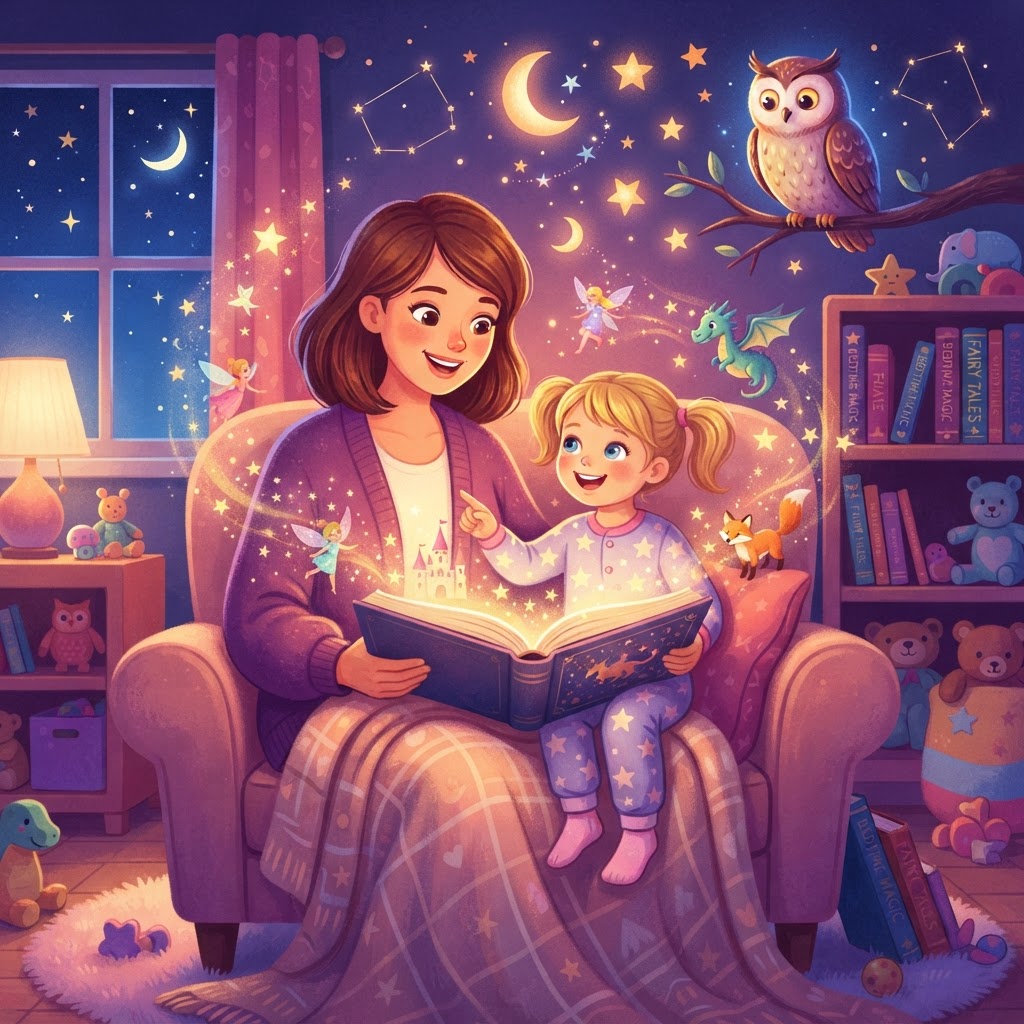
If you are searching for the best fairy-tales stories for 4 year olds, start with one simple truth: at this age, children love stories that feel magical, safe, and easy to follow. The best bedtime stories for 4 year olds use gentle adventure, clear emotions, and comforting endings to help children wind down while still feeding their growing imagination.
Fairy tales are especially powerful at this age because 4-year-olds are learning how the world works through pretend play, repetition, and simple cause-and-effect. When chosen well, fairy-tales bedtime stories can build vocabulary, support emotional growth, and turn bedtime into a calm, connected part of the day.
What developmental milestones matter most when choosing fairy tales bedtime stories for 4-year-olds?
The most important milestones to consider are language growth, imagination, emotional awareness, and a still-developing sense of fear and reality. A 4-year-old can follow a simple plot, understand basic feelings, and enjoy pretend worlds, but may still be sensitive to scary images or complicated conflict.
According to the CDC’s 4-year developmental milestones, many children at this age speak in longer sentences, engage in imaginative play, and can talk about events from their day. That means they are ready for stories with a beginning, middle, and end, but they still do best with familiar patterns and clear emotional cues.
When picking kids fairy-tales stories, look for stories that match these common 4-year-old strengths:
- They enjoy pretend play and magical thinking.
- They understand simple problems and solutions.
- They can name basic emotions like happy, sad, scared, or proud.
- They benefit from repetition and predictable story structure.
- They may take story details very literally, especially near bedtime.
This is also the age when bedtime stories can support “serve and return” interaction, which helps early brain development, as explained by the Center on the Developing Child at Harvard University. In practical terms, that means pausing to ask, “How do you think the bunny feels?” or “What would you do next?” can be just as valuable as the story itself.
Why do fairy tales stories appeal so strongly to 4-year-olds?
Fairy tales appeal to 4-year-olds because they blend wonder with structure. Children this age want magic, but they also want reassurance that the story world makes sense and ends safely.
A classic fairy-tale pattern is perfect for preschoolers: a kind hero, a small problem, a magical helper, and a happy ending. That structure feels satisfying because it is easy to understand. It also gives children a safe way to explore big ideas like bravery, jealousy, kindness, and trying again.
Fairy tales are also rich in the things 4-year-olds naturally love:
- Repetition such as “three wishes” or “three chances”
- Talking animals and enchanted objects
- Clear “good choice” versus “bad choice” moments
- Gentle suspense followed by comfort
- Imaginative settings like forests, castles, clouds, and moonlit gardens
The American Academy of Pediatrics has long emphasized that reading aloud supports language, bonding, and early literacy. Fairy tales add another layer: they help children organize emotions into story form, which is one reason they remain such strong bedtime stories for 4 year olds.
How long should bedtime stories for 4-year-olds be?
For most 4-year-olds, the ideal bedtime story length is 5 to 10 minutes, or roughly 500 to 900 words. That is long enough to feel satisfying, but short enough to keep bedtime calm.
Some children can handle longer stories, especially if they are already relaxed. But many 4-year-olds lose track of the plot if a story has too many characters, too many twists, or long descriptive passages. The goal at bedtime is not to impress them with complexity. The goal is to help them feel secure, connected, and ready for sleep.
A good bedtime fairy tale for this age usually includes:
- One main character
- One clear problem
- One or two supporting characters
- A soothing resolution
- A calm final image, such as cuddling, resting, or going home
If your child asks for “one more story,” it is often better to choose two short fairy tales rather than one very long one. That keeps the bedtime rhythm steady and avoids overtiredness.
Which fairy tale themes work best for 4-year-olds?
The best fairy tale themes for 4-year-olds are gentle, hopeful, and easy to connect to everyday life. At this age, children respond especially well to stories about kindness, belonging, bravery, and small acts of magic.
Here are the most effective themes for fairy-tales stories for 4 year olds:
-
Kindness and helping others
A fairy, child, or animal notices someone in need and offers help. This is easy for 4-year-olds to understand and copy. -
Small bravery
The hero is nervous but still tries. At this age, bravery should look like speaking up, crossing a bridge, or sleeping in a big-kid bed, not battling dangerous villains. -
Friendship and cooperation
Stories about sharing, waiting, apologizing, and working together are especially relevant. If your child loves these themes, explore more friendship stories for 4-year-olds. -
Gentle magic and wonder
A glowing lantern, a whispering tree, or a sleepy dragon feels magical without becoming intense. Families who want more of that dreamy tone may enjoy these magic-themed bedtime stories. -
Nature and seasons
Fairy tales set in gardens, moonlit forests, or spring meadows feel soothing and sensory-rich. You can also find inspiration in these nature bedtime stories for preschoolers. -
Problem-solving with a happy ending
A lost crown, a missing star, or a shy unicorn gives a child something to follow without creating real fear.
The best themes are the ones that let your child feel capable by the end of the story.
What should parents avoid in kids fairy-tales stories at this age?
Parents should avoid stories that are overly scary, emotionally confusing, or too stimulating right before sleep. A 4-year-old may enjoy suspense during the day, but bedtime usually calls for gentler storytelling.
Some classic fairy tales include dark material that many preschoolers are not ready for, especially in their original form. You do not need to avoid fairy tales completely. You just need child-friendly adaptations.
Try to limit or skip:
- Threatening villains with graphic details
- Children being abandoned or trapped without reassurance
- Long chase scenes or high-stakes danger
- Punishments that feel harsh or frightening
- Storylines with sarcasm or complicated moral ambiguity
- Stereotypes about beauty, gender, or “goodness” that go unexamined
A simple rule helps: if a story is likely to come back as a bedtime fear, save it for later.
Parents should also watch for overstimulation. Fast pacing, loud sound effects, and too many cliffhangers can make it harder for a child to settle. For bedtime, choose warmth over excitement.
What are five great fairy-tales bedtime story ideas for 4-year-olds?
The best story ideas for this age are simple, magical, and emotionally safe. They should feel fresh enough to spark interest, while still using the familiar patterns preschoolers love.
1. The Little Fox and the Moon Lantern
A small fox is nervous about the dark, so a friendly moon fairy lends him a lantern that glows brighter each time he does something brave. By the end, he learns that courage can feel small and quiet.
2. The Sleeping Garden Gate
A child discovers that the garden gate only opens for someone who says kind words to the flowers. Inside is a soft, magical world where petals whisper goodnight.
3. The Princess Who Lost Her Laugh
A princess misplaces her laugh in the castle wind. With help from a bird, a baker, and a sleepy dragon, she finds it again through moments of joy and kindness.
4. The Tiny Giant’s Bedtime Wish
A tiny giant worries he is too big for lullabies and too small for giant adventures. A cloud fairy helps him find a bedtime song made just for him.
5. The Three Raindrop Fairies
Three raindrop fairies help a child water a thirsty rainbow before sunrise. Each fairy brings one lesson: patience, sharing, and hope.
If you want stories like these tailored to your child’s name, favorite animal, or bedtime challenge, you can create your own personalized bedtime story with InstaTales. Personalized stories often work especially well at age 4 because children are deeply engaged by seeing themselves inside the adventure.
How can parents make fairy-tales bedtime stories more calming and personal?
Parents can make bedtime fairy tales more effective by keeping them interactive, predictable, and personal. The calmer and more familiar the routine feels, the more likely the story is to soothe rather than excite.
A few practical strategies work well:
- Read in a slower, softer voice than you use during the day.
- Replace intense endings with peaceful ones.
- Use your child’s name in retellings or personalized stories.
- Pause to let your child predict simple next steps.
- End with a repeated closing line like, “And everyone felt safe, cozy, and ready for sleep.”
Personalization is especially useful for common age-4 concerns, such as fear of the dark, separation at preschool, making friends, or trying new things. With InstaTales, parents can create fairy tales that match those exact needs, then save favorites in your story library for easy rereading. Repetition is not a downside at this age. It is often the reason a story becomes comforting.
If your child likes variety, it can also help to rotate themes across the week. One night might be fairy tales, while another might feature dragons, space, or forest animals. This keeps bedtime fresh without losing structure.
Frequently Asked Questions
Are fairy tales good bedtime stories for 4-year-olds?
Yes, as long as they are age-appropriate. The best fairy tales for 4-year-olds use gentle magic, simple plots, and reassuring endings.
How scary is too scary for a 4-year-old at bedtime?
If a story causes repeated questions, clinginess, or bedtime fears, it is probably too intense. Save darker tales for later and choose calmer adaptations before sleep.
What is the ideal length for bedtime stories for 4 year olds?
Most 4-year-olds do best with stories that last about 5 to 10 minutes. That usually means one short story or two very short ones.
Should I read classic fairy tales or modern versions?
Modern retellings are often the better choice for bedtime. They usually keep the magic of the original while removing dark or confusing details.
Can personalized AI fairy tales help preschoolers?
Yes, when used thoughtfully. Personalized stories can increase attention and emotional connection, especially when the plot stays simple, warm, and age-appropriate.
How often should I repeat the same bedtime story?
As often as your child wants, within reason. Repetition helps many preschoolers feel secure and supports memory, language, and emotional comfort.
Ready to Create a Personalized Bedtime Story?
Use our free AI bedtime story generator to create a personalized illustrated story for your child in 30 seconds — no credit card needed.
Popular story types:
Maya Rodriguez
Lead Content Editor & Early Literacy Specialist
Maya is a former early childhood educator and literacy specialist with over a decade of experience helping children develop a love of reading. She leads content at InstaTales, where she writes about the science of storytelling, child development, and how families can use personalized AI stories to build literacy and emotional resilience.
instatales.ai