Best magic bedtime stories for 4-year-olds
Discover the best magic bedtime stories for 4-year-olds — themes, tips, and story ideas that will delight your child at bedtime.
✦ Key Takeaways
- •Four-year-olds are developmentally primed for imaginative stories.
- •Magic stories match how many 4-year-olds think and play.
- •For most 4-year-olds, the sweet spot is about 5 to 10 minutes.
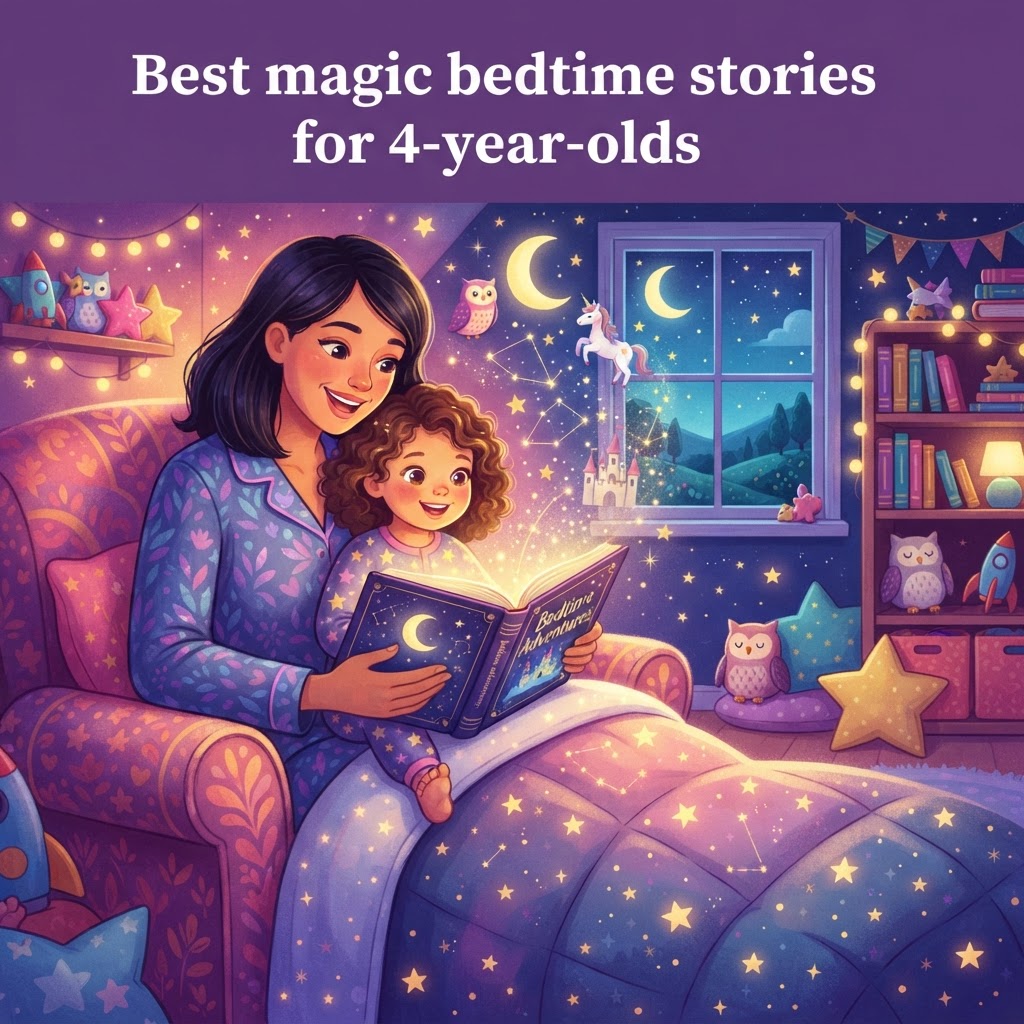
If you are looking for magic bedtime stories for 4-year-olds, you are choosing a wonderful fit for this stage of childhood. Four-year-olds are imaginative, chatty, and deeply drawn to stories where ordinary bedtime moments turn sparkly, surprising, and safe. In this guide, you will find what makes bedtime stories for 4 year olds work so well, how long they should be, which magical themes are best, what to avoid at night, and five story ideas you can use right away. You will also see how InstaTales can help you create your own personalized bedtime story when your child wants a hero who looks, talks, and dreams a little like them.
What makes 4-year-olds ready for magic bedtime stories?
Four-year-olds are developmentally primed for imaginative stories. At this age, many children love pretend play, understand simple story sequences, and can follow a problem-and-solution plot without getting lost.
According to the CDC’s 4-year developmental milestones, many children at this age use longer sentences, engage in make-believe, and show growing social awareness. That matters at bedtime. It means they can enjoy a story about a sleepy dragon, a moonlit wand, or a pajama fairy while still tracking what happens next.
In practice, most magic stories for 4 year olds work best when they include:
- A clear beginning, middle, and end
- One gentle challenge
- A comforting adult, animal, or magical helper
- Repetition or predictable phrases
- A calm, happy resolution
This is also the age when some children start to test fears through play and stories. Magic can help them feel brave, as long as the story stays reassuring and does not become too intense.
Why do magic stories appeal so strongly to 4-year-olds?
Magic stories match how many 4-year-olds think and play. Children this age often blend reality and imagination in healthy, creative ways, so a talking pillow or glowing bedtime cloud feels delightful rather than strange.
Development experts at Harvard’s Center on the Developing Child emphasize that back-and-forth interaction and shared storytelling support language, attention, and emotional connection. When a parent reads kids magic stories, the child is not just listening. They are predicting, imagining, asking questions, and building meaning with you.
Magic also gives children something bedtime especially needs: a sense of gentle control. A child who cannot make the sun stay up can still imagine a tiny spell that helps stuffed animals settle down. That kind of story can ease the shift from busy play to sleep.
Parents often notice that magical bedtime tales help with:
- Wonder and curiosity
- Emotional safety
- Confidence in small challenges
- Language growth through repeated phrases
- Smoother bedtime transitions
If your child already loves make-believe, they may also enjoy related themes like adventure tales for this age or animal bedtime favorites.
How long should bedtime stories for 4 year olds be?
For most 4-year-olds, the sweet spot is about 5 to 10 minutes. That usually means roughly 600 to 1,000 words, depending on pacing, pictures, and how often your child stops to comment.
The goal at bedtime is not to fit in the longest possible story. It is to help your child feel calm, connected, and ready for sleep. A shorter story with rhythm and warmth often works better than a long, exciting plot with too many twists.
A good bedtime length usually includes:
- One main event
- Two or three memorable magical details
- Repeated comforting language
- A sleepy ending
If your child is newly 4 or still prefers very simple tales, you may want to borrow ideas from magic stories for 3-year-olds. If they are an older 4 and crave more plot, you can gently stretch the story over two nights.
Which themes work best in magic bedtime stories?
The best themes for 4-year-olds are comforting, imaginative, and easy to understand. At bedtime, magic should feel cozy rather than chaotic.
Here are the themes I recommend most often to parents:
-
Friendly magical helpers
Think sleepy fairies, kind dragons, moon cats, or tiny star keepers. A helper gives the child someone safe to trust. -
Everyday objects with a magical twist
Pajamas that glow softly, a toothbrush that sings, or a blanket that remembers dreams. Familiar objects keep the story grounded. -
Nature magic
Fireflies, gardens, rainbows, clouds, and talking trees feel soothing and visually rich for this age. -
Small bravery stories
Magic can support a child who feels nervous about the dark, sleeping alone, or tomorrow’s new experience. -
Kindness as a superpower
A child smiles, shares, or helps someone, and that act creates the “magic.” This is simple, meaningful, and easy for 4-year-olds to grasp.
These themes work especially well because they stay close to a young child’s world. They also leave room for personalization. With InstaTales, you can use story templates and adapt them around your child’s favorite color, toy, pet, or bedtime routine.
What should parents avoid in kids magic stories at bedtime?
Avoid stories that overstimulate, confuse, or frighten your child right before sleep. The best bedtime magic is gentle, clear, and emotionally safe.
The American Academy of Pediatrics supports daily shared reading because it builds language and connection, but the type of story matters at night. A bedtime story should lower stress, not raise it.
Try to avoid:
-
Scary villains or chase scenes
Mild tension is fine. Intense danger is not ideal before bed. -
Too many magical rules
Four-year-olds can get confused if a story has a complicated fantasy system. -
Fast pacing
Constant surprises can make a child more alert when you want them winding down. -
Shaming lessons
Stories should guide gently, not make a child feel “bad” or “naughty.” -
Open-ended or unsettling endings
Bedtime stories need closure. The child should know everyone is safe and it is time to rest.
If your child is sensitive, pay attention to the images that stay with them after the book is closed. Even a magical storm or grumpy giant may be too much for some children. Follow your child, not just the age label.
What are five great magic bedtime story ideas for 4-year-olds?
The best story ideas for this age are simple, visual, and soothing. Each one should center on one magical moment and end with comfort.
1. The Moonlight Pajama Spell
A child puts on pajamas covered in tiny silver stars. Each star lights up when they do one calm bedtime step, like brushing teeth, taking deep breaths, or hugging a teddy. By the end, the room glows softly and sleep arrives like a gentle cloud.
2. The Little Wand in the Toy Box
A child finds a tiny wand that only works for kind actions. When they tuck in a stuffed rabbit, help a sleepy bear, and whisper goodnight to their room, the wand creates warm sparkles. The final spell helps everyone drift to sleep.
3. The Sleepy Dragon’s Missing Yawn
A baby dragon cannot fall asleep because its biggest yawn has gone missing. A child helps search under pillows, behind curtains, and up near the moon. When they finally find the yawn hiding in a fluffy cloud, both child and dragon fall asleep together.
4. The Garden That Blooms at Bedtime
Each flower in a moon garden opens only when someone says a kind memory from the day. A child walks through the garden with a firefly guide, sharing one happy moment at a time. As the last flower blooms, the stars dim and the whole garden rests.
5. The Pocket Full of Quiet Magic
A child discovers they have an invisible pocket that fills with calm things: a feather, a hum, a sleepy breeze, and a golden goodnight wish. Whenever bedtime feels hard, they can reach into the pocket and pull out a little peace. It is a lovely choice for children who need extra reassurance.
These ideas also work well when personalized with a child’s name, favorite stuffed animal, or bedtime concern. After you generate one, you can save it in your story library for easy rereading on future nights.
How can parents use personalized magic stories with InstaTales?
Personalized stories can make bedtime feel more engaging and more emotionally relevant. When a child hears their own name, favorite toy, or real bedtime routine in a story, they often listen more closely and connect more deeply.
That does not mean every story needs to be fully custom. Sometimes small details are enough: your child’s favorite pajamas, a beloved grandparent, or the family cat as the magical helper. InstaTales makes it easy to create your own personalized bedtime story in minutes, especially when you want a fresh tale without losing the calm rhythm that bedtime needs.
A few practical ways parents use personalized magic bedtime stories:
- Turn a bedtime struggle into a gentle magical plot
- Reuse favorite characters in new calming stories
- Save winning stories in your story library
- Explore more age-based ideas on the InstaTales blog
If you have younger children too, it can help to compare what works across ages, including magic stories for 2-year-olds. The biggest difference is that 4-year-olds can usually handle a bit more plot, dialogue, and emotional nuance.
Frequently Asked Questions
Are magic bedtime stories good for 4-year-olds?
Yes. Most 4-year-olds love imaginative play, so magical stories feel natural and engaging. When the tone is calm and reassuring, they can support language, connection, and smoother bedtime routines.
How scary is too scary for bedtime?
If a story leaves your child worried, clingy, or too alert to settle, it is too scary for bedtime. Keep nighttime stories gentle, predictable, and clearly safe by the end.
What if my child wants the same story every night?
That is very normal. Repetition helps 4-year-olds feel secure and lets them master language, sequence, and emotional expectations. You can keep the same core story and swap one tiny detail to keep it fresh.
Can personalized stories help with bedtime resistance?
Often, yes. A story that includes your child’s name, favorite toy, or bedtime challenge can feel more meaningful and cooperative. It works best when the story guides gently rather than trying to “fix” behavior in a heavy-handed way.
How often should parents read bedtime stories to 4-year-olds?
Daily is ideal, even if the story is short. A consistent read-aloud routine supports language and closeness, and it signals to your child that the day is ending in a safe, predictable way.
Ready to Create a Personalized Bedtime Story?
Use our free AI bedtime story generator to create a personalized illustrated story for your child in 30 seconds — no credit card needed.
Popular story types:
Maya Rodriguez
Lead Content Editor & Early Literacy Specialist
Maya is a former early childhood educator and literacy specialist with over a decade of experience helping children develop a love of reading. She leads content at InstaTales, where she writes about the science of storytelling, child development, and how families can use personalized AI stories to build literacy and emotional resilience.
instatales.ai