Best animals bedtime stories for 4-year-olds
Discover the best animals bedtime stories for 4-year-olds — themes, tips, and story ideas that will delight your child at bedtime.
✦ Key Takeaways
- •At age 4, children usually do best with stories that are simple, imaginative, and emotionally clear.
- •Animals bedtime stories work beautifully for 4-year-olds because they combine familiarity, imagination, and emotional safety.
- •For most 4-year-olds, the ideal bedtime story lasts about 5 to 10 minutes.
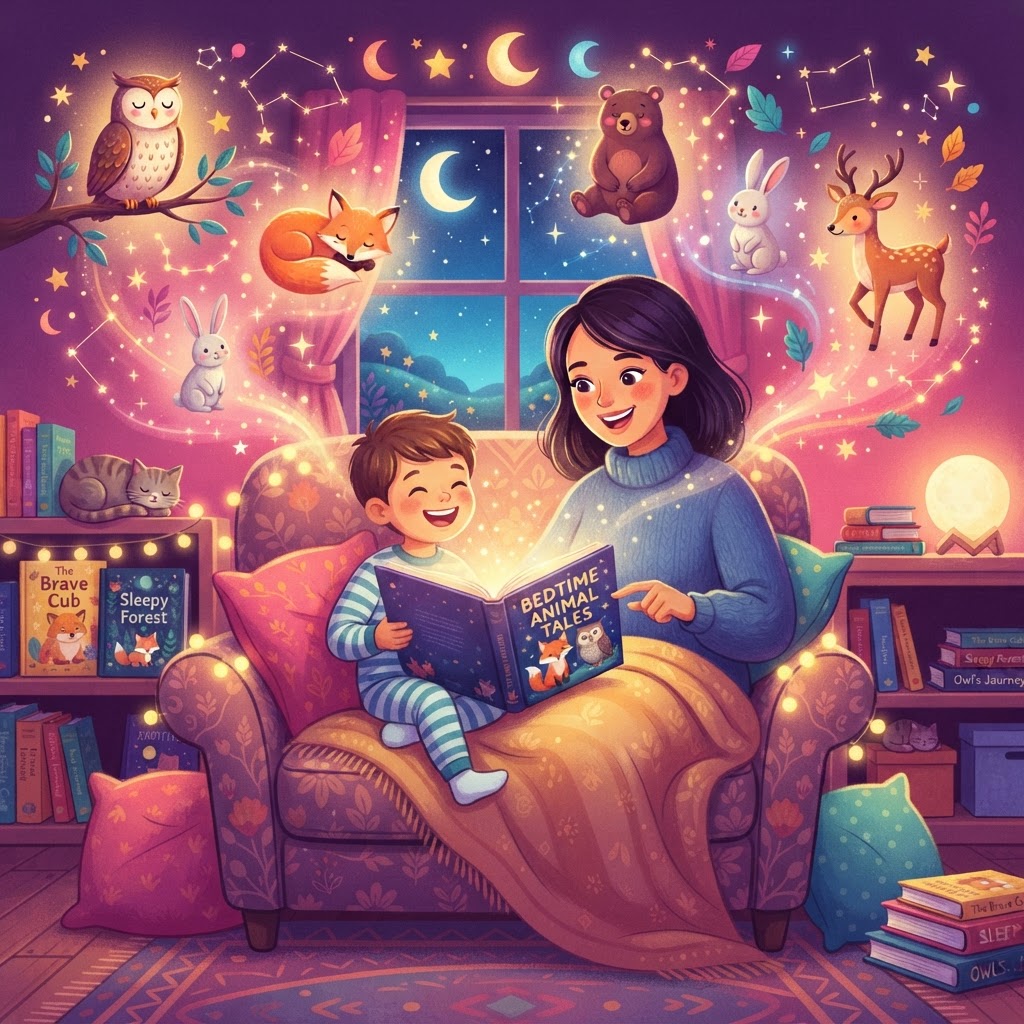
Finding the best animals bedtime stories for 4-year-olds is about more than picking a cute bunny or sleepy bear. At this age, children are growing fast in language, imagination, and emotional understanding, so the right story can help them feel calm, connected, and ready for sleep.
For parents, the sweet spot is a story that feels gentle and playful while still matching a 4-year-old’s developing mind. This guide explains what makes bedtime stories for 4 year olds work so well, why animal characters are such a strong fit, what themes to choose, what to skip, and how to come up with story ideas your child will ask for again and again.
What developmental milestones matter most when choosing stories for 4-year-olds?
At age 4, children usually do best with stories that are simple, imaginative, and emotionally clear. They can follow a basic plot, enjoy pretend play, and understand familiar feelings, but they still need repetition, reassurance, and a calm ending.
According to the CDC developmental milestones, many 4-year-olds can speak in longer sentences, engage in make-believe, and follow multi-step directions. That matters at bedtime because it means they are ready for slightly richer stories than toddlers, but not for complicated twists or intense suspense.
A strong animal story for this age usually includes:
- One main problem
- Two to four central characters
- Clear emotional cues
- Repetition or pattern
- A soothing resolution
This is also an age when children ask “why?” often. They want stories that make sense emotionally: Why was the fox sad? Why did the duck help? Why did the cub feel brave in the end? Good kids animals stories answer those questions gently without turning into a lesson.
Why do animal bedtime stories appeal so strongly to 4-year-olds?
Animals bedtime stories work beautifully for 4-year-olds because they combine familiarity, imagination, and emotional safety. A child can connect deeply with a worried bear or a shy mouse without feeling overwhelmed.
Animal characters help children explore feelings at a comfortable distance. A preschooler may resist a story about “you sharing your toys,” but happily listen to a squirrel learning to share acorns. That small bit of distance lowers defensiveness and opens the door to empathy.
Animal stories also match how 4-year-olds think and play. The Center on the Developing Child at Harvard University has long emphasized the importance of imaginative interaction for healthy development. When children hear about talking owls, sleepy koalas, or helpful beavers, they get to practice imagination, emotional understanding, and language all at once.
Parents often notice that animal stories are especially effective when a child loves:
- Pretend play
- Nature walks
- Farm or zoo visits
- Repeating favorite characters
- Gentle humor
If your child is transitioning from simpler toddler stories, you may also like these animal story picks for 3-year-olds or even gentler options for toddlers.
How long should bedtime stories for 4-year-olds be?
For most 4-year-olds, the ideal bedtime story lasts about 5 to 10 minutes. That is usually enough time for a satisfying story arc without pushing a tired child past their attention limit.
In practical terms, many animals stories for 4 year olds work best at roughly 500 to 900 words when read aloud with pauses and expression. Some children can handle longer stories, especially if the plot is simple and the language is repetitive. Others do better with short stories and a quick cuddle after.
A few signs the story length is right:
- Your child stays engaged without fidgeting too much
- They can retell part of the story the next day
- The ending feels calming, not abrupt
- They ask for “one more” because they enjoyed it, not because the first story was confusing
If bedtime has been rough lately, shorter is usually better. Save the bigger adventures for daytime reading and keep nighttime stories gentle and predictable.
Which themes make the best animals stories for 4 year olds?
The best themes for this age are everyday, comforting, and emotionally meaningful. Four-year-olds love stories that help them make sense of friendship, routines, feelings, and small acts of bravery.
Here are some especially strong themes for bedtime stories for 4 year olds:
-
Friendship and kindness
A hedgehog helps a rabbit find a lost mitten, or ducklings include a shy turtle in their game. -
Bedtime routines and winding down
A panda brushes teeth, says goodnight to the moon, and settles into a cozy nest. -
Gentle problem-solving
A squirrel loses its favorite leaf blanket and asks friends for help. -
First feelings and emotional naming
A little fox feels jealous, lonely, or proud and learns that feelings come and go. -
Nature and seasons
Stories about rain, snow, gardens, or nighttime forest sounds feel grounding and sensory. -
Small adventures with a safe ending
A mouse explores a moonlit meadow, then returns home for sleep.
At 4, many children are ready for a little more plot than younger preschoolers. If your child also enjoys action and movement, these adventure bedtime ideas for this age can be a helpful next step.
What should parents avoid in animals bedtime stories?
Parents should avoid stories that are too scary, too busy, or too stimulating right before sleep. Even a child who enjoys lively play during the day may struggle to settle after an intense bedtime plot.
Try to skip:
- Predators chasing prey in a frightening way
- Characters getting lost for too long
- Loud, chaotic humor near the ending
- Overly moralizing language
- Too many characters or side plots
- Sudden sad endings or unresolved tension
This does not mean every story has to be bland. A little uncertainty is fine. But the emotional shape should still move toward safety, comfort, and reconnection.
The American Academy of Pediatrics highlights the value of shared reading for bonding and language growth, and calm read-aloud time is especially helpful in bedtime routines. Their parent resource on reading aloud with young children is a useful reminder that the tone of reading matters as much as the content.
What are five great animals bedtime story ideas for 4-year-olds?
The best story ideas are simple, visual, and centered on one feeling or challenge. Here are five parent-friendly ideas you can use tonight.
1. The bunny who couldn’t find the quiet
A busy little bunny keeps hearing crickets, wind, and rustling leaves and thinks bedtime is impossible. One by one, the forest animals help Bunny notice that the sounds are not scary at all—they are the forest’s lullaby.
2. The bear cub’s moonlight blanket
A bear cub worries because his favorite blanket is missing. He visits a few woodland friends, discovers each one has helped in a small way, and finally finds the blanket drying under the moon after an afternoon wash.
3. The shy turtle at the pond picnic
A turtle wants to join the other pond animals but feels nervous about speaking up. With gentle encouragement, Turtle shares a song and discovers that friendship can start with one brave moment.
4. The fox who saved a sleepy star
A little fox thinks a glowing reflection in the stream is a fallen star. The journey to “help” it becomes a calm nighttime walk, and Fox learns that some mysteries are beautiful even when they stay simple.
5. The koala who packed too many bedtime hugs
A koala tries to carry bedtime hugs for everyone in the tree. In the end, she learns that love can be shared through a yawn, a cuddle, a whisper, and a goodnight song.
These kinds of kids animals stories work well because they are emotional without being heavy. They also give you lots of room to personalize names, settings, and favorite animals.
How can parents make animal bedtime stories more calming and memorable?
Parents can make stories more effective by reading slowly, adding simple repetition, and inviting light participation. The goal is not a performance; it is connection.
Try these techniques:
- Use a softer, slower voice as the story progresses
- Repeat key lines like “The forest was getting sleepy now”
- Ask one gentle question: “Do you think Bunny feels better?”
- Let your child choose the animal before you begin
- End with a predictable closing line each night
This approach is supported by decades of shared-reading research, including dialogic reading practices that encourage language while keeping the interaction warm and responsive. For bedtime, though, keep participation low-pressure. Too many questions can wake a tired child up.
How can InstaTales help you create personalized animals stories for 4-year-olds?
InstaTales can make bedtime easier by helping you create animal stories that match your child’s age, interests, and emotional needs. Instead of searching endlessly, you can create your own personalized bedtime story with your child’s favorite animal, bedtime challenge, and preferred tone.
This is especially helpful if your 4-year-old wants the same story structure night after night but with a new character each time. You might generate a sleepy penguin story one night, a brave deer story the next, and then save the favorites in your story library for easy re-reading.
Parents often find personalization useful for:
- Bedtime resistance
- New sibling transitions
- Preschool nerves
- Friendship themes
- Specific animal obsessions
The best part is that personalized stories can still follow strong early-childhood principles: short length, emotional clarity, repetition, and a calm ending.
Frequently Asked Questions
What makes a good animal bedtime story for a 4-year-old?
A good story is short, gentle, and easy to follow. It should focus on one simple problem, familiar feelings, and a soothing ending.
Are animal stories better than human-character stories at bedtime?
Not always, but many children respond especially well to animals because they feel playful and emotionally safe. Animal characters can help children explore feelings without taking the story too personally.
How long should I read to my 4-year-old before bed?
For most children, 5 to 10 minutes is ideal. If your child is very tired or overstimulated, a shorter story is often more effective than a longer one.
Can personalized AI stories be appropriate for preschoolers?
Yes, if they are age-appropriate, calm, and reviewed by a parent. The best personalized stories for preschoolers keep the language simple, the themes gentle, and the ending reassuring.
What if my child wants the same animal story every night?
That is completely normal at age 4. Repetition supports comprehension, emotional security, and language development, so re-reading a favorite story can be a very healthy bedtime habit.
Ready to Create a Personalized Bedtime Story?
Use our free AI bedtime story generator to create a personalized illustrated story for your child in 30 seconds — no credit card needed.
Popular story types:
Maya Rodriguez
Lead Content Editor & Early Literacy Specialist
Maya is a former early childhood educator and literacy specialist with over a decade of experience helping children develop a love of reading. She leads content at InstaTales, where she writes about the science of storytelling, child development, and how families can use personalized AI stories to build literacy and emotional resilience.
instatales.ai