Best animals bedtime stories for 3-year-olds
Discover the best animals bedtime stories for 3-year-olds — themes, tips, and story ideas that will delight your child at bedtime.
✦ Key Takeaways
- •At age 3, children are ready for simple, repetitive stories with clear emotions and easy-to-follow action.
- •Animals bedtime stories work especially well because animals are familiar, expressive, and gently symbolic.
- •For most 3-year-olds, the ideal bedtime story length is 3 to 7 minutes, or about 300 to 700 words when read aloud slowly.
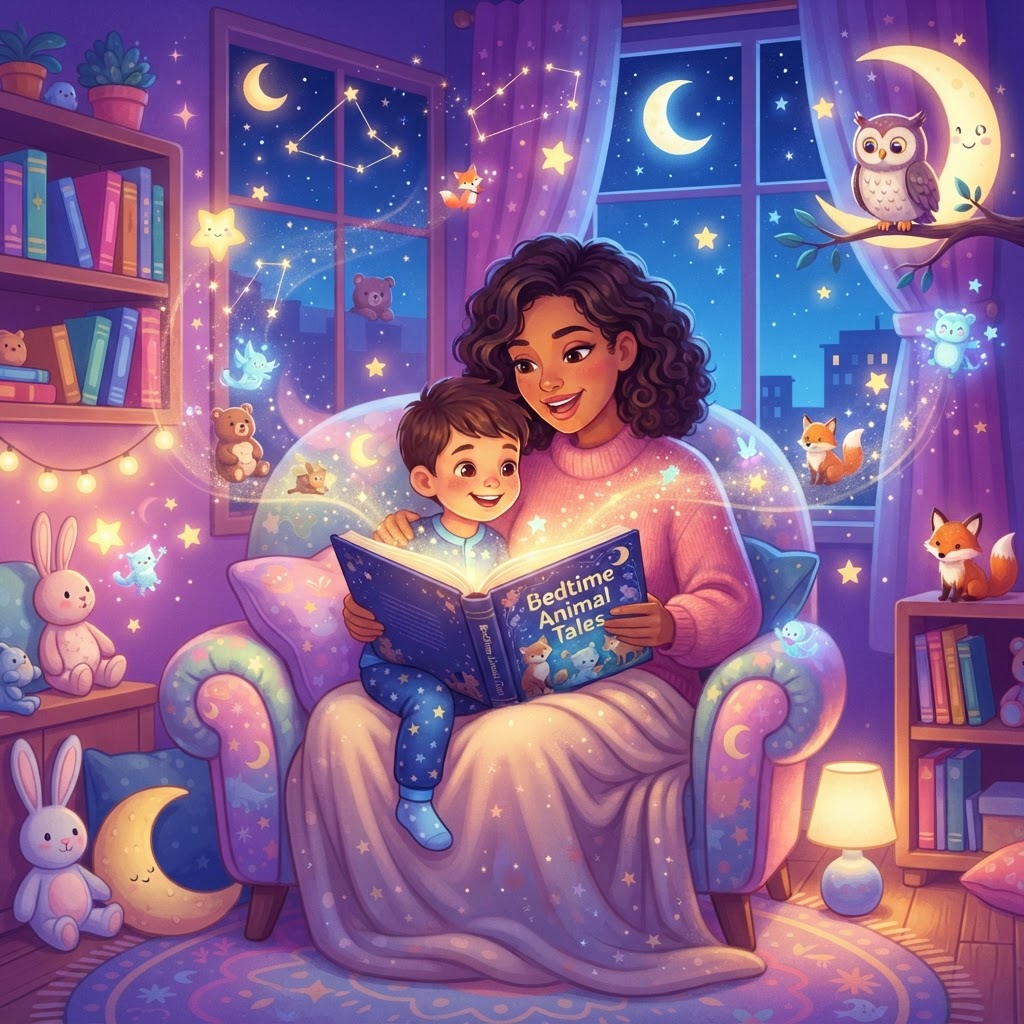
Choosing the best animals bedtime stories for 3-year-olds is less about finding the “perfect book” and more about matching stories to how 3-year-olds actually think, feel, and learn. At this age, children love familiar routines, playful animal characters, and simple plots, which is why animals stories for 3 year olds can be such a powerful part of a calm, happy bedtime.
What developmental milestones matter most for bedtime stories at age 3?
At age 3, children are ready for simple, repetitive stories with clear emotions and easy-to-follow action. They are growing quickly in language, imagination, and social understanding, but they still need stories that feel safe and predictable.
According to the CDC developmental milestones, many 3-year-olds can speak in short conversations, follow simple instructions, and engage in pretend play. That matters at bedtime because stories can now include:
- A basic beginning, middle, and end
- Repeated phrases your child can join in with
- Simple feelings like happy, worried, proud, or sleepy
- Light problem-solving, such as helping a lost duckling find home
Three-year-olds also start connecting stories to real life. If your child loves pets, farms, or zoo visits, kids animals stories often feel instantly meaningful. If you are looking at younger age ranges too, our guide to animals bedtime stories for 2-year-olds shows how story needs change from age 2 to 3.
Why do animals bedtime stories appeal so strongly to 3-year-olds?
Animals bedtime stories work especially well because animals are familiar, expressive, and gently symbolic. A shy bunny, sleepy bear, or curious fox lets children explore feelings without the pressure of a fully realistic human story.
For many preschoolers, animals sit in the sweet spot between real and magical. Children this age often know what a dog, owl, or elephant is, but they also enjoy pretending those animals talk, sing, or wear pajamas. That mix supports imagination while keeping the story grounded.
Research from Zero to Three and early literacy experts consistently shows that young children learn through playful repetition, emotional connection, and shared reading routines. Animal characters make that easier because they naturally invite:
- Sound effects like “moo,” “woof,” and “hoot”
- Gentle humor
- Emotional safety
- Curiosity about nature and the world
For bedtime stories for 3 year olds, animal characters also help parents introduce themes like kindness, patience, and bedtime routines without sounding preachy.
How long should bedtime stories for 3-year-olds be?
For most 3-year-olds, the ideal bedtime story length is 3 to 7 minutes, or about 300 to 700 words when read aloud slowly. That is usually long enough to feel satisfying, but short enough to avoid overstimulation before sleep.
Some children enjoy two very short stories instead of one longer one. Others prefer the same story every night for a week. Both are developmentally normal. The goal is not literary complexity; it is emotional comfort and predictable wind-down time.
A good bedtime story for this age usually includes:
- One main character
- One small problem
- One comforting solution
- A soft, sleepy ending
If your child likes a little more excitement, you can still keep the structure calm. For example, a tiny nighttime journey can work well, especially if you enjoy gentle adventure bedtime stories for 3-year-olds with reassuring endings.
Which themes work best in animals stories for 3 year olds?
The best themes for animals stories for 3 year olds are simple, emotional, and close to everyday life. Stories should help children understand feelings, routines, and relationships without becoming too intense.
Here are some of the strongest bedtime themes:
Sleep and bedtime routines
A bear getting ready for bed or a bunny looking for the coziest blanket mirrors your child’s own routine. These stories make bedtime feel familiar and safe.
Friendship and belonging
A duckling finding friends at the pond or a puppy joining the group helps children think about connection. At age 3, social development is growing quickly, so these stories feel relevant.
Sharing and turn-taking
Animal stories are a gentle way to model early social skills. If this theme matters in your home, you may also like our guide to sharing stories for younger preschoolers.
Feelings and reassurance
A nervous squirrel, excited kitten, or frustrated turtle helps children name emotions. The American Academy of Pediatrics via HealthyChildren.org often emphasizes the value of routines, connection, and emotional coaching in early childhood, and bedtime stories can support all three.
Small acts of courage
A hedgehog trying something new or a mouse sleeping in a dark room alone can be a perfect “brave but safe” story. For related ideas, our article on courage-themed bedtime stories can help.
Nature-based themes also work beautifully at this age: rain, moonlight, forest sounds, nests, burrows, and the rhythm of day turning to night.
What should parents avoid in animals bedtime stories for 3-year-olds?
At bedtime, it is best to avoid stories that are too scary, too busy, or too emotionally unresolved. Three-year-olds can enjoy suspense, but they usually do not sleep well after intense danger or fast-moving plots.
Try to skip or limit:
- Predators chasing prey in a frightening way
- Loud conflict or repeated shouting
- Sad endings or lost-parent storylines without clear reassurance
- Too many characters to track
- Overly long moral lessons
Also watch for sensory overload. If a story includes too much silliness, action, or surprise, it can push bedtime energy up instead of bringing it down.
A simple check is this: Does the story leave your child feeling safe, calm, and connected? If yes, it is probably a good bedtime fit. If your child seems wired, worried, or confused, save that story for daytime.
What are five great animals bedtime story ideas for 3-year-olds?
The best story ideas for this age are short, visual, and soothing. These five prompts are designed to work well as kids animals stories at bedtime.
1. The Sleepy Bunny Who Couldn’t Find Her Pillow
A little bunny checks the burrow, the garden, and the moonlit meadow for her favorite pillow. In the end, it was tucked under her blanket all along.
2. The Tiny Bear’s Goodnight Walk
A bear cub says goodnight to the stars, the stream, the trees, and each member of the family before curling up in bed. This is ideal for repetition and bedtime routine building.
3. The Duckling Who Shared the Moon Pond
A duckling learns to make space for frogs, fish, and fireflies around a beautiful pond. It is a sweet setup for early sharing and community themes.
4. The Little Owl Who Wasn’t Ready for Dark
A young owl feels unsure about nighttime until forest friends show how the dark can be soft, quiet, and full of gentle sounds. This can help children who resist bedtime or feel uncertain about sleeping alone.
5. The Puppy Who Collected Dream Sounds
A puppy listens for cozy bedtime sounds like crickets, a rocking chair, and sleepy yawns. The story naturally slows the body and mind before sleep.
These ideas also work well if you want to create your own personalized bedtime story with your child’s name, favorite animal, or home setting included.
How can parents make animals stories even more effective at bedtime?
Parents can make bedtime stories more effective by keeping the reading experience calm, interactive, and predictable. The way you tell the story matters almost as much as the story itself.
A few simple strategies help:
- Read in a slower, softer voice than you use during the day
- Pause for repeated phrases your child can join in with
- Let your child pick the animal character
- End with a comforting final line, such as “and everyone was safe and sleepy”
Personalization helps too. Many 3-year-olds love hearing their own name in a story, or recognizing their teddy, bedroom, or family pet. If you create stories often, saving favorites in your story library can make it easier to revisit the ones that work best.
For families who want variety without losing that familiar bedtime rhythm, browsing more ideas on the InstaTales blog can also be useful.
How can InstaTales help you create personalized animals stories for 3-year-olds?
InstaTales can help by generating age-appropriate, personalized animals bedtime stories based on your child’s interests, routine, and developmental stage. That means you can quickly create a sleepy fox story, a brave little turtle tale, or a bunny bedtime adventure tailored to your 3-year-old.
This is especially helpful when your child wants the same kind of story night after night, but with a fresh twist. You might choose:
- Your child’s name
- A favorite animal
- A bedtime theme like sharing, bravery, or sleep
- A calm setting such as a forest, farm, or pond
If you want a faster starting point, story templates can help you build a gentle animal story without starting from scratch. Personalized storytelling works best when it stays simple, soothing, and emotionally safe for the age.
Frequently Asked Questions
What are the best animals for bedtime stories for 3-year-olds?
The best animals are usually familiar, gentle ones like bunnies, bears, puppies, ducklings, and owls. These characters feel safe and are easy for young children to understand and love.
How long should animals stories for 3 year olds be?
Most 3-year-olds do best with stories that last 3 to 7 minutes. Shorter stories are easier to follow and more calming before sleep.
Are animal stories good for language development?
Yes, animal stories support language growth by introducing repetition, simple dialogue, and new vocabulary in a meaningful way. Shared reading is strongly linked to early literacy and communication skills.
Can personalized bedtime stories overstimulate my child?
They can if they are too exciting, too long, or packed with surprises. Personalized stories work best at bedtime when they stay calm, predictable, and emotionally reassuring.
What if my child wants the same story every night?
That is very common and developmentally appropriate at age 3. Repetition helps children feel secure, remember language patterns, and process emotions.
Are bedtime stories for 3 year olds different from stories for 1- or 2-year-olds?
Yes, they usually include slightly more plot, emotion, and dialogue than stories for younger toddlers. If you are comparing stages, our guide to animals stories for 1-year-olds can help show the difference.
Ready to Create a Personalized Bedtime Story?
Use our free AI bedtime story generator to create a personalized illustrated story for your child in 30 seconds — no credit card needed.
Popular story types:
Maya Rodriguez
Lead Content Editor & Early Literacy Specialist
Maya is a former early childhood educator and literacy specialist with over a decade of experience helping children develop a love of reading. She leads content at InstaTales, where she writes about the science of storytelling, child development, and how families can use personalized AI stories to build literacy and emotional resilience.
instatales.ai