Best brave bedtime stories for 7-year-olds
Discover the best brave bedtime stories for 7-year-olds — themes, tips, and story ideas that will delight your child at bedtime.
✦ Key Takeaways
- •Brave stories for 7 year olds work well because children this age are learning to manage bigger feelings while also building real-world confidence.
- •The best kids brave stories match a 7-year-old’s growing thinking skills, imagination, and emotional sensitivity.
- •For most 7-year-olds, the ideal bedtime story length is about 8 to 15 minutes, or roughly 800 to 1,500 words.
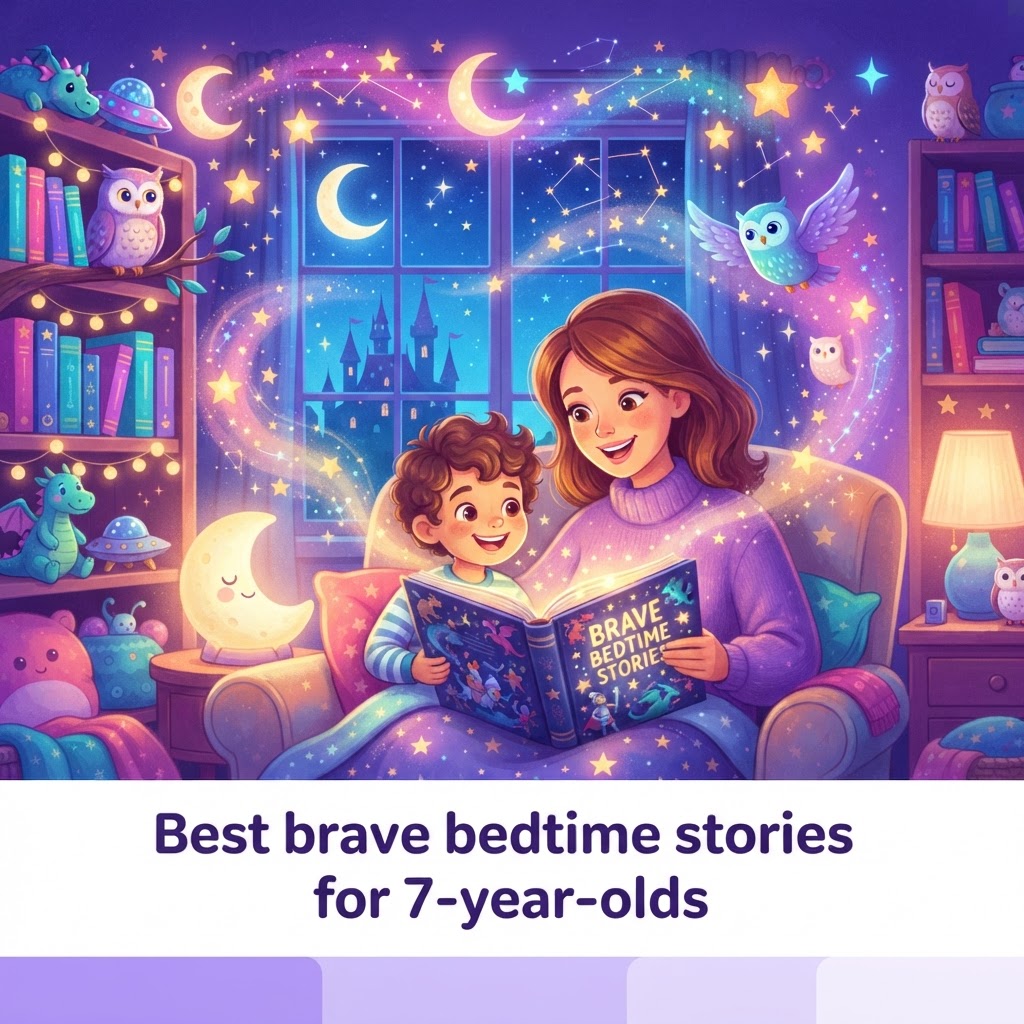
At 7, many children are eager to feel capable, independent, and brave—but they still want the safety and comfort of bedtime. That is why the best brave bedtime stories for 7-year-olds are not the scariest ones. They are the stories that let children face a challenge, feel a flutter of fear, and then see courage, kindness, and problem-solving win in the end.
Why do brave bedtime stories work so well for 7-year-olds?
Brave stories for 7 year olds work well because children this age are learning to manage bigger feelings while also building real-world confidence. A strong bedtime story gives them a safe way to explore fear, resilience, and success before sleep.
Around age 7, children often become more aware of rules, fairness, friendship, and their own abilities. They may worry about school performance, trying new activities, sleeping alone, or speaking up in a group. In a story, bravery becomes something they can understand: not “never being scared,” but doing the right thing even when something feels hard.
This matches what child development experts describe for children in the 6-8 range. The CDC’s positive parenting guidance notes that children this age are developing stronger independence, emotional awareness, and social skills. Brave stories help them rehearse those skills in a safe, predictable format.
For many families, bedtime stories for 7 year olds are also a chance to talk gently about everyday fears. A child may not say, “I’m nervous about tomorrow’s spelling test,” but they may open up after hearing about a character who feels nervous too.
What developmental milestones matter when choosing brave stories for 7-year-olds?
The best kids brave stories match a 7-year-old’s growing thinking skills, imagination, and emotional sensitivity. At this age, children can follow more complex plots, but they still need emotional safety and a clear sense of resolution.
Here are the most important milestones to keep in mind:
- Stronger logical thinking: Many 7-year-olds can follow cause and effect. They enjoy stories where the hero solves a problem step by step.
- Growing empathy: They are getting better at understanding how others feel. Stories about helping a friend, protecting an animal, or standing up for someone can be powerful.
- Better memory and attention: They can usually handle longer plots than younger children, especially if the story has a clear goal.
- Heightened fairness and rules: Children this age often care deeply about what is right or just, so brave choices feel meaningful.
- Still-sensitive nervous systems: Even confident children can become unsettled by graphic danger, intense conflict, or unresolved endings.
The Harvard Center on the Developing Child explains that children build executive function through experiences that support memory, flexible thinking, and self-control. A good brave story does exactly that: it lets a child hold a problem in mind, imagine options, and follow a calm path to a solution.
How long should bedtime stories for 7-year-olds be?
For most 7-year-olds, the ideal bedtime story length is about 8 to 15 minutes, or roughly 800 to 1,500 words. That is long enough to feel satisfying, but short enough to avoid overstimulation before sleep.
If your child is already tired, aim shorter. If they love listening and settle well, a slightly longer story can work—especially if the structure is soothing and the ending is calm.
A good bedtime pacing often looks like this:
- A clear setup in the first minute or two
- One central challenge
- A brave but manageable turning point
- A reassuring ending with safety restored
If your child wants more adventure, you can also tell chapter-style brave bedtime stories over several nights. That gives them suspense without an overlong bedtime routine. If your child tends to get wound up at night, pair brave stories with gentler reads like these calming bedtime stories for 7-year-olds.
Which themes make the best brave bedtime stories?
The best brave bedtime stories use themes that feel adventurous but emotionally safe. At 7, children usually connect most with bravery that is practical, relational, and hopeful.
Strong themes to explore include:
- Trying something new: first campout, first school performance, first bike ride on a bigger path
- Helping others: rescuing a lost pet, guiding a nervous friend, solving a community problem
- Speaking up: telling the truth, asking for help, standing up kindly for someone else
- Small everyday courage: sleeping in a new room, joining a team, reading aloud in class
- Magical courage: a child crosses a moonlit bridge, meets a dragon who is afraid too, or protects a tiny enchanted forest
Parents often do best with stories where bravery is mixed with warmth and humor. If your child likes lessons as well as adventure, you might also enjoy moral bedtime stories for 7-year-olds. If they prefer learning through story, educational bedtime stories for 7-year-olds can also support confidence.
The American Academy of Pediatrics emphasizes the value of shared reading for language, emotional connection, and healthy routines. Reading aloud together creates a moment where bravery feels supported rather than lonely, as explained by HealthyChildren.org.
What should parents avoid in kids brave stories at bedtime?
Parents should avoid stories that confuse bravery with danger, shame, or emotional overload. A bedtime story should stretch a child’s imagination—not leave them tense, guilty, or frightened in the dark.
Try to avoid:
- Graphic peril or horror elements
- Punishments that feel harsh or humiliating
- Bravery framed as “never cry” or “don’t be scared”
- Chaotic plots with no clear resolution
- Villains that feel too realistic or threatening right before sleep
- Messages that reward reckless behavior
The healthiest message is simple: bravery means noticing fear and making a wise choice anyway. That is much more useful than stories where a hero wins only by being fearless.
If your child is especially sensitive, balance brave stories with sillier or more magical options like funny bedtime stories for 7-year-olds or gentle fairy tale bedtime stories for 7-year-olds.
What are five brave bedtime story ideas for 7-year-olds?
The best story ideas for this age combine one meaningful challenge with a comforting ending. Here are five parent-approved ideas that work especially well at bedtime.
1. The Lantern in the Wind
A child must carry a glowing lantern through a breezy forest to help a lost baby owl find its nest. The bravery comes from staying calm, asking woodland friends for help, and protecting the light.
2. The First Dive at Silver Lake
A nervous swimmer wants to jump from the small dock for the first time. Instead of being pushed, they practice breathing, watch others, and choose the moment when they feel ready.
3. The Knight Who Was Afraid of Thunder
A young knight is supposed to guard the castle during a storm, but thunder makes their knees shake. By focusing on helping others feel safe, the knight discovers that courage can be quiet and shaky.
4. Maya and the Whispering Bridge
A child must cross an old bridge at dusk to deliver medicine to a grandparent. The bridge sounds spooky, but the whispers turn out to be wind, birds, and kind memories guiding the way.
5. The Classroom Dragon Helper
A tiny dragon hidden in a school backpack is scared of reading aloud. The child and dragon learn together that bravery grows when you take one small step, then another.
These kinds of brave bedtime stories work because they keep the stakes understandable. The child hears, “I can do hard things,” without feeling flooded by fear.
How can personalized brave stories help a 7-year-old feel more confident?
Personalized stories can be especially powerful because they place your child inside the brave moment in a safe, supportive way. When a story uses your child’s name, interests, favorite animals, or everyday worries, the lesson feels more relevant and memorable.
For example, a child who feels nervous about soccer practice may connect more deeply with a story where they help a shy lion join a team. A child worried about the dark may feel reassured by a story where they carry a moon flashlight through a gentle nighttime garden.
With InstaTales, parents can create your own personalized bedtime story based on age, theme, and the exact kind of courage their child needs to practice. You can also use story templates for quick inspiration and save favorite brave stories in your story library to reread when your child needs a confidence boost.
That matters because repetition helps children internalize emotional skills. The first time they hear a brave story, they enjoy it. The fifth time, they begin to believe it applies to them.
Where can parents find more bedtime story ideas for different moods?
Parents usually get the best bedtime routine by matching the story to the child’s mood that night. Brave stories are wonderful, but some evenings call for calm, laughter, or a stronger lesson.
A flexible story routine might look like this:
- Brave stories on nights before a new challenge
- Calming stories after busy or overstimulating days
- Funny stories when your child needs to release tension
- Moral or educational stories when you want a gentle teaching moment
If you want more ideas, browse the InstaTales blog for age-based story guides and bedtime tips. Many parents find that mixing story types across the week keeps bedtime fresh while still predictable.
Frequently Asked Questions
What makes a bedtime story “brave” for a 7-year-old?
A brave story shows a child-friendly challenge and a character who handles fear in a healthy way. The focus should be on courage, problem-solving, and emotional safety rather than danger alone.
Are brave stories good for anxious children?
Yes, if the stories are gentle and end with reassurance. Choose low-intensity plots, avoid graphic threats, and talk briefly afterward about how the character coped.
How often should I read brave bedtime stories?
Two or three times a week works well for many families, especially around new experiences like school events or sleep changes. Repetition can help children absorb the message of courage over time.
Can personalized stories really help build confidence?
They can help because children engage more deeply when a story reflects their name, interests, and real-life concerns. Personalized stories are not a cure-all, but they can be a useful tool for emotional coaching.
What if my child says a brave story is too scary?
Pause and listen. Shorten the story, soften the challenge, and switch to a more reassuring theme that night if needed.
Should brave bedtime stories always have a happy ending?
For bedtime, usually yes. A hopeful ending helps children settle, feel safe, and carry the message of courage into sleep rather than worry.
Get a new bedtime story every week
Free, personalized, and delivered to your inbox. No spam, ever.
Ready to Create a Personalized Bedtime Story?
Use our free AI bedtime story generator to create a personalized illustrated story for your child in 30 seconds — no credit card needed.
Popular story types:
Maya Rodriguez
Lead Content Editor & Early Literacy Specialist
Maya is a former early childhood educator and literacy specialist with over a decade of experience helping children develop a love of reading. She leads content at InstaTales, where she writes about the science of storytelling, child development, and how families can use personalized AI stories to build literacy and emotional resilience.
instatales.ai