Best curious bedtime stories for 1-year-olds
Discover the best curious bedtime stories for 1-year-olds — themes, tips, and story ideas that will delight your child at bedtime.
✦ Key Takeaways
- •Curious bedtime stories are a strong match for 1-year-olds because curiosity is one of the main ways they learn.
- •At age 1, children are learning through senses, repetition, and relationships, not through complex storylines.
- •For most 1-year-olds, the ideal bedtime story is very short: about 2 to 5 minutes, or roughly 100 to 300 words.
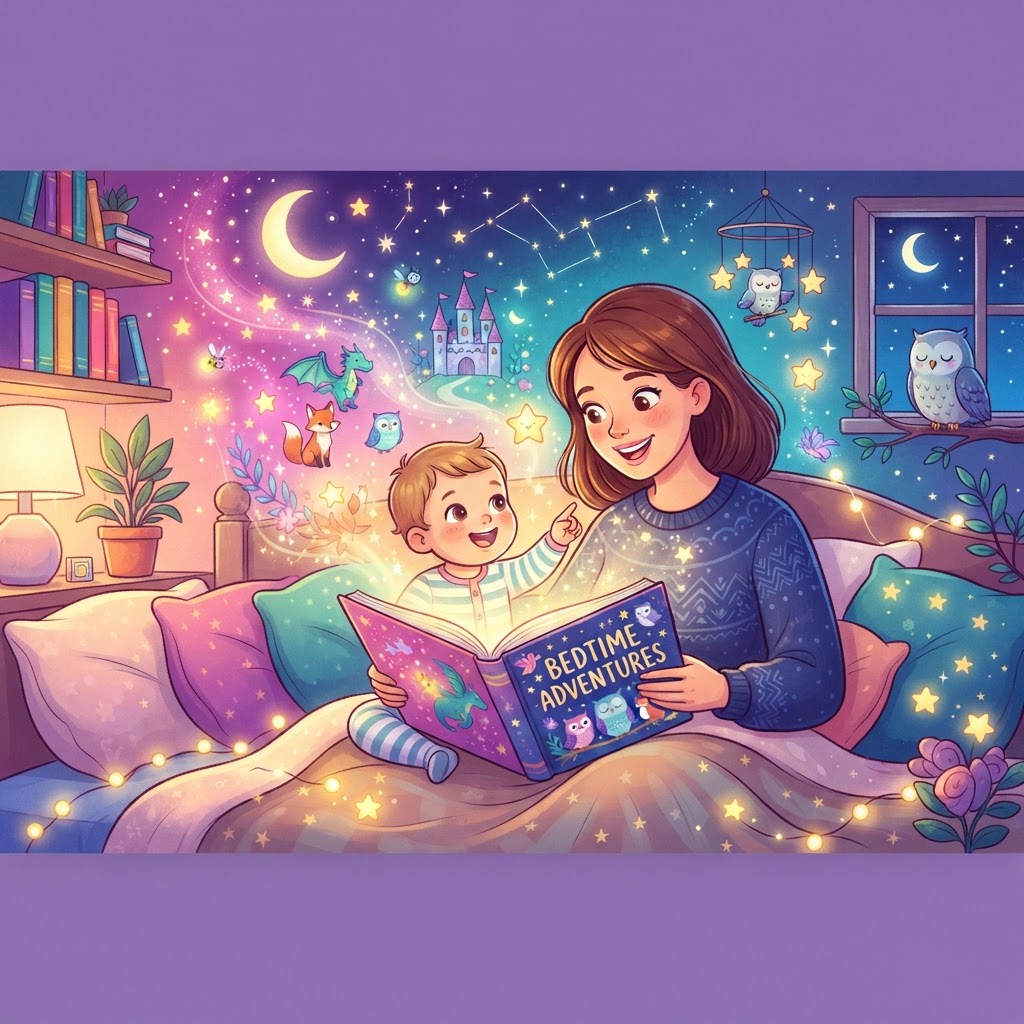
If you are looking for the best curious stories for 1 year olds, the sweetest answer is often the simplest one: choose stories that match your child’s growing urge to notice, point, repeat, and explore. At age 1, bedtime stories work best when they feel calm, familiar, and gently surprising—think a baby bunny finding a shiny leaf, a little bear wondering where the moon went, or a toddler noticing soft animal sounds on a quiet walk. The best bedtime stories for 1 year olds do not need big plots. They need warmth, rhythm, and just enough discovery to keep a young child engaged without making bedtime harder.
Why are curious bedtime stories such a good fit for 1-year-olds?
Curious bedtime stories are a strong match for 1-year-olds because curiosity is one of the main ways they learn. At this age, children are constantly noticing patterns, faces, sounds, and objects, so stories built around simple discovery feel exciting and natural.
According to the CDC’s developmental milestones, many 1-year-olds are beginning to look for hidden things, copy gestures, and explore objects in different ways. That means curious bedtime stories can mirror what your child is already doing during the day: wondering, watching, and trying to make sense of the world.
For parents, this is helpful because curiosity-based stories can be both soothing and enriching. A good story for this age often includes:
- one simple question, like “Where did the duck go?”
- one small discovery, like finding a star or hearing a soft sound
- lots of repetition
- comforting emotional cues from a parent, animal friend, or familiar routine
If your child also loves gentle emotions and nurturing themes, you may enjoy these kind bedtime stories for 1-year-olds, which pair beautifully with curiosity-led plots.
What developmental milestones shape how 1-year-olds listen to stories?
At age 1, children are learning through senses, repetition, and relationships, not through complex storylines. Their listening skills are growing, but they understand stories best when the language is concrete, rhythmic, and connected to familiar experiences.
Around the first year, many children are developing:
- stronger attention for short, engaging routines
- early understanding of familiar words
- pointing, waving, clapping, and imitation
- interest in cause and effect
- attachment to predictable bedtime patterns
Organizations like Zero to Three and the American Academy of Pediatrics emphasize that responsive back-and-forth interaction supports early language and emotional security. In practice, that means your child benefits most when you pause, point to pictures, name objects, and repeat favorite phrases.
This is why kids curious stories work so well at bedtime. A 1-year-old may not follow “why” in an abstract sense, but they absolutely understand the emotional shape of discovery:
- “Look!”
- “Where is it?”
- “There it is!”
- “Goodnight, moon.”
That simple pattern helps build language, memory, and comfort all at once.
How long should bedtime stories for 1-year-olds be?
For most 1-year-olds, the ideal bedtime story is very short: about 2 to 5 minutes, or roughly 100 to 300 words. Some children will happily listen to two or three short stories, but one long story is usually less effective than several tiny, calm ones.
Shorter stories are better because they fit a 1-year-old’s attention span and bedtime energy. By the end of the day, many toddlers want connection and repetition more than novelty.
A good rule of thumb is:
- 2-3 minutes for very sleepy or easily overstimulated children
- 3-5 minutes for children who enjoy books and pointing games
- two short stories instead of one long one if your child wants “more”
If you want variety without extra work, you can create your own personalized bedtime story with a simple prompt like “a sleepy puppy who wonders where the stars go.” Personalized stories are especially useful when your child wants the same comforting rhythm with just one new detail.
Which curious story themes work best for 1-year-olds?
The best themes are simple, sensory, and grounded in a 1-year-old’s world. Stories about animals, bedtime objects, sounds, family routines, and gentle discovery usually land better than imaginative plots that require lots of explanation.
Strong themes to explore include:
- Animals noticing things: a kitten hears rain, a duck spots bubbles
- Bedtime discoveries: finding pajamas, choosing a teddy, watching the moon
- Nature close-ups: leaves, stars, clouds, flowers, puddles
- Peekaboo-style searching: where is the bunny, blanket, or soft toy?
- Everyday wonder: bath water swirling, socks disappearing, blocks tumbling
These themes work because they connect curiosity to emotional safety. A child can wonder about a firefly or a bedtime sound while still feeling secure in a calm ending.
If your child enjoys learning through stories, our guide to educational bedtime stories for 1-year-olds offers more theme ideas rooted in early development. And if you want a little more imagination later on, fantasy bedtime stories for 1-year-olds can introduce wonder in a very gentle way.
What should parents avoid in curious bedtime stories?
Avoid stories that are too stimulating, confusing, or emotionally intense for bedtime. At age 1, even “fun” surprises can tip into overtiredness if the story is loud, fast, or unpredictable.
Try to skip or limit:
- complicated plots with multiple characters
- scary separation themes without a clear, quick reunion
- loud action, chasing, or conflict right before sleep
- too many new words packed into every sentence
- bright, hyperactive pacing that feels more like playtime than bedtime
Curiosity should feel safe, not activating. For example, “Where did the little owl go?” is a calm mystery. “The owl flew into a dark storm and got lost” may be too intense for some toddlers at night.
The HealthyChildren.org guidance from the American Academy of Pediatrics often highlights the value of predictable bedtime routines. Story choice matters here: the story should help settle the nervous system, not rev it up.
A good test is simple: if the story makes your child point, smile, and snuggle closer, it is probably a good bedtime fit. If it makes them sit bolt upright and start babbling excitedly, save that theme for daytime.
What are five curious bedtime story ideas for 1-year-olds?
The best story ideas for this age combine one tiny question with one cozy ending. Here are five easy, development-friendly ideas you can use tonight.
1. The bunny who followed a soft sound
A little bunny hears “shh, shh” outside and wonders what it is. The bunny discovers wind in the grass, cuddles up, and falls asleep.
2. Where did the moon hide?
A toddler looks out the window and cannot see the moon. Then the clouds move, the moon peeks out, and everyone says goodnight.
3. The duck who found bubbles in the bath
A baby duck notices big bubbles, little bubbles, and one bubble on its nose. After the bath, the duck gets warm, dry, and sleepy.
4. The bear cub and the missing sock
A tiny bear sees one sock but not the other. After looking under the blanket, by the bed, and near the teddy, the sock is found and bedtime can begin.
5. The firefly that blinked hello
A child notices a gentle light outside. The firefly blinks hello, the stars come out, and the world gets quieter and quieter.
These ideas work well because they use repetition, sensory detail, and calm resolution. They also make excellent starting points for bedtime stories for 1 year olds generated around your child’s favorite animal, toy, or routine.
How can parents personalize curious stories without making bedtime too exciting?
Personalization works best when you keep the structure calm and the details familiar. The goal is not to create a thrilling adventure. The goal is to help your child feel seen, engaged, and ready for sleep.
A strong personalized bedtime formula looks like this:
- use your child’s name or nickname
- include one favorite object, like a bunny, blanket, or cup
- focus on one simple curiosity moment
- end with cuddles, lights dimming, or everyone going to sleep
For example: “Mila wondered where her yellow star pillow went. She looked by Teddy, under the blanket, and there it was—waiting for sleepy cuddles.”
This is where InstaTales can be especially helpful. You can generate curious stories for 1 year olds that match your child’s age, interests, and bedtime routine, then save the ones they love in your story library for easy re-reading. If you want a head start, exploring the platform’s story templates can help you create calm, age-appropriate stories in just a few clicks.
For parents building a wider bedtime routine, the InstaTales blog also has helpful guides on other story styles, including brave, moral, and educational themes.
Frequently Asked Questions
What makes a story “curious” for a 1-year-old?
A curious story gives a child one small mystery or discovery to follow, such as finding a toy or noticing an animal sound. It should feel gentle and safe, not suspenseful or overwhelming.
Are curious bedtime stories good for language development?
Yes. Simple curiosity stories encourage pointing, naming, repetition, and shared attention, which all support early language growth. Reading aloud from infancy is widely recommended by child development experts.
How often should I read bedtime stories to my 1-year-old?
Daily is ideal, even if the story is only a few minutes long. A short, predictable reading routine helps build connection, language, and bedtime consistency.
Can AI-generated stories be safe for 1-year-olds?
Yes, if parents guide the prompt and keep the content age-appropriate. Choose short stories, familiar themes, and calm endings, and always preview the story before reading.
What if my 1-year-old wants the same story every night?
That is very normal and often beneficial. Repetition helps young children feel secure and gives them more chances to understand words, patterns, and story cues.
Should bedtime stories for 1-year-olds teach a lesson?
Not always. At this age, the biggest “lesson” is often comfort, language exposure, and gentle exploration, though simple themes from moral bedtime stories for 1-year-olds can still work when kept very light.
Ready to Create a Personalized Bedtime Story?
Use our free AI bedtime story generator to create a personalized illustrated story for your child in 30 seconds — no credit card needed.
Popular story types:
Maya Rodriguez
Lead Content Editor & Early Literacy Specialist
Maya is a former early childhood educator and literacy specialist with over a decade of experience helping children develop a love of reading. She leads content at InstaTales, where she writes about the science of storytelling, child development, and how families can use personalized AI stories to build literacy and emotional resilience.
instatales.ai