Best moral bedtime stories for 1-year-olds
Discover the best moral bedtime stories for 1-year-olds — themes, tips, and story ideas that will delight your child at bedtime.
✦ Key Takeaways
- •A 1-year-old understands feelings, repetition, and simple cause-and-effect far better than a formal “lesson.” They may not explain the moral back to you, but they can absorb the emotional pattern of a story: someone is kind, someone helps, everyone feels safe. According to the CDC’s developmental milestones, many one-year-olds are learning first words, using gestures, copying adults, and responding to familiar routines.
- •Moral stories for 1 year olds appeal because they are soothing, predictable, and emotionally clear.
- •The ideal length is usually 2 to 5 minutes, or about 100 to 300 words if you are reading aloud from a script.
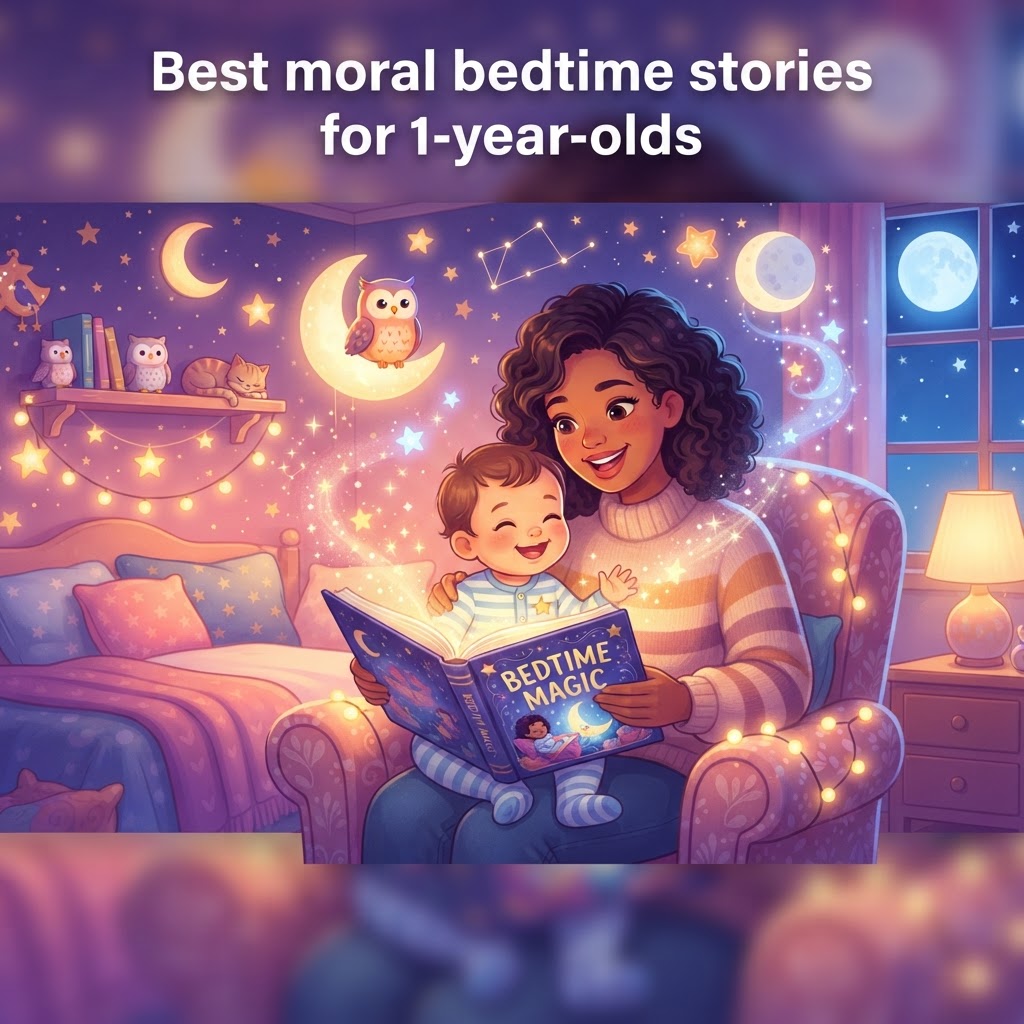
If you are looking for the best moral bedtime stories for 1-year-olds, the good news is that “moral” at this age does not mean long lessons or big speeches. For a one-year-old, the best stories are simple, warm, repetitive, and built around tiny everyday values like kindness, sharing, helping, and feeling safe. These early bedtime stories for 1 year olds work best when they match your child’s development, support connection, and end with comfort.
At age 1, children are not ready for complex plots or abstract morals. But they are ready to absorb patterns, emotions, and routines through language. That is why gentle moral bedtime stories can become a lovely part of evening wind-down, especially when parents keep them short, soothing, and familiar.
What do 1-year-olds understand from moral bedtime stories?
A 1-year-old understands feelings, repetition, and simple cause-and-effect far better than a formal “lesson.” They may not explain the moral back to you, but they can absorb the emotional pattern of a story: someone is kind, someone helps, everyone feels safe.
According to the CDC’s developmental milestones, many one-year-olds are learning first words, using gestures, copying adults, and responding to familiar routines. Research and guidance from Zero to Three also show that babies and toddlers learn through relationships, repetition, and back-and-forth interactions.
That means kids moral stories for this age should focus on:
- familiar people, animals, or toys
- one emotion at a time
- one small positive action
- a predictable ending
- language your child hears in daily life
For example, “Bunny shares a blanket with Bear” is more meaningful to a toddler than “Bunny learns the importance of generosity.” The lesson is felt, not explained.
Why do moral bedtime stories appeal to 1-year-olds?
Moral stories for 1 year olds appeal because they are soothing, predictable, and emotionally clear. Young toddlers love stories that repeat the same phrases, mirror everyday life, and end in safety.
At bedtime, children are often processing the day’s stimulation. A soft story about helping Mama, cuddling a toy, or saying night-night to friends gives them structure. It also supports early emotional development by naming simple feelings like happy, sleepy, sad, or calm.
Moral stories are especially helpful when they use:
- repetition: “Baby duck helps, helps, helps”
- rhythm: short, musical sentences
- familiar routines: bath, pajamas, bedtime hugs
- gentle resolution: no intense conflict or fear
This is also why parents often rotate between different bedtime moods. Some nights call for moral bedtime stories, while other evenings may benefit from calming bedtime stories for 1-year-olds or even funny bedtime stories for 1-year-olds to release energy before sleep.
How long should bedtime stories for 1-year-olds be?
The ideal length is usually 2 to 5 minutes, or about 100 to 300 words if you are reading aloud from a script. One-year-olds have short attention spans, and shorter stories are more likely to feel comforting rather than overstimulating.
The American Academy of Pediatrics encourages shared reading from infancy because it supports language, bonding, and early literacy. Their parenting resource HealthyChildren.org notes that even brief, consistent reading moments matter.
A good bedtime story length for this age usually includes:
- one main character
- one small problem or need
- one kind action
- one sleepy ending
If your child is extra tired, make it even shorter. You do not need a full arc every night. A tiny story like “Lamb found her blanket, hugged Mama, and fell asleep feeling loved” can be enough.
For many families, the winning formula is:
- 1 familiar character
- 1 repeated phrase
- 1 value
- 1 peaceful ending
What themes work best in moral bedtime stories for 1-year-olds?
The best themes are simple, concrete, and rooted in daily life. At age 1, the most effective morals are about connection and behavior, not abstract ethics.
Here are the strongest themes to explore:
- Kindness: helping a friend, giving a cuddle, using gentle hands
- Sharing: taking turns with blocks, offering a blanket, passing a toy
- Love and security: staying close, bedtime hugs, family routines
- Empathy: noticing when someone is sad or sleepy
- Helping: putting toys away, bringing a sock, tucking in a teddy
- Patience: waiting for a turn, waiting for bath time, waiting for a song
These values match what many one-year-olds are beginning to practice through imitation. They copy adult tone, facial expression, and daily habits long before they can discuss rules. In that sense, the best moral stories for 1 year olds feel more like a warm model than a lecture.
You can also pair moral themes with subjects your child already loves. If your toddler lights up at animals, vehicles, or water play, try value-based versions of those interests, such as ocean-themed bedtime stories or gentle creature stories with a helping message.
What should parents avoid in kids moral stories for toddlers?
Parents should avoid anything too scary, too long, too loud, or too moralizing. At this age, bedtime stories should regulate the nervous system, not challenge it.
The most common mistakes are:
- abstract lessons: “honor,” “honesty,” or “fairness” without a concrete example
- too much conflict: arguments, danger, villains, or punishment
- sensory overload: lots of characters, fast scene changes, noisy action
- harsh consequences: shame-based endings or “bad child” messages
- overexplaining: long paragraphs that lose the child’s attention
A one-year-old does not need a dramatic plot twist to learn kindness. In fact, milder stories often work better because they preserve emotional safety. If you want imaginative themes, keep them gentle and familiar, such as soft animal tales or simple fairy-tale bedtime stories for 1-year-olds without dark or frightening elements.
Also watch your child’s cues. If they turn away, fuss, or become more alert instead of sleepier, the story may be too stimulating.
What are five simple moral bedtime story ideas for 1-year-olds?
The best story ideas are short, repetitive, and built around one clear value. These five examples are easy for parents to tell, adapt, or personalize.
1. Bunny Shares the Blanket
Moral: Sharing feels warm and kind.
Bunny sees Bear shivering, scoots over, and shares the blanket. They both snuggle and fall asleep.
2. Little Duck Helps at Bedtime
Moral: Helping is a loving thing to do.
Little Duck carries one sock, then one book, then one tiny teddy to Mama. Everyone says, “Thank you, Little Duck.”
3. Teddy Waits for a Turn
Moral: Patience can be peaceful.
Teddy wants the rocking chair first, but waits while Baby rocks. Soon Teddy gets a turn and feels proud and calm.
4. Moon Mouse Uses Gentle Hands
Moral: Gentle touch keeps friends happy and safe.
Moon Mouse pats the kitten softly, tucks in the doll softly, and closes the door softly. Everything in the room becomes quiet and cozy.
5. Baby Whale Checks on a Friend
Moral: Caring about others matters.
Baby Whale notices a sleepy starfish drifting alone and gives it a gentle nudge back home. Then Baby Whale snuggles into the sea and sleeps.
If your child has strong favorite interests, you can easily adapt these patterns into dinosaur bedtime stories for 1-year-olds, vehicle stories, pet stories, or family stories.
How can parents use personalized AI stories for 1-year-olds safely?
Parents can use AI stories safely by keeping them simple, reviewing them first, and making sure the tone fits bedtime. The best AI-generated stories for toddlers still need an adult’s judgment and warmth.
A personalized story can be especially powerful at age 1 because familiarity matters so much. Hearing their own name, favorite toy, sibling, or bedtime routine in a story helps toddlers connect quickly. With InstaTales, parents can create your own personalized bedtime story using a child’s interests, then keep favorites in your story library for easy re-reading night after night.
To use personalized stories well:
- choose one value per story, such as kindness or helping
- keep the plot very simple
- ask for a calm bedtime tone
- review the story before reading aloud
- reuse favorite phrases and characters
If you want a fast starting point, InstaTales also offers story templates that make it easier to build age-appropriate bedtime stories without overcomplicating the prompt. And if you want more inspiration for different moods and themes, explore the InstaTales blog for related story guides.
For toddlers, personalization works best when it feels reassuring, not novel for novelty’s sake. The sweet spot is a familiar child, a familiar routine, and one gentle moral.
Frequently Asked Questions
Are moral stories too advanced for 1-year-olds?
No, as long as the moral is simple and shown through action. A one-year-old understands warmth, helping, and gentle behavior better than a spoken lesson.
What is the best bedtime story length for a 1-year-old?
Most one-year-olds do best with stories that last 2 to 5 minutes. Short stories are easier to follow and more calming before sleep.
Which morals are easiest for toddlers to understand?
Kindness, sharing, helping, patience, and gentle touch are usually the easiest. These values connect directly to everyday routines and social interactions.
Can personalized stories help my child engage more at bedtime?
Yes, many toddlers respond strongly to hearing their own name, favorite animal, or bedtime routine in a story. Personalization can increase attention and make the story feel comforting and familiar.
Should bedtime stories for 1 year olds always teach a lesson?
No, not every story needs an obvious lesson. The best bedtime stories for 1 year olds often teach indirectly through a calm, loving example.
How often should I read moral bedtime stories to my toddler?
Daily is wonderful, but consistency matters more than length. Even a short story most nights can support bonding, language growth, and positive bedtime habits.
Ready to Create a Personalized Bedtime Story?
Use our free AI bedtime story generator to create a personalized illustrated story for your child in 30 seconds — no credit card needed.
Popular story types:
Maya Rodriguez
Lead Content Editor & Early Literacy Specialist
Maya is a former early childhood educator and literacy specialist with over a decade of experience helping children develop a love of reading. She leads content at InstaTales, where she writes about the science of storytelling, child development, and how families can use personalized AI stories to build literacy and emotional resilience.
instatales.ai