Best ocean bedtime stories for 1-year-olds
Discover the best ocean bedtime stories for 1-year-olds — themes, tips, and story ideas that will delight your child at bedtime.
✦ Key Takeaways
- •At age 1, most children respond best to short, predictable stories with strong rhythm and familiar ideas.
- •Ocean bedtime stories appeal to 1-year-olds because they combine sensory calm with gentle novelty.
- •The ideal length for bedtime stories for 1 year olds is usually 2 to 5 minutes.
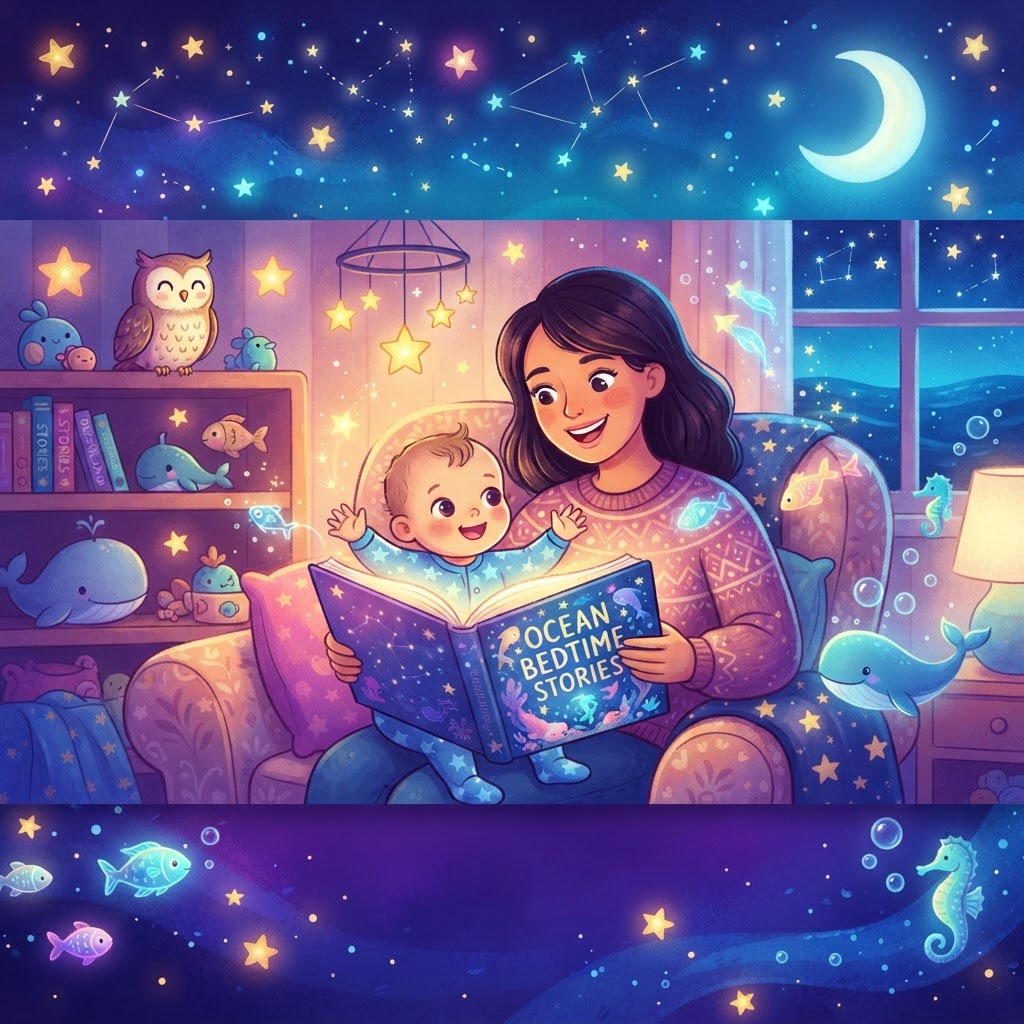
If you are looking for ocean stories for 1 year olds, the best ones are simple, soothing, and full of gentle repetition. At this age, children do not need a big plot. They need warmth, familiar words, calming rhythm, and images they can picture easily at bedtime.
That is why ocean bedtime stories can work so well. Soft waves, sleepy sea animals, moonlit water, and quiet underwater sounds naturally fit an evening routine. In this guide, you will find what makes great bedtime stories for 1 year olds, which ocean themes are most toddler-friendly, what to avoid, and five easy story ideas you can use tonight.
What developmental milestones shape bedtime stories for 1-year-olds?
At age 1, most children respond best to short, predictable stories with strong rhythm and familiar ideas. They are building language, memory, and emotional security, so bedtime stories should feel safe and easy to follow.
According to the CDC developmental milestones guide, many 1-year-olds are starting to understand simple words, gestures, routines, and object names. That means they enjoy stories about everyday experiences, especially when paired with repeated phrases and expressive tone.
For parents, this usually means choosing stories with:
- Very short sentences
- Repetition, such as “swish, swish, sleepy fish”
- Familiar actions, like waving, cuddling, splashing, or yawning
- Warm emotional cues, including smiles, comfort, and closeness
- One clear idea at a time
The American Academy of Pediatrics, through HealthyChildren.org, also emphasizes that reading aloud supports early language and bonding. At 1, your child may not follow a full storyline, but they absolutely benefit from the sound of your voice, the shared routine, and the repetition of comforting words.
Why do ocean bedtime stories appeal to 1-year-olds?
Ocean bedtime stories appeal to 1-year-olds because they combine sensory calm with gentle novelty. The sea offers soft sounds, flowing motion, and simple animal characters that feel interesting without becoming overwhelming.
Many toddlers love water long before they understand the wider world of beaches, tides, or marine life. Bath time, splashing, pouring, and watching movement are already familiar experiences. Ocean stories build on that early sensory curiosity.
Ocean themes also work well because they often include:
- Natural rhythm: waves, rocking boats, drifting seaweed
- Soft sounds: hush, swish, splash, bubble
- Friendly animals: fish, turtles, seals, whales, starfish
- Strong visuals: blue water, shiny shells, moonlight, coral colors
From a child development perspective, predictable sensory patterns help young children settle. The Harvard Center on the Developing Child explains that responsive, calm interactions support healthy early development. A quiet ocean story read in a soothing voice can become part of that calming bedtime rhythm.
If your child also enjoys outdoor-themed reading, you may like these gentle nature bedtime stories, which use similar calming patterns.
How long should bedtime stories for 1-year-olds be?
The ideal length for bedtime stories for 1 year olds is usually 2 to 5 minutes. At this age, shorter is better because attention spans are still very brief, especially at the end of the day.
A one-year-old does not need a long narrative arc. In fact, many toddlers enjoy hearing the same small scene repeated more than hearing a complex story unfold. A short ocean story about a sleepy fish finding its shell bed can be more effective than a longer tale with multiple events.
A good bedtime structure looks like this:
- Beginning: introduce one sea character
- Middle: repeat 1-2 calming actions
- Ending: the character snuggles, rests, or falls asleep
Aim for around:
- 50-150 words for very sleepy children
- 150-250 words for toddlers who enjoy a slightly longer read
- Repeated key lines so the story feels familiar even on first listen
If your child asks for “more,” you can simply repeat the last few lines slowly. For many parents, that is the sweet spot for successful kids ocean stories at bedtime.
Which ocean themes work best for 1-year-olds?
The best ocean themes for 1-year-olds are gentle, sensory, and emotionally safe. Focus on comfort, rhythm, family connection, and simple discovery rather than adventure or suspense.
Here are the strongest themes to explore:
Sleepy sea animals
A baby turtle, little whale, or tiny fish getting ready for bed is easy for a toddler to understand. The bedtime routine feels familiar, even in an underwater setting.
Parent-and-baby closeness
Stories about a baby dolphin swimming beside a parent or a little crab snuggling near home support emotional security. This theme works especially well for winding down after a busy day.
Soft ocean movement
Waves rocking, bubbles floating, and seaweed swaying create natural calm. These are ideal images for bedtime stories because they match the slow pace you want before sleep.
Simple discovery
A shiny shell, a glowing starfish, or a friendly seahorse gives the story a small point of interest. It adds wonder without overstimulating your child.
Gentle friendship
A fish waving goodnight to a turtle or a seal sharing a quiet song introduces early social ideas in a calm way. If your toddler likes relationship-based stories, try these friendship-themed stories for toddlers too.
What should parents avoid in ocean stories for 1-year-olds?
Parents should avoid anything too loud, scary, or confusing in ocean stories for this age. The goal is regulation, not excitement.
Even though older children may enjoy dramatic sea adventures, 1-year-olds are more sensitive to emotional tone than to plot details. A story can feel upsetting even if the words seem harmless to an adult.
Try to avoid:
- Storms, danger, or getting lost
- Predator-prey scenes, including chasing or biting
- Too many characters
- Fast pacing or constant action
- Bright, overstimulating language right before sleep
- Lessons that are too abstract, such as sharing explained in a complex way
Also skip stories that rely on sarcasm, jokes, or big twists. At this age, simple cause and effect works best. A little fish is sleepy, finds a cozy coral nook, and closes its eyes. That is enough.
If your child enjoys a bit more wonder but still needs calm, soft magical bedtime ideas can be a gentle next step.
What are five ocean bedtime story ideas to try tonight?
The best story ideas for this age are short, repetitive, and easy to personalize. These five work especially well for parents who want fresh ocean stories for 1 year olds without making bedtime feel busy.
-
The Sleepy Little Turtle
A tiny turtle paddles slowly past seaweed, shells, and bubbles, saying goodnight to each one before curling up under a warm rock. -
Moonlight on the Baby Whale
A baby whale follows a silver moonbeam across calm water while a parent whale hums a soft bedtime song. -
The Fish Who Found a Cozy Shell
A little fish looks for the perfect sleepy place and discovers a smooth shell where the water swishes quietly. -
Goodnight, Starfish
A starfish rests on the sandy ocean floor while one by one, nearby sea friends whisper goodnight. -
The Seahorse and the Floating Bubbles
A tiny seahorse watches bubbles drift upward, counts a few softly, then snuggles into waving seagrass.
To make these stories even more engaging, use your child’s name, favorite color, or familiar bedtime object. A toddler is much more likely to connect with “Ella the little turtle” or “Noah’s blue fish” than with a generic character.
How can parents use InstaTales to create personalized ocean bedtime stories for 1-year-olds?
Parents can use InstaTales to make personalized ocean bedtime stories that match a 1-year-old’s developmental stage. The key is to keep the prompt simple, soothing, and age-appropriate.
When you create your own personalized bedtime story, include details like:
- Your child’s first name
- A favorite sea animal
- A calming bedtime tone
- Very short sentences
- A gentle ending with sleep
For example, you might request: “Write a 2-minute ocean bedtime story for a 1-year-old about Mia the sleepy baby turtle. Use repetition, soft sounds, and a calm ending.”
This can be especially helpful when your child loves hearing the same type of story every night but you want small variations. You can also save favorites in your story library for easy re-reading, which is useful because repetition is often exactly what toddlers want.
If you want more ideas beyond ocean themes, the InstaTales blog is a good place to find age-based inspiration and bedtime reading guidance.
Frequently Asked Questions
Are ocean bedtime stories good for 1-year-olds?
Yes, ocean bedtime stories are often a great fit for 1-year-olds because they naturally include calm movement, soft sounds, and simple imagery. Gentle sea themes can help support a soothing bedtime routine.
How long should an ocean story be for a 1-year-old?
Most 1-year-olds do best with stories that last about 2 to 5 minutes. Short stories with repetition are usually more effective than longer, more detailed narratives.
What words work best in bedtime stories for 1 year olds?
Simple, familiar, sensory words work best, such as “splash,” “soft,” “bubble,” “sleepy,” and “goodnight.” Repeated phrases also help toddlers follow along and feel secure.
Can a 1-year-old understand a full story plot?
Not in the way older children do. At this age, children respond more to rhythm, repetition, emotional tone, and familiar routines than to complex plot structure.
Is it okay to use AI-generated kids ocean stories?
Yes, as long as a parent guides the content and keeps it age-appropriate. For 1-year-olds, choose short, gentle, low-stimulation stories and read them yourself so you can adjust tone and pacing.
What if my child wants the same ocean story every night?
That is completely normal. Repetition helps young children feel safe, remember language patterns, and settle more easily at bedtime.
Ready to Create a Personalized Bedtime Story?
Use our free AI bedtime story generator to create a personalized illustrated story for your child in 30 seconds — no credit card needed.
Popular story types:
Maya Rodriguez
Lead Content Editor & Early Literacy Specialist
Maya is a former early childhood educator and literacy specialist with over a decade of experience helping children develop a love of reading. She leads content at InstaTales, where she writes about the science of storytelling, child development, and how families can use personalized AI stories to build literacy and emotional resilience.
instatales.ai