Best nature bedtime stories for 1-year-olds
Discover the best nature bedtime stories for 1-year-olds — themes, tips, and story ideas that will delight your child at bedtime.
✦ Key Takeaways
- •Nature bedtime stories work well for 1-year-olds because they offer simple, soothing images that match a young toddler’s world.
- •The most important milestones at age 1 are growing receptive language, short attention spans, and a strong need for connection and routine.
- •For most 1-year-olds, the ideal bedtime story is very short: about 2 to 5 minutes.
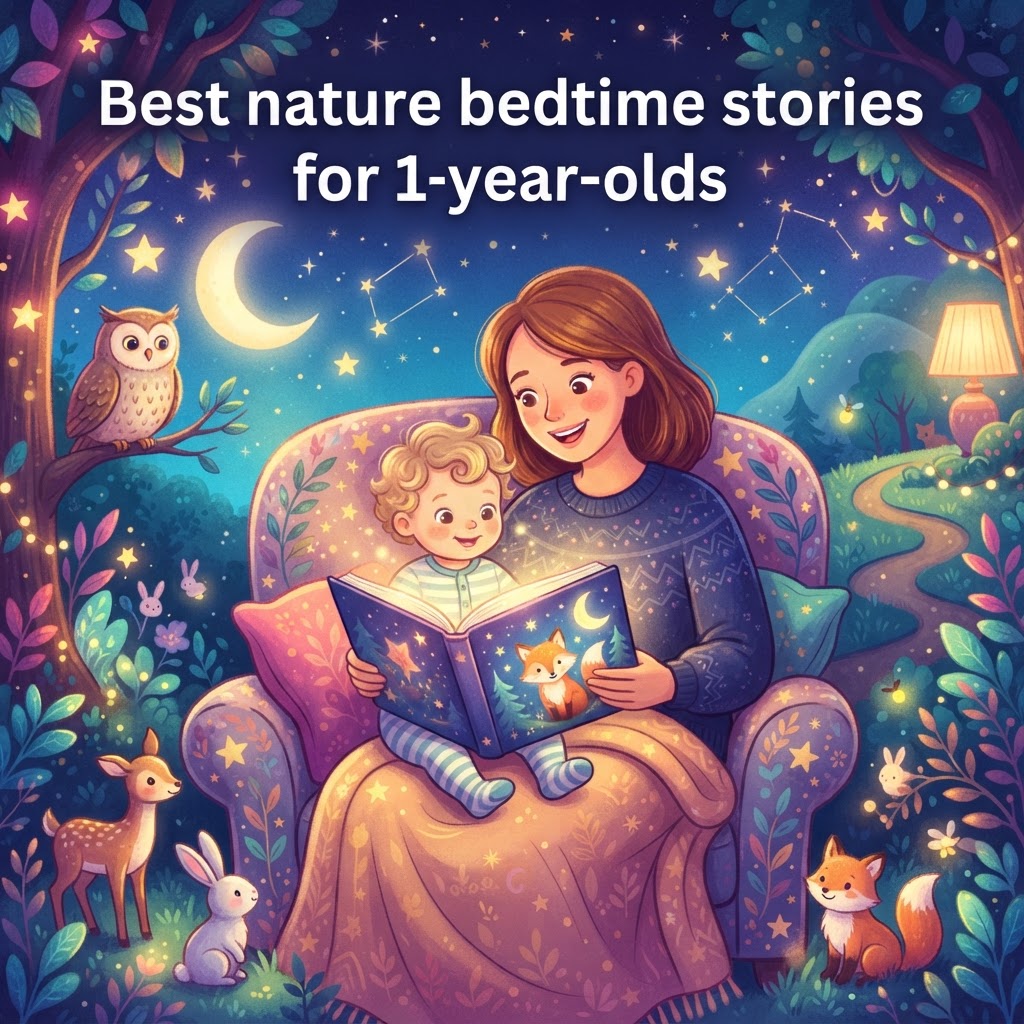
Nature bedtime stories can be a lovely match for this age because they feel calm, familiar, and sensory-rich without being too busy. For many families looking for nature stories for 1 year olds, the goal is not a big plot — it is a soothing bedtime rhythm, simple words, and a few gentle images like moonlight, leaves, birds, rain, or sleepy animals. The best bedtime stories for 1 year olds help children wind down, connect with a parent, and hear language in a warm, predictable way.
Why are nature bedtime stories such a good fit for 1-year-olds?
Nature bedtime stories work well for 1-year-olds because they offer simple, soothing images that match a young toddler’s world. At this age, children respond best to familiar sounds, repeated phrases, and clear emotional cues, all of which nature themes provide easily.
A one-year-old does not need a complicated storyline. They are more likely to enjoy a story about a sleepy bunny under the moon than a fast-moving adventure with lots of characters and conflict. Nature also gives parents natural bedtime language: soft wind, quiet stars, gentle rain, slow animals, and bedtime nests.
These stories can support early learning in a relaxed way by introducing:
- Simple vocabulary like tree, bird, moon, leaf, and cloud
- Repetition such as “night-night, little owl”
- Predictable patterns that help children feel safe
- Calm sensory imagery that lowers stimulation before sleep
If you are also exploring broader bedtime stories for 1-year-olds, nature-themed stories are often among the easiest to use as part of a steady evening routine.
Which developmental milestones matter most when choosing stories at age 1?
The most important milestones at age 1 are growing receptive language, short attention spans, and a strong need for connection and routine. In practice, that means the best stories are short, interactive, and emotionally secure.
According to the CDC’s 1-year developmental milestones, many children around this age respond to simple words, use gestures like pointing, and show interest in games and shared attention. That matters for story choice. A child may not follow a full plot, but they can absolutely enjoy pointing at a moon, hearing “tweet tweet,” or anticipating a repeated bedtime phrase.
Parents should keep these age-typical traits in mind:
- Attention is brief. Most 1-year-olds stay engaged for only a few minutes.
- Understanding comes before talking. Your child may know more words than they can say.
- Repetition is comforting. Hearing the same line again builds memory and calm.
- Serve-and-return interaction matters. The Harvard Center on the Developing Child explains that back-and-forth interaction helps build brain architecture.
That last point is especially useful at bedtime. A great story for a 1-year-old is not just something you read. It is something you share — with eye contact, a soft voice, pauses, and a chance for your child to point, pat the page, or copy a sound.
How long should bedtime stories for 1-year-olds be?
For most 1-year-olds, the ideal bedtime story is very short: about 2 to 5 minutes. If you are creating your own story, aim for roughly 50 to 150 words, one clear idea, and plenty of repetition.
Longer is not better at this age. A one-year-old is often ready for one mini-story, not a full tale with multiple scenes. If you notice your child turning pages quickly, wiggling away, or focusing more on cuddling than listening, that is normal and developmentally appropriate.
A helpful structure for nature bedtime stories at this age is:
- A familiar setting: garden, forest edge, backyard, pond
- One main character: bunny, bird, bear cub, child
- One bedtime action: finding a nest, saying goodnight, listening to rain
- One repeated phrase: “Sleep now, little one”
The American Academy of Pediatrics has long emphasized the value of reading aloud from infancy because it supports language, bonding, and routine through everyday moments, not perfect performance. The sweet spot is often “short enough to finish while your child still feels relaxed.”
Which nature themes work best for 1-year-olds at bedtime?
The best nature themes for this age are gentle, familiar, and easy to picture. Choose scenes that feel safe and slow rather than wild, dramatic, or overstimulating.
Strong options for kids nature stories include:
- Sleepy animals like owls, rabbits, ducklings, or fox cubs
- Night sky moments with stars, moonlight, and quiet skies
- Soft weather like drizzle, mist, or a light breeze
- Garden discoveries such as flowers closing or bees going home
- Water rhythms like a pond, stream, or slow ocean waves
Animal-based nature stories are especially popular because they combine comfort and recognition. If your child already loves birds, bears, or farm creatures, you might also enjoy these animal bedtime stories.
Some families also like a tiny sense of movement, as long as it stays calm. A child walking through a garden or following a butterfly can feel engaging without becoming overstimulating. If that sounds like your little one, gentle adventure stories can offer similar appeal.
What should parents avoid in nature stories for 1-year-olds?
Avoid stories that are too loud, too long, or too emotionally intense. At bedtime, the aim is regulation and closeness, not suspense.
Nature can be beautiful, but it can also turn dramatic very quickly in stories. For a 1-year-old, it is best to skip anything with storms, predators, getting lost, or a frightened main character. Even if the ending is happy, the middle may be too activating right before sleep.
Try to avoid:
- Big dangers like thunder crashes, falling from trees, or animals in trouble
- Too many characters that make the story hard to follow
- Fast scene changes from forest to river to mountain in one short tale
- Abstract lessons that matter more to adults than toddlers
- Busy language with long descriptions and little rhythm
The nonprofit Zero to Three regularly highlights how babies and toddlers learn through repetition, warm interaction, and predictable experiences. Bedtime stories should follow that principle. A soft, simple nature story will usually work better than a clever one.
What are five simple nature bedtime story ideas for 1-year-olds?
The best story ideas for this age are small, repetitive, and centered on one cozy image. These five ideas are easy to tell aloud, adapt to your child’s interests, and reuse night after night.
1. The Little Bunny Under the Moon
A tiny bunny hops three times, finds a warm patch of grass, and says goodnight to the moon. Each page or line can repeat: “Goodnight, moon. Goodnight, grass. Goodnight, little bunny.”
2. The Sleepy Ducklings at the Pond
Three ducklings paddle slowly across a quiet pond as the sky gets darker. They snuggle under mama’s wing one by one, which gives you a natural counting pattern.
3. The Raindrop on the Window
A soft raindrop slides down the window while a child listens from bed. The story can focus on sound words like drip, pat, hush, and sleep.
4. The Firefly’s Goodnight Light
One little firefly floats through the garden, blinking goodnight to flowers, leaves, and a baby bird. The repeated light-dark rhythm is naturally calming and easy for toddlers to follow.
5. The Bear Cub Finds a Cozy Cave
A bear cub walks past a tree, a rock, and a flower before curling up beside a parent bear. This is a lovely option for children who like a little movement before the story settles into rest.
These are great starting points if you want to create your own personalized bedtime story with your child’s name, favorite animal, or familiar bedtime object like a blanket or toy.
How can parents use InstaTales to create personalized nature stories for 1-year-olds?
InstaTales can help parents generate personalized nature stories that match a 1-year-old’s developmental stage. The key is to keep the prompt simple, calm, and focused on familiar details.
For this age, personalization works best when you include:
- Your child’s name or nickname
- One favorite animal or nature object
- A bedtime setting like a crib, room, or window
- One clear emotional tone: cozy, sleepy, gentle
For example, a parent might request a story about “Mila and a sleepy owl under the moon, using simple words and repetition for a 1-year-old.” That produces a story with more meaning than a generic tale because it reflects what your child already knows and loves.
It is also helpful to save favorite stories for rereading. Toddlers often want the same story again and again, and that repetition is beneficial. Keeping a few trusted stories in your story library can make bedtime easier, especially on busy nights.
Frequently Asked Questions
Are nature stories good for 1-year-olds?
Yes. Nature stories are often an excellent choice because they use simple, soothing images like animals, stars, rain, and trees. Those familiar themes help young toddlers relax and stay engaged.
How many words should a bedtime story for a 1-year-old have?
A good range is often 50 to 150 words, or about 2 to 5 minutes of reading aloud. Some children enjoy even less, especially when they are very tired.
What nature themes are most calming at bedtime?
Sleepy animals, moonlight, quiet gardens, soft rain, and gentle water are usually the most calming. Themes that feel safe, repetitive, and slow tend to work best.
What should I avoid in kids nature stories for this age?
Avoid stories with danger, loud storms, scary animals, or too many plot changes. At bedtime, simple and predictable is usually much more effective than exciting.
Can personalized AI stories work for 1-year-olds?
Yes, if they are kept very short and age-appropriate. The best personalized stories for this age use familiar names, simple words, repetition, and a calm bedtime tone.
What if my child will not sit through the whole story?
That is completely normal at age 1. You can shorten the story, tell it aloud without a book, or simply repeat one favorite line while cuddling.
Ready to Create a Personalized Bedtime Story?
Use our free AI bedtime story generator to create a personalized illustrated story for your child in 30 seconds — no credit card needed.
Popular story types:
Maya Rodriguez
Lead Content Editor & Early Literacy Specialist
Maya is a former early childhood educator and literacy specialist with over a decade of experience helping children develop a love of reading. She leads content at InstaTales, where she writes about the science of storytelling, child development, and how families can use personalized AI stories to build literacy and emotional resilience.
instatales.ai