Best friendship bedtime stories for 1-year-olds
Discover the best friendship bedtime stories for 1-year-olds — themes, tips, and story ideas that will delight your child at bedtime.
✦ Key Takeaways
- •At age 1, children benefit most from stories that match their developing attention, language, and emotional understanding.
- •Friendship bedtime stories work well because they combine emotional warmth with simple social patterns that toddlers can recognize.
- •The ideal story length for most 1-year-olds is 2 to 5 minutes, or roughly 100 to 300 words if read aloud slowly.
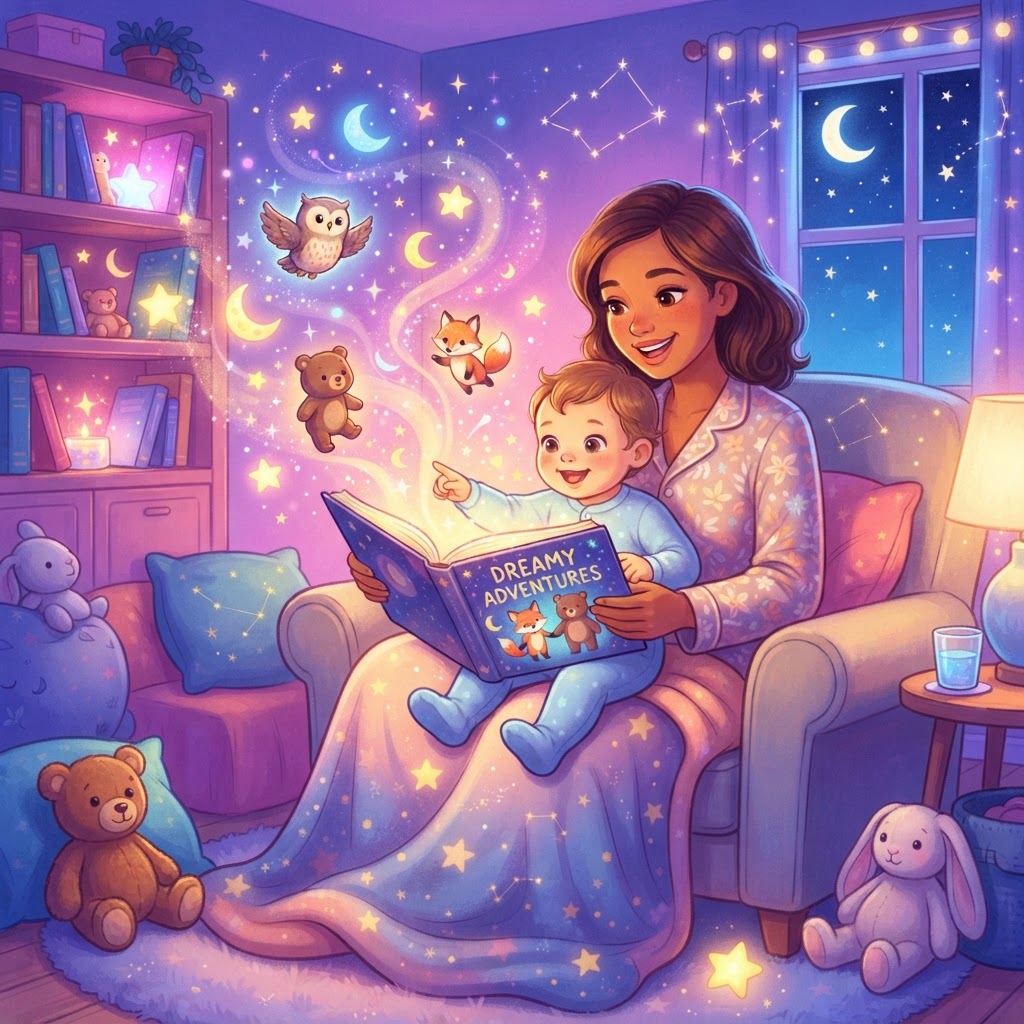
Choosing the right friendship stories for 1 year olds can make bedtime feel calmer, sweeter, and more connected. At this age, children do not follow complex plots, but they do respond strongly to warm voices, simple patterns, familiar emotions, and loving social moments. That is why the best bedtime stories for 1 year olds often focus on gentle friendship, kindness, sharing, and togetherness.
Parents often ask whether a 1-year-old can really enjoy friendship bedtime stories. The answer is yes — not because toddlers fully understand “friendship” as older children do, but because they already notice faces, voices, comfort, turn-taking, and affection. A soft story about two little animals helping each other can support language growth, emotional bonding, and early social learning all at once.
If you are building a cozy bedtime routine, this guide will help you choose age-appropriate kids friendship stories, avoid common mistakes, and find simple story ideas your child will love.
What developmental milestones matter most for bedtime stories at age 1?
At age 1, children benefit most from stories that match their developing attention, language, and emotional understanding. They are learning through repetition, sound, rhythm, and familiar routines rather than through detailed plots.
According to the CDC developmental milestones, many 1-year-olds are beginning to use simple gestures, respond to familiar words, and show preferences for people and objects they know. They also enjoy looking, pointing, babbling, and hearing the same phrases again and again.
For bedtime reading, that means stories should include:
- Simple language
- Repeated phrases
- Clear emotional cues
- Familiar daily experiences
- Gentle endings
A 1-year-old may not grasp “best friends” in the way a 5-year-old does. But they can understand the feeling of being near someone safe, offering a toy, waving hello, or cuddling after a wobble. These are the building blocks of friendship.
This is also why parents often do well with short, rhythmic stories similar to those in our guide to gentle bedtime reading for 1-year-olds. The goal is not to teach a big lesson. The goal is to create a soothing, positive emotional experience.
Why do friendship bedtime stories work so well for 1-year-olds?
Friendship bedtime stories work well because they combine emotional warmth with simple social patterns that toddlers can recognize. Even before children can explain friendship, they are already learning connection, comfort, and trust.
Research from ZERO TO THREE and the American Academy of Pediatrics consistently shows that responsive relationships and shared reading support early brain development, communication, and emotional security. A bedtime story about two little friends saying hello, sharing a blanket, or helping each other find a toy mirrors the social world a 1-year-old is just starting to notice.
These stories appeal to young toddlers because they often include:
- Faces and feelings: happy, sleepy, calm, surprised
- Predictable actions: wave, hug, share, follow, cuddle
- Reassuring rhythms: repeated names, sounds, and sentence patterns
- Low-stress connection: friendship without conflict-heavy drama
For parents, friendship themes also open the door to everyday language such as “kind hands,” “take turns,” and “we help our friends.” The story becomes a gentle bridge between bedtime comfort and real-life social learning.
How long should bedtime stories for 1-year-olds be?
The ideal story length for most 1-year-olds is 2 to 5 minutes, or roughly 100 to 300 words if read aloud slowly. Shorter is usually better at bedtime, especially when your child is tired.
At this age, attention span is limited and highly variable. Some children happily sit for several tiny books in a row, while others prefer one very short story repeated twice. Both are normal. The best bedtime stories for 1 year olds are brief enough to finish before overstimulation starts.
A good bedtime story for this age usually has:
- One main idea
- One or two characters
- A calm beginning, middle, and end
- Repetition instead of plot twists
- A sleepy final image, such as cuddling, moonlight, or bedtime
If your child loves animal characters, our collection of animal-themed bedtime stories for toddlers can be especially helpful, since animals are easy to recognize and emotionally engaging for this age.
A helpful rule: if you have to explain the story, it is probably too advanced for a 1-year-old bedtime read.
What friendship themes are best for 1-year-olds?
The best friendship themes for this age are concrete, gentle, and rooted in everyday experiences. Toddlers connect best with actions they can see, hear, and feel.
Strong themes for friendship stories for 1 year olds include:
- Saying hello and goodbye
- Sharing simple objects
- Taking turns
- Helping a friend
- Playing side by side
- Comfort after a small upset
- Bedtime routines with a buddy
- Being kind with touch and tone
For example, a story about two ducklings looking for a soft place to sleep works better than a story about a friendship tested by jealousy. A simple story about a bear bringing a blanket to a sleepy bunny is easier to follow than a complex moral lesson.
These themes also support early social-emotional development. The Center on the Developing Child at Harvard University emphasizes that young children learn through repeated, responsive interactions. Stories that model warmth, calm, and gentle cooperation reinforce those patterns.
Parents can also rotate themes to keep reading fresh:
- Friendship with animals
- Friendship in family settings
- Friendship during playtime
- Friendship during bedtime routines
If your child enjoys a little movement or discovery before sleep, you might also like these simple adventure stories for very young children, as long as the pacing stays calm.
What should parents avoid in friendship stories for 1-year-olds?
Parents should avoid stories that are too long, too noisy, too abstract, or emotionally overwhelming. The best kids friendship stories for this age feel safe and easy to process.
Try to skip or limit:
- Complex conflict
- Scary separation themes
- Fast scene changes
- Loud or chaotic characters
- Heavy moralizing
- Sarcasm or teasing
- Too many characters
A story about friends arguing, getting lost for a long time, or feeling deeply excluded may be too intense for bedtime, even if it ends well. One-year-olds are still learning emotional regulation. Bedtime reading should help settle their nervous system, not activate it.
Also avoid stories that demand perfect behavior. Friendship at this age is not about teaching formal manners through pressure. It is about gently modeling warmth, care, and simple social joy.
In practice, the safest bedtime formula is this:
- Familiar character
- Small social moment
- Repetition
- Soft resolution
- Sleepy ending
What are five simple friendship bedtime story ideas for 1-year-olds?
The best story ideas for this age are sweet, repetitive, and easy to picture. These five concepts work well because they center on friendship in a way a 1-year-old can feel, even if they cannot fully explain it.
1. Bunny and Bear Share the Moon Blanket
Bunny feels sleepy, and Bear brings a soft blanket to share under the moon. They yawn, cuddle, and say goodnight together.
2. Two Ducklings Take Turns Splashing
Two little ducklings splash one at a time in a tiny puddle. They quack, wait, splash again, and end with a warm snuggle by the reeds.
3. Kitten Helps Puppy Find His Teddy
Puppy cannot find his bedtime teddy. Kitten looks under the pillow, beside the basket, and near the lamp until the teddy appears and both friends cheer softly.
4. Little Fox Waves Hello to New Friends
Little Fox meets a bird, a lamb, and a mouse during an evening walk. Each new friend says hello in a gentle way, and Fox returns home feeling happy and calm.
5. Elephant and Mouse Build a Cozy Bed
Elephant carries the pillow, Mouse brings the blanket, and together they make the coziest bed. They climb in, listen to the night sounds, and drift off.
These story types are easy to personalize with your child’s name, favorite toy, preferred animal, or bedtime routine. If you want more variety, you can explore ideas on the InstaTales blog or start with ready-made story templates.
How can parents personalize friendship stories for 1-year-olds with InstaTales?
Personalized stories can make bedtime more engaging because they use names, routines, and favorites your child already knows. For a 1-year-old, that familiarity can increase attention and comfort.
With InstaTales, parents can create your own personalized bedtime story using simple friendship themes, favorite animals, calming settings, and a bedtime tone that fits this age. You might create a story where your child and a baby bunny share blocks, help a sleepy bear, or cuddle under the stars with a best friend.
To keep personalized stories age-appropriate for 1-year-olds, aim for:
- One main friendship action
- Very short sentences
- Repeated names and phrases
- Calm images and soft endings
- Minimal conflict
A practical bonus is that you can save the stories your child responds to best in your story library. Re-reading familiar favorites is not a problem at this age — it is often exactly what supports language, bonding, and bedtime calm.
For families, caregivers, and early educators, personalized stories can also help connect reading to real routines. If you want more literacy ideas for group settings, InstaTales for teachers offers useful options for classroom-friendly storytelling too.
Frequently Asked Questions
Are friendship stories good for 1-year-olds?
Yes. Friendship stories are a great fit for 1-year-olds when they focus on simple actions like sharing, helping, waving, or cuddling. These stories support early social awareness in a calm, age-appropriate way.
What makes a bedtime story appropriate for a 1-year-old?
A good bedtime story for this age is short, repetitive, gentle, and easy to follow. It should have simple language, clear emotions, and a soothing ending.
How often should I read bedtime stories to my 1-year-old?
Daily reading is ideal, even if it only lasts a few minutes. Consistent shared reading supports bonding, language development, and bedtime routines.
Can a 1-year-old understand friendship?
Not in a fully developed way, but they do understand connection, comfort, and familiar social patterns. That is why simple friendship bedtime stories can still feel meaningful and enjoyable.
Should bedtime stories teach lessons at this age?
Only in a very gentle way. At age 1, stories work best when they model kindness and connection rather than trying to deliver big moral messages.
Can I make personalized friendship stories for my toddler?
Yes. Personalized stories can be especially engaging when they include your child’s name, favorite animal, or bedtime routine. Just keep the story short, soothing, and developmentally simple.
Ready to Create a Personalized Bedtime Story?
Use our free AI bedtime story generator to create a personalized illustrated story for your child in 30 seconds — no credit card needed.
Popular story types:
Maya Rodriguez
Lead Content Editor & Early Literacy Specialist
Maya is a former early childhood educator and literacy specialist with over a decade of experience helping children develop a love of reading. She leads content at InstaTales, where she writes about the science of storytelling, child development, and how families can use personalized AI stories to build literacy and emotional resilience.
instatales.ai