5 Best Diwali Bedtime Stories for Children
The best Diwali bedtime stories for children — cozy, festive tales that make the season magical at storytime.
✦ Key Takeaways
- •The best Diwali bedtime stories for children are gentle, meaningful, and easy to follow.
- •Diwali stories for kids are especially meaningful at bedtime because they connect celebration with comfort.
- •The best Diwali themes for bedtime are light, family, kindness, and wonder.
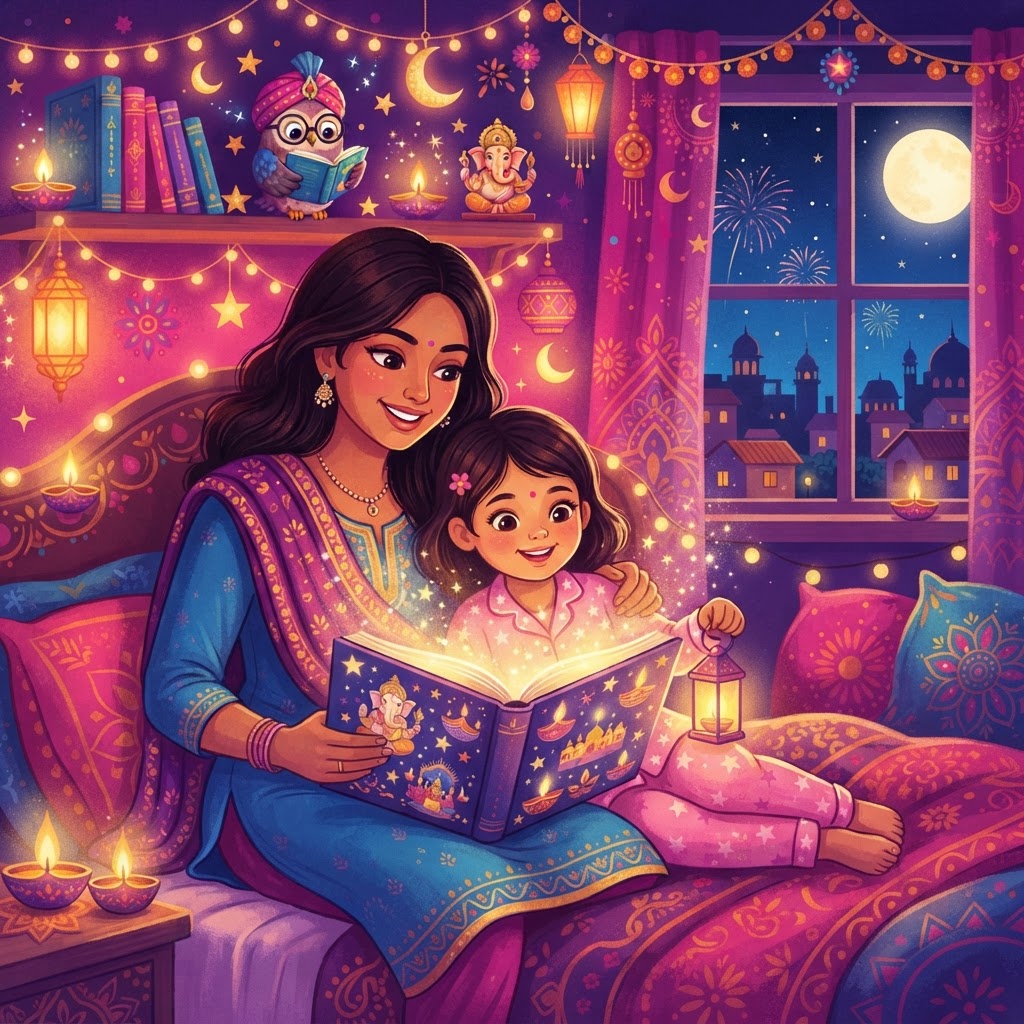
Diwali is full of sparkle by day, but some of its sweetest magic happens at night. A calm, festive story can help children wind down, feel connected to family traditions, and carry the warmth of the season into sleep.
If you are looking for the best Diwali bedtime stories, it helps to think beyond bright lights and sweets alone. Great Diwali stories for kids balance celebration with comfort. They make room for wonder, family, kindness, and that peaceful bedtime feeling every parent hopes for.
What makes the best Diwali bedtime stories for children?
The best Diwali bedtime stories for children are gentle, meaningful, and easy to follow. They celebrate the festival’s joy while keeping the tone calm enough for sleep.
At bedtime, children respond best to stories with a clear emotional arc: a small problem, a warm solution, and a reassuring ending. For Diwali, that might mean a lost diya finding its place, cousins preparing for a family celebration, or a child learning that light can mean kindness as much as lamps.
Look for stories that include:
- Simple, cozy pacing rather than loud, fast action
- Age-appropriate cultural details like diyas, rangoli, sweets, prayer, family visits, or festive clothes
- Positive emotional themes such as hope, generosity, courage, gratitude, and belonging
- A satisfying bedtime ending, where children feel safe, loved, and settled
Good children Diwali books also respect the fact that families celebrate Diwali in different ways. Some focus on spiritual meaning, some on family traditions, and some on the broader theme of light over darkness. That flexibility makes Diwali bedtime reading more inclusive and more useful for families, teachers, and caregivers.
Why are Diwali stories for kids especially meaningful at bedtime?
Diwali stories for kids are especially meaningful at bedtime because they connect celebration with comfort. A child who hears familiar seasonal stories before sleep often remembers the holiday more deeply and feels more secure within family routines.
Reading aloud supports language growth, attention, and emotional bonding. The American Academy of Pediatrics recommends shared reading from infancy because it helps build strong relationships and early literacy. Organizations like Reach Out and Read also point to regular reading as a powerful support for vocabulary and school readiness.
Bedtime stories add another layer: regulation. Calm storytelling, cuddling, and predictable routines help children settle their bodies and emotions. The Center on the Developing Child at Harvard University highlights the value of responsive back-and-forth interactions for healthy development, and bedtime reading is one of the easiest ways to create that kind of connection.
From a literacy perspective, seasonal books also work well because they give children repeated, meaningful vocabulary. Words like diya, rangoli, festival, lantern, and celebration stick better when tied to a real family experience. This is similar to what dialogic reading research by Grover Whitehurst and colleagues found: children learn more when stories invite conversation, prediction, and personal connection.
Which Diwali themes work best in children Diwali books and bedtime tales?
The best Diwali themes for bedtime are light, family, kindness, and wonder. They reflect the spirit of the festival without overstimulating children right before sleep.
These themes tend to work especially well in Diwali bedtime reading:
-
Light over darkness
This is the classic Diwali idea, and it translates beautifully for children. Light can mean hope, truth, courage, or helping someone feel less alone. -
Family and tradition
Children love stories about grandparents, cousins, cooking, decorating, and getting ready together. These details make the season feel real and memorable. -
Generosity and sharing
A story about offering sweets, helping a neighbor, or including a shy friend teaches values in a natural way. -
Small acts of bravery
A nervous child lighting their first diya with help, performing in a celebration, or speaking kindly after a disagreement gives emotional depth without becoming too intense. -
Sensory magic
Rangoli colors, glowing lamps, soft music, festive clothing, and the smell of treats help children imagine the world of the story.
The strongest children Diwali books do not just explain the holiday. They let a child feel it.
What are five Diwali bedtime story ideas children will love?
Five story types work especially well for Diwali bedtime reading: a gentle lamp story, a family-preparation story, an animal rescue tale, a wish-filled celebration, and a memory story with an elder. Each one captures the festival in a calm, child-friendly way.
1. The Little Diya That Wouldn’t Go Out
A tiny lamp worries it is too small to matter when the house is filled with bigger, brighter decorations. By the end, it learns that even a small light can guide someone home.
This is ideal for ages 3-6 because it is symbolic, soothing, and reassuring.
2. Meera and the Sweet Box Surprise
Meera helps her family prepare treats for Diwali and notices one extra box with no name on it. She spends the evening discovering that her parents plan to share it with a neighbor who is celebrating alone.
This kind of story supports empathy, gratitude, and community.
3. The Rangoli That Guided a Lost Kitten
A child carefully makes a rangoli at the doorstep, only to find a frightened kitten hiding nearby. The glowing entryway becomes a safe path that helps the kitten feel brave enough to come inside.
This idea is especially good for animal-loving children and for bedtime calm.
4. Aarav’s Firework Wishes
Instead of focusing on loud fireworks, this story turns each “firework” into a quiet wish in the night sky: one for courage, one for kindness, one for family, and one for peace. The visual imagery feels festive without being overstimulating.
This is a lovely option for children ages 4-8.
5. Grandpa’s Lantern Map
A grandparent shares a Diwali memory from long ago and draws a pretend lantern map through the house, with each stop linked to a family tradition. By the end, the child understands that traditions are like lights passed from one generation to the next.
This story works beautifully for mixed-age siblings.
If you want even more holiday inspiration throughout the year, the Hanukkah bedtime story guide and these cozy Thanksgiving bedtime picks can help you build a full seasonal story rotation.
How can parents choose age-appropriate Diwali bedtime reading?
Parents can choose age-appropriate Diwali bedtime reading by matching the story’s length, language, and emotional intensity to the child’s age. The right fit keeps storytime engaging instead of overstimulating.
A simple guide:
- Ages 1-3: Choose short stories with repetition, sensory details, and loving family scenes. Think lamps, colors, cuddles, and very gentle plots.
- Ages 4-6: Look for one clear problem and solution, plus strong visual details. This is a great age for stories about helping, sharing, or learning a tradition.
- Ages 7-10: Children can enjoy richer cultural context, layered family relationships, and more developed storylines. They may also like stories that include history, symbolism, or moral choices.
As a children’s education rule of thumb, bedtime is not the best time for confusing timelines, scary villains, or overly noisy scenes. If a story leaves a child asking anxious questions, it may be better for daytime reading instead.
How can you create a custom Diwali adventure with InstaTales?
You can create a custom Diwali adventure by starting with your child’s age, interests, and family traditions. Personalized storytelling makes Diwali feel immediate, familiar, and deeply engaging.
With InstaTales, you can create your own personalized bedtime story based on details your child already loves: their name, favorite animal, preferred story length, or a special Diwali memory. That can turn a general holiday tale into something that feels truly theirs.
A simple way to build a great story is to choose:
- A main character your child relates to
- One Diwali tradition to center the plot
- A gentle bedtime problem to solve
- A cozy ending that returns the child to safety and calm
If you want a fast start, browse the Diwali-friendly options in story templates. Once you find a version your child loves, save it in your story library so you can reread it next year or revisit it throughout the season.
For teachers or homeschoolers, Diwali storytelling can also support cultural learning, vocabulary, and descriptive writing. Classroom users may find InstaTales for teachers helpful when planning seasonal literacy activities.
How can seasonal reading make Diwali more memorable for children?
Seasonal reading makes Diwali more memorable because it helps children revisit the meaning of the celebration in a calm, repeated way. Stories act like anchors: they connect emotions, language, and family rituals.
When children hear holiday stories across several nights, they begin to anticipate the language, images, and values of the season. That repetition builds comprehension and confidence. It also gives parents easy openings for conversations like, “What do we do in our family?” or “How can we be a light for someone today?”
Seasonal books also help families create traditions that are low-cost, screen-light, and highly relational. One carefully chosen Diwali story, read several times, often becomes more meaningful than a stack of unfamiliar books.
If your family enjoys rotating stories through the calendar year, explore more ideas on the InstaTales blog. A seasonal shelf can help children connect festivals, values, and family memories all year long.
Frequently Asked Questions
What age are Diwali bedtime stories best for?
Diwali bedtime stories can work well for children from about age 1 through 10. The key is choosing the right length, language, and emotional tone for the child’s developmental stage.
Are Diwali stories only for Hindu families?
No. Diwali stories can be enjoyed by any family when they are shared respectfully and with cultural context. They are especially valuable for teaching children about light, kindness, tradition, and community.
How long should Diwali bedtime reading be?
For toddlers, 3-7 minutes is often enough. For preschool and early elementary children, 8-15 minutes usually works well, especially if the story is calm and interactive.
What should I avoid in a bedtime Diwali story?
Avoid overly loud, scary, or chaotic scenes right before sleep. Stories with warmth, clear structure, and a peaceful ending are usually the best choice for bedtime.
Can I personalize a Diwali story without losing cultural respect?
Yes, as long as the story keeps the traditions accurate and meaningful. Personalization works best when it adds your child’s interests while still honoring the values, symbols, and family-centered spirit of Diwali.
Ready to Create a Personalized Bedtime Story?
Use our free AI bedtime story generator to create a personalized illustrated story for your child in 30 seconds — no credit card needed.
Popular story types:
Maya Rodriguez
Lead Content Editor & Early Literacy Specialist
Maya is a former early childhood educator and literacy specialist with over a decade of experience helping children develop a love of reading. She leads content at InstaTales, where she writes about the science of storytelling, child development, and how families can use personalized AI stories to build literacy and emotional resilience.
instatales.ai