Best fairy tales bedtime stories for 9-year-olds
Discover the best fairy tales bedtime stories for 9-year-olds — themes, tips, and story ideas that will delight your child at bedtime.
✦ Key Takeaways
- •Nine-year-olds are usually ready for more layered stories, stronger character motivation, and gentle moral complexity.
- •Fairy tales appeal to 9-year-olds because they turn big feelings into manageable symbols.
- •For most 9-year-olds, the ideal bedtime story length is about 10 to 20 minutes.
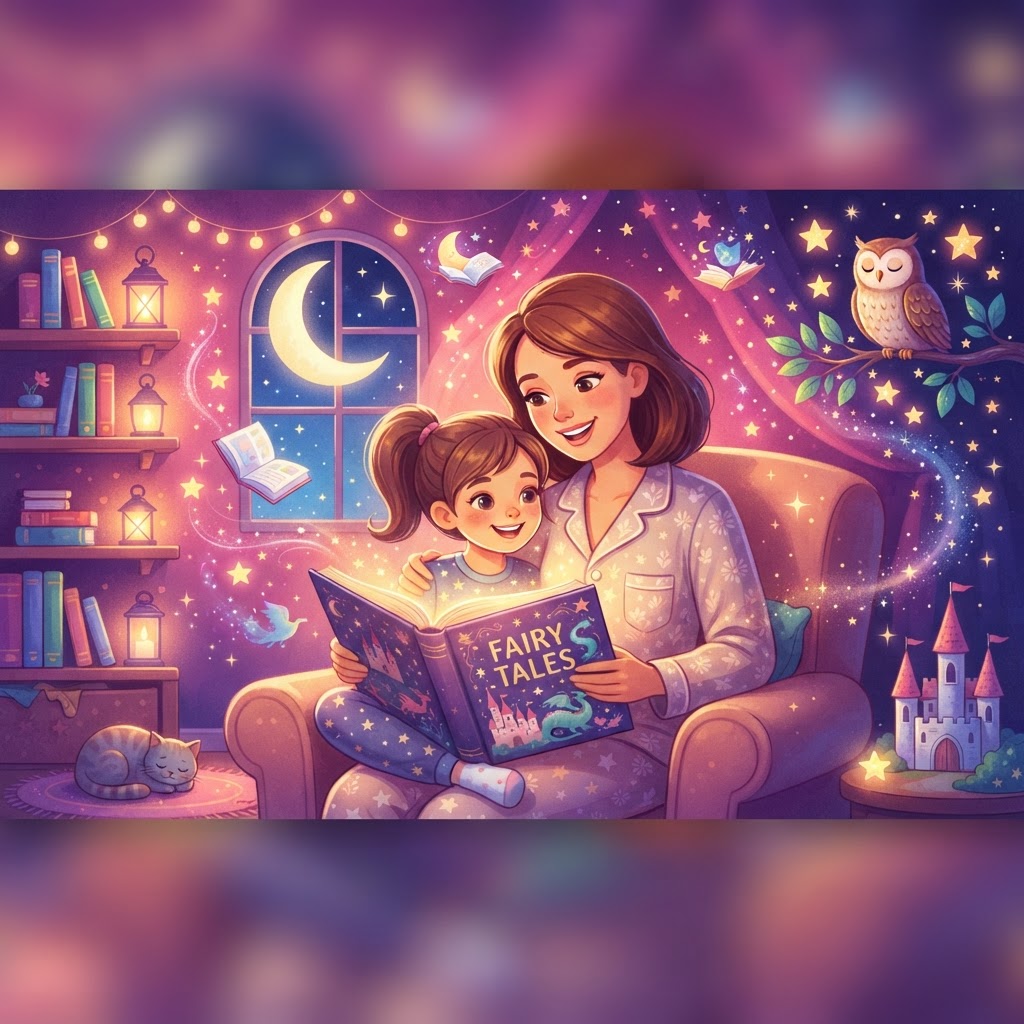
If you're looking for fairy-tales stories for 9 year olds, the best choices blend wonder, adventure, and emotional depth without making bedtime feel too intense. At this age, children still love enchanted forests, talking animals, and mysterious quests, but they also want smarter plots, brave heroes, and endings that feel earned. This guide will help you choose the right bedtime stories for 9 year olds, understand what makes fairy-tales bedtime stories work so well, and find fresh ideas you can use tonight.
What developmental milestones matter most for 9-year-olds?
Nine-year-olds are usually ready for more layered stories, stronger character motivation, and gentle moral complexity. They still enjoy imagination, but they also notice fairness, cause and effect, and whether a character’s choices make sense.
This age sits in the heart of middle childhood, a stage when many children grow in empathy, logic, and independence. According to the CDC’s guidance on middle childhood, children in this age range are developing stronger friendships, more self-awareness, and better problem-solving skills. That matters at bedtime because stories can now hold:
- More than one problem or challenge
- Characters who make mistakes and repair them
- Themes of loyalty, courage, justice, and responsibility
- Endings that feel hopeful, not just “happily ever after” by default
In practical terms, the best kids fairy-tales stories for this age do not talk down to children. A 9-year-old can follow a clever twist, understand a hidden lesson, and appreciate a hero who succeeds through persistence rather than pure luck.
Why do fairy tales stories appeal to 9-year-olds?
Fairy tales appeal to 9-year-olds because they turn big feelings into manageable symbols. Magic, villains, quests, and transformations help children explore fear, bravery, jealousy, kindness, and justice in a safe way.
At 9, many children are beginning to think more deeply about rules, fairness, and identity. Fairy tales are perfect for that stage because they often ask questions like: Who can I trust? What is the right thing to do? What happens when someone is selfish or kind?
They also offer emotional distance. A child may not want a realistic story about school stress right before sleep, but they may happily listen to a tale about a lost key, a moonlit forest, or a clever child outwitting a greedy troll. Research and literacy experts at Reading Rockets also note that reading aloud supports vocabulary, comprehension, and a love of language, which is one reason bedtime reading still matters well beyond the early years.
For many families, fairy tales also feel timeless. They invite ritual, cozy repetition, and conversation. If your child already enjoys magical bedtime stories, fairy-tale structures will likely feel especially satisfying.
How long should bedtime stories for 9 year olds be?
For most 9-year-olds, the ideal bedtime story length is about 10 to 20 minutes. That often works out to roughly 1,200 to 2,500 words, depending on your reading pace and how often your child stops to comment or ask questions.
The goal at bedtime is not just entertainment. It is emotional settling. A story that is too short may feel abrupt, while one that is too long can become stimulating and delay sleep.
A good rule of thumb is:
- 10-12 minutes for a school night when your child is already tired
- 15-20 minutes for a relaxed evening or a chapter-based story
- Short chapters if your child enjoys longer adventures but needs a clear stopping point
Watch your child’s cues. If they become more alert as the plot intensifies, choose a calmer story or stop at a softer moment. If they beg for “just one more page,” that may mean the length is right but the pacing is too exciting for bedtime.
For parents who want variety, mixing fairy tales with quieter formats can help. You might rotate enchanted adventures with gentler bedtime picks for 9-year-olds to keep evenings balanced.
Which fairy-tale themes work best for 9-year-olds?
The best fairy-tale themes for 9-year-olds are courage, cleverness, friendship, justice, and transformation. These themes match a child’s growing sense of independence while still feeling magical and emotionally safe.
Here are some especially strong theme choices:
-
Courage with uncertainty
A hero can be scared and still do the right thing. That feels realistic to 9-year-olds. -
Clever problem-solving
Children this age enjoy stories where the main character wins by thinking, noticing details, or solving a riddle. -
Friendship and loyalty
Peer relationships matter deeply at 9. Stories about trust and teamwork often resonate. If your child loves relationship-driven plots, try friendship-focused stories. -
Justice and fairness
Many 9-year-olds care strongly about what is fair. Fairy tales often provide satisfying moral order without needing a lecture. -
Transformation and self-discovery
Hidden doors, secret gifts, cursed gardens, and shape-shifting helpers all mirror the feeling of growing up and changing. -
Nature and wonder
Forest spirits, rivers that speak, and moon gardens offer magic without overwhelming intensity. Families who enjoy those settings may also like nature-themed tales.
You can also stretch the fairy-tale format into other interests. A child who loves stars and adventure may enjoy tales with a mythic feel, like space adventures for 9-year-olds.
What should parents avoid in fairy-tales bedtime stories?
Parents should avoid stories that are too frightening, too hopeless, or too emotionally unresolved for bedtime. A 9-year-old can handle tension, but bedtime is usually not the best time for graphic punishments, relentless danger, or endings that leave the child unsettled.
Classic fairy tales often contain darker material, so adaptation matters. Watch out for:
- Graphic violence or cruel punishments
- Repeated humiliation or shaming
- Frightening imagery with no emotional relief
- Stereotypes about appearance, gender, or “goodness”
- Romance themes that feel too mature or irrelevant
- Endings where the problem is solved only by adult rescue
It is also worth avoiding stories that confuse excitement with quality. A bedtime fairy tale does not need constant peril. In fact, children usually settle better when a story includes tension, then reassurance, then a calm resolution.
If you do read older traditional tales, feel free to soften or update them. That is not “ruining” the story. It is thoughtful parenting. The Harvard Center on the Developing Child highlights how children build self-regulation over time, and bedtime routines work best when adults support that process rather than overload it.
What are five great fairy-tales bedtime story ideas for 9-year-olds?
The best story ideas for this age combine one magical hook with one emotional challenge. That balance makes a tale memorable without making it too busy for bedtime.
1. The Clockmaker’s Hidden Forest
A child discovers that every time the town clock strikes thirteen, a secret forest appears behind the library. To save it, they must solve three riddles about patience, honesty, and courage.
2. The Dragon Who Collected Apologies
A lonely dragon does not steal gold. Instead, he collects the apologies people never said aloud. A brave child helps return them, healing old hurts across the kingdom.
3. The Glass Shoes That Chose the Wrong Hero
A magical pair of shoes picks an ordinary village child instead of a prince or princess. The child must learn why kindness, not status, is the real magic.
4. The River That Remembered Names
When children in a village begin forgetting their happiest memories, one girl follows a silver river to a sleeping water spirit. Along the way, she learns that remembering others is a kind of magic.
5. The Baker’s Son and the Moon Seed
A child plants a mysterious glowing seed and grows a staircase into the night sky. At the top waits a moon garden where wishes only bloom for those who help someone first.
These kinds of plots work especially well because they allow wonder, suspense, and a comforting ending. They also adapt beautifully into personalized stories.
How can parents use InstaTales to create better fairy-tales bedtime stories?
Personalized fairy tales can make bedtime more engaging because children listen more closely when the story reflects their world. A child who hears their name, favorite animal, or biggest interest woven into a fairy-tale adventure often feels instantly connected.
With InstaTales, parents can create your own personalized bedtime story based on age, theme, and mood. For 9-year-olds, that means you can generate fairy tales with the right level of challenge, a gentler bedtime pace, and details your child actually cares about.
A few helpful ways to use it:
- Start with one of the ready-made story templates if you want a quick, structured bedtime option
- Save favorite stories in your story library so your child can revisit beloved characters
- Choose themes tied to current interests, such as magic, animals, friendship, or mystery
- Personalize the emotional tone: cozy, adventurous, reassuring, or thoughtful
This can also be useful for reluctant readers. A child who helps shape the story may feel more ownership and curiosity. If you want more inspiration by age and theme, browse the InstaTales blog for related ideas and reading guidance.
Frequently Asked Questions
Are fairy tales still appropriate for 9-year-olds?
Yes. Fairy tales are often an excellent fit for 9-year-olds because they combine imagination with meaningful themes like bravery, justice, and friendship. The key is choosing versions with age-appropriate pacing and emotional tone.
What makes bedtime stories for 9 year olds different from stories for younger children?
Stories for 9-year-olds can handle more complex plots, stronger character motivation, and bigger questions about fairness or identity. They still need warmth and clarity, but they usually do not need the heavy repetition younger children prefer.
How scary is too scary for a bedtime fairy tale?
If a story leaves your child worried, hyper-alert, or asking repeated safety questions, it is probably too intense for bedtime. Mild suspense is fine, but the story should return to safety and emotional comfort before sleep.
How often should I read fairy-tales bedtime stories to my child?
Even a few nights a week can be valuable. Regular read-aloud time supports connection, vocabulary, and routine, especially when stories are enjoyable and discussion-friendly.
Can personalized kids fairy-tales stories help reluctant readers?
Yes. Personalization can boost attention and motivation because the child feels part of the story world. Seeing their interests reflected in the plot often makes reading feel more relevant and fun.
Should I rewrite classic fairy tales if parts feel outdated?
Absolutely. Adapting language, removing harsh punishments, or updating stereotypes is a practical and responsible choice. The goal is to preserve the wonder while making the story feel safe and meaningful for your child.
Ready to Create a Personalized Bedtime Story?
Use our free AI bedtime story generator to create a personalized illustrated story for your child in 30 seconds — no credit card needed.
Popular story types:
Maya Rodriguez
Lead Content Editor & Early Literacy Specialist
Maya is a former early childhood educator and literacy specialist with over a decade of experience helping children develop a love of reading. She leads content at InstaTales, where she writes about the science of storytelling, child development, and how families can use personalized AI stories to build literacy and emotional resilience.
instatales.ai