Best fantasy bedtime stories for 9-year-olds
Discover the best fantasy bedtime stories for 9-year-olds — themes, tips, and story ideas that will delight your child at bedtime.
✦ Key Takeaways
- •Fantasy bedtime stories work especially well at age 9 because children this age can handle more complex plots while still loving imaginative worlds.
- •At age 9, most children are ready for deeper characters, stronger cause-and-effect, and more layered emotions.
- •For most 9-year-olds, the ideal fantasy bedtime story is about 10 to 20 minutes long.
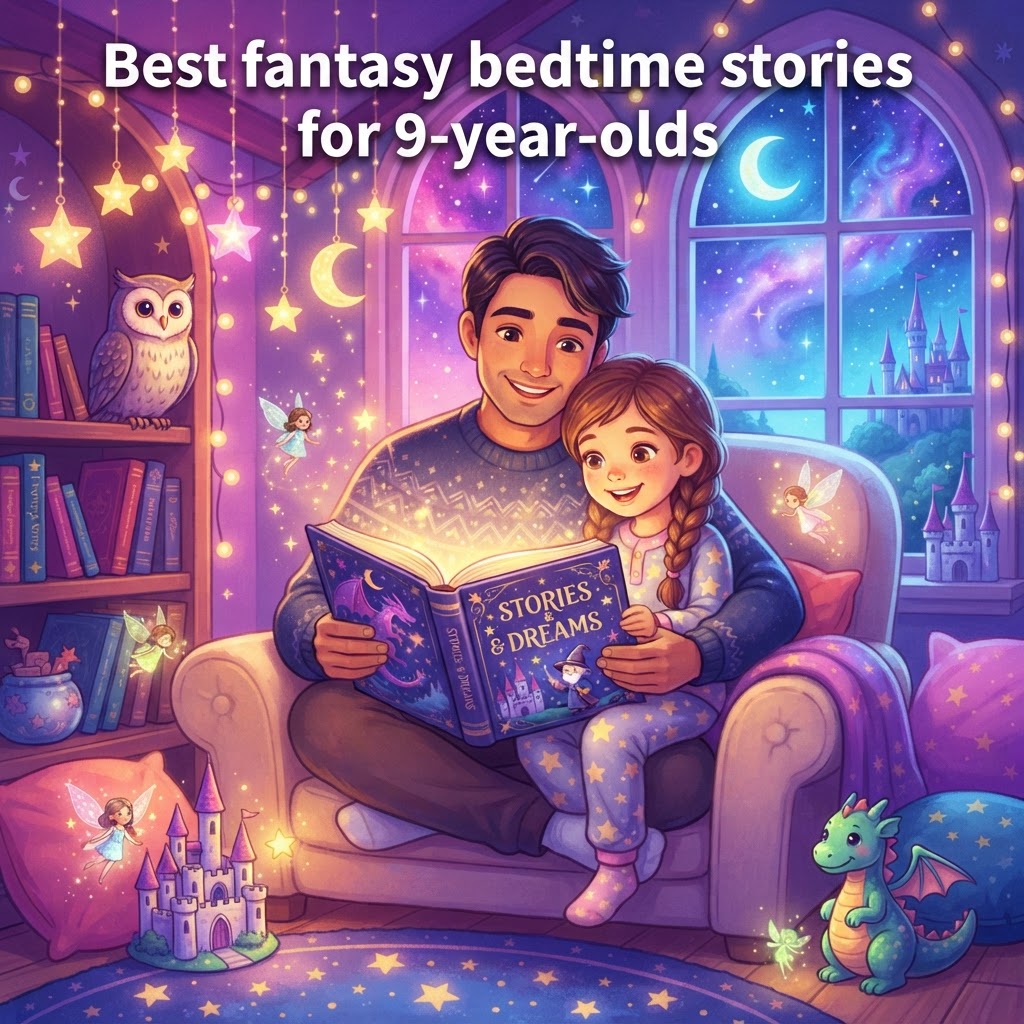
Nine-year-olds are at a wonderful reading age: old enough to enjoy richer plots, but still young enough to believe that a hidden map, a talking fox, or a moonlit portal might be waiting just around the corner. The best fantasy bedtime stories for 9-year-olds balance wonder with emotional safety, giving children adventure, humor, and hope without making bedtime feel too intense. For parents searching for fantasy stories for 9 year olds or gentle bedtime stories for 9 year olds, the sweet spot is usually imaginative, character-led storytelling that feels exciting by page three and comforting by the final line.
Why do fantasy bedtime stories work so well for 9-year-olds?
Fantasy bedtime stories work especially well at age 9 because children this age can handle more complex plots while still loving imaginative worlds. They want stories that feel bigger than everyday life, but they also need emotional clarity and satisfying endings before sleep.
Around age 9, many children are in what Jean Piaget called the concrete operational stage. In simple terms, they are getting better at logic, cause and effect, and understanding other people’s perspectives. That makes kids fantasy stories especially appealing: children can follow magical rules, notice clues, and think about what a hero should do next.
Fantasy also gives children safe distance from real worries. A problem feels easier to explore when it appears as a dragon guarding a bridge, a storm over a crystal island, or a spell that only teamwork can break. The Harvard Center on the Developing Child has highlighted how children continue building self-regulation, perspective-taking, and resilience through middle childhood, and stories are one gentle way to practice those skills.
At bedtime, fantasy has one more benefit: it turns winding down into something children look forward to. Instead of “go to sleep,” the invitation becomes, “Come meet the mapmaker, the star horse, and the whispering forest.”
What developmental milestones should parents consider at age 9?
At age 9, most children are ready for deeper characters, stronger cause-and-effect, and more layered emotions. They can usually track a longer story, understand motives, and enjoy moral choices, but they still need reassurance, rhythm, and resolution at bedtime.
Many 9-year-olds are developing:
- Better attention spans for read-alouds
- Stronger vocabulary and inference skills
- A growing sense of fairness and justice
- More interest in friendships, teamwork, and belonging
- Greater sensitivity to embarrassment, failure, and exclusion
This is why the best bedtime stories for 9 year olds often include a clear emotional thread. A child this age may love a magical tournament, but what keeps them listening is often the friendship conflict, the brave apology, or the character who learns to trust themselves.
Parents should also remember that 9-year-olds vary widely. Some want gentle enchanted forests; others love high-stakes quests. The CDC’s guidance on middle childhood reminds families that school-age children are growing in independence while still needing strong emotional support. In practice, that means choosing stories that stretch the imagination without overwhelming the nervous system right before sleep.
How long should bedtime stories for 9-year-olds be?
For most 9-year-olds, the ideal fantasy bedtime story is about 10 to 20 minutes long. On school nights, shorter is usually better; on weekends, children can often enjoy a slightly longer chapter or episodic adventure.
A good rule of thumb is:
- 10-12 minutes for tired evenings
- 15 minutes for a satisfying single bedtime story
- 15-20 minutes for chapter-based fantasy with a calm stopping point
Length matters because bedtime stories should soothe, not overstimulate. If the story ends in the middle of a chase, your child may feel more wired than sleepy. If it wraps up too fast, they may not feel emotionally settled. The best fantasy bedtime stories give enough adventure to feel special and enough closure to support sleep.
If your child tends to get activated by suspense, it can help to alternate fantasy with gentler reads, such as these calming bedtime stories for 9-year-olds. And if your child enjoys lightness before sleep, a little humor can go a long way, which is why many families also rotate in funny bedtime stories for 9-year-olds.
Which fantasy themes are best for this age?
The best fantasy themes for 9-year-olds combine wonder, competence, and emotional safety. Children this age tend to love stories where magic helps characters grow, solve problems, and build meaningful relationships.
Themes that usually work very well include:
-
Hidden worlds with clear rules
Think secret libraries, moon doors, cloud villages, or map rooms that only open at dusk. Nine-year-olds enjoy fantasy more when the magical world has logic. -
Friendship and teamwork
A trio of children, a sibling pair, or a child-and-creature partnership often feels very satisfying. Cooperation matters a lot at this age. -
Quests with manageable stakes
“Save the glowing tree before sunrise” works better at bedtime than “the entire universe will collapse forever.” -
Animal companions and magical helpers
Talking owls, brave rabbits, tiny dragons, and sea horses remain highly appealing because they offer warmth and humor. -
Courage, fairness, and choice
Nine-year-olds are often deeply interested in doing what is right. Fantasy lets them explore justice in a vivid, memorable way.
Parents often find that classic wonder still works beautifully at this age, especially when retold in a fresh, less frightening way. If your child loves enchanted kingdoms, talking creatures, and magical tests, these fairy tale picks for 9-year-olds can be a strong companion to newer fantasy reads.
Research shared by Reading Rockets consistently points to the value of read-aloud experiences for vocabulary, comprehension, and motivation to read. In other words, rich fantasy language is not just fun; it also supports literacy growth.
What should parents avoid in fantasy bedtime stories?
Parents should avoid fantasy stories that are too frightening, too fast-paced, or emotionally unresolved for bedtime. A story can still have danger and tension, but it should not leave a 9-year-old worried, confused, or unable to settle.
Watch out for:
- Graphic monsters, body horror, or vivid peril
- Hopeless endings or heavy unresolved loss
- Intense betrayal between trusted characters
- Relentless cliffhangers right before lights-out
- Overly dense world-building that becomes mentally tiring
- Sarcastic humor that undercuts emotional safety
It also helps to avoid stories where the child hero is powerful but emotionally alone. Many 9-year-olds are beginning to think more deeply about belonging and peer relationships. Bedtime stories feel better when support is present: a wise grandmother, a loyal friend, a magical fox, or even a grumpy-but-kind giant.
If a child enjoys fantasy but is prone to bedtime worries, soften the edges. Choose moonlit adventures over nightmare realms, puzzles over battles, and reassuring endings over shock twists.
What are five fantasy bedtime story ideas a 9-year-old will love?
The best story ideas for this age feel magical, emotionally clear, and easy to personalize. A child is more likely to stay engaged when they can imagine themselves inside the world.
Here are five strong ideas:
1. The Library Behind the Moon Clock
Every midnight, a clock in the town square opens a staircase to a hidden library where unfinished stories wait for the right child to complete them. Your child must help a shy phoenix find the missing ending to a tale that keeps the stars glowing.
2. The Dragon Who Collected Kindness
A tiny dragon cannot breathe fire yet, but he can sense acts of kindness and turn them into golden sparks. When the valley’s light begins to fade, he and your child travel from cottage to cottage gathering brave, generous moments to relight the sky.
3. The Map That Changes with Courage
A magical map only reveals the next path when its holder does something brave, such as telling the truth, helping a friend, or asking for help. This is ideal for 9-year-olds because the adventure moves forward through emotional growth, not just action.
4. The Sea Castle of Whispering Shells
On a faraway shore, a castle appears only at bedtime, and every shell inside carries a forgotten wish. Your child and a moonlit sea horse must return the wishes to their owners before dawn. This one works especially well for children who like softer, dreamy fantasy.
5. The Forest School for Lost Spells
A child receives a letter inviting them to a woodland school where runaway spells are hiding in the trees. To bring balance back, they must solve riddles, befriend a nervous troll, and learn that the strongest magic is often patience.
Personalized stories can make these ideas even more engaging. With InstaTales, you can create your own personalized bedtime story using your child’s name, favorite creatures, and preferred level of adventure, then save favorites in your story library for easy rereading.
How can parents use personalized AI fantasy stories thoughtfully?
Personalized AI fantasy stories work best when parents guide the tone, length, and emotional shape of the story. Used thoughtfully, they can make bedtime more engaging while still protecting routine, comfort, and age-appropriate content.
A simple approach is to choose:
- One clear setting, like a cloud kingdom or glowing forest
- One emotional theme, such as courage or friendship
- One gentle challenge
- One calming ending
You can also tell the story generator exactly what you want: “A 12-minute fantasy bedtime story for a 9-year-old, magical but not scary, with a dragon friend and a peaceful ending.” That level of specificity helps create better fantasy stories for 9 year olds and keeps the bedtime tone right where it should be.
For families who want novelty without a lot of prep, personalized stories are especially helpful. They let a child revisit favorite themes while still getting a fresh plot. Over time, this can support reading motivation, language development, and family connection. The key is not endless stimulation, but warm, predictable storytelling with just enough magic.
Frequently Asked Questions
What makes a good fantasy bedtime story for a 9-year-old?
A good fantasy bedtime story for a 9-year-old has imaginative world-building, a clear emotional arc, and a reassuring ending. It should feel exciting without becoming too intense right before sleep.
Are fantasy stories good for child development?
Yes. Fantasy can support vocabulary, perspective-taking, problem-solving, and emotional processing when stories are age-appropriate and discussed with a caring adult.
How scary is too scary at bedtime?
If a story leads to worry, repeated questions, or trouble settling down, it is probably too intense for bedtime. Save darker fantasy for daytime reading and choose gentler adventures at night.
How often should I read bedtime stories to a 9-year-old?
Even 10 to 15 minutes most nights can be valuable. Regular read-aloud time supports connection, language growth, and a calming bedtime routine.
Can personalized AI stories be safe for 9-year-olds?
Yes, when parents guide the prompt and review the tone. Ask for age-appropriate themes, gentle pacing, and a comforting ending to keep the experience bedtime-friendly.
Ready to Create a Personalized Bedtime Story?
Use our free AI bedtime story generator to create a personalized illustrated story for your child in 30 seconds — no credit card needed.
Popular story types:
Maya Rodriguez
Lead Content Editor & Early Literacy Specialist
Maya is a former early childhood educator and literacy specialist with over a decade of experience helping children develop a love of reading. She leads content at InstaTales, where she writes about the science of storytelling, child development, and how families can use personalized AI stories to build literacy and emotional resilience.
instatales.ai