Best Fourth of July Bedtime Stories for Kids
The best Fourth of July bedtime stories for children — cozy, festive tales that make the season magical at storytime.
✦ Key Takeaways
- •The best Fourth of July bedtime stories for children feel festive and soothing.
- •Seasonal reading helps children connect books to real life, and that makes stories easier to understand and remember.
- •The most effective Fourth of July themes are simple, warm, and grounded in a child’s world.
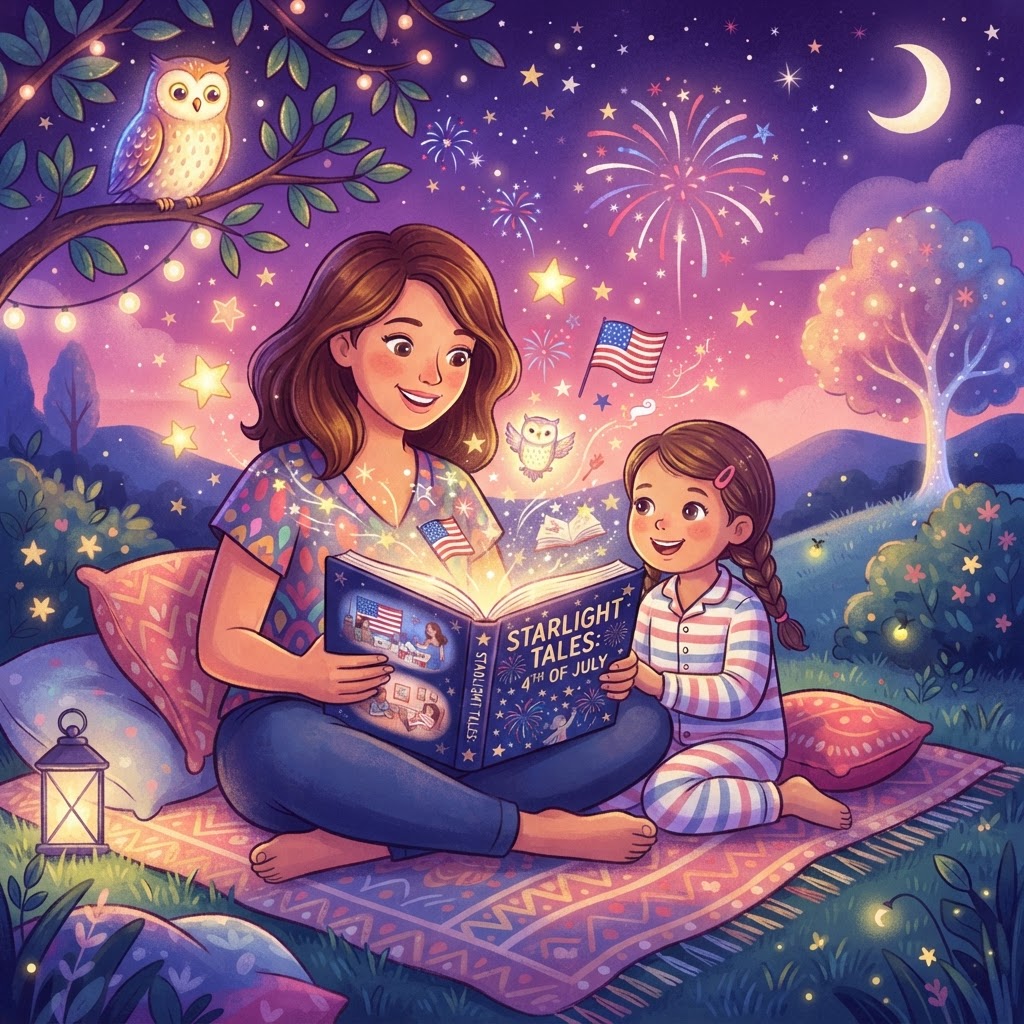
If you are looking for the best Fourth of July bedtime stories, the sweetest picks are not the loudest or busiest ones. They are cozy, reassuring, and full of summer wonder—stories that help children wind down while still enjoying the sparkle of the holiday.
For many families, the Fourth of July is exciting but overstimulating. Late bedtimes, fireworks, visitors, and big emotions can make storytime extra important. Thoughtful Fourth of July stories for kids give children a calm bridge from celebration to sleep, while also building seasonal vocabulary, family connection, and happy memories.
What makes the best Fourth of July bedtime stories for children?
The best Fourth of July bedtime stories for children feel festive and soothing. They capture the magic of summer nights without turning bedtime into one more high-energy event.
A strong holiday bedtime story usually includes:
- A gentle pace with a clear beginning, middle, and calm ending
- Familiar child-centered moments, like picnics, parades, fireflies, or family gatherings
- Light sensory details instead of overwhelming action
- Reassuring emotional themes, such as belonging, pride, gratitude, and togetherness
- Age-appropriate language and a short enough length for evening reading
For toddlers and preschoolers, repetition and predictable patterns help children relax. For older children, a bit more plot works well—as long as the story still ends in safety and comfort. When parents compare children Fourth of July books, the best ones often balance celebration with emotional security.
Why is seasonal reading so helpful for children around the Fourth of July?
Seasonal reading helps children connect books to real life, and that makes stories easier to understand and remember. It also supports language growth because children hear words they can immediately see, feel, and use.
Research and literacy organizations consistently support regular read-aloud routines. The American Academy of Pediatrics recommends shared reading from infancy because it strengthens language, relationships, and early brain development. Programs like Reach Out and Read also highlight how reading together builds secure connection and school-ready skills.
Seasonal books are especially useful because they help children:
- Build background knowledge about holidays and traditions
- Understand what to expect from upcoming events
- Practice naming feelings like excitement, surprise, or nervousness
- Strengthen family routines during busy times of year
- Create positive associations with reading
That is why Fourth of July bedtime reading can be more than a cute tradition. It gives children a quiet, meaningful way to process a very stimulating day.
Which themes capture the spirit of Fourth of July stories for kids?
The most effective Fourth of July themes are simple, warm, and grounded in a child’s world. Children respond best to stories about connection, wonder, and celebration they can actually imagine.
Here are the themes that work especially well:
- Community and togetherness: Neighborhood walks, shared snacks, and family traditions
- Summer-night magic: Fireflies, stars, lanterns, moonlight, and backyard sounds
- Pride and gratitude: Feeling thankful for home, family, and community helpers
- Inclusion and belonging: Everyone has a place at the celebration
- Gentle bravery: A child who feels unsure about fireworks, crowds, or bedtime changes
- Curiosity about traditions: Why people wave flags, gather outside, or watch parades
- Kindness in action: Sharing blankets, helping younger siblings, or comforting a pet
If you want more inspiration for festive plots, this roundup of Fourth of July story ideas is a helpful place to start.
One important note from a child development perspective: not every child experiences fireworks as fun. Some children are startled by loud sounds, and younger children may need stories that focus more on picnics, stars, and family connection than on booms and flashes.
What are five cozy Fourth of July story ideas children will love?
The best story ideas for bedtime take big holiday energy and turn it into something soft and memorable. These five concepts work well for toddlers through early elementary ages.
The Firefly Parade
A child worries they will miss the big parade after bedtime, but then discovers a tiny nighttime parade of fireflies in the backyard. The story ends with the child realizing that quiet wonders can be just as magical as loud celebrations.
The Red, White, and Blue Picnic Blanket
A family loses its special picnic blanket before the holiday meal. As everyone searches together, the child notices kind acts happening all around—someone sharing lemonade, someone helping a grandparent sit down, someone comforting a baby cousin—and learns that celebration is really about being together.
The Puppy Who Hid From Fireworks
A gentle puppy feels nervous when the evening gets noisy, and a child helps create a safe, cozy nest indoors. This is a strong choice for sensitive children because it validates fear, models empathy, and ends with calm breathing, soft music, and sleep.
The Little Lantern on Main Street
A small paper lantern worries it is not bright enough for the town celebration. By the end, it learns that every light matters, even the quiet ones. This theme supports confidence, belonging, and self-worth.
The Stars’ Fourth of July Wish
After the fireworks end, the stars come out and whisper wishes over sleeping houses. A child makes a wish for kindness, friendship, and one more summer adventure, giving the story a dreamy ending that fits bedtime perfectly.
If your family enjoys holiday books all year long, you may also like our guides to Thanksgiving bedtime stories and Easter bedtime stories.
How can parents choose age-appropriate children Fourth of July books?
Age-appropriate Fourth of July books match a child’s attention span, emotional needs, and language level. The right story feels engaging without becoming too long, too noisy, or too abstract.
A simple guide by age can help:
- Ages 1-3: Board books, repeating phrases, family scenes, bedtime-friendly rhythm
- Ages 3-5: Short narratives with clear feelings, simple holiday traditions, gentle humor
- Ages 5-7: Light adventure, community themes, problem-solving, and reassuring endings
- Ages 7-10: Longer read-alouds with richer plot, history touches, and character growth
Organizations such as NAEYC emphasize that young children learn best through meaningful, engaging experiences tied to what they know. That is why a story about a picnic, a pet, or a neighborhood walk often lands better than a heavy historical explanation at bedtime.
How can parents use InstaTales to create custom Fourth of July adventures?
Parents can use InstaTales to turn a child’s real holiday world into a calm, personalized bedtime story. That makes storytime feel familiar, relevant, and emotionally safe.
A custom story works especially well when you include details your child already loves, such as:
- Their name and age
- A favorite stuffed animal or pet
- A backyard picnic, family barbecue, or local parade
- Fireflies, sparklers, or stars instead of loud fireworks
- A gentle bedtime ending with cuddles, songs, or moonlight
You can create your own personalized bedtime story by starting with a simple prompt like: “Write a cozy Fourth of July bedtime story for a 5-year-old named Maya who loves dogs, feels nervous about fireworks, and wants a happy ending.” If you want a faster start, try the ready-made story templates and adjust the tone, age level, and setting.
Once you make a story your child loves, save it in your story library so you can revisit it each year as part of your family tradition. Teachers and caregivers can also adapt this idea for summer learning with InstaTales for teachers, especially for holiday-themed literacy centers or writing extensions.
How can you make Fourth of July bedtime reading feel calm after a busy day?
You can make Fourth of July bedtime reading feel calm by slowing everything down on purpose. A soft voice, shorter story, and predictable routine matter more than reading the longest or most exciting book.
Here are practical strategies that work well:
- Read before children are overtired, even if the holiday schedule shifts
- Choose stories with quiet endings, not cliffhangers
- Preview fireworks scenes if your child is sensitive
- Let your child hold a comfort item during the read-aloud
- Pause and ask simple questions like, “What part felt cozy?”
- End with one repeated line or phrase your child can remember
This kind of back-and-forth reading is supported by dialogic reading practices, which literacy experts at Reading Rockets describe as a powerful way to build language and engagement. In real family life, it also helps children process feelings and settle their bodies for sleep.
A seasonal story can become a ritual: bath, pajamas, book, cuddle, lights out. When that rhythm repeats year after year, children begin to associate holidays not just with excitement, but with comfort and closeness too.
Frequently Asked Questions
What are the best Fourth of July bedtime stories for toddlers?
The best choices for toddlers are short, repetitive, and gentle. Look for stories about family, picnic foods, stars, or fireflies rather than loud fireworks or complex history.
Are Fourth of July stories for kids good for sensitive children?
Yes, as long as you choose stories with calm themes and reassuring endings. Books about pets, nighttime nature, and family closeness are often better for children who feel anxious about noise.
How long should Fourth of July bedtime reading be?
For most children, 5-15 minutes works well, depending on age and energy level. On busy holiday nights, shorter is often better because children are already taking in a lot.
Can I make a personalized Fourth of July story for my child?
Yes. With InstaTales, you can create a story that includes your child’s name, favorite characters, and comfort needs, making bedtime feel more familiar and special.
Do seasonal books really help early learning?
Yes, they do. Seasonal stories build vocabulary, background knowledge, and emotional understanding because children can connect the book directly to what they are experiencing in real life.
Get a new bedtime story every week
Free, personalized, and delivered to your inbox. No spam, ever.
Ready to Create a Personalized Bedtime Story?
Use our free AI bedtime story generator to create a personalized illustrated story for your child in 30 seconds — no credit card needed.
Popular story types:
Maya Rodriguez
Lead Content Editor & Early Literacy Specialist
Maya is a former early childhood educator and literacy specialist with over a decade of experience helping children develop a love of reading. She leads content at InstaTales, where she writes about the science of storytelling, child development, and how families can use personalized AI stories to build literacy and emotional resilience.
instatales.ai