Fourth of July Stories for Kids: 7 Festive Ideas
Celebrate Fourth of July with these magical stories for kids — festive, fun, and perfect for the season.
✦ Key Takeaways
- •The Fourth of July is the birthday of the United States.
- •Fourth of July bedtime stories are helpful because they make a big, noisy holiday feel predictable and safe.
- •The best Fourth of July stories for kids mix festive holiday details with a gentle plot and a calm ending.
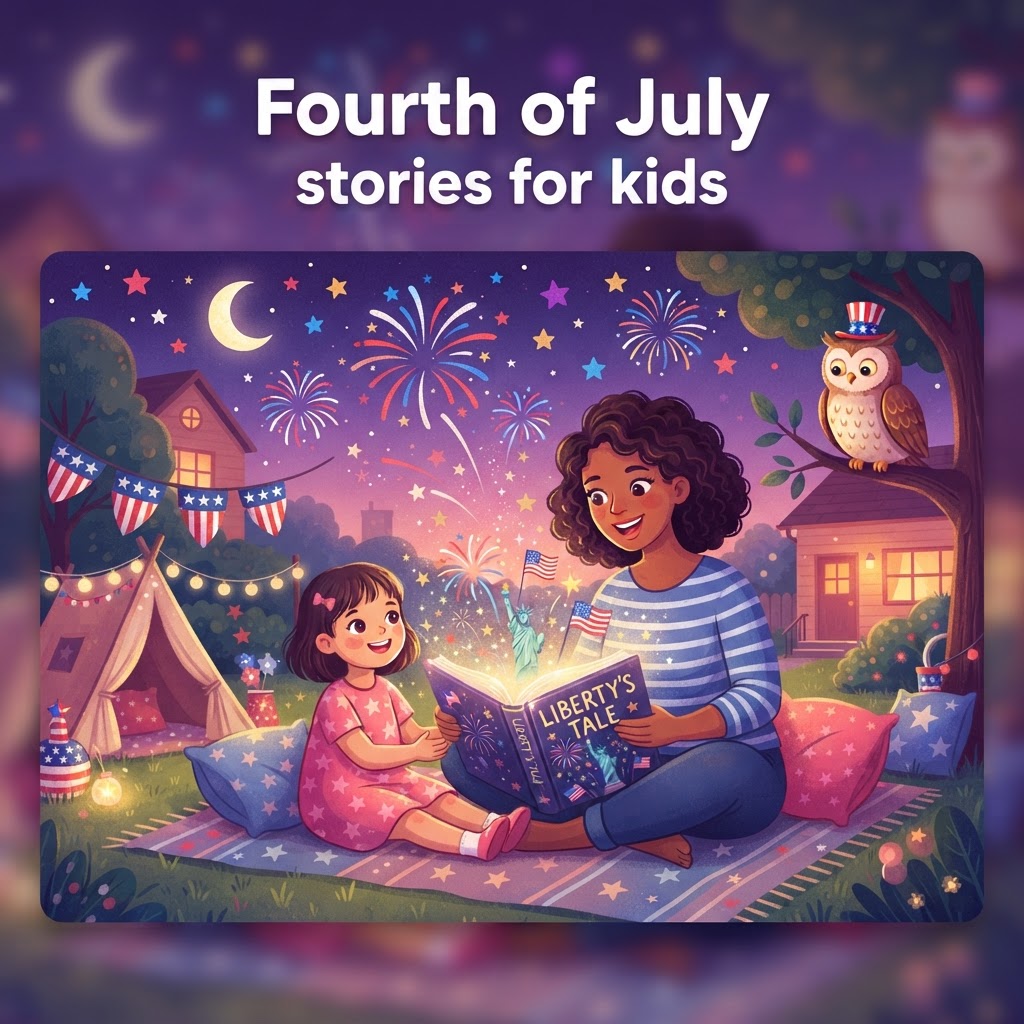
If you're looking for Fourth of July stories for kids, bedtime is a perfect time to bring the holiday to life. A gentle story can turn fireworks, flags, parades, and family picnics into something warm, meaningful, and easy for children to understand.
The best Fourth of July bedtime stories do more than entertain. They help children connect with family traditions, learn a little history, and end an exciting summer day feeling calm, safe, and included.
What does the Fourth of July mean to children?
The Fourth of July is the birthday of the United States. For children, the simplest age-appropriate explanation is that it celebrates the day the country declared its independence on July 4, 1776.
Young kids do not need a long history lesson. What helps most is connecting the holiday to ideas they already understand: freedom, community, family traditions, and celebrating together. You might say, “It’s a day when many families gather, enjoy special foods, watch parades, and remember that people wanted the freedom to make their own choices.”
If you want a child-friendly way to build your own background knowledge, the Library of Congress offers a helpful overview of the day’s history. For ages 6-10, you can also introduce symbols such as the flag, the Liberty Bell, or the Declaration of Independence in simple language.
A good rule is to match the explanation to the child’s age:
- Ages 1-3: “It’s a holiday with music, colors, and family fun.”
- Ages 4-6: “It’s America’s birthday.”
- Ages 7-10: “It marks when the United States said it wanted to be free and govern itself.”
That balance keeps Fourth of July stories children enjoy both accurate and reassuring.
Why are Fourth of July bedtime stories so helpful for young readers?
Fourth of July bedtime stories are helpful because they make a big, noisy holiday feel predictable and safe. They also give children a quiet way to process excitement, ask questions, and wind down before sleep.
Shared reading supports language, bonding, and emotional regulation. The American Academy of Pediatrics has long encouraged read-aloud routines, and literacy experts at Reading Rockets highlight how reading together builds vocabulary and background knowledge. Early childhood organizations such as NAEYC also emphasize storytelling as a powerful tool for social and emotional growth.
In practice, I’ve found that holiday stories work best when they do three things:
- name familiar holiday experiences, like fireworks or lemonade stands
- add one simple problem or adventure
- end with comfort, belonging, and rest
This approach also fits what we know from child development research. Dialogic reading research by Grover Whitehurst and colleagues showed that children learn more when adults invite them to talk about the story. So after reading, ask simple questions like, “What was your favorite part of the parade?” or “How did the character feel when the fireworks were loud?”
Which Fourth of July stories for kids work best at bedtime?
The best Fourth of July stories for kids mix festive holiday details with a gentle plot and a calm ending. Children usually respond well to stories that feel magical, familiar, and emotionally safe.
Here are seven strong story ideas you can use tonight:
-
The Firefly Parade
A group of fireflies wants to create their own red, white, and blue parade through the backyard. This is perfect for toddlers and preschoolers because it uses repetition, glowing lights, and a soft bedtime ending. -
The Missing Star on the Flag
A child notices a shiny paper star has fallen from a parade float and sets off to return it before the celebration begins. This idea works well for ages 4-8 and introduces responsibility and kindness. -
The Quiet Spot for the Eagle
A young eagle loves the holiday but is afraid of loud fireworks. This story helps sensitive children see that it is okay to celebrate in quieter ways. -
The Red, White, and Blue Picnic Rescue
Ants carry away the blueberry pie topping, and two siblings must save dessert before sunset. This playful option adds humor and teamwork. -
The Lemonade Stand That Time-Traveled
A lemonade stand magically shows a child scenes from long ago, introducing simple historical moments in a light, imaginative way. It’s a great fit for older kids who want more than a simple celebration story. -
The Parade Drum That Lost Its Beat
A shy child helps the town drummer find a steady rhythm again. This makes a lovely choice for kids who need confidence-building themes. -
The Backyard Rocket to the Stars
A cardboard rocket decorated in patriotic colors takes off in pretend play and shows the child that courage, curiosity, and friendship matter more than being “the best.” This one feels especially magical for bedtime.
These kids Fourth of July tales work because they center on emotions children know well: excitement, curiosity, worry, pride, and belonging.
What should a gentle Fourth of July story sound like?
A gentle holiday story should feel festive without becoming overstimulating. At bedtime, the tone matters just as much as the plot.
Here is a short sample excerpt you can use for inspiration:
Mia wore her red shoes, her white sunhat, and her blue ribbon as she followed Grandpa to the little town parade. The band played softly at first, and paper stars danced from the float behind them.
“Today is a day to remember and celebrate,” Grandpa said, handing Mia a cup of cold lemonade.
Mia waved at the neighbors, clapped for the marching dogs, and laughed when one puppy sneezed glitter into the air. But when evening came, she held Grandpa’s hand a little tighter.
“What if the fireworks are too loud?” she whispered.
Grandpa smiled. “Then we will watch the first sparkle, listen for the second boom, and if your heart says ‘enough,’ we’ll find our quiet blanket under the tree.”
So they did. They watched one golden burst bloom across the sky like a giant sunflower. Then they sat beneath the oak tree, where fireflies blinked like tiny lanterns.
“I like this part best,” Mia said.
Grandpa nodded. “Me too. Some celebrations are loud. Some are soft. Both still count.”
And under the warm July stars, Mia felt the holiday settle into a peaceful glow.
Notice what makes this excerpt work: sensory detail, emotional safety, and a calm ending. Those are the building blocks of memorable Fourth of July stories children will want to hear again.
How can parents create personalized Fourth of July bedtime stories with InstaTales?
Personalized stories work best when they reflect your child’s real world. With InstaTales, you can create your own personalized bedtime story using your child’s name, age, favorite activities, and comfort needs.
A simple formula is:
- your child as the main character
- one Fourth of July setting, like a parade, picnic, or backyard celebration
- one small challenge, such as lost shoes, a shy moment, or loud fireworks
- one cozy resolution before bed
You can make the story even better by adding specific details:
- favorite colors or foods
- siblings, cousins, or pets
- noise sensitivity or bedtime preferences
- reading level and story length
If you want a faster start, browse the ready-made story templates and adapt one for Independence Day. Afterward, save your favorites in your story library so your child can revisit the same story next year as a family tradition.
Seasonal storytelling also works beautifully across the year. Families who enjoy festive read-alouds can explore more ideas in cozy Thanksgiving tales too.
How can teachers and caregivers use Fourth of July stories in learning?
Fourth of July stories for kids can support literacy, social studies, and social-emotional learning all at once. In classrooms or summer programs, they give children a safe way to explore history, symbols, traditions, and feelings.
For group use, try these simple extensions:
- ask children to retell the story in order
- sort story details into “past” and “present”
- create a red, white, and blue vocabulary chart
- discuss different ways families celebrate holidays
- offer a quiet-choice option for children who dislike loud sounds
This is also a great opportunity to teach inclusivity. Not every child celebrates the holiday the same way, and some families may focus more on community gatherings than fireworks or history. Flexible storytelling respects that difference.
If you’re planning lessons around seasonal reading, InstaTales for teachers can help you build custom class stories for different ages, interests, and reading levels.
Frequently Asked Questions
What age are Fourth of July stories best for?
They work well for children ages 1-10 when the content matches developmental level. Toddlers do best with simple sensory stories, while older children can enjoy gentle historical elements and more complex plots.
How do I make Fourth of July bedtime stories less scary?
Keep the conflict small and the ending calm. If fireworks are included, show characters making choices like wearing headphones, watching from indoors, or taking a quiet break.
Can Fourth of July stories teach history without being too complicated?
Yes. Focus on simple ideas such as freedom, community, and the country’s birthday. For older children, add one or two clear historical facts rather than a long explanation.
What should I include in a personalized Fourth of July story?
Use your child’s name, age, favorite holiday activity, and emotional needs. The strongest personalized stories also include familiar people, a simple problem, and a reassuring ending.
Are fireworks a good theme for all children?
Not always. Some children love the excitement, while others find fireworks loud or overwhelming. A good story should offer both festive fun and quieter ways to celebrate.
How long should a Fourth of July bedtime story be?
For toddlers, 3-5 minutes is often enough. For ages 5-10, a 5-10 minute story usually works well, especially if you pause for questions or discussion.
Ready to Create a Personalized Bedtime Story?
Use our free AI bedtime story generator to create a personalized illustrated story for your child in 30 seconds — no credit card needed.
Popular story types:
Maya Rodriguez
Lead Content Editor & Early Literacy Specialist
Maya is a former early childhood educator and literacy specialist with over a decade of experience helping children develop a love of reading. She leads content at InstaTales, where she writes about the science of storytelling, child development, and how families can use personalized AI stories to build literacy and emotional resilience.
instatales.ai