Thanksgiving Stories for Kids: Cozy Holiday Tales
Celebrate Thanksgiving with these magical stories for kids — festive, fun, and perfect for the season.
✦ Key Takeaways
- •Thanksgiving stories for kids help children connect emotion, routine, and family traditions.
- •The simplest way to explain Thanksgiving is to say that many families use the day to share food, show gratitude, and spend time together.
- •The best kids Thanksgiving tales combine familiar holiday details with gentle adventure.
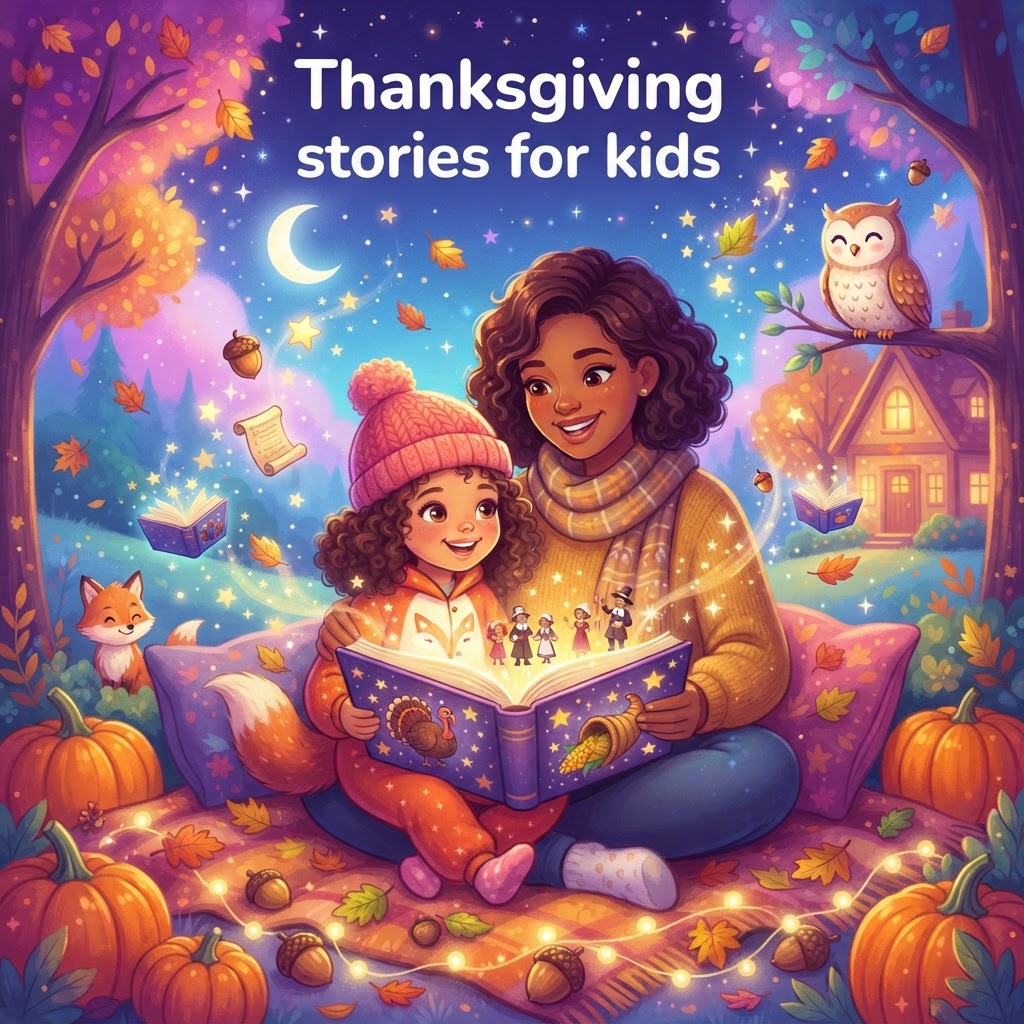
Thanksgiving is a wonderful time for cozy reading, family connection, and simple lessons about gratitude. The best Thanksgiving stories for kids do more than entertain — they help children understand the season in a warm, age-appropriate way.
For babies, toddlers, and young readers, festive stories can turn big ideas like thankfulness, sharing, and community into something concrete and comforting. And for parents who want fresh Thanksgiving bedtime stories, personalized tales can make the holiday feel even more magical.
What makes Thanksgiving stories for kids such a meaningful holiday tradition?
Thanksgiving stories for kids help children connect emotion, routine, and family traditions. They give kids a gentle way to explore gratitude, kindness, food, and togetherness while feeling safe and calm at storytime.
Shared reading is also good for development. The American Academy of Pediatrics has long highlighted that reading aloud supports language growth, bonding, and early literacy. In real life, that means a simple seasonal story can do several jobs at once: teach, soothe, and create memories.
Holiday stories are especially powerful because they repeat familiar themes. Children often enjoy hearing about:
- family meals
- helping in the kitchen
- saying thank you
- welcoming guests
- noticing small blessings
That is why Thanksgiving stories children remember most are often the ones that feel close to their own lives.
How can you explain the meaning of Thanksgiving to children in an age-appropriate way?
The simplest way to explain Thanksgiving is to say that many families use the day to share food, show gratitude, and spend time together. For older children, it is also important to explain that Thanksgiving has a complex history and that different people tell that history in different ways.
For toddlers and preschoolers, you might say:
- “Thanksgiving is a time when people think about what they are thankful for.”
- “Families and friends often share a special meal.”
- “We can celebrate by being kind, helpful, and grateful.”
For children ages 6-10, you can go a little deeper. You can explain that people often learn about harvest celebrations, early settlers, and Native peoples, but that the real history is more complicated than the simple version many adults heard as children. The Library of Congress offers helpful historical context, and the Smithsonian’s National Museum of the American Indian provides important Native perspectives.
A good rule is this: teach gratitude without oversimplifying history. In stories, that often means focusing on generosity, community, and respect rather than pretending the holiday’s past is one simple tale.
Which Thanksgiving story ideas can inspire magical tales this season?
The best kids Thanksgiving tales combine familiar holiday details with gentle adventure. Children love stories that include food, animals, family traditions, and small acts of kindness.
Here are seven story ideas you can use at home, at bedtime, or in the classroom:
1. The runaway pumpkin pie
A child helps a pie that rolls off the windowsill make it safely back to the dinner table. Along the way, they meet neighbors who each share something they are thankful for.
2. The tiny turkey with a big thank-you
A shy little turkey worries he has nothing special to offer at the harvest feast. He discovers that kindness, not size, makes someone important.
3. The gratitude lantern parade
A family creates glowing lanterns, and each lantern lights up only when someone says a heartfelt thank-you. By the end, the whole town is shining.
4. The secret ingredient in Grandma’s stuffing
A child searches the house and garden for a missing ingredient, only to learn that the “secret” is everyone helping together.
5. The forest friends’ harvest feast
Squirrels, rabbits, foxes, and owls each bring something to a woodland table. This works beautifully for younger children who love rhythmic, repetitive animal stories.
6. The windy day before Thanksgiving
A storm threatens the family meal, and siblings must work together to save decorations, ingredients, and everyone’s good mood.
7. The thankful tablecloth
Every year, family members write or draw one thing they are grateful for on a magical tablecloth. One child discovers messages from years before and feels part of a bigger family story.
These ideas work well because they are low-stakes, seasonal, and emotionally reassuring. They also make excellent prompts if you want to create your own personalized bedtime story with your child as the main character.
What does a Thanksgiving bedtime story sound like?
A good Thanksgiving bedtime story feels gentle, sensory, and reassuring. It should slow the day down, highlight warmth and gratitude, and end with a sense of safety.
Here is a short sample excerpt:
On the night before Thanksgiving, Maya stood on a little stool beside Grandma’s kitchen table. The house smelled like cinnamon, warm bread, and apples bubbling softly in a silver pot.
“Listen,” Grandma whispered.
Maya tilted her head. At first she heard only the ticking clock. Then she noticed the tiny sounds she usually missed — the flutter of curtains, the hum of the oven, and the soft tap-tap of rain on the window.
“That,” Grandma said, smiling, “is the sound of everyone getting ready to share.”
Maya looked around. Her father was setting plates. Her baby brother was giggling in his high chair. Even the cat was curled up near the warm stove as if he knew something special was coming.
“What if I don’t have anything big to give?” Maya asked.
Grandma tucked a loose curl behind Maya’s ear. “You brought your helping hands,” she said. “And your thankful heart. Sometimes those are the grandest gifts at the table.”
Maya smiled. Outside, the rain kept tapping its sleepy song. Inside, the whole house seemed to glow.
This style works well for Thanksgiving bedtime stories because it uses calm sounds, family connection, and a simple emotional message.
How can you create personalized Thanksgiving bedtime stories with InstaTales?
Personalized stories make Thanksgiving feel more immediate because your child becomes part of the celebration. When a child hears their own name, favorite food, pet, or grandparents in a story, attention and emotional engagement often increase.
With InstaTales, you can turn a seasonal idea into a custom story in minutes. A simple process works best:
- Choose a cozy Thanksgiving theme, like gratitude, cooking, or a harvest feast.
- Add your child’s name, age, favorite animal, or family tradition.
- Pick a calm bedtime tone or a playful adventure tone.
- Use one of the ready-made story templates if you want a faster start.
- Save your favorites in your story library so you can reread them each year.
If you teach young children, personalized seasonal reading can also support writing prompts, speaking practice, and social-emotional learning. That is where InstaTales for teachers can be especially useful for centers, circle time, or holiday literacy activities.
A few prompts that work well:
- “Write a Thanksgiving story where Leo helps forest animals prepare a feast.”
- “Create a bedtime story about Ava finding the meaning of gratitude.”
- “Tell a gentle story about cousins cooking together on Thanksgiving morning.”
If your family enjoys seasonal reading all year, it can also help to rotate through other holidays with stories like these Christmas story ideas for kids.
How can parents and teachers make Thanksgiving stories more meaningful for children?
The easiest way to deepen a Thanksgiving story is to connect it to real-life conversation and play. A short story becomes much more memorable when children talk about it, act it out, or relate it to their own family traditions.
Try these simple follow-up activities:
- Ask, “What would you bring to the Thanksgiving table?”
- Invite your child to name three things they are thankful for.
- Draw the feast from the story and add favorite family foods.
- Compare how different families celebrate.
- Let children retell the story with puppets or stuffed animals.
Research from organizations such as Zero to Three shows that interactive reading helps build language and comprehension. In practice, that means pausing to ask questions is just as valuable as finishing every page.
For classrooms, you can expand the lesson by:
- creating a class gratitude wall
- making a “thankful book” with one page per child
- comparing harvest traditions from different cultures
- pairing storytime with writing or drawing
The goal is not a perfect history lesson or a perfect craft. The goal is helping children feel connected, curious, and grateful.
Frequently Asked Questions
What age are Thanksgiving stories for kids best for?
Thanksgiving stories can work for children from ages 1-10, as long as the language matches the child’s stage. Toddlers do best with short, repetitive stories, while older children can enjoy richer plots and gentle historical context.
How long should Thanksgiving bedtime stories be?
For bedtime, 5-10 minutes is often ideal for younger children. If your child is older or especially engaged, a 10-15 minute story can work well as long as the tone stays calm.
Can Thanksgiving stories teach real history?
Yes, but they should do so carefully and honestly. For young children, focus first on gratitude and community, then gradually introduce more accurate and inclusive history as they grow.
What themes work best in kids Thanksgiving tales?
The strongest themes are gratitude, helping, sharing, family traditions, harvest, and kindness. Animal characters, cooking adventures, and magical feast settings also tend to be very appealing.
How can I personalize Thanksgiving stories for my child?
Start with familiar details like your child’s name, favorite food, family members, or pets. Then build the story around a simple Thanksgiving goal, such as helping with dinner or discovering what it means to be thankful.
Are Thanksgiving stories useful in the classroom?
Absolutely. They support vocabulary, listening, empathy, and discussion, and they can lead naturally into writing, art, or social-emotional learning activities.
Ready to Create a Personalized Bedtime Story?
Use our free AI bedtime story generator to create a personalized illustrated story for your child in 30 seconds — no credit card needed.
Popular story types:
Maya Rodriguez
Lead Content Editor & Early Literacy Specialist
Maya is a former early childhood educator and literacy specialist with over a decade of experience helping children develop a love of reading. She leads content at InstaTales, where she writes about the science of storytelling, child development, and how families can use personalized AI stories to build literacy and emotional resilience.
instatales.ai