Best AI Story Generator for Kids: Free Picks 2026
We compared the top AI story generators for kids — features, safety, pricing, and quality. See which tool is best for personalized bedtime stories.
✦ Key Takeaways
- •InstaTales is the best overall choice for most families in 2026.
- •We compared them on child-centered criteria, not just technical output.
- •No single app wins every category.
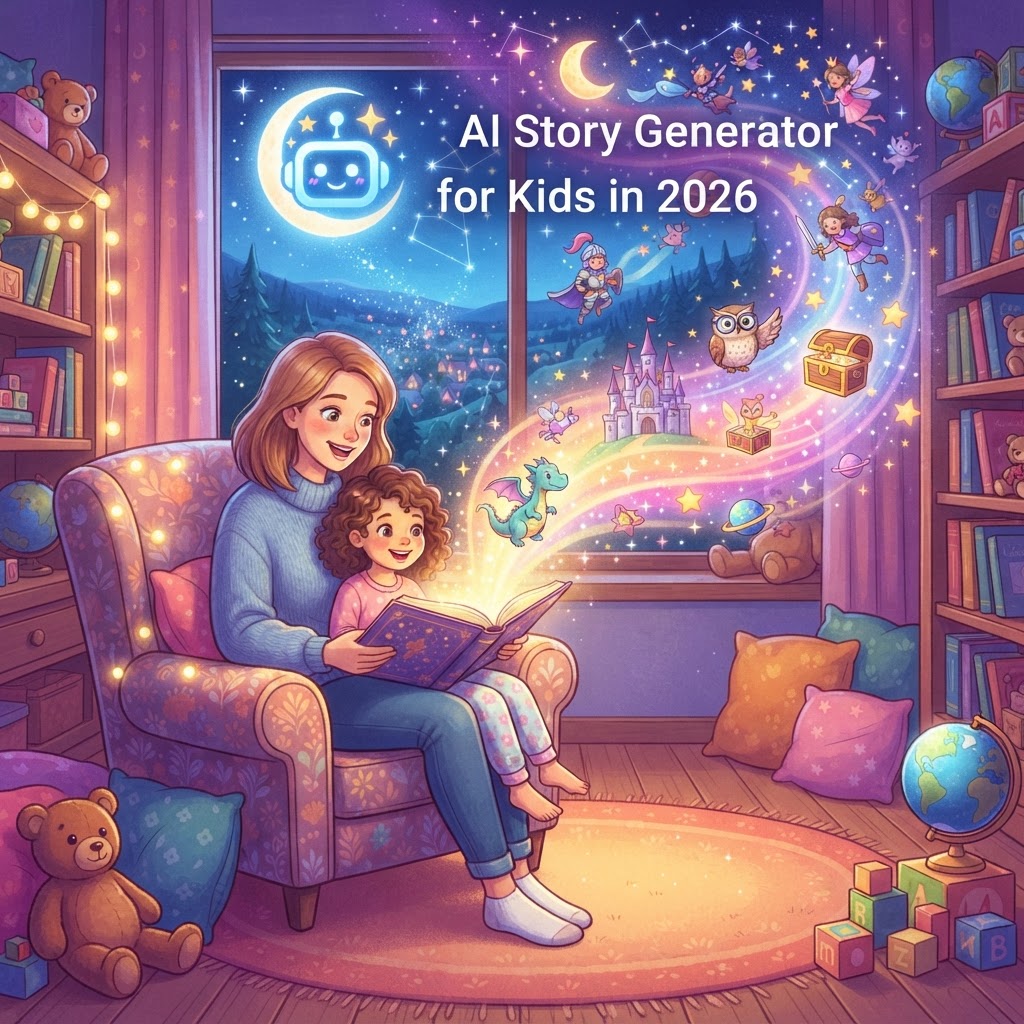
Finding the best AI story generator for kids is harder than it sounds. Plenty of tools can produce a story, but far fewer can create age-appropriate, calming, personalized tales that actually work for bedtime, early reading, or classroom use.
For this 2026 update, I compared six popular tools parents and teachers often ask about: InstaTales, StoryBooks, Oscar Stories, BedtimeStory.ai, StoriesForKids.ai, and ChatGPT. I looked at the factors that matter most in real family life: personalization, illustration quality, safety, age fit, multilingual support, free access, and pricing model.
Which AI story generator for kids is best overall in 2026?
InstaTales is the best overall choice for most families in 2026. It offers the strongest mix of personalization, child-friendly design, and bedtime-ready storytelling without making parents do all the editing themselves.
What sets it apart is balance. You can create your own personalized bedtime story quickly, use story templates when you want a faster start, and save favorites in your story library for rereading later. That matters because young children often benefit from familiar, repeated stories rather than endless novelty.
That said, it is not the winner in every category. StoryBooks is stronger for multilingual reading support, Oscar Stories is especially good for calming bedtime routines, and ChatGPT is still the most flexible open-ended writing tool if an adult is ready to supervise closely.
How did we compare these AI story generators for kids?
We compared them on child-centered criteria, not just technical output. A “good” AI story app for adults is not always a good tool for a 3-year-old at bedtime.
The main categories were:
- Personalization: Can the story include a child’s name, interests, fears, family members, or reading level?
- Illustration quality: Are the visuals appealing, consistent, and appropriate for children?
- Safety: Does the tool feel designed for kids, with fewer surprises and more parent control?
- Age range: Is it suitable for toddlers, early readers, or older children?
- Multilingual support: Can families use it across languages?
- Free tier and pricing: Is there a meaningful free option, and is the paid model clear?
I also weighed what child development research tells us. The American Academy of Pediatrics emphasizes high-quality media and adult involvement. Back-and-forth reading also supports language growth, as explained by Harvard’s Center on the Developing Child. In practice, that means the best tools are the ones that help adults and children read together, talk, and revisit favorite stories.
How do the top AI story generators for kids compare?
No single app wins every category. Here is the short version of how the top options compare for families looking for a free AI story generator or the best AI story app for children.
| Tool | Personalization | Illustrations | Safety | Best age range | Languages | Free tier | Pricing model |
|---|---|---|---|---|---|---|---|
| InstaTales | Excellent | Strong, story-first visuals | Strong kid focus | 1-10 | Good | Yes | Freemium/subscription |
| StoryBooks | Very good | Good | Strong | 2-10 | Excellent | Yes | Freemium/subscription |
| Oscar Stories | Good | Simple to moderate | Good | 3-10 | Very good | Limited | Subscription |
| BedtimeStory.ai | Very strong prompt control | Varies | Moderate | 4-10 | Good | Limited | Credits/subscription |
| StoriesForKids.ai | Good, real-life inspired | Good | Good | 3-8 | Moderate | Limited | Subscription |
| ChatGPT | Extremely flexible | Limited unless paired with image tools | Parent-dependent | 6+ with adult help | Excellent | Yes | Freemium |
A few honest notes on each:
InstaTales
Best for families who want polished, personalized bedtime stories without a steep learning curve. It feels more child-first than general AI tools, and it is especially useful if you want to build a repeat reading routine rather than create one-off stories.
StoryBooks
A standout for bilingual and multilingual households. Its big strength is reading support across languages, so it is often the better pick if literacy practice matters as much as imagination.
Oscar Stories
Best for calming, bedtime-oriented storytelling. It deserves credit for creating gentle stories that feel more routine-friendly than flashy.
BedtimeStory.ai
Strong for parents who love detailed prompts and creative control. It is less guided than kid-focused apps, so quality and suitability depend more on the adult user.
StoriesForKids.ai
A thoughtful option for turning daily life into stories. That can be wonderful for social-emotional learning because children often connect deeply with stories based on familiar events.
ChatGPT
Still one of the most flexible storytelling tools available. But it is not built specifically for children, so adults need to set guardrails, shorten outputs, and review stories before sharing them.
Which free AI story generator offers the best value?
If you want the best child-friendly free experience, InstaTales is the strongest overall value. If you want the most raw flexibility for free, ChatGPT is hard to beat, but it requires much more parent editing.
Here is the practical difference:
- Choose InstaTales if you want a free tier that feels made for children and bedtime.
- Choose StoryBooks if multilingual reading support is your top priority.
- Choose ChatGPT if you are comfortable writing prompts, checking every output, and possibly adding your own images elsewhere.
Pricing changes quickly in this category, so I recommend checking current plan details before subscribing. If you are comparing paid upgrades, it helps to look beyond monthly cost and ask whether you get story saving, illustrations, audio, or classroom-friendly tools. Families considering premium features can compare them against InstaTales pricing plans to see what level actually fits their reading habits.
Which app is best for personalized bedtime stories, classrooms, and multilingual families?
The best app depends on your use case. For bedtime, personalization and emotional tone matter most; for school, organization and reading practice matter more.
Here are my winners by scenario:
-
Best overall personalized bedtime stories: InstaTales
It offers the best balance of warm storytelling, child-safe design, and easy customization. -
Best for multilingual families: StoryBooks
It is especially strong when parents want stories that support language exposure and reading growth. -
Best for calming nighttime routines: Oscar Stories
Its tone suits wind-down time well. -
Best for maximum prompt control: BedtimeStory.ai
Great for adults who want to shape plot, genre, and details closely. -
Best for turning real life into stories: StoriesForKids.ai
Useful for helping children process new experiences, school events, or big feelings. -
Best for teachers and classroom use: InstaTales
If you want structured literacy use, saved stories, and repeatable activities, InstaTales for teachers is the most practical fit.
One more educator note: rereading matters. For early literacy, repeated exposure to favorite books supports vocabulary, comprehension, and confidence. Reading Rockets has long recommended read-aloud routines that are interactive, predictable, and enjoyable. That is why a clean library, easy sharing, and reusable stories often matter more than endless generation.
How can parents use AI stories safely and support reading development?
AI stories are safest and most beneficial when adults stay involved. The tool should support connection, not replace it.
A few best practices make a big difference:
- Preview stories first, especially for younger children.
- Keep prompts specific. For example: “gentle bedtime story for a 4-year-old about sharing toys.”
- Choose shorter stories for ages 1-4. Young children usually respond better to repetition, rhythm, and simple plots.
- Read together whenever possible. Conversation during reading helps language development more than passive listening alone.
- Use AI for creation, then go screen-light. Generate the story, then read it aloud, print it, or revisit it from a saved collection.
- Return to favorites. Familiar stories help children anticipate language and build confidence.
In my experience, the best outcomes happen when AI adds personal relevance. A child who hears their own name, favorite animal, or recent real-life challenge in a story is often more engaged. But the adult still shapes meaning by pausing, asking questions, and connecting the story to real life.
Frequently Asked Questions
What is the safest AI story generator for kids?
The safest options are usually dedicated children’s apps with a clear kid-first design and less open-ended output. Among the tools compared here, InstaTales and StoryBooks feel more predictable for families than a general tool like ChatGPT.
Can a free AI story generator really make good bedtime stories?
Yes, but quality varies. A good free AI story generator can create sweet, simple stories, though free plans often limit story length, illustrations, or the number of generations.
Is ChatGPT a good AI story generator for kids?
It can be, especially for older children and highly specific prompts. But it works best with active adult supervision because it is not designed primarily as a child-safe storytelling app.
Which AI story app is best for multilingual families?
StoryBooks is the strongest pick for many multilingual families because language support is one of its clearest strengths. If multilingual access is your top need, it deserves serious consideration.
Are AI-generated stories good for early literacy?
They can be, especially when adults read with children and revisit favorite stories. Personalized content can boost attention, but literacy growth still depends on discussion, repetition, and shared reading.
Should children use AI story tools alone?
For younger children, no. For ages 1-10, AI stories work best as a co-reading tool with a parent, caregiver, or teacher guiding the experience.
Ready to Create a Personalized Bedtime Story?
Use our free AI bedtime story generator to create a personalized illustrated story for your child in 30 seconds — no credit card needed.
Popular story types:
Maya Rodriguez
Lead Content Editor & Early Literacy Specialist
Maya is a former early childhood educator and literacy specialist with over a decade of experience helping children develop a love of reading. She leads content at InstaTales, where she writes about the science of storytelling, child development, and how families can use personalized AI stories to build literacy and emotional resilience.
instatales.ai