Best friendship bedtime stories for 6-year-olds
Discover the best friendship bedtime stories for 6-year-olds — themes, tips, and story ideas that will delight your child at bedtime.
✦ Key Takeaways
- •At age 6, children are becoming much more social, rule-aware, and emotionally observant.
- •Friendship bedtime stories appeal to 6-year-olds because friendship is becoming one of the biggest themes in their daily lives.
- •For most children this age, the ideal story length is 8 to 15 minutes.
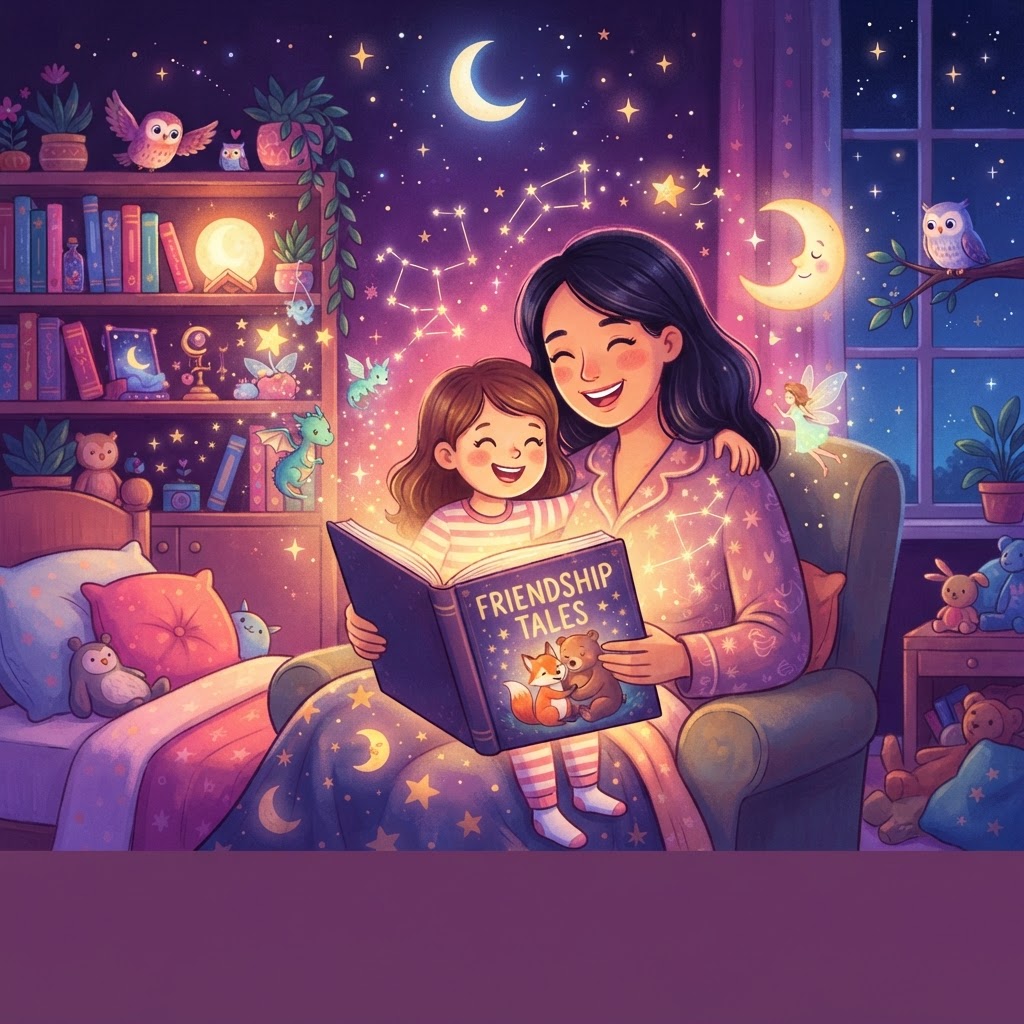
The best friendship bedtime stories for 6-year-olds do more than calm the room before sleep. They help children make sense of playground feelings, first best friends, hurt feelings, teamwork, and forgiveness. If you are looking for friendship stories for 6 year olds that feel warm, age-appropriate, and genuinely helpful, this guide will show you what to choose, what to skip, and how to make bedtime reading more meaningful.
What developmental milestones matter most when choosing friendship stories for 6-year-olds?
At age 6, children are becoming much more social, rule-aware, and emotionally observant. That is exactly why friendship-focused stories often land so well at this age.
Many 6-year-olds are starting school routines, forming stronger preferences about who they play with, and noticing fairness in a big way. According to the CDC’s child development guidance, children in this age range are often building independence, language skills, and more complex social understanding. They can usually follow a clear story arc, understand simple cause and effect, and talk about feelings with support.
This means the strongest kids friendship stories for age 6 usually include:
- A clear social problem, like being left out or misunderstanding a friend
- Familiar emotions, such as jealousy, worry, pride, or kindness
- Simple but meaningful problem-solving
- A reassuring ending that restores connection
Parents often notice that 6-year-olds want stories that feel “real” but not heavy. They are ready for more emotional nuance than preschoolers, yet they still need safety, warmth, and clear resolution.
Why do friendship bedtime stories appeal so much to 6-year-olds?
Friendship bedtime stories appeal to 6-year-olds because friendship is becoming one of the biggest themes in their daily lives. Stories let them rehearse social situations in a safe, calm setting.
At this age, children often think about questions like: “What makes someone a good friend?” “What if a friend says no?” or “What if two people want the same thing?” A bedtime story gives them a gentle way to explore those questions without pressure. The emotional distance of fiction helps children process big feelings without feeling judged.
Research also supports the value of read-alouds. The American Academy of Pediatrics has long emphasized shared reading for language growth, emotional connection, and healthy routines. For 6-year-olds, that shared reading time can also become a space for talking about friendship in a low-stress way.
If your child enjoys stories about teamwork and brave problem-solving too, pairing friendship tales with adventure bedtime stories for 6-year-olds can keep reading fresh while reinforcing social skills.
How long should bedtime stories for 6-year-olds be?
For most children this age, the ideal story length is 8 to 15 minutes. That is usually long enough to feel satisfying, but short enough to support a calm bedtime routine.
When parents search for bedtime stories for 6 year olds, length matters more than many people expect. A story that is too short may feel unfinished. A story that is too long can become stimulating right when you want your child to wind down.
A good bedtime story for a 6-year-old usually includes:
- One central problem
- Two to four main story events
- A gentle resolution
- Predictable emotional pacing
If your child is tired after a long school day, shorter is often better. If they are a strong listener and love discussion, a slightly longer story can work well, especially if the tone stays calm.
As a rule of thumb, bedtime is not the best time for a friendship story with too many side characters, lots of conflict, or a cliffhanger ending.
Which friendship themes work best in stories for 6-year-olds?
The best themes are simple, relatable, and emotionally clear. Children this age benefit most from stories that show friendship as something they can practice, repair, and enjoy.
The National Association for the Education of Young Children highlights the importance of helping children name feelings, understand others, and build social-emotional skills. In story form, that often looks like everyday friendship moments rather than dramatic lessons.
Strong themes to explore include:
- Sharing and turn-taking: especially when both characters want the same thing
- Including others: welcoming a new child, sibling, or shy classmate
- Misunderstandings: showing that not every problem means the friendship is over
- Apologies and repair: helping children see that mistakes can be fixed
- Celebrating differences: friends can enjoy different games, foods, or strengths
- Teamwork: solving a problem together builds both confidence and connection
These themes work because they mirror real life. Six-year-olds do not just want “nice” stories. They want stories that reflect the small social bumps they are already experiencing.
If your child still prefers very gentle, simpler friendship plots, you may also enjoy these friendship stories for 5-year-olds or gentler friendship stories for 4-year-olds.
What should parents avoid in kids friendship stories at this age?
Avoid stories that are confusing, overly moralizing, or emotionally intense right before bed. A good bedtime story should comfort first, then teach.
Here are the main things to skip:
- Mean-spirited conflict: teasing, exclusion, or betrayal without repair can feel upsetting at bedtime
- Too many characters: this makes it harder for a 6-year-old to track relationships
- Lecturing endings: children connect better with actions and dialogue than with a moral spelled out too heavily
- Scary consequences: friendship mistakes should feel manageable, not catastrophic
- Fast, noisy pacing: bedtime stories should settle the nervous system, not rev it up
It also helps to avoid stories where one “perfect” friend always knows the right thing to do. Real friendship learning is more useful when both children have feelings, make mistakes, and grow.
A helpful test is this: after the story, does your child feel calmer and more understood? If yes, the story is doing its bedtime job well.
What are five great friendship bedtime story ideas for 6-year-olds?
The best story ideas for this age combine emotional truth with a soft, satisfying ending. These five are strong starting points for parents, educators, or anyone creating friendship bedtime stories.
1. The new child on the playground
A child notices someone sitting alone during recess and feels shy about saying hello. With a small act of kindness, a new friendship begins over a shared game.
2. The two friends who both want the same role
Two best friends both want to be the line leader, team captain, or pretend-play hero. They feel upset, then discover a fair solution and learn that friendship matters more than winning.
3. The misunderstanding over a missing toy
One child thinks a friend took something special, but the item was misplaced. The story gently explores assumptions, apology, and trust.
4. The rainy-day teamwork challenge
A picnic, fort, or game falls apart because of weather or a small problem. The friends work together, adapt their plan, and end the story feeling proud and connected.
5. The quiet friend with a different talent
A confident child learns that a quieter friend has a wonderful skill, idea, or way of helping. The story teaches respect for differences without turning anyone into a stereotype.
These ideas work well because they are ordinary. For 6-year-olds, ordinary social moments often feel more powerful than grand fantasy lessons.
How can parents use personalized friendship stories at bedtime?
Personalized stories can be especially effective because they reflect your child’s world, interests, and current social questions. When a child hears their own name, favorite animal, or familiar school-like setting, they often listen more deeply.
This is where InstaTales can be genuinely helpful. You can create your own personalized bedtime story built around friendship, kindness, sharing, or problem-solving, and adjust the tone to suit your child’s age and bedtime routine. If you want a quick starting point, using guided story templates can make the process simple.
Personalization works best when you keep a few principles in mind:
- Use low-stakes conflict, not intense drama
- Keep the ending reassuring
- Reflect your child’s real interests without copying a stressful real-life event too closely
- Focus on one friendship lesson at a time
It also helps to save favorites for repetition. Many children love hearing the same comforting story again and again, so storing them in your story library makes re-reading easy.
Frequently Asked Questions
What makes friendship stories for 6 year olds different from stories for younger children?
Stories for 6-year-olds can handle slightly more emotional complexity, such as misunderstandings, fairness, and repair. They still need simple structure and reassurance, but they can explore deeper social feelings than most preschool stories.
Are friendship bedtime stories good for children who are struggling socially?
Yes, they can be very helpful. Stories give children a safe way to explore social situations, hear language for feelings, and imagine positive outcomes without pressure.
How often should I read bedtime stories about friendship?
Two or three times a week is plenty, though some children enjoy them nightly. Repeating a favorite story can be especially useful when your child is dealing with a current friendship issue.
Should friendship stories always have a lesson?
Not in a heavy-handed way. The best stories show the lesson through characters, choices, and outcomes rather than ending with a lecture.
Can personalized AI stories really support learning?
They can, when used thoughtfully. A personalized story can match your child’s age, interests, and emotional needs, making the message more engaging and memorable.
What if my 6-year-old still likes simpler friendship stories?
That is completely normal. Some children benefit from revisiting easier plots, especially at bedtime when they are tired and want comfort more than complexity.
Ready to Create a Personalized Bedtime Story?
Use our free AI bedtime story generator to create a personalized illustrated story for your child in 30 seconds — no credit card needed.
Popular story types:
Maya Rodriguez
Lead Content Editor & Early Literacy Specialist
Maya is a former early childhood educator and literacy specialist with over a decade of experience helping children develop a love of reading. She leads content at InstaTales, where she writes about the science of storytelling, child development, and how families can use personalized AI stories to build literacy and emotional resilience.
instatales.ai