Best kind bedtime stories for 7-year-olds
Discover the best kind bedtime stories for 7-year-olds — themes, tips, and story ideas that will delight your child at bedtime.
✦ Key Takeaways
- •A kind bedtime story is a story where compassion, empathy, and gentle problem-solving matter more than winning, fighting, or showing off.
- •At age 7, children are becoming more logical, more socially aware, and more interested in fairness.
- •Kind stories for 7 year olds appeal because they match what many children this age are trying to figure out in real life: how to be a good friend, how to handle mistakes, and how to belong.
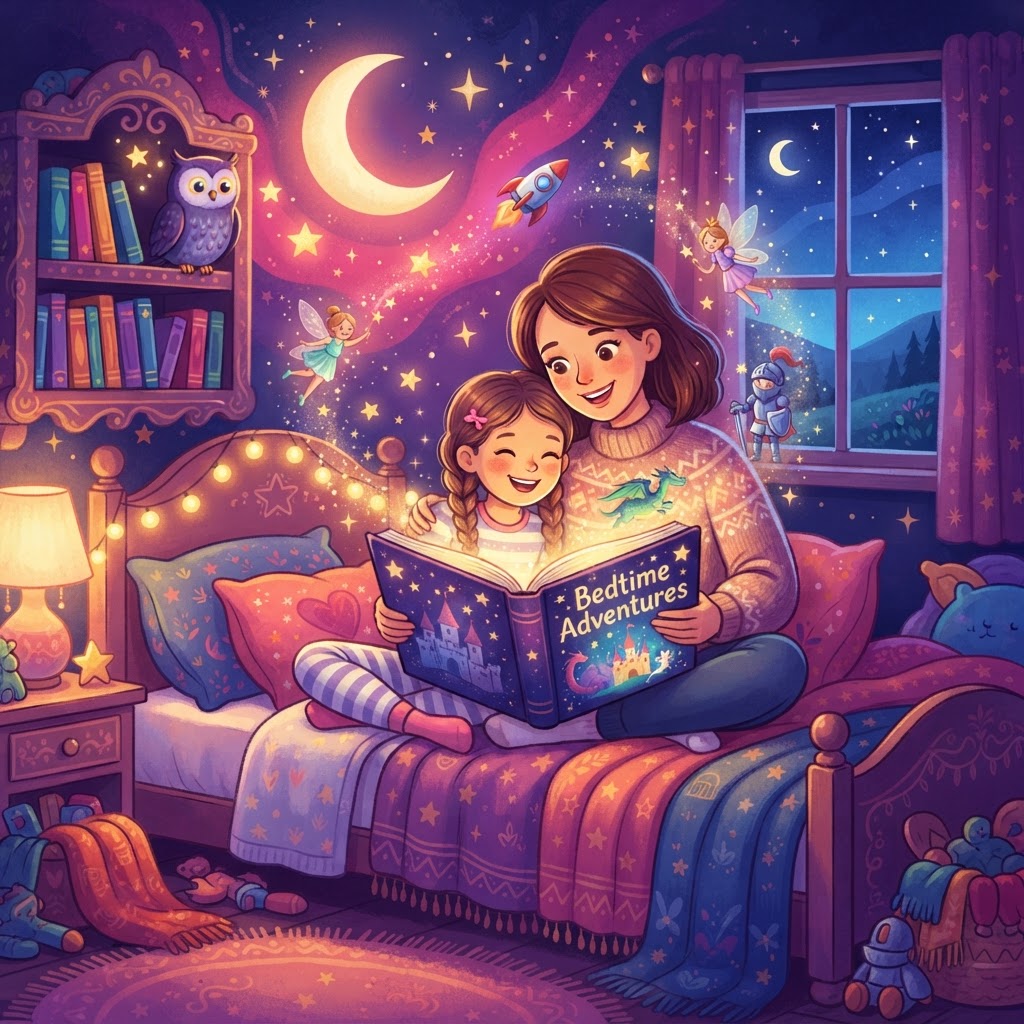
By age 7, many children want bedtime stories that feel a little more grown-up—but not too heavy for the end of the day. The best kind stories for 7 year olds combine gentle plots, believable emotions, and reassuring endings, giving children a safe space to think about friendship, fairness, and empathy before sleep. If you are looking for bedtime stories for 7 year olds that calm the body and nourish the heart, this guide will help you choose stories that truly fit this age.
What makes a bedtime story kind for a 7-year-old?
A kind bedtime story is a story where compassion, empathy, and gentle problem-solving matter more than winning, fighting, or showing off. For 7-year-olds, kindness feels most meaningful when it is shown through actions children can imagine doing themselves.
At this age, children usually connect with stories where characters:
- notice when someone is left out
- help a friend fix a mistake
- learn to apologize and repair hurt feelings
- show courage without being mean
- treat animals, siblings, and classmates with care
The best kids kind stories do not preach. Instead, they let children see kindness in action. A strong story might include a misunderstanding, a small conflict, and a warm resolution that shows how kindness can solve real-life problems.
What developmental milestones matter most when choosing stories for 7-year-olds?
At age 7, children are becoming more logical, more socially aware, and more interested in fairness. That is why the best bedtime stories for 7 year olds offer simple emotional depth, clear consequences, and characters who learn from everyday situations.
According to the American Academy of Pediatrics and the CDC’s child development guidance, many 7-year-olds are developing in these important ways:
- Stronger empathy: They are better able to imagine how someone else feels.
- Growing sense of justice: They care deeply about fairness and rules.
- Longer attention span: They can follow more plot than a preschooler can.
- Better language skills: They enjoy richer vocabulary and more dialogue.
- More emotional insight: They can understand mixed feelings, not just happy or sad.
This matters at bedtime. A 7-year-old often wants more than a very simple tale, but still needs emotional safety and closure. Stories that are too intense, too sarcastic, or too morally confusing can feel unsettling right before sleep.
Why do kind stories appeal so strongly to 7-year-olds?
Kind stories for 7 year olds appeal because they match what many children this age are trying to figure out in real life: how to be a good friend, how to handle mistakes, and how to belong. A gentle story helps them rehearse these social lessons in a calm and comforting way.
Seven-year-olds are often navigating school friendships, classroom expectations, and more independence. Research from the Center on the Developing Child at Harvard University highlights how supportive relationships help children build emotional regulation and social understanding. Bedtime stories can support that process by giving children examples of patience, forgiveness, and cooperation.
Parents often notice that children this age return again and again to stories where:
- someone feels left out, then welcomed in
- a problem gets solved through teamwork
- a character learns to be brave and gentle at the same time
- a mistake is handled with honesty, not shame
That is one reason many families also enjoy related story types, like moral bedtime stories for 7-year-olds or calming bedtime stories for 7-year-olds. Kindness and emotional safety often go hand in hand.
How long should bedtime stories for 7-year-olds be?
For most children, the ideal length is 8 to 15 minutes, or roughly 800 to 1,500 words. That is long enough to feel satisfying, but short enough to keep bedtime peaceful.
A 7-year-old can usually handle more plot than a younger child, especially if the story has a clear beginning, middle, and end. Still, bedtime is not the best time for a very long story with lots of subplots. If your child is tired, overstimulated, or anxious, shorter is often better.
A helpful rule of thumb:
- Very tired child: 5-8 minutes
- Typical bedtime: 8-15 minutes
- Chapter-style read-aloud: 10-20 minutes, stopping at a calm point
If your child loves variety, it can help to create your own personalized bedtime story that matches their exact mood that night—gentle, funny, cozy, or reassuring.
Which themes work best in kind bedtime stories for 7-year-olds?
The strongest themes are everyday, relatable, and emotionally safe. The best kind bedtime stories help children imagine how kindness works in family life, school life, and small adventures.
Here are some themes that work especially well:
-
Friendship and inclusion
Stories about inviting someone to join a game, noticing loneliness, or making room for a new child in class feel very relevant at 7. -
Helping without being asked
Children this age love seeing kindness shown through small, practical actions: carrying books, sharing supplies, or comforting a sibling. -
Repairing mistakes
A powerful theme for this age is learning that being kind does not mean being perfect. It means apologizing, listening, and trying again. -
Gentle courage
Seven-year-olds enjoy brave characters, but bedtime stories work best when bravery is linked to kindness, not aggression. -
Community and cooperation
Group projects, neighborhood helpers, and teamwork stories help children see that kindness can strengthen a whole community. -
Wonder with warmth
Fairies, woodland creatures, or magical gardens can be lovely when the emotional tone stays soft. If your child enjoys magical settings, you might also like these fairy tale bedtime ideas for 7-year-olds.
Families often pair kids kind stories with other bedtime moods too. Some nights call for educational bedtime stories for 7-year-olds, while other nights benefit from funny bedtime stories for 7-year-olds that still keep the humor gentle.
What should parents avoid in kind bedtime stories for 7-year-olds?
Avoid stories that are emotionally harsh, overly fast-paced, or confusingly moralistic. A bedtime story should settle the mind, not leave a child worrying, buzzing, or feeling ashamed.
Watch out for these common mismatches:
-
Cruel humor or mean teasing
Some children laugh along in the moment but feel uneasy later. -
High-stakes danger right before sleep
A little tension is fine; intense peril, loss, or unresolved fear is usually not. -
Heavy-handed lessons
If the moral feels like a lecture, children often tune out. -
Complicated plots with too many characters
This can make it harder for a child to relax and follow the story. -
Punishment-focused endings
Stories about kindness work better when they emphasize growth, empathy, and repair.
If your child is especially sensitive, choose stories with a clear emotional arc: a small problem, a kind response, and a safe ending. That pattern helps children settle into sleep with a sense of reassurance.
What are five great kind bedtime story ideas for 7-year-olds?
These five story concepts work beautifully because they combine relatable feelings with gentle resolutions. Each one can be told as a short original tale or turned into a personalized story.
1. The New Child on the Playground
A child notices a classmate sitting alone during recess and invites them into a game. The story can explore nervousness, kindness, and how one small gesture changes someone’s whole day.
2. The Lost Library Book
A child accidentally misplaces a library book and feels worried about telling the truth. With help from a kind friend or parent, they learn that honesty and teamwork can fix a mistake.
3. The Little Fox Who Shared the Moonlight
A woodland animal wants the prettiest moonlit spot for itself but slowly realizes that beauty is better when shared. This is a lovely choice for soft, lyrical bedtime reading.
4. The Birthday Card for the Grumpy Neighbor
A child decides to make a card for a neighbor who seems unfriendly. The story gently reveals that the neighbor is lonely, showing how kindness can open closed doors.
5. The Team That Almost Gave Up
A group of children working on a school project argue at first, then learn to listen and combine their ideas. This kind of story is ideal for 7-year-olds who are learning cooperation in class.
If you want more variety, the InstaTales blog can help you explore related story types and themes for different moods and reading goals.
How can parents use personalized AI stories to encourage kindness?
Personalized AI stories can be a wonderful tool when parents use them intentionally. They allow you to match the story to your child’s age, interests, sensitivities, and real-life social experiences.
For example, if your child is nervous about making friends, you can generate a gentle story about welcoming someone new. If they are struggling with sibling tension, you can create a bedtime tale about sharing, apologizing, and reconnecting. With InstaTales, families can create your own personalized bedtime story in minutes, use ready-made story templates, and save favorites in your story library for easy re-reading.
This can also support learning beyond bedtime. Teachers and caregivers sometimes use personalized stories to model empathy, classroom cooperation, and emotional vocabulary, which is why some families also explore InstaTales for teachers for school-friendly story use.
Frequently Asked Questions
Are kind bedtime stories good for 7-year-olds?
Yes. Kind bedtime stories support empathy, emotional regulation, and social learning while also helping children wind down at the end of the day.
How long should a bedtime story be for a 7-year-old?
Most 7-year-olds do well with stories that last 8 to 15 minutes. If your child is extra tired or sensitive at night, a shorter story may work better.
What themes are best in kind stories for 7 year olds?
Friendship, inclusion, honesty, teamwork, and gentle courage are excellent themes. These reflect the real social challenges many 7-year-olds are working through.
Should bedtime stories for 7 year olds always teach a lesson?
Not directly. The best stories show kindness through character choices and natural consequences instead of sounding like a lecture.
Can personalized AI stories help children learn kindness?
Yes, when used thoughtfully. Personalized stories can reflect your child’s current experiences and model compassionate responses in a way that feels engaging and safe.
What if my child wants the same kind story every night?
That is completely normal. Repetition helps children feel secure and gives them more chances to absorb language, emotional patterns, and comforting routines.
Get a new bedtime story every week
Free, personalized, and delivered to your inbox. No spam, ever.
Ready to Create a Personalized Bedtime Story?
Use our free AI bedtime story generator to create a personalized illustrated story for your child in 30 seconds — no credit card needed.
Popular story types:
Maya Rodriguez
Lead Content Editor & Early Literacy Specialist
Maya is a former early childhood educator and literacy specialist with over a decade of experience helping children develop a love of reading. She leads content at InstaTales, where she writes about the science of storytelling, child development, and how families can use personalized AI stories to build literacy and emotional resilience.
instatales.ai