Best ocean bedtime stories for 6-year-olds
Discover the best ocean bedtime stories for 6-year-olds — themes, tips, and story ideas that will delight your child at bedtime.
✦ Key Takeaways
- •At age 6, children are ready for more connected plots, richer vocabulary, and deeper emotions than preschoolers.
- •Ocean bedtime stories appeal to 6-year-olds because the sea feels both real and magical.
- •For most children this age, the ideal bedtime story lasts 7 to 12 minutes, or roughly 800 to 1,200 words when read aloud.
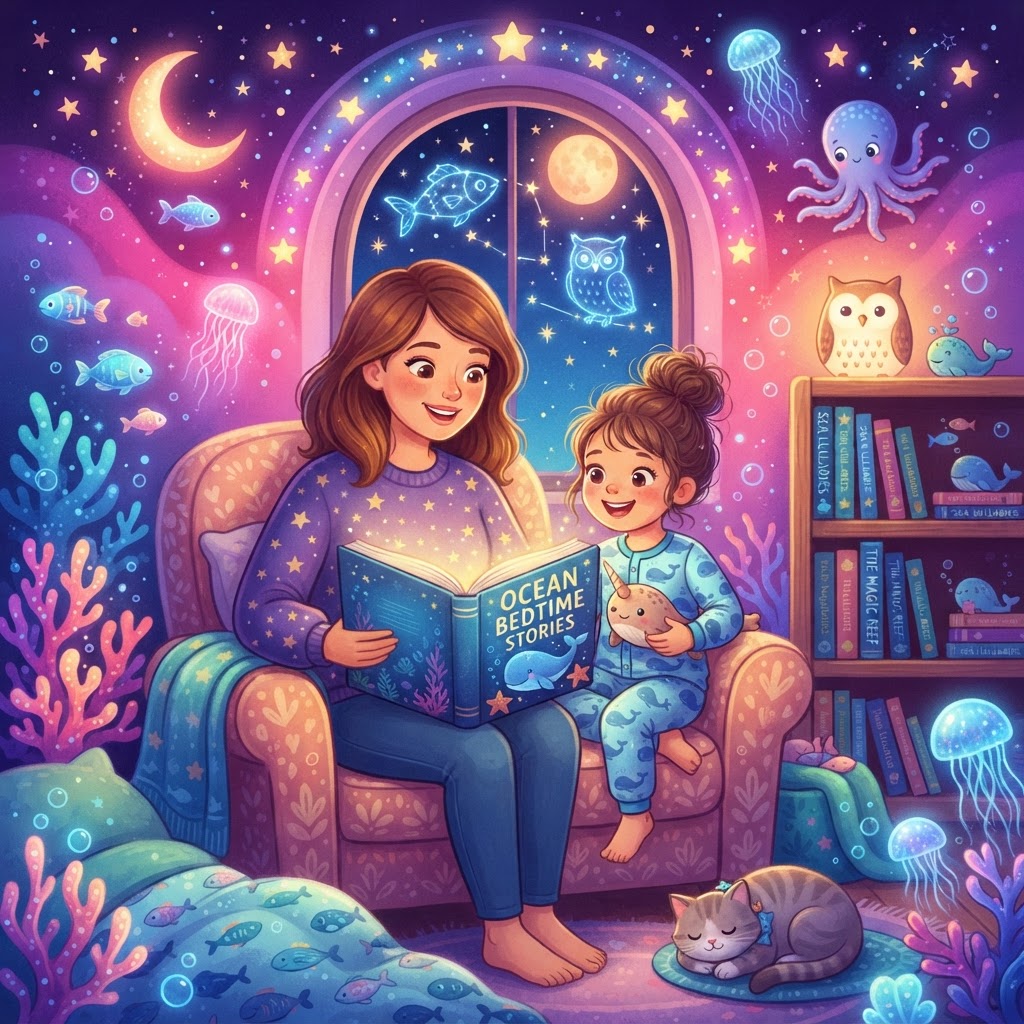
The best ocean stories for 6 year olds do two jobs at once: they spark wonder and help children settle down. At this age, many kids love sea animals, underwater adventures, and “what lives deep below?” questions—but they still need a story that feels safe, clear, and soothing before sleep.
For parents, that means choosing bedtime stories for 6 year olds that match both attention span and emotional development. A strong ocean story should feel magical without being overwhelming, adventurous without being chaotic, and gentle enough to end the day well.
What developmental milestones matter most when choosing ocean bedtime stories for 6-year-olds?
At age 6, children are ready for more connected plots, richer vocabulary, and deeper emotions than preschoolers. They can usually follow a beginning, middle, and end, understand simple motives, and enjoy stories with a real problem to solve.
According to the CDC’s middle childhood guidance, children ages 6 to 8 are building independence, friendships, empathy, and reasoning skills. That matters at bedtime because stories now need a bit more substance—but not so much stimulation that sleep becomes harder.
Here’s what many 6-year-olds respond to well:
- One clear main character they can root for
- A simple challenge such as finding a shell, helping a friend, or returning home
- Emotional safety with mild tension and a reassuring ending
- Interesting facts woven lightly into the plot
- Repetition or patterns that make the story calming and predictable
The American Academy of Pediatrics also emphasizes the value of regular shared reading for language, bonding, and emotional growth on HealthyChildren.org. In practice, that means kids ocean stories work best when they invite closeness, curiosity, and conversation—not just entertainment.
Why do ocean bedtime stories appeal so strongly to 6-year-olds?
Ocean bedtime stories appeal to 6-year-olds because the sea feels both real and magical. Children this age are often fascinated by animals, hidden worlds, and big natural environments, and the ocean offers all three.
The underwater setting is especially powerful because it naturally slows the imagination down. Waves, drifting seaweed, gliding turtles, and glowing fish create a peaceful rhythm that fits bedtime better than fast-moving action stories.
Ocean themes also match common interests at age 6:
- Animal curiosity: dolphins, octopuses, whales, turtles, and starfish are memorable
- Mystery without too much fear: caves, coral reefs, and deep water feel exciting
- Gentle discovery: tides, shells, and bioluminescence add wonder
- Caring themes: protecting sea life and helping friends feel meaningful
For many families, ocean stories are a great middle ground between realistic and imaginative themes. If your child also loves other calming adventures, you might enjoy these nature-themed bedtime stories or gentle friendship bedtime stories.
How long should bedtime stories for 6-year-olds be?
For most children this age, the ideal bedtime story lasts 7 to 12 minutes, or roughly 800 to 1,200 words when read aloud. That is usually long enough to feel satisfying, but short enough to support sleep rather than delay it.
A good rule is to keep the structure simple:
- 1 main character
- 1 central problem
- 3 to 5 short scenes
- A calm ending
If your child is already tired, aim shorter. If they are alert and love listening, you can stretch a little—so long as the story stays emotionally gentle.
Signs a story is too long for bedtime include:
- Your child starts interrupting often or losing track
- The middle feels busy or repetitive in a restless way
- The ending comes too late, after they are overtired
- The story raises new questions instead of settling them
Parents often notice that the best bedtime stories for 6 year olds leave children feeling complete, not wound up. Save more action-heavy adventures for daytime, and keep nighttime tales warm, predictable, and easy to follow.
Which themes work best in ocean stories for 6-year-olds?
The best themes for ocean bedtime stories are gentle adventure, friendship, problem-solving, and awe. These themes fit a 6-year-old’s growing imagination while still supporting rest.
Five especially effective themes are:
-
Friendship under the sea
A shy seahorse, a helpful dolphin, or a curious crab gives children social stories they understand. At 6, many kids are working through friendship questions in real life. -
Exploration and discovery
Tide pools, coral reefs, and moonlit beaches feel exciting without being too intense. Children can learn while still feeling cozy. -
Helping and teamwork
A group of sea animals solving a small problem teaches cooperation in a natural way. This matches school-age social development well. -
Gentle environmental care
Stories about keeping the beach clean or helping a trapped turtle can build empathy. NOAA explains why ocean care matters in simple, family-friendly ways on the National Ocean Service site. -
Small magic, not big chaos
Glowing shells, singing whales, or a sleepy moon ray can add wonder without turning the story into a high-stakes fantasy. If your child likes that blend, soft magic bedtime tales can also be a great fit.
The strongest kids ocean stories often combine one emotional theme with one nature theme—for example, courage plus whales, or friendship plus coral reefs.
What should parents avoid in ocean bedtime stories for 6-year-olds?
Parents should avoid stories that are too scary, too busy, or too moralizing right before bed. A 6-year-old can handle mild suspense, but bedtime is not the best time for intense danger, dark imagery, or long factual explanations.
Watch out for these common missteps:
- Predator-heavy plots with chasing, attacking, or looming danger
- Storms, sinking, or separation themes that feel unresolved
- Too many characters introduced too quickly
- Information overload that sounds like a lesson instead of a story
- Harsh environmental guilt that makes children feel worried or helpless
- Cliffhanger endings that make it harder to wind down
It also helps to avoid portraying the ocean as only scary or only silly. Children benefit from balance. Sharks do not need to be villains, and every sea creature does not need a joke voice to hold attention.
A better bedtime approach is: small problem, warm support, satisfying solution. That rhythm helps children process the story emotionally and move toward sleep.
What are five great ocean bedtime story ideas for 6-year-olds?
The best story ideas for this age are simple, vivid, and emotionally reassuring. Here are five ocean-themed ideas parents can use tonight.
1. The little turtle and the moonlit path
A young sea turtle feels nervous about swimming home at night. Friendly moonbeams and glowing fish help light the way, and the turtle learns that brave can also mean calm.
2. The whale who lost her lullaby
A gentle whale forgets the song she sings to help all the baby sea creatures sleep. One by one, ocean friends share tiny sounds until the whale remembers a new lullaby even sweeter than before.
3. The starfish in the tide pool school
A curious starfish wants to learn why the tide comes and goes. With help from a patient crab and a wise old shell, the starfish discovers that nature has rhythms—just like bedtime.
4. The coral reef clean-up club
A clownfish, turtle, and octopus work together to clear a reef after a windy day. The story focuses on teamwork and caring, ending with the reef glowing softly under the stars.
5. The shy seahorse and the bubble parade
A seahorse wants to join a parade but feels too shy. A jellyfish friend shows that small, quiet bravery matters, and the parade becomes a peaceful dance of bubbles and light.
These ideas work especially well because they keep stakes low, use memorable imagery, and end with safety. They also leave room for personalization based on your child’s favorite animal, bedtime worry, or current interest.
How can parents make ocean bedtime stories more personal and useful?
Personalized stories are often more engaging because they connect directly to a child’s world. When a 6-year-old hears their name, favorite sea animal, or familiar emotion in a story, attention and emotional connection usually increase.
A simple way to personalize a story is to include:
- Your child’s name
- A favorite ocean animal
- A bedtime challenge, like feeling wiggly or worried
- A familiar comfort object, like a blanket or stuffed toy
- A calm goal, such as helping someone or finding the way home
This is where AI can be genuinely helpful. With InstaTales, parents can create your own personalized bedtime story based on age, theme, and interests, making it easier to generate ocean stories for 6 year olds that feel fresh without losing that soothing bedtime tone.
If you want a quicker starting point, browse the ready-made story templates. And if your child loves hearing the same favorites again and again, you can save them in your story library for easy rereading.
Frequently Asked Questions
Are ocean bedtime stories good for anxious 6-year-olds?
Yes, they can be excellent if the tone is calm and reassuring. Choose stories with gentle motion, kind animal characters, and endings that clearly restore safety.
What makes ocean stories different from other bedtime themes?
Ocean stories naturally combine wonder, animals, and a slower sensory setting. The sound and imagery of water often make them feel more soothing than faster-paced adventure themes.
How often should I read bedtime stories to a 6-year-old?
Nightly reading is ideal for many families, even if it is brief. A consistent routine supports language, bonding, and emotional regulation, especially when the story style is predictable and comforting.
Can ocean stories also teach science?
Yes, but the learning should be light and woven into the plot. At bedtime, a small fact about tides, coral, or whales works better than a fact-heavy lesson.
Should bedtime stories for 6 year olds always have a moral?
No. A gentle takeaway is fine, but children connect best when the story feels natural rather than preachy. Emotional warmth and a satisfying ending matter more than a heavy lesson.
Ready to Create a Personalized Bedtime Story?
Use our free AI bedtime story generator to create a personalized illustrated story for your child in 30 seconds — no credit card needed.
Popular story types:
Maya Rodriguez
Lead Content Editor & Early Literacy Specialist
Maya is a former early childhood educator and literacy specialist with over a decade of experience helping children develop a love of reading. She leads content at InstaTales, where she writes about the science of storytelling, child development, and how families can use personalized AI stories to build literacy and emotional resilience.
instatales.ai