Best ocean bedtime stories for 9-year-olds
Discover the best ocean bedtime stories for 9-year-olds — themes, tips, and story ideas that will delight your child at bedtime.
✦ Key Takeaways
- •Ocean stories work especially well for 9-year-olds because they combine mystery, science, and imagination in a way that fits this age perfectly.
- •At age 9, children are usually ready for more layered plots, stronger character motivation, and richer vocabulary—but they still need emotional safety at bedtime.
- •For most 9-year-olds, the ideal bedtime story length is about 10 to 20 minutes.
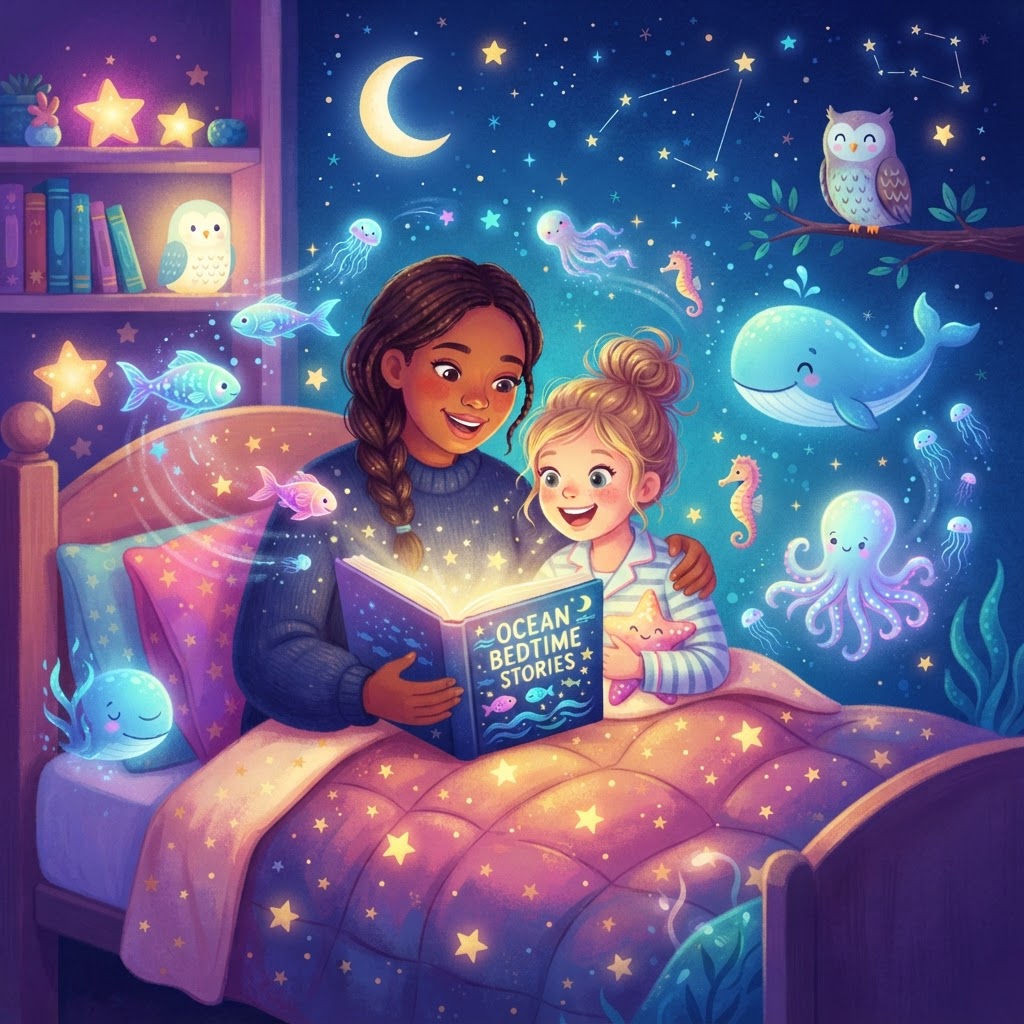
If your 9-year-old asks for “one more story” at bedtime, the ocean is a wonderful place to begin. The best ocean bedtime stories mix adventure, wonder, and gentle emotional depth—perfect for children who are growing more curious, thoughtful, and independent. For parents looking for the best ocean stories for 9 year olds, this guide covers what works at this age, what to skip before sleep, and how to choose stories that feel magical without becoming overstimulating.
Why are ocean bedtime stories such a strong match for 9-year-olds?
Ocean stories work especially well for 9-year-olds because they combine mystery, science, and imagination in a way that fits this age perfectly. Children this age often want stories that feel bigger and richer than simple picture-book plots, but they still enjoy warmth, comfort, and wonder at bedtime.
The ocean offers all of that. It gives children hidden worlds, unusual animals, brave explorers, and natural questions like “What’s down there?” or “How do dolphins communicate?” That mix of fact and fantasy helps kids ocean stories feel exciting without needing loud action.
Ocean settings also support emotional calm. Waves, underwater movement, moonlit beaches, and glowing sea life create soothing imagery that can help children wind down. If your child also enjoys other immersive themes, they may like space adventures for this age or nature-themed bedtime stories too.
What developmental milestones matter when choosing bedtime stories for 9 year olds?
At age 9, children are usually ready for more layered plots, stronger character motivation, and richer vocabulary—but they still need emotional safety at bedtime. That means the best bedtime stories for 9 year olds can be more complex than stories for younger children, while still ending with reassurance.
Many 9-year-olds are developing:
- Longer attention spans
- Better understanding of cause and effect
- Stronger empathy for characters
- Interest in fairness, rules, and moral choices
- More curiosity about the real world
Research-backed reading guidance supports this approach. Reading Rockets notes that reading aloud to older children still builds vocabulary, comprehension, and background knowledge. And healthy sleep habits matter too; the CDC recommends 9–12 hours of sleep for children ages 6–12, so bedtime reading should help the brain settle, not rev up.
In practical terms, choose stories with a clear plot, relatable feelings, and enough detail to feel “grown up.” A shy child may love a brave reef explorer, while a socially focused child may prefer a dolphin friendship story. If your child is especially drawn to relationships, friendship-focused bedtime stories can also be a lovely fit.
How long should ocean bedtime stories be for a 9-year-old?
For most 9-year-olds, the ideal bedtime story length is about 10 to 20 minutes. That usually means roughly 1,000 to 2,000 spoken words, depending on your reading pace and how often your child stops to ask questions.
This age can handle longer stories than younger children, but bedtime is not the moment for an epic chapter full of cliffhangers. If the story is too short, it may feel babyish. If it is too long or too intense, it can keep your child mentally “awake” after lights-out.
A good bedtime rhythm often looks like this:
- 2-3 minutes to settle in
- 10-15 minutes of story
- 1-2 minutes to reflect or say goodnight
If your child loves serialized stories, stop at a calm resolution point rather than a dramatic twist. That helps preserve sleep while still building anticipation for tomorrow night. Parents who want flexible length can also create your own personalized bedtime story and adjust the plot to fit the evening.
Which themes work best in kids ocean stories for this age?
The best themes for 9-year-olds are wonder, bravery, friendship, problem-solving, and gentle discovery. These themes respect a child’s growing maturity while keeping the bedtime tone calm and hopeful.
Great themes for ocean stories for 9 year olds include:
- Exploration: discovering a coral cave, a hidden lagoon, or a moonlit reef
- Friendship: a child and sea turtle, siblings on a beach quest, or a pod of dolphins helping each other
- Responsibility: caring for marine life or protecting a habitat
- Courage: facing a fear of deep water, darkness, or making a mistake
- Curiosity and learning: weaving in real ocean facts from places like NOAA or the Smithsonian Ocean portal
These themes work well because 9-year-olds often enjoy stories that mean something. They like adventure, but they also want characters to grow. A bedtime story about a child helping a lost octopus find its reef home can be both soothing and emotionally satisfying.
If your child prefers more imaginative twists, you can blend ocean settings with fantasy through gentle magical bedtime stories. That combination often works beautifully for children who want wonder without scariness.
What should parents avoid in ocean bedtime stories for 9-year-olds?
Avoid stories that are too frightening, too fast-paced, or too emotionally unresolved right before sleep. Even confident 9-year-olds can become overstimulated by danger-heavy plots, vivid predator scenes, or endings that leave the main problem hanging.
Be careful with:
- Shark attack or drowning scenes
- Environmental themes presented in a hopeless way
- Loud, frantic action from start to finish
- Sarcasm or humor that feels mean
- Endings built around punishment, loss, or guilt
This does not mean all conflict is bad. In fact, age-appropriate conflict helps children think and feel deeply. The key is regulation. A good ocean bedtime story might include a storm, getting lost, or a misunderstanding—but it should move toward safety, comfort, and connection before the last page.
When in doubt, ask: “Will this child feel calmer after this story?” That one question helps parents choose better bedtime stories for 9 year olds every time.
What are five ocean bedtime story ideas that work especially well tonight?
The strongest ocean bedtime story ideas for 9-year-olds combine gentle suspense with a reassuring ending. Here are five parent-friendly prompts you can use right away.
1. The Moonlight Reef Rescue
A 9-year-old child hears a faint singing sound from the reef and discovers a baby seahorse separated from its family. The story follows a calm search through glowing coral gardens before a joyful reunion.
2. The Library Beneath the Waves
A curious child finds a secret underwater library run by wise turtles. Each shell book contains a memory from the sea, and the child learns one important lesson about kindness and patience.
3. The Dolphin Who Lost Her Song
A young dolphin becomes quiet after feeling left behind by her pod. With help from a thoughtful child visitor, she regains confidence and finds her own voice again.
4. The Sandcastle Map to the Hidden Cove
A beach-built sandcastle reveals a magical map only visible at sunset. The journey leads to a hidden cove where sea creatures work together to protect a patch of coral.
5. The Octopus Inventor’s Sleepy Sea Machine
A friendly octopus creates a gentle machine that helps restless sea creatures settle down for the night. The child hero helps fix one small problem, and the entire ocean drifts into peaceful sleep.
These ideas can easily become recurring stories. You can expand them, turn them into a bedtime series, or adapt them to your child’s interests using story templates or save favorites in your story library for re-reading.
How can parents use personalized ocean bedtime stories in a helpful way?
Personalized stories can make bedtime more engaging because they place your child inside a world that already interests them. For many families, that means a stronger connection to reading and fewer bedtime power struggles.
With InstaTales, parents can generate ocean bedtime stories tailored to a 9-year-old’s name, favorite sea animal, reading level, and preferred tone. A child who loves facts might get a reef adventure with real marine details, while a child who needs emotional comfort might get a calmer story about belonging and bravery.
Personalization also helps you match bedtime stories to real life. If your child is nervous about swimming lessons, an ocean story about gentle courage can support that feeling indirectly. If they are fascinated by marine biology, story time can build on that interest in the same spirit as the resources found across the InstaTales blog.
For families who want variety, it can help to rotate themes: ocean one night, cozy bedtime favorites another night, then friendship or nature after that. Variety keeps reading fresh while still protecting the bedtime routine.
Frequently Asked Questions
What makes ocean stories calming for 9-year-olds?
Ocean imagery often feels naturally soothing because it includes waves, moonlight, drifting movement, and peaceful sea life. When the plot stays gentle, those details can help children relax before sleep.
Are ocean bedtime stories educational as well as fun?
Yes. Many kids ocean stories can introduce vocabulary, animal facts, habitats, and environmental awareness in a low-pressure way. At age 9, children are especially ready to enjoy stories that blend imagination with real-world learning.
How scary is too scary at bedtime for a 9-year-old?
A little suspense is fine, but bedtime stories should not leave a child tense or worried after lights-out. Avoid graphic danger, unresolved peril, or intense emotional themes late in the evening.
Can personalized ocean stories help reluctant readers?
Yes. Personalization often boosts engagement because children pay more attention when the story includes their name, interests, or favorite animals. It can be a helpful bridge for children who resist standard read-alouds.
How often should I read bedtime stories to a 9-year-old?
As often as your routine allows, even if it is only a few nights a week. Older children still benefit from read-aloud time, especially when it supports bonding, language growth, and a calm transition to sleep.
Ready to Create a Personalized Bedtime Story?
Use our free AI bedtime story generator to create a personalized illustrated story for your child in 30 seconds — no credit card needed.
Popular story types:
Maya Rodriguez
Lead Content Editor & Early Literacy Specialist
Maya is a former early childhood educator and literacy specialist with over a decade of experience helping children develop a love of reading. She leads content at InstaTales, where she writes about the science of storytelling, child development, and how families can use personalized AI stories to build literacy and emotional resilience.
instatales.ai