Best sharing bedtime stories for 6-year-olds
Discover the best sharing bedtime stories for 6-year-olds — themes, tips, and story ideas that will delight your child at bedtime.
✦ Key Takeaways
- •Six-year-olds are developing empathy, rule awareness, and a stronger sense of fairness.
- •Sharing bedtime stories appeal to 6-year-olds because they match the social challenges children are actively living through each day.
- •For most 6-year-olds, the ideal bedtime story length is about 8 to 15 minutes.
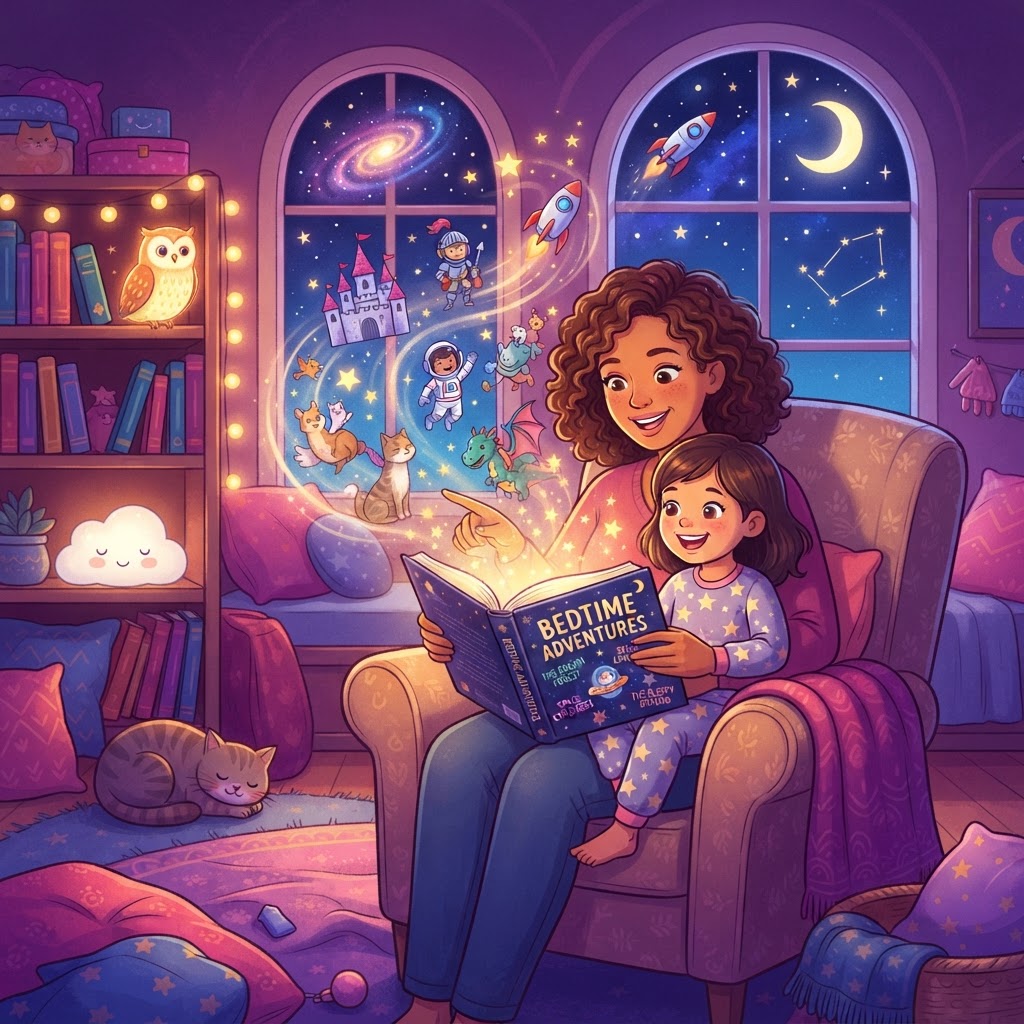
If you are looking for the best sharing bedtime stories for 6-year-olds, start with stories that feel close to your child’s real world: friendships, taking turns, fairness, and small everyday choices. At this age, children are ready for richer plots than toddlers, but they still learn best from gentle, concrete examples that help them imagine what kindness looks like in action.
Parents often notice that age 6 is a big year for social growth. Children are entering school routines, learning classroom rules, and figuring out how to cooperate with peers. That makes sharing stories for 6 year olds especially powerful at bedtime, because stories let children explore tricky moments in a calm, safe setting before they face them in real life.
What developmental milestones shape sharing stories for 6-year-olds?
Six-year-olds are developing empathy, rule awareness, and a stronger sense of fairness. That combination makes them especially responsive to stories about sharing, teamwork, and friendship.
At this age, many children can follow a multi-step plot, understand simple cause and effect, and talk about how a character feels. According to HealthyChildren.org, school-age children are building social skills, emotional regulation, and a deeper understanding of relationships. They also care a lot about what feels “fair,” even if they still struggle to share easily in the moment.
That matters for bedtime reading because the best bedtime stories for 6 year olds meet children right where they are:
- They show common social problems, like wanting the same toy or not wanting to wait.
- They offer clear emotional cues, such as disappointment, pride, jealousy, or relief.
- They end with repair, connection, and a sense of security.
Research from the Center on the Developing Child at Harvard University also highlights how children’s executive function skills grow through practice. Stories can support these skills by helping children imagine impulse control, perspective-taking, and problem-solving.
Why do sharing bedtime stories appeal so much to 6-year-olds?
Sharing bedtime stories appeal to 6-year-olds because they match the social challenges children are actively living through each day. A story about taking turns feels meaningful when your child has just spent the day navigating classmates, siblings, and playground dynamics.
Children this age are often fascinated by social rules. They want to know:
- What happens when someone is left out?
- Is it okay to keep something special for yourself?
- How do friends fix hurt feelings?
- What makes sharing feel fair?
Stories answer those questions without sounding like lectures. Instead of saying, “You should share,” a story shows a child-character wrestling with the choice, making a mistake, and feeling the reward of generosity or cooperation.
That is why kids sharing stories work so well at bedtime. In the evening, children are more open to reflection. A gentle story can lower defensiveness and open the door to a short conversation like, “Have you ever felt like that?”
How long should bedtime stories for 6-year-olds be?
For most 6-year-olds, the ideal bedtime story length is about 8 to 15 minutes. That is long enough for a satisfying plot, but short enough to keep the story calm and sleep-friendly.
Some children can enjoy a slightly longer read, especially if they already love chapter books. But for bedtime, shorter often works better than longer. The goal is connection and emotional settling, not overstimulation.
A strong length for sharing stories for 6 year olds usually includes:
- One clear social problem
- Two or three key story events
- A warm resolution
- A calm final image or feeling
If your child is tired, shorten the story even more. If they are highly verbal and engaged, you can add a little discussion after reading. For families who want more bedtime inspiration, exploring calming bedtime stories for 6-year-olds can also help create a peaceful evening routine.
Which themes work best in sharing bedtime stories?
The best themes are everyday, relatable, and emotionally clear. Six-year-olds connect most with stories that reflect situations they understand from home, school, or play.
Strong themes for sharing bedtime stories include:
- Taking turns with a toy, game, or special role
- Including others in play
- Sharing space in a bedroom, classroom, or fort
- Generosity with snacks, art supplies, or time
- Cooperation to solve a problem together
- Fairness versus sameness, which helps children see that fair does not always mean identical
- Repair after conflict, such as apologizing or trying again
These themes work well because they are concrete. A 6-year-old may not connect deeply with a vague lesson about “kindness,” but they absolutely understand what it feels like when two children want the same glitter pen.
For even richer bedtime reading, parents can pair sharing stories with moral stories for 6-year-olds or educational bedtime stories, especially if they want stories that gently reinforce social learning.
The read-aloud experts at Reading Rockets note that discussion during reading supports comprehension and language development. That means even a simple sharing story becomes more valuable when you pause to ask, “What do you think the character should do?”
What should parents avoid in sharing stories for 6 year olds?
Avoid stories that shame, preach, or overwhelm. The best stories teach sharing gently, without making a child feel “bad” for having normal big feelings.
Here is what to skip or limit:
- Harsh moralizing: If the message feels like a lecture, children tune out.
- One-dimensional characters: A “perfect sharer” is less useful than a realistic child who learns.
- High-stakes fear or punishment: Bedtime is not the right moment for scary consequences.
- Overly long conflicts: If the upset goes on too long, it can leave children emotionally activated.
- Unrealistic expectations: Children should not be told they must always give away everything.
This last point matters. Healthy sharing is not the same as constant self-sacrifice. A strong story can teach both generosity and boundaries. For example, a child may share markers but keep one treasured stuffed animal private. That is a balanced lesson.
If your child is sensitive, look for stories with a calm tone and a secure ending. Some children also respond well to fantasy bedtime stories for 6-year-olds, where the emotional lesson feels a bit safer because it happens through magical characters.
What are five great sharing bedtime story ideas for 6-year-olds?
The best story ideas place sharing inside a small, relatable problem and end with connection. Here are five strong examples parents can use tonight.
1. The two-cape problem
Two friends both want the shiny superhero cape in the dress-up box. They first argue, then invent a game where one becomes the “sky rescuer” and the other the “secret mission captain,” switching roles halfway through.
2. The last strawberry muffin
A child sees one muffin left after dinner and wants it badly. When they notice a sibling also hoping for it, the parent helps them find a solution: split it, save it, or create a new shared treat together.
3. The playground bridge
At recess, several children want to use the same bridge in an imaginary castle game. One child comes up with a turn-taking plan that makes the game bigger and more fun for everyone.
4. The art box rescue
A classroom runs low on glitter paper before a project is finished. A child who was saving extra supplies decides to share them, and the group works together to create one giant mural.
5. The moonlight picnic blanket
During a backyard pretend picnic, everyone wants the soft blue blanket. The children discover they can combine cushions, towels, and the blanket to build a larger “sharing island” under the stars.
These ideas work because they show that sharing is not only giving something up. Often, it leads to creativity, teamwork, and a better outcome than a child first imagined. If your child enjoys courage in social situations too, brave bedtime stories for 6-year-olds can pair beautifully with sharing themes.
How can parents use personalized AI stories to support sharing skills?
Personalized AI stories can make sharing lessons more relevant because they place your child inside the exact kind of situation they are learning to handle. That personal connection often increases attention, understanding, and recall.
For example, if your child is having trouble sharing with a sibling, you can create your own personalized bedtime story featuring your child’s name, favorite toy, and a gentle turn-taking challenge. If they need variety, InstaTales also offers helpful story templates that make it easy to build age-appropriate stories quickly.
Personalization works best when you keep the tone warm and specific. Include details your child loves, such as:
- Their favorite animal or magical helper
- A familiar setting like home, school, or the park
- One simple sharing challenge
- A calm, reassuring ending
You can also save successful stories in your story library so children can revisit favorites. Re-reading matters: repeated stories help children absorb emotional lessons over time.
For parents who want to explore more reading support, the InstaTales blog can offer additional ideas for bedtime routines, themes, and age-based story choices.
Frequently Asked Questions
What makes a good sharing story for a 6-year-old?
A good sharing story for a 6-year-old uses a realistic problem, clear feelings, and a gentle resolution. It should show that sharing can be hard sometimes, while still modeling kindness and cooperation.
Are sharing bedtime stories too “teachy” for bedtime?
Not if they are written well. The best bedtime stories feel warm and engaging first, with the lesson woven naturally into the plot rather than stated like a lecture.
How often should I read sharing stories to my child?
You can read them as often as they feel useful, especially during times of sibling conflict or friendship struggles. Rotating sharing stories with calming, funny, or imaginative stories keeps bedtime balanced.
Can personalized stories really help children learn to share?
Yes, personalized stories can help because children pay closer attention when they hear their own name, interests, and familiar situations. That makes the lesson feel more concrete and easier to apply in real life.
What if my child resists stories about sharing?
If your child resists, choose stories with humor, animals, or fantasy elements to lower pressure. You can also focus on cooperation and problem-solving first, then circle back to sharing more directly later.
Should sharing stories always end with the child giving something away?
No. A strong story can also show turn-taking, compromise, teamwork, or setting a healthy boundary. The goal is social understanding, not teaching children to ignore their own needs.
Ready to Create a Personalized Bedtime Story?
Use our free AI bedtime story generator to create a personalized illustrated story for your child in 30 seconds — no credit card needed.
Popular story types:
Maya Rodriguez
Lead Content Editor & Early Literacy Specialist
Maya is a former early childhood educator and literacy specialist with over a decade of experience helping children develop a love of reading. She leads content at InstaTales, where she writes about the science of storytelling, child development, and how families can use personalized AI stories to build literacy and emotional resilience.
instatales.ai