Butterflies Stories for Kids: 7 Tales & Facts
Delightful butterflies stories for kids — plus real fun facts woven into each tale. Perfect for young animal lovers who love a good story.
✦ Key Takeaways
- •Butterfly stories work beautifully at bedtime because they blend soft imagery with quiet discovery.
- •The best butterflies bedtime stories combine one simple adventure with one or two memorable facts.
- •The easiest way to make these tales feel special is to personalize them with your child’s name, age, and favorite details.
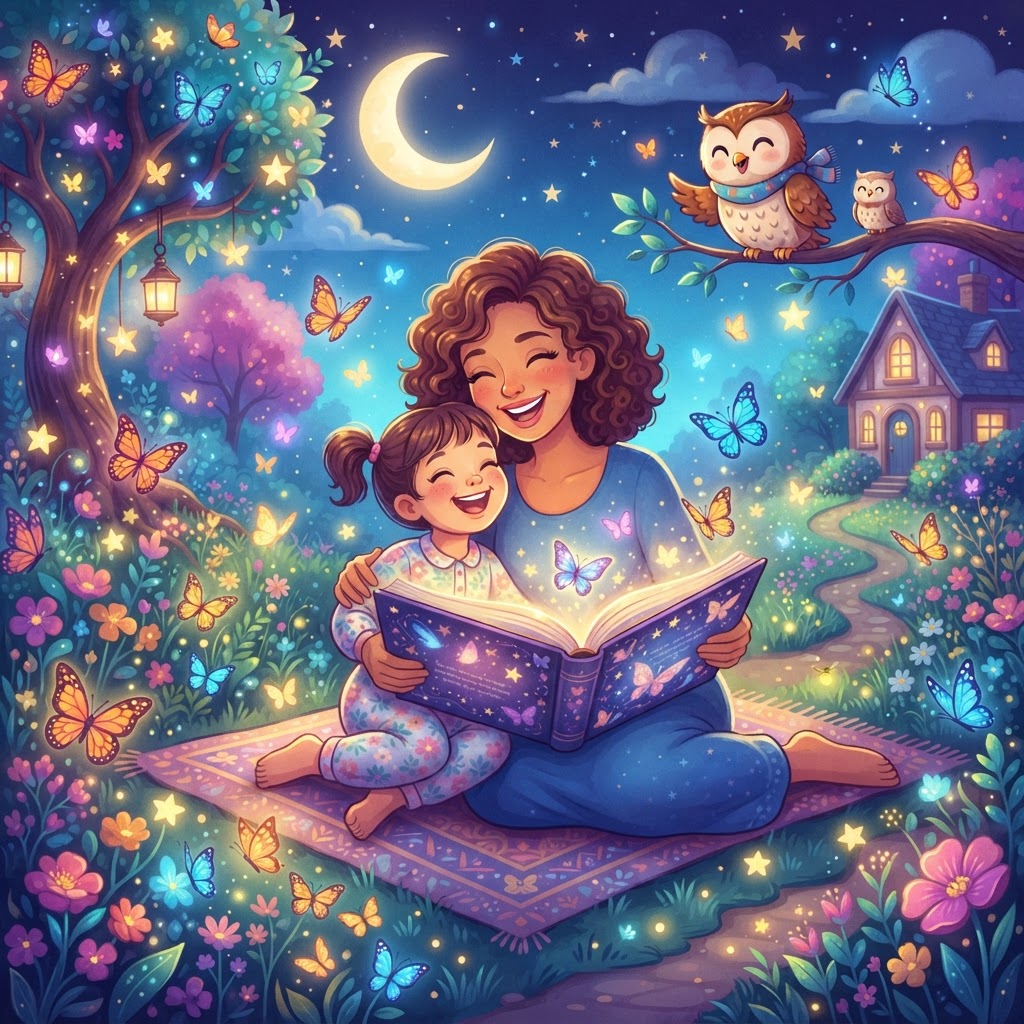
Butterflies are a wonderful bedtime theme because they feel magical, but they are also real enough to spark learning. If you are looking for butterflies stories for kids, butflies bedtime stories, or gentle stories about butterflies that mix wonder with true nature facts, this guide gives you both. Each idea below includes a simple story concept, 1-2 real butterfly facts, and an easy AI prompt you can use to create your own personalized bedtime story.
Why are butterflies stories for kids so calming and engaging at bedtime?
Butterfly stories work beautifully at bedtime because they blend soft imagery with quiet discovery. Gardens, moonlight, flowers, and slow transformations help children relax while still keeping their minds curious.
From a child development perspective, this mix matters. Research on shared reading and dialogic reading, including work by Dr. Grover Whitehurst and colleagues, shows that children learn more when adults pause, ask questions, and connect story details to real life. Butterfly tales children love often do this naturally: “What color wings would you choose?” or “Where do you think the butterfly will fly next?”
There is also a strong emotional fit. Young children are drawn to patterns and life cycles, and butterflies offer both. A caterpillar changes, rests, and emerges again, which gives children a reassuring story arc with a calm ending.
Which butterflies story ideas can you try tonight?
The best butterflies bedtime stories combine one simple adventure with one or two memorable facts. That way, children enjoy the tale first and remember the science almost by accident.
The facts below are drawn from trusted butterfly resources from the Monarch Joint Venture, the Xerces Society, and University of Kentucky Entomology.
1. Mila and the Milkweed Map
- Story concept: Mila finds a tiny monarch caterpillar on a milkweed leaf and helps it follow a “map” made of moonbeams, dew drops, and garden scents until it is ready for its long journey.
- Real butterfly facts: Monarch caterpillars eat milkweed, and female monarchs lay their eggs on it. Later, monarch butterflies are famous for their long seasonal migration.
- AI prompt: Write a gentle bedtime story for a 5-year-old about Mila helping a monarch caterpillar on a milkweed plant. Include the real facts that monarchs lay eggs on milkweed and that monarch butterflies migrate long distances. Keep the tone cozy and reassuring.
2. The Caterpillar Who Counted Clouds
- Story concept: A small caterpillar counts clouds every day until it feels sleepy enough to form a chrysalis, where it dreams of wings.
- Real butterfly facts: Butterflies go through four life stages: egg, caterpillar, chrysalis, and adult butterfly. Inside the chrysalis, the insect changes dramatically before emerging.
- AI prompt: Create a calm story about a caterpillar who counts clouds before becoming a butterfly. Include the butterfly life cycle in an age-appropriate way for a 4-year-old, with a peaceful ending.
3. Poppy’s Sunny Garden Patrol
- Story concept: Poppy the butterfly is too chilly to fly at first, so she waits in a warm patch of morning sun before visiting the flowers in her garden.
- Real butterfly facts: Butterflies are cold-blooded, so they need warmth from the sun to become active. Many butterflies rest with their wings open or closed to help manage body temperature.
- AI prompt: Write a short butterflies story for kids about Poppy waiting for sunshine before flying through a flower garden. Include the real fact that butterflies need warmth to get moving. Make it soft, cheerful, and bedtime-friendly.
4. The Secret of the Painted Wings
- Story concept: Two siblings discover that every butterfly in Grandma’s garden wears a different “painted cloak,” and each pattern helps tell its own story.
- Real butterfly facts: Butterfly wings are covered with tiny scales, which create their colors and patterns. Those patterns can help with camouflage or warning signals.
- AI prompt: Tell a bedtime story about children discovering butterflies with different wing patterns in a garden. Mention that butterfly wings are covered in tiny scales and that patterns can help protect butterflies. Keep the language simple for ages 6-8.
5. Nico and the Nectar Straw
- Story concept: Nico wants to share tea with a butterfly friend, but learns that butterflies drink in a very different way, using a long curled straw.
- Real butterfly facts: Butterflies drink liquid food, such as nectar, with a long tube called a proboscis. When not in use, the proboscis stays curled up.
- AI prompt: Write a sweet story about Nico learning how butterflies drink nectar. Include the word “proboscis” in a child-friendly way and explain that it works like a tiny straw. End with a sleepy garden scene.
6. The Moonlit Puddle Club
- Story concept: A group of butterflies gathers around a sparkling puddle after the rain, and one shy butterfly learns that even muddy places can hide something useful.
- Real butterfly facts: Some butterflies drink from mud puddles to get minerals and salts. This behavior is often called puddling.
- AI prompt: Generate a bedtime story about a shy butterfly joining a puddle club after a rain shower. Include the real fact that butterflies sometimes drink from puddles for minerals. Make it gentle, surprising, and comforting.
7. Ava and the Flower Parade
- Story concept: Ava hosts a garden parade where butterflies visit different flowers, and each stop helps the whole garden wake up brighter the next day.
- Real butterfly facts: Butterflies help with pollination when they move from flower to flower. They use their feet and other senses to explore plants and feeding spots.
- AI prompt: Create a personalized story about Ava hosting a butterfly flower parade in her backyard. Include the real facts that butterflies help pollinate flowers and explore plants as they feed. Make it vivid but calm enough for bedtime.
If your child enjoys animal-themed storytelling beyond butterflies, you can also explore giraffe story ideas or more adventurous dragon story ideas for variety.
How can you turn these ideas into personalized butterflies bedtime stories with InstaTales?
The easiest way to make these tales feel special is to personalize them with your child’s name, age, and favorite details. A familiar main character helps children feel seen, and that often increases attention, recall, and emotional connection.
Here is a simple way to do it with InstaTales:
- Pick one story idea from the list above.
- Add your child’s name, favorite color, and a comfort detail like a teddy, blanket, or pet.
- Ask for a word count that fits bedtime, such as 300-500 words for younger children.
- Request “gentle pacing,” “age-appropriate butterfly facts,” and “a calm ending.”
- Use story templates if you want a quick starting point.
- Save your favorites in your story library so children can hear the same story again.
You can also ask for variations. For example, turn “Mila and the Milkweed Map” into a rainy-night story, a sibling story, or a classroom nature story. That flexibility is what makes butterflies tales children can return to again and again.
How can parents use stories about butterflies to support learning?
Yes, stories about butterflies can support real learning without feeling like a lesson. The key is to keep the science light, accurate, and tied to the plot.
A good routine is simple:
- Read the story first for enjoyment.
- Ask one or two open-ended questions.
- Connect the story to a real-world activity the next day.
For example, after reading a butterfly tale, you might:
- Draw the life cycle together
- Look for butterflies on a walk
- Plant pollinator-friendly flowers
- Compare butterflies and caterpillars in a picture book
This approach supports vocabulary, sequencing, and observation skills. It also fits what many educators already know from practice: children remember facts better when those facts are attached to emotion, imagery, and repetition. That is why stories about butterflies work so well for preschool and early elementary ages.
Frequently Asked Questions
What age are butterflies stories for kids best for?
Butterfly stories can work from toddlerhood through age 10. Younger children usually enjoy simple garden adventures, while older children can handle more detailed facts about migration, metamorphosis, and pollination.
Can butterflies bedtime stories really teach science?
Yes, they can. When facts are woven into a narrative, children often remember them more easily because the information is tied to characters, emotion, and sequence.
How long should a butterfly bedtime story be?
For toddlers and preschoolers, 3-5 minutes is often enough. For ages 6-10, a 5-10 minute story usually works well, especially if the child enjoys talking about the facts afterward.
What should I include in an AI prompt for butterfly stories?
Include your child’s age, the main character’s name, the tone you want, and 1-2 facts to include. You can also ask for a calm ending, gentle language, and a specific setting like a moonlit garden or a spring meadow.
Are real butterfly facts too advanced for very young children?
Not if you keep them simple. Facts like “butterflies drink nectar” or “a caterpillar becomes a butterfly” are easy for young children to understand when they appear inside a cozy story.
How can I keep AI-generated stories age-appropriate?
Be specific in your prompt. Ask for age-appropriate vocabulary, a reassuring tone, no scary scenes, and a bedtime-friendly ending, then reread the story once before sharing it.
Ready to Create a Personalized Bedtime Story?
Use our free AI bedtime story generator to create a personalized illustrated story for your child in 30 seconds — no credit card needed.
Popular story types:
Maya Rodriguez
Lead Content Editor & Early Literacy Specialist
Maya is a former early childhood educator and literacy specialist with over a decade of experience helping children develop a love of reading. She leads content at InstaTales, where she writes about the science of storytelling, child development, and how families can use personalized AI stories to build literacy and emotional resilience.
instatales.ai