Creation Stories Stories for Kids: Parent Guide
Exciting Creation Stories stories for kids — gods, heroes, monsters, and adventures from Creation Stories mythology, retold for young readers.
✦ Key Takeaways
- •Creation stories are tales about how the world, people, animals, or important parts of nature began.
- •Most creation myths share a few child-friendly character types and themes.
- •The best way to adapt Creation Stories tales for children is to keep the wonder and soften the intensity.
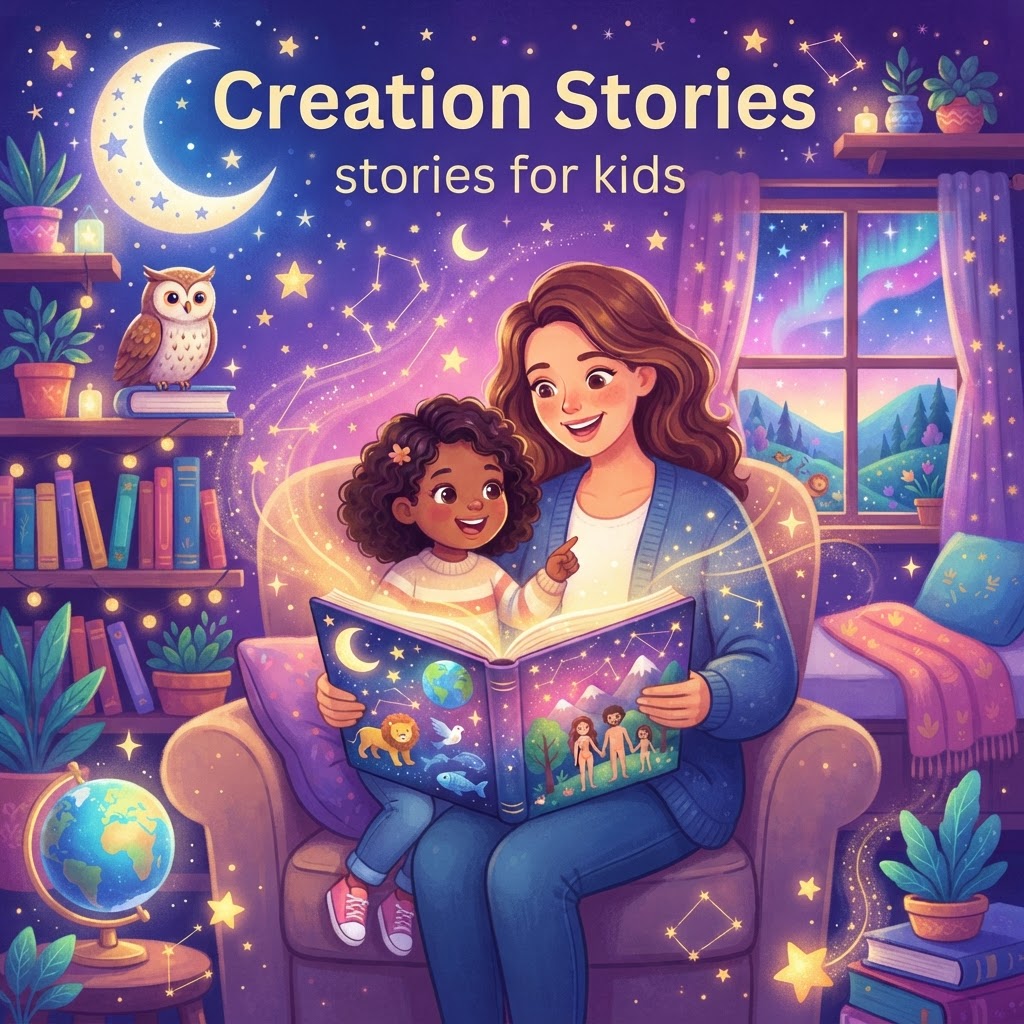
Children are naturally drawn to big questions: How did the stars get there? Who made the animals? Why is there day and night? That is why Creation Stories stories for kids can be such a powerful bedtime theme. When they are retold gently, creation tales offer wonder, pattern, and meaning without needing to feel heavy or frightening.
For families who already enjoy myths and heroes for kids or legend-based adventures, creation stories can be a lovely next step. They invite children to imagine beginnings, notice nature, and talk about belonging in the world.
What are creation stories, and why do children enjoy them?
Creation stories are tales about how the world, people, animals, or important parts of nature began. Children enjoy them because they match the way young minds think: through images, repetition, and simple cause-and-effect.
A good creation story gives children a safe way to explore huge ideas. Instead of abstract explanations, kids hear about a sky maker, an animal helper, a growing tree, or the first sunrise. That makes the story easier to picture and remember.
There is good developmental support for this kind of storytelling. The American Academy of Pediatrics encourages shared reading from infancy because it supports language, bonding, and emotional development. Research on dialogic reading by Dr. Grover Whitehurst also shows that interactive storytelling can build vocabulary and comprehension. In simple terms: when you pause, ask questions, and wonder together, children learn more.
That is one reason Creation Stories mythology children can work so well at bedtime. The stories are naturally full of repeated actions, vivid symbols, and comforting patterns like darkness turning to light or emptiness becoming home.
Which characters and themes appear most often in creation stories mythology for children?
Most creation myths share a few child-friendly character types and themes. You will often find a maker, a helper, a first family, or an animal guide, along with themes of beginnings, balance, and care for the world.
Common character types include:
- A creator or dreamer who imagines the world into being
- Sky and earth figures who shape land, water, and weather
- Animal helpers such as birds, turtles, foxes, or fish
- A curious child or first person discovering names, seasons, or fire
- A gentle trickster who causes change through cleverness
Common themes include:
- Beginnings: where the world came from
- Naming: how things got their place or purpose
- Order from chaos: darkness becoming light, water becoming land
- Connection: people, animals, and nature belonging together
- Responsibility: caring for a newly made world
If you want adult background before retelling a tale, a strong starting point is the Yale Babylonian Collection, which gives useful context for ancient Near Eastern myth traditions. Reading a source first can help you choose respectful, age-appropriate details.
How can you make Creation Stories tales age-appropriate for ages 5 to 8?
The best way to adapt Creation Stories tales for children is to keep the wonder and soften the intensity. Focus on imagery, relationships, and discovery rather than conflict, fear, or punishment.
For ages 5-8, I recommend these changes:
- Keep the central image simple. One star, one river, one seed, one mountain.
- Reduce violent details. Many original myths include battles or destruction that younger children do not need.
- Use clear emotional stakes. “The world was dark and lonely” is easier for children than complex cosmic conflict.
- End with safety and belonging. Bedtime stories should settle the nervous system, not spike it.
- Name the tradition respectfully. Say, “This story is inspired by creation tales from many cultures,” unless you are carefully sharing one specific tradition.
This matters because young children learn best through warm, responsive conversation. The Harvard Center on the Developing Child notes that back-and-forth interaction helps build language and thinking skills. In practice, that means pausing to ask, “What do you think happened next?” or “Which animal would you want to help make the moon?”
What are some great Creation Stories stories for kids to tell tonight?
The most effective kids Creation Stories stories are gentle, visual, and built around one big idea. Instead of retelling a complex sacred narrative word-for-word, try story concepts inspired by common creation-myth patterns.
Here are 6 age-appropriate story ideas:
-
The Little Star Who Learned Its Name
A tiny new star is afraid to shine until the moon helps it discover its special place in the sky. This works well for children who need reassurance about growing up. -
Turtle Makes a Home for Everyone
Inspired by earth-diver and world-turtle motifs, a patient turtle helps bring up a patch of land where animals can rest together. The focus is cooperation, not danger. -
The First Morning Song
Before sunrise exists, a shy bird sings one brave note that opens the sky. This is ideal for bedtime because it turns fear of darkness into hope. -
How the River Found Its Path
A curious cloud child spills silver rain, and the first river learns how to flow around stones instead of fighting them. The message is flexibility and problem-solving. -
The Garden of First Colors
The world begins in soft gray tones until a child gardener and a butterfly paint flowers, berries, and sunsets. Young children love the sensory details. -
The Friendly Giant Who Hung the Moon
A kind giant lifts the moon gently into the night so sleeping children can always find calm light. This one feels especially cozy and reassuring.
If your child enjoys playful rule-breakers, you can also borrow the lighter energy found in trickster tales for kids. And if they prefer magical transformations, fairy tales for children can blend beautifully with creation-inspired bedtime plots.
How can parents and teachers use InstaTales to create personalized Creation Stories stories for kids?
InstaTales makes it easy to turn a big mythology theme into a child-specific bedtime story. The key is to give the AI a clear age, gentle tone, and a simple creation-style problem to solve.
A strong prompt usually includes:
- Your child’s age
- A safe emotional tone: calm, hopeful, magical
- One creation motif: first star, first tree, first river, first rainbow
- A helper character: turtle, bird, moon, child explorer
- A simple lesson: kindness, courage, patience, sharing
You can start by using InstaTales to create your own personalized bedtime story with a prompt like:
“Write a calm bedtime story for a 6-year-old about the first rainbow being painted across the sky by a gentle fox and a brave little girl. Keep it warm, magical, and not scary.”
For repeated reading, save favorites in your story library so children can revisit the same comforting tale again and again. In classrooms, InstaTales for teachers can also support mythology units, creative writing, and compare-and-contrast activities between traditional myths and student-made stories.
How can you keep sacred traditions respectful when retelling them for children?
Respect matters, especially because many creation stories are still sacred today. The safest approach is to treat these stories as cultural treasures, not just plot material.
A few best practices help:
- Avoid mixing sacred traditions carelessly into one “anything goes” myth soup.
- Use “inspired by” language when you are borrowing general themes rather than retelling a specific cultural story.
- Check a reliable source first, especially for living Indigenous traditions.
- Do not turn sacred ceremonies or beliefs into jokes, villains, or random fantasy props.
If you want adult context, the American Academy of Pediatrics also offers helpful family literacy guidance through HealthyChildren.org, which can support thoughtful shared reading habits. Respectful storytelling is not about making stories stiff; it is about sharing wonder with care.
Frequently Asked Questions
Are creation stories appropriate for young children?
Yes, many are, as long as they are adapted with care. Choose versions that focus on wonder, nature, and belonging rather than conflict or frightening imagery.
What is the difference between creation stories and other myths?
Creation stories are a type of myth that specifically explain beginnings. Other myths may focus more on heroes, gods, quests, monsters, or moral lessons.
Should I retell sacred stories exactly as written?
Not always. For bedtime or classroom use, it is often better to share a respectful summary or an “inspired by” version unless you know the tradition well and can present it accurately.
What age is best for Creation Stories stories for kids?
Children ages 5-8 are a sweet spot because they love imaginative explanation and symbolic thinking. Younger children can enjoy very short, repetitive versions with soothing images.
How long should a bedtime creation story be?
For most children, 5-10 minutes is ideal. Keep the plot simple, end with calm imagery, and leave room for one or two quiet questions.
Can teachers use Creation Stories mythology children in class?
Yes, when handled respectfully, creation stories can support literacy, cultural learning, and discussion about symbolism. They work especially well alongside art, nature study, and compare-and-contrast writing.
Explore More Stories
Ready for more? - free AI bedtime story generator
Get a new bedtime story every week
Free, personalized, and delivered to your inbox. No spam, ever.
Ready to Create a Personalized Bedtime Story?
Use our free AI bedtime story generator to create a personalized illustrated story for your child in 30 seconds — no credit card needed.
Popular story types:
Maya Rodriguez
Lead Content Editor & Early Literacy Specialist
Maya is a former early childhood educator and literacy specialist with over a decade of experience helping children develop a love of reading. She leads content at InstaTales, where she writes about the science of storytelling, child development, and how families can use personalized AI stories to build literacy and emotional resilience.
instatales.ai