Myths Stories for Kids: Heroes, Gods & Wonder
Exciting Myths stories for kids — gods, heroes, monsters, and adventures from Myths mythology, retold for young readers.
✦ Key Takeaways
- •Myths stories for kids are simplified retellings of ancient stories that explain the world, celebrate heroes, and explore human feelings through gods, monsters, and quests.
- •Children usually connect best with clear characters and big emotions.
- •The best myths tales for ages 5-8 have one clear problem, one memorable hero, and an uplifting ending.
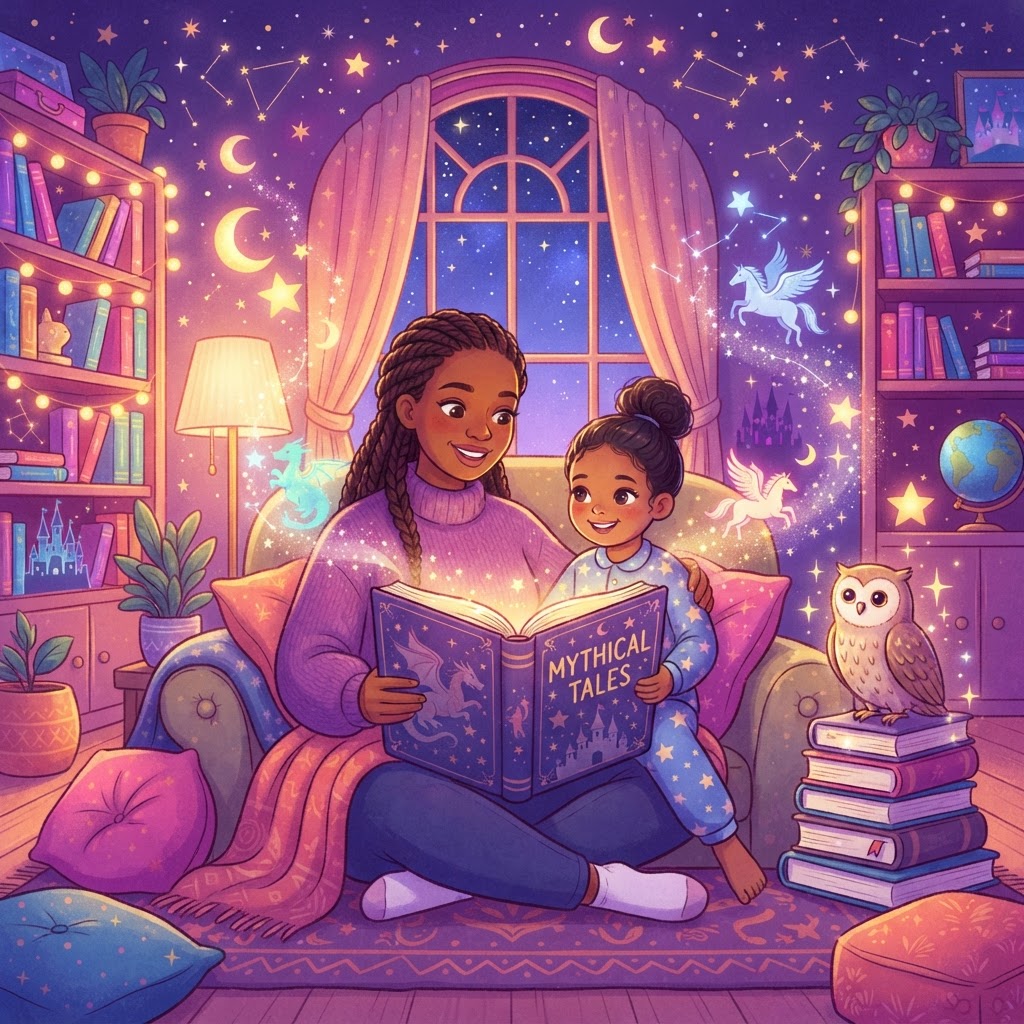
Myths stories for kids can be thrilling, funny, and surprisingly gentle when they are retold with care. For children ages 5-8, myths open the door to big ideas—bravery, jealousy, kindness, mistakes, and second chances—without needing to feel scary or confusing.
Parents and teachers often ask how to share Myths mythology children will actually enjoy. The answer is simple: choose clear plots, focus on one main adventure, soften the darker parts, and keep the wonder. With a little adaptation, ancient myths tales become rich bedtime stories full of memorable heroes, magical creatures, and important lessons.
What are myths stories for kids?
Myths stories for kids are simplified retellings of ancient stories that explain the world, celebrate heroes, and explore human feelings through gods, monsters, and quests. They are different from fairy tales because myths usually come from real cultural traditions and often connect to religion, nature, or early ideas about how the world works.
In child-friendly form, myths do not need to be heavy or violent. Instead, they can focus on:
- brave choices
- clever problem-solving
- magical journeys
- family relationships
- how actions have consequences
Many families begin with Greek myths, but children can also enjoy myths from Norse, Egyptian, Hindu, West African, and other traditions. If your child already loves legends and hero tales or fairy tale favorites, myths are a natural next step.
For adults who want trustworthy background information, the Perseus Digital Library at Tufts University is an excellent mythology source.
Which characters and themes from myths mythology children enjoy most?
Children usually connect best with clear characters and big emotions. In Myths mythology children tend to love figures who are easy to picture: a thunder god, a clever hero, a wise goddess, a trickster, or a friendly helper animal.
The most engaging myth characters for ages 5-8 often include:
- Heroes like Heracles, Perseus, or Atalanta
- Wise guides like Athena
- Tricksters who cause trouble and teach lessons
- Monsters that are more exciting than frightening
- Magical animals and talking creatures
- Kings, queens, and powerful families with strong personalities
The themes that work best are just as important:
- courage in the face of a challenge
- using brains, not just strength
- keeping promises
- pride and humility
- helping others
- learning from mistakes
This is why kids Myths stories often stay in a child’s memory. The characters are larger than life, but the feelings are familiar. A child may never fight a hydra, but they do understand being nervous, wanting to prove themselves, or needing help from a friend.
Which myths tales work best for ages five to eight?
The best myths tales for ages 5-8 have one clear problem, one memorable hero, and an uplifting ending. Shorter adventures work especially well at bedtime because young children can follow the plot without getting lost in too many names or side stories.
Here are 7 age-appropriate story ideas:
-
Perseus and the Gorgon
Keep the focus on bravery, a magical shield, and smart thinking. Soften the monster details and turn the story into a quest about courage. -
King Midas and the Golden Touch
This is one of the easiest Myths stories for kids because the lesson is clear: wanting too much can cause trouble. End with gratitude and a fresh start. -
Demeter and Persephone
Retell this as a story about the changing seasons and a mother’s love. This version helps children understand nature and feelings of missing someone. -
Arachne and Athena
Use this myth to talk about talent, pride, and respectful behavior. For younger children, focus more on learning humility than on punishment. -
The Flight of Daedalus and Icarus
This works well when told as a story about invention, wonder, and listening carefully to guidance. Keep the emotional tone gentle. -
Thor’s Lost Hammer
From Norse mythology, this tale brings humor, action, and a satisfying resolution. Children love the bold energy and magical objects. -
Anansi the Clever Spider
In many African myths tales and folktale traditions, Anansi uses wit to solve problems. These stories are playful, memorable, and perfect for discussion.
If your child prefers softer moral lessons, you might also enjoy gentler fables for younger readers or folklore-inspired stories.
What should adults adapt when sharing myths with children?
Adults should adapt violence, romance, revenge, and complicated family drama so the story fits a young child’s emotional stage. The goal is not to erase mythology’s meaning, but to present it in a way that is safe, clear, and developmentally appropriate.
For ages 5-8, it helps to:
- replace graphic battles with “a difficult challenge”
- simplify family trees and god relationships
- remove romantic subplots
- reduce cruelty and punishment
- focus on emotional lessons and problem-solving
- give the ending comfort, safety, or hope
This approach matches what early childhood experts know about learning. Young children understand stories best when they can follow cause and effect, identify feelings, and predict what happens next. The American Academy of Pediatrics also emphasizes the value of shared reading and discussion for language and emotional growth.
A practical formula is:
- Keep the magic
- Soften the fear
- Clarify the lesson
- End with reassurance
That balance lets kids Myths stories stay exciting without becoming overwhelming.
Why are myths valuable for child development?
Myths are valuable because they help children build language, imagination, moral reasoning, and emotional understanding. When adults read myths aloud and talk about them, children practice listening, predicting, remembering, and making meaning from symbols.
Research and child development practice support this. The American Academy of Pediatrics recommends reading aloud regularly, and dialogic reading research by Grover Whitehurst shows that asking questions during stories supports vocabulary and comprehension. The Harvard Center on the Developing Child also highlights how back-and-forth conversation helps build strong brain architecture.
Myths are especially useful because they invite rich questions:
- Why did the hero make that choice?
- Was the character being kind or proud?
- What would you have done?
- Why do people create stories about thunder, stars, or seasons?
These conversations matter. They help children move beyond “what happened” to “why it mattered.” That is one reason many educators use myths alongside the InstaTales blog and other reading resources to build comprehension and creativity.
How can parents and teachers use InstaTales to create myths-inspired stories?
InstaTales makes it easy to turn classic myth ideas into personalized, age-appropriate bedtime stories. You can keep the wonder of mythology while adjusting the tone, length, lesson, and character details for your child or classroom.
A simple way to start is to create your own personalized bedtime story using a prompt like:
- “Write a gentle Greek myth-inspired story for a 6-year-old about a brave child helping a lost Pegasus.”
- “Create a funny Norse-style adventure with a magical hammer, no scary scenes, and a lesson about teamwork.”
- “Tell an Egyptian-inspired bedtime story about a moon boat, a puzzle, and a kind young hero.”
For faster results, browse the story templates and adapt a quest, magic, or hero format to fit a myth theme. Teachers can also use InstaTales for teachers to create reading prompts, compare myth structures across cultures, or support creative writing activities.
Helpful prompt ingredients include:
- the child’s age
- a favorite myth creature or hero type
- the desired tone: cozy, funny, adventurous, calm
- a simple lesson: honesty, courage, patience, kindness
- a clear bedtime-friendly ending
This is often the easiest path for families who want Myths stories for kids without spending time editing complex original versions. You get the excitement of gods, monsters, and quests—shaped for the child in front of you.
Frequently Asked Questions
Are myths appropriate for young children?
Yes, many myths are appropriate when retold in a gentler way. Choose simple plots, soften frightening scenes, and focus on adventure, choices, and lessons.
What age are myths stories for kids best for?
Many children enjoy myth-inspired stories from ages 5-8, though some 4-year-olds like very simple versions. Older children can handle longer plots and more cultural detail.
What is the difference between myths and fairy tales?
Myths usually come from cultural or religious traditions and often explain nature, gods, or heroic ideals. Fairy tales are more likely to be purely imaginative stories with magical patterns and invented kingdoms.
Which myth is the best place to start?
King Midas, Perseus, and Demeter and Persephone are great starting points. They have clear story arcs, strong imagery, and lessons children can understand.
How can I make myths less scary at bedtime?
Keep the language soft, remove graphic details, and end with safety and comfort. It also helps to focus on the hero’s cleverness and support system rather than the monster itself.
Can teachers use myths in the classroom?
Absolutely. Myths support vocabulary, sequencing, comparison, and discussion about values across cultures. They also work well as creative writing models and art or drama prompts.
Ready to Create a Personalized Bedtime Story?
Use our free AI bedtime story generator to create a personalized illustrated story for your child in 30 seconds — no credit card needed.
Popular story types:
Maya Rodriguez
Lead Content Editor & Early Literacy Specialist
Maya is a former early childhood educator and literacy specialist with over a decade of experience helping children develop a love of reading. She leads content at InstaTales, where she writes about the science of storytelling, child development, and how families can use personalized AI stories to build literacy and emotional resilience.
instatales.ai