Cute dogs bedtime stories for children
Snuggle up with these cute dogs bedtime stories for children — gentle, heartwarming tales perfect for winding down at night.
✦ Key Takeaways
- •Dog stories are comforting at bedtime because dogs symbolize safety, routine, and unconditional love.
- •A good bedtime story about dogs is calm, predictable, and emotionally warm.
- •The best cute dog bedtime story ideas are simple, cozy, and built around gentle routines.
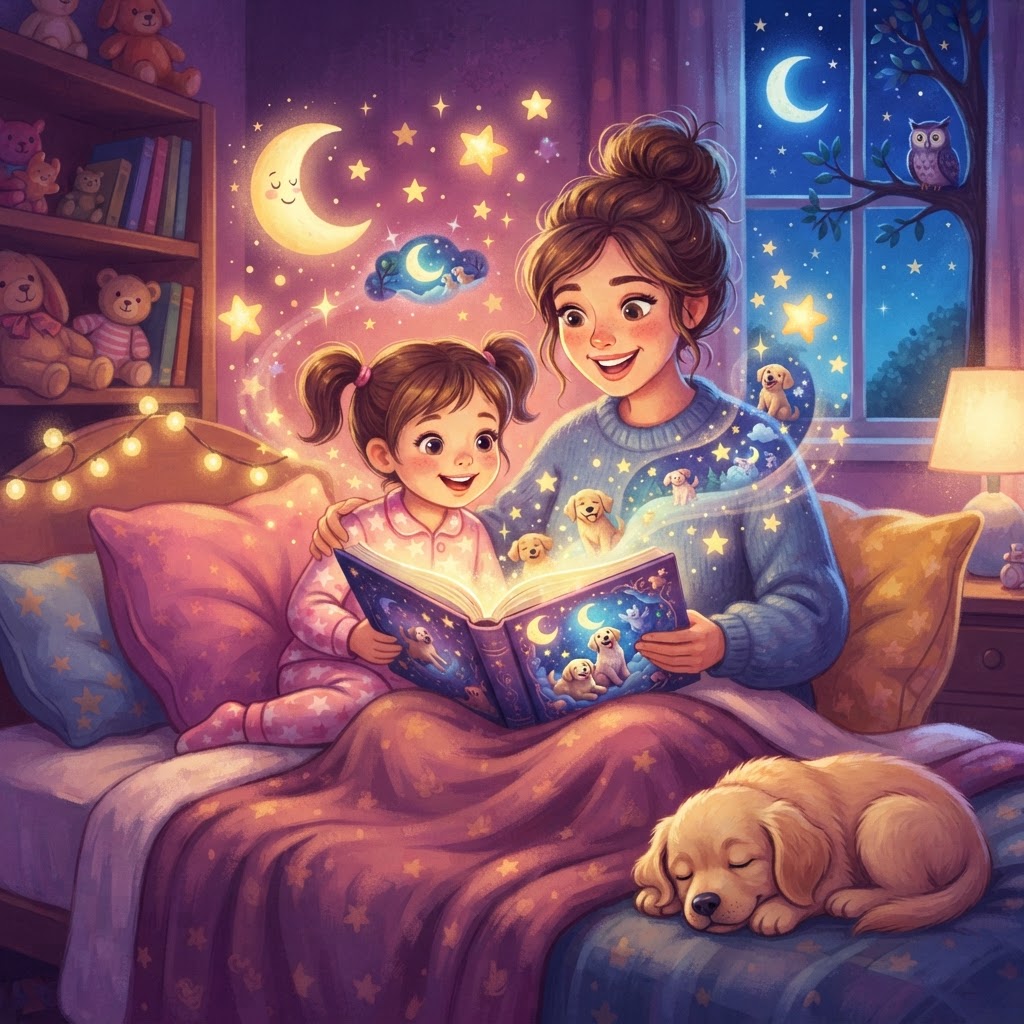
Few things feel cozier at the end of the day than a warm blanket, a dim light, and a gentle story about a loyal puppy drifting off to sleep. Cute dogs stories are a natural fit for bedtime because they combine comfort, friendship, and soft adventure in a way that helps children relax instead of rev up.
For parents looking for dogs bedtime stories for kids, the best tales are simple, reassuring, and full of calm sensory details: a wagging tail, a moonlit walk, a sleepy yawn, or a pup curling into a basket. Below, you’ll find why dogs stories for children work so well at night, five soothing story concepts, tips for using InstaTales’ lullaby story type with animal characters, and a sample mini-story you can read tonight.
Why are dog stories so comforting at bedtime?
Dog stories are comforting at bedtime because dogs symbolize safety, routine, and unconditional love. For many children, a gentle dog character feels familiar and emotionally safe, which makes it easier to settle into sleep.
Bedtime stories work best when they reduce uncertainty. A kind puppy who follows a predictable path home, helps a friend, or curls up in a cozy corner gives children an emotional pattern they can trust. This matters because young children often relax more easily when evenings feel consistent and reassuring.
Child development research supports that idea. The American Academy of Pediatrics emphasizes the value of consistent bedtime routines, and sleep researchers such as Jodi Mindell have found that predictable, calming routines are linked with better sleep for children. Story time becomes part of that routine, especially when the tone stays soft and the ending feels secure.
Dogs also naturally lend themselves to bedtime imagery:
- Soft fur and gentle movement
- Loyalty and companionship
- Familiar home settings
- Quiet nighttime sounds
- Happy endings without high stakes
That is why bedtime stories about dogs often feel less intense than stories with loud action, villains, or cliffhangers. If your child already loves puppies, you can also explore more playful ideas in these dog tales and fun facts.
What makes a good bedtime story about dogs for children?
A good bedtime story about dogs is calm, predictable, and emotionally warm. The best stories lower energy as they go, rather than building toward excitement in the final minutes before sleep.
As an educator, I recommend choosing stories with a clear emotional arc: gentle beginning, small problem, comforting solution, peaceful ending. For children ages 1-10, that usually works better than long plots with too many twists.
Look for these features in dogs stories for children:
- A soothing main character: a sleepy puppy, a kind rescue dog, or a gentle older dog
- Low-stakes conflict: finding a blanket, helping a firefly, or walking home before moonrise
- Repetition: phrases like “tip-tap paws” or “goodnight, little pup” help children anticipate what comes next
- Sensory softness: moonlight, warm beds, whispering grass, or a quiet kitchen clock
- A settled ending: the dog is safe, loved, and ready to rest
It also helps to avoid bedtime triggers such as barking competitions, lost-in-the-storm scenes, or long separations from caregivers. According to the Center on the Developing Child at Harvard University, warm and responsive experiences help children build a sense of security. A bedtime story should support that same feeling.
For older children who still want calm but can handle a little more plot, age-specific story styles can help. You might also like these ideas for calming bedtime stories for 7-year-olds or calming bedtime stories for 9-year-olds.
Which cute dog bedtime story ideas work best for winding down?
The best cute dog bedtime story ideas are simple, cozy, and built around gentle routines. They should invite children to imagine slowing down, helping, snuggling, and resting.
Here are five story concepts that work beautifully for dogs bedtime stories for kids:
1. The puppy who collected moonbeams
A small cream-colored puppy thinks moonbeams are silver ribbons. Each night, he gathers them in the garden and leaves one at every sleeping friend’s door. By the end, he realizes the last moonbeam belongs in his own basket.
Why it works: the story repeats a calming action and ends in self-soothing.
2. The sleepy dog and the starry path
A young dog walks home along a glowing path of fireflies after visiting woodland friends. Each friend whispers one goodnight wish. The pup reaches home feeling safe, loved, and ready for sleep.
Why it works: every stop slows the pace and creates a predictable rhythm.
3. The little rescue dog’s blanket parade
A tiny rescue pup notices that all the stuffed animals in the nursery are “cold.” He gently drags tiny blankets to each one before curling up beside the last toy elephant. Everyone falls asleep together.
Why it works: caring behavior models empathy without overstimulation.
4. The bakery dog who saved one last biscuit
In a sleepy village, the baker’s dog helps close the shop by sweeping crumbs with his tail and saving one tiny honey biscuit for tomorrow. The ovens cool, the lights dim, and the village settles into silence.
Why it works: closure and routine are naturally built into the plot.
5. The rain-listening puppy
A puppy who does not like loud sounds learns that soft rain on the roof can sound like a lullaby. With help from Grandma Dog, he counts raindrops, breathes slowly, and drifts to sleep.
Why it works: it gently reframes a common worry and adds a calming coping skill.
These ideas can also be adapted by age. Toddlers often love repetition and sound patterns, while children ages 6-10 may enjoy a little more emotional growth or problem-solving in their bedtime stories about dogs.
How can parents use InstaTales’ lullaby type with animal characters?
Parents can use InstaTales’ lullaby type by keeping the prompt simple, sensory, and sleep-focused. The goal is not a big adventure; it is a slow, cozy descent into rest with a lovable animal guide.
If you want to create your own personalized bedtime story, start with a dog character your child already finds comforting. That might be a floppy-eared puppy, a brave but gentle rescue dog, or even a dog inspired by the family pet.
A strong prompt for the lullaby story type includes:
- The dog’s name and personality
- A calm setting, such as a moonlit bedroom, garden, or quiet village
- One tiny challenge
- Repeated soothing words
- A peaceful bedtime ending
For example, you could ask for:
“A lullaby-style bedtime story about a golden puppy named Sunny who helps the stars say goodnight, with soft repetition, gentle pacing, and a sleepy ending.”
To make the story even more effective, try these educator-tested tips:
- Keep stories under 5-8 minutes for younger children
- Use slow, rhythmic language when reading aloud
- Choose one image or emotional theme, not many
- End with sleep cues like yawning, snuggling, dimming lights, or breathing slowly
If you want an easier starting point, browse the available story templates and then personalize the dog, setting, and mood. Once you find favorites, save them in your story library so children can revisit familiar stories, which often makes bedtime smoother.
What does a gentle mini-story excerpt sound like?
A gentle mini-story excerpt should sound soft, predictable, and easy to picture. It should feel like a lullaby in story form, with quiet action and a safe ending.
Here is a sample excerpt you can use as inspiration:
Mini-story excerpt
Milo was the smallest dog in the lane, with velvet ears and paws as quiet as falling leaves. Every night, just before the moon climbed over the chimney tops, Milo made his little goodnight walk.
First, he tip-tapped to the garden gate and listened to the crickets sing.
“Goodnight, green grass,” whispered Milo.
“Goodnight, silver moon.”
“Goodnight, sleepy roses.”
Then he carried a tiny blue blanket in his mouth all the way back to his basket by the fire. He circled once. He circled twice. He tucked his nose beneath his tail and gave the room one last drowsy look.
The fire made a soft orange glow. The clock made a slow tick-tock. Outside, the wind brushed the window like a feather.
Milo sighed the happiest sigh.
Home was warm.
The night was kind.
And the little dog, wrapped in moonlight and blanket-blue dreams, drifted gently, gently, gently to sleep.
This kind of structure works well because it uses repetition, soft sounds, and a settled ending. If your child likes a familiar format, rereading the same excerpt for several nights can be very effective.
How can you tailor dog bedtime stories for different ages?
You can tailor dog bedtime stories by adjusting sentence length, plot complexity, and emotional depth. The younger the child, the simpler and more repetitive the story should be.
Here is a quick age guide:
- Ages 1-3: Use short sentences, repeated phrases, and one clear bedtime action
- Ages 4-6: Add a gentle problem and a comforting solution
- Ages 7-10: Include a little more character growth, humor, or reflection while keeping the tone calm
For all ages, keep the ending emotionally secure. The CDC’s sleep guidance reminds families that children need enough sleep for healthy growth and learning, and a well-matched bedtime story can support the larger nighttime routine.
If you want more children’s reading ideas and sleep-friendly themes, you can explore more resources on the InstaTales blog.
Frequently Asked Questions
Why do children love bedtime stories about dogs?
Children often love dogs because they represent friendliness, comfort, and protection. At bedtime, those qualities help a story feel safe and soothing rather than stimulating.
Are dogs bedtime stories for kids good for anxious sleepers?
Yes, they can be very helpful when the story is gentle and predictable. A calm dog character, repeated phrases, and a peaceful ending may help lower bedtime tension and create a stronger routine.
How long should a bedtime story about dogs be?
For most children, 3-8 minutes works well at bedtime. Younger children usually settle best with shorter stories, while older children may enjoy a slightly longer but still low-energy tale.
What should I avoid in dogs stories for children at night?
Avoid loud action, scary barking, getting lost for long periods, or suspenseful endings. The final moments of the story should always move toward safety, rest, and emotional calm.
Can I make personalized cute dogs stories with InstaTales?
Yes. You can personalize the dog’s name, personality, setting, and bedtime mood, which helps create stories that feel especially meaningful to your child and easy to revisit night after night.
Ready to Create a Personalized Bedtime Story?
Use our free AI bedtime story generator to create a personalized illustrated story for your child in 30 seconds — no credit card needed.
Popular story types:
Maya Rodriguez
Lead Content Editor & Early Literacy Specialist
Maya is a former early childhood educator and literacy specialist with over a decade of experience helping children develop a love of reading. She leads content at InstaTales, where she writes about the science of storytelling, child development, and how families can use personalized AI stories to build literacy and emotional resilience.
instatales.ai