Cute Dolphins Stories for Sleepy Bedtimes
Snuggle up with these cute dolphins bedtime stories for children — gentle, heartwarming tales perfect for winding down at night.
✦ Key Takeaways
- •Dolphin stories are soothing because they combine calm movement, kind social characters, and a peaceful setting.
- •A great dolphin bedtime story keeps the stakes low and the feelings warm.
- •The best cute dolphins stories for bedtime are gentle, repetitive, and emotionally safe.
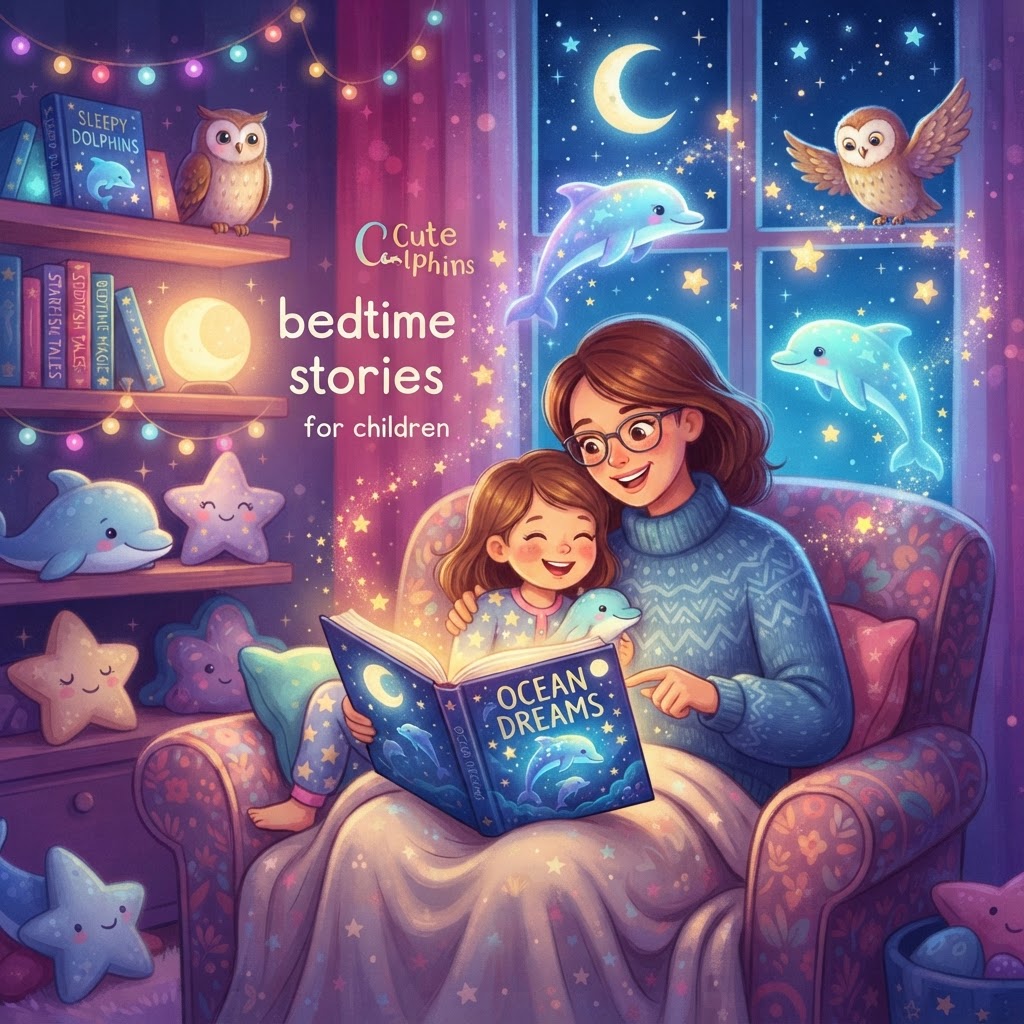
Few themes feel as calming at night as the sea. Cute dolphins stories bring together soft waves, friendly animal characters, and gentle adventure, which is why they work so well for sleepy evenings with young children.
If you are looking for dolphins bedtime stories for kids, this guide shares cozy ideas you can use tonight. You will find why dolphins stories for children feel so comforting, five low-stress story concepts, tips for using InstaTales’ lullaby style with animal characters, and a short sample of bedtime stories about dolphins to spark your own ideas.
Why are dolphin stories so soothing at bedtime?
Dolphin stories are soothing because they combine calm movement, kind social characters, and a peaceful setting. For many children, that mix feels safe and rhythmic rather than busy or intense, which makes it ideal before sleep.
Ocean stories often carry a natural “slow tempo.” Waves roll in and out. Dolphins glide, bob, and circle. That repeated motion can help children settle their bodies and attention, much like lullabies do.
There is also a strong emotional reason. Dolphins are usually seen as playful, gentle, and curious. In stories, they make excellent bedtime companions because they can explore without creating fear.
This matters for sleep. Research on bedtime routines, including work by Rebecca Mindell and colleagues, has found that consistent, calming routines are linked with better sleep outcomes in children. The CDC also emphasizes healthy sleep habits and regular routines, while the American Academy of Pediatrics encourages reading aloud daily to support language and connection.
In practice, the best dolphin bedtime tales usually include:
- A slow, predictable plot
- Reassuring repetition
- A kind problem that is solved gently
- Soft sensory details, like moonlight or warm water
- A quiet ending that leads toward rest
What makes a great dolphin bedtime story for children?
A great dolphin bedtime story keeps the stakes low and the feelings warm. The goal is not excitement; it is comfort, closeness, and a gentle drift toward sleep.
For babies and toddlers, simple repetition works best. Repeated phrases like “swoosh went the wave” or “goodnight, little dolphin” help very young children anticipate what comes next. Predictability supports emotional safety, especially at the end of the day.
For preschool and early elementary children, a little more story can be helpful. They often enjoy a tiny mystery, a shy new friend, or a simple task, as long as the plot stays soft. Think “find the glowing shell” rather than “escape the storm.”
A strong bedtime story about dolphins usually includes:
- One lovable main character
- One clear feeling, such as sleepy, curious, or proud
- One small problem
- One cozy setting, like a moonlit reef or quiet cove
- One peaceful ending, often with a cuddle, song, or drifting home
If your child enjoys rotating animal favorites, it can be fun to pair dolphin nights with gentle whale bedtime tales or cozy owl bedtime stories for variety while keeping the same calm tone.
Which cute dolphin story ideas work best for winding down?
The best cute dolphins stories for bedtime are gentle, repetitive, and emotionally safe. Here are five story concepts that work especially well for evening reading.
1. The Little Dolphin Who Followed the Moonbeam
A young dolphin notices a silver moonbeam on the water and follows it through a sleepy bay. Along the way, she says goodnight to turtles, seahorses, and tiny fish before returning to her family.
Why it works: the story has movement, but it is circular and reassuring. The dolphin always stays safe, and the moon becomes a calming guide.
2. The Dolphin and the Singing Shell
A quiet dolphin finds a shell that hums a soft lullaby whenever the tide comes in. He shares the shell’s song with his friends, and one by one the whole reef grows still and sleepy.
Why it works: sound-based stories are naturally soothing. They also invite parents to read more slowly and softly.
3. The Sleepy Swim School
A group of young dolphins finishes their last lesson of the day: how to float calmly under the stars. Their teacher reminds them to breathe slowly, listen to the sea, and drift home side by side.
Why it works: this idea mirrors bedtime routines. It gently models calming behaviors children can copy.
4. The Lost Starfish’s Ride Home
A little dolphin meets a starfish who has been nudged away from its rock by the tide. Together, they travel slowly across the seabed, meeting kind ocean friends until the starfish is tucked safely back home.
Why it works: there is a problem to solve, but it stays mild and comforting. The story ends with security, belonging, and relief.
5. The Cloudy-Day Cuddle Cove
A pod of dolphins swims into a small cove when the sky turns gray. Instead of fear, they find a peaceful hiding place where raindrops tap softly on the water and everyone rests together until the sun returns.
Why it works: it turns a potentially scary change in weather into a warm, protected moment. That is especially helpful for children who worry at night.
To keep dolphins stories for children even gentler, try adding real but simple sea details. If your child loves animal facts, you can borrow a few from NOAA Fisheries’ dolphin resources and weave them into the story without making it too stimulating.
How can you use InstaTales’ lullaby style for dolphin stories?
InstaTales’ lullaby style works well for dolphin stories because it naturally slows the language, softens the plot, and creates a musical rhythm. That makes it a strong choice when you want dolphins bedtime stories for kids that feel peaceful from start to finish.
A good approach is to begin with one clear prompt. For example:
- Main character: a baby dolphin
- Tone: gentle, sleepy, reassuring
- Setting: moonlit ocean or quiet coral reef
- Plot: a short goodnight journey
- Ending: safe at home with family
When you create your own personalized bedtime story, try adding details your child already loves. You might include their name, favorite color, a sibling, or a comfort object like a blanket-shaped sea cloud. Personal details help children feel seen, which often increases engagement and calm.
The lullaby type tends to work best when you ask for:
- Short sentences
- Repeating phrases
- Soft sensory words
- No villains or loud conflict
- A clearly sleepy ending
If you want a quick starting point, browse the story templates and adapt an animal story frame for a dolphin setting. Afterward, save favorites to your story library so you can re-read the same calming tale night after night. Repetition is not a problem at bedtime; for many children, it is the whole point.
What does a gentle dolphin mini-story sound like?
A gentle dolphin mini-story sounds slow, warm, and easy to picture. It should feel more like floating than rushing.
Here is a short example:
Mira the little dolphin rose through the soft blue water and saw the moon making a silver path across the sea.
“Follow the quiet light,” whispered Mama.
So Mira swam slowly, slowly, past a waving seahorse and a sleepy turtle tucked near the reef.
At each stop she said, “Goodnight, ocean. Goodnight, stars. Goodnight, little waves.”
When she came back to the warm circle of her family, the sea hummed low and kind. Mira curled close, flicked her tail once, and drifted into dreams beneath the shining moon.
Notice what makes this work for bedtime:
- The language is soft
- The action is gentle
- The repeated “goodnight” phrase creates rhythm
- The ending clearly signals rest
That same pattern works well in many bedtime stories about dolphins, especially for children under age 7.
How can parents make dolphin bedtime stories even more calming?
Parents can make dolphin bedtime stories more calming by matching the story to the child’s energy level and age. The calmer your delivery, the more effective the story will be.
Try these simple techniques:
- Lower your voice as the story goes on
- Pause after repeated phrases
- Dim the lights before you begin
- Let children hold one image in mind, such as moonlight on water
- End with the character asleep, safe, or back home
For toddlers, keep the story under five minutes. For older children, you can stretch it a little longer, but avoid twists that wake the brain back up.
It also helps to keep bedtime reading consistent. A predictable order like bath, pajamas, story, cuddle, lights out can make dolphins bedtime stories for kids part of a trusted nightly rhythm rather than a one-off activity.
Frequently Asked Questions
Why do children enjoy bedtime stories about dolphins?
Children often enjoy dolphin stories because dolphins feel friendly, playful, and safe. The ocean setting also creates a calm mood that works well before sleep.
What age are dolphins stories for children best for?
Dolphin stories can work for ages 1-10 when the language matches the child’s stage. Toddlers do best with simple repetition, while older children can enjoy a slightly fuller plot.
How long should a dolphin bedtime story be?
For bedtime, shorter is usually better. Aim for 3-5 minutes for toddlers and 5-10 minutes for preschoolers and early elementary children.
Can personalized dolphin stories help bedtime routines?
Yes, personalized stories can make children more engaged and emotionally connected. When a child hears their name or favorite details in the story, the routine often feels more comforting and special.
What should I avoid in dolphins bedtime stories for kids?
Avoid loud danger, fast chase scenes, and complicated plots. Bedtime stories work best when the tension stays mild and the ending feels fully safe and settled.
Can teachers use dolphin stories in class too?
Yes, gentle animal stories can support listening, vocabulary, and imaginative thinking in early years settings. For school-friendly uses, educators can explore InstaTales for teachers to adapt calming story prompts for classroom reading corners or quiet time.
Ready to Create a Personalized Bedtime Story?
Use our free AI bedtime story generator to create a personalized illustrated story for your child in 30 seconds — no credit card needed.
Popular story types:
Maya Rodriguez
Lead Content Editor & Early Literacy Specialist
Maya is a former early childhood educator and literacy specialist with over a decade of experience helping children develop a love of reading. She leads content at InstaTales, where she writes about the science of storytelling, child development, and how families can use personalized AI stories to build literacy and emotional resilience.
instatales.ai