Cute Whales Bedtime Stories for Kids
Snuggle up with these cute whales bedtime stories for children — gentle, heartwarming tales perfect for winding down at night.
✦ Key Takeaways
- •Whale stories are comforting because they naturally match the slow, soothing pace children need before sleep.
- •The best whales stories for bedtime stay simple, soft, and emotionally safe.
- •The most effective whale bedtime stories use calm images, loving relationships, and a cozy goal.
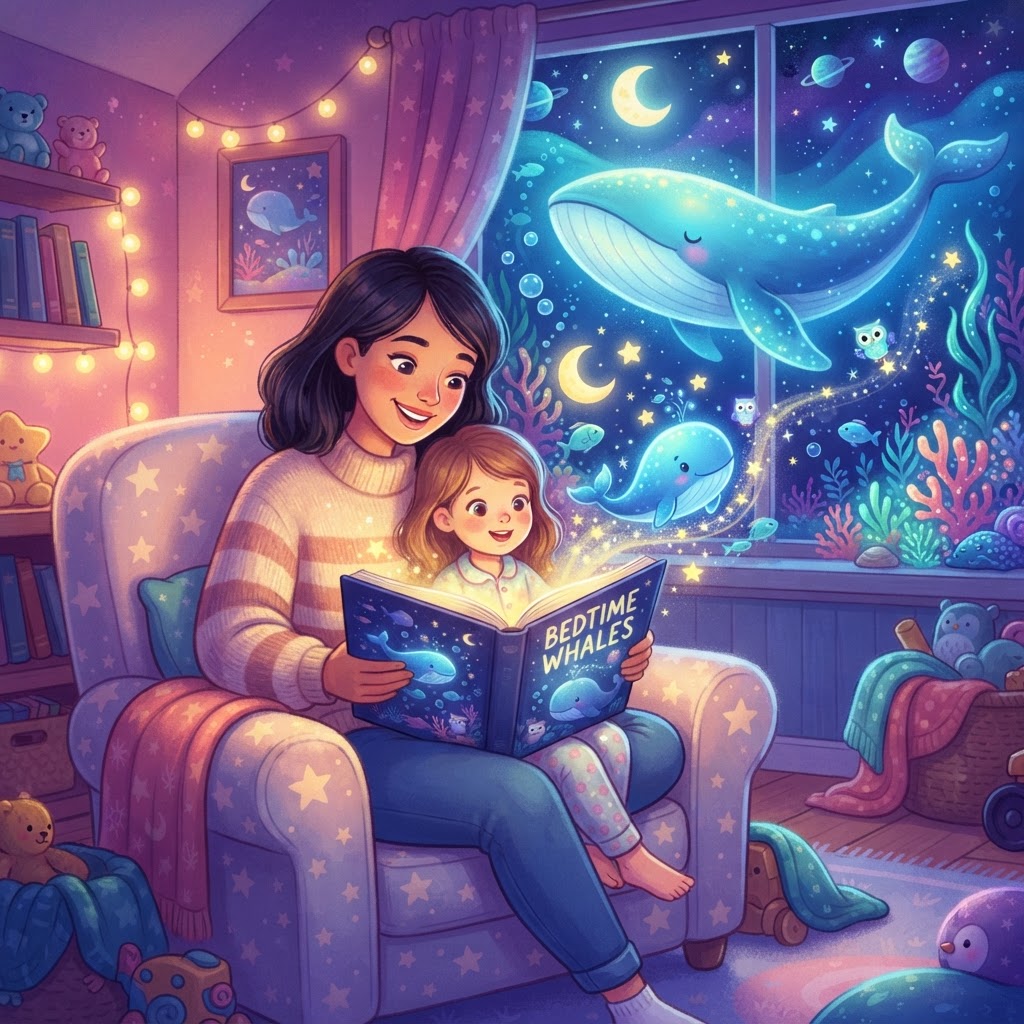
If you are looking for cute whales stories that help children feel safe, sleepy, and calm, whales are a lovely place to begin. Their slow swimming, soft songs, and peaceful ocean world make them perfect stars for whales bedtime stories for kids.
For many families, bedtime stories work best when they feel warm and predictable rather than exciting or noisy. That is why whales stories for children can be such a good fit: they invite gentle imagination without making bedtime feel too busy.
Why are whales bedtime stories so comforting for children?
Whale stories are comforting because they naturally match the slow, soothing pace children need before sleep. Their ocean setting, gentle movement, and low-stakes adventures can help little listeners shift from active play to quiet rest.
Children often settle more easily when bedtime includes a calm routine. The CDC and HealthyChildren.org both emphasize the value of consistent bedtime habits, including reading, for better sleep and emotional security. A soft story about a whale drifting under moonlight fits beautifully into that pattern.
There is also a developmental reason whale tales work so well. Young children respond to rhythm, repetition, and sensory language. A phrase like “swish, sway, sleep” gives them something predictable to hold onto, much like a lullaby.
Whales also feel “big but safe.” They are powerful animals, yet in bedtime stories they can be kind, protective, and calm. That combination helps children explore wonder without fear, which is exactly what many parents want from bedtime stories about whales.
What makes whales stories for children feel gentle rather than overstimulating?
The best whales stories for bedtime stay simple, soft, and emotionally safe. They give children a small feeling to process, a tiny problem to solve, and a peaceful ending to rest inside.
A bedtime-friendly whale story usually includes:
- A slow plot with one clear idea
- A small challenge, such as finding a song, a shell, or a sleepy place to rest
- Reassuring language that repeats key phrases
- Soft sensory details, like moonlight, bubbles, drifting seaweed, and warm cuddles
- A clear ending where everyone is safe, sleepy, and together
Research on early childhood language and attachment also supports the value of warm, responsive reading. The Harvard Center on the Developing Child notes that nurturing, back-and-forth interactions help young children build security and learning at the same time. Reading gentle whales bedtime stories for kids can support both.
In practice, this means skipping sharp conflict, loud danger, or rushed action at bedtime. A lost treasure hunt may be fun in the afternoon, but at night, a baby whale learning a sleepy song usually works better.
Which cute whales stories work especially well at bedtime?
The most effective whale bedtime stories use calm images, loving relationships, and a cozy goal. Instead of big drama, they focus on comfort, belonging, and the quiet beauty of the sea.
Here are five gentle story ideas you can use tonight:
1. The Baby Whale Who Could Not Find Her Sleep Song
A little whale calf hears every family member humming a different tune and worries she does not have one of her own. By the end, she learns that her sleep song is simply the sound of her own breathing, the water rocking around her, and her mother’s steady heartbeat beside her.
2. The Moonlight Current and the Sleepy Whale
A young whale follows a silver current that glows under the moon. Along the way, the current leads him past twinkling fish, quiet coral, and resting penguins. If your child enjoys ocean-animal mixes, they may also love these gentle penguin bedtime tales.
3. Grandma Whale’s Bubble Bed
Grandma Whale knows exactly how to make the coziest bubble bed in the whole sea. She teaches her grandchild to gather soft sea foam, listen for slow waves, and think one happy thought before floating to sleep.
4. The Little Whale and the Shy Starfish
A friendly whale meets a starfish who is afraid of the dark. Together, they look for tiny points of light in the ocean until the starfish realizes that night is full of soft glimmers. This kind of story works well for children who need reassurance at bedtime.
5. The Whale Parade That Whispered Goodnight
A group of whale friends wants to say goodnight to every corner of the sea without waking anyone. So they practice the quietest tail swishes, the gentlest songs, and the slowest swims until the whole ocean seems to yawn with them.
These story concepts can be adapted by age. Toddlers often enjoy very short, repetitive versions, while older children may like a little more description and a simple emotional lesson. If your child likes calm animal stories beyond whales, the InstaTales blog has more inspiration, including cozy tales about rabbits, foxes, owls, and elephants.
How can parents use InstaTales’ lullaby type with animal characters?
InstaTales’ lullaby type works best when you keep the prompt soft, sensory, and specific. Start with a gentle whale character, add a soothing setting, and ask for repetition that sounds almost like a song.
Here is an easy formula for creating your own story:
- Choose the lullaby story type
- Pick a main character, such as a baby humpback, a sleepy blue whale, or a playful beluga
- Add a calm goal, like finding a moonlit place to rest
- Include 2-3 soothing images: bubbles, stars, slow waves, glowing coral
- Ask for a repeated phrase, such as “drift down, little whale”
- Request a warm ending with cuddling, resting, or humming
A sample prompt might look like this:
“Create a lullaby-style bedtime story about a baby whale named Willa who feels too excited to sleep. Use a gentle tone, ocean sounds, repetition, and a cozy ending with her family under the moon.”
If you want a quick start, you can begin with story templates or create your own personalized bedtime story. Once you find a version your child loves, save it in your story library so you can reread it night after night.
Animal combinations can also make the story feel fresh without losing the calm mood. A whale can meet an owl on a seaside cliff, wave to a fox on the shore, or share a snowy scene with a penguin. For quiet-time reading in classrooms or ocean-themed literacy units, InstaTales for teachers can help educators build age-appropriate versions too.
What does a bedtime story about whales sound like in practice?
A good whale bedtime story sounds slow, musical, and easy to picture. The words should feel soft in the mouth and peaceful in the ear, almost like a spoken lullaby.
Here is a short sample excerpt:
Willa the little whale was not ready for sleep.
She swished her tail once. She swished her tail twice. Above her, the moon poured a silver path across the water.
“Listen,” whispered Mama Whale.
Willa listened. She heard tiny bubbles popping. She heard the sea hum low and deep. She heard her own breath go in and out, in and out.
“That is the ocean’s lullaby,” said Mama. “It sings to every small whale at bedtime.”
So Willa floated close. She let the cool water rock her. She let the moonlight warm her thoughts.
“Swish, sway, sleep,” hummed Mama Whale.
Willa whispered it too. “Swish, sway, sleep.”
And before the stars could count to three, the little whale was dreaming in the quiet blue sea.
This kind of excerpt works because it uses repetition, sensory detail, and a clear feeling of safety. It is imaginative enough to hold attention, but calm enough to support sleep.
Frequently Asked Questions
Why do children enjoy whales bedtime stories so much?
Children often love whale stories because whales feel gentle, magical, and safe. Their slow movement and ocean setting create a naturally peaceful mood that works well before sleep.
What age are whales stories for children best for?
Whales stories for children can work from ages 1 to 10 when the length and language match the child’s stage. Toddlers do best with short repetition, while older children often enjoy a fuller plot and more emotional detail.
How long should bedtime stories about whales be?
For most children, 3 to 10 minutes is ideal at bedtime. The goal is to calm the body and mind, not to restart energy with a long, exciting adventure.
Can whale stories help with bedtime anxiety?
Yes, gentle stories can help many children feel more settled at night. Stories with predictable language, soft imagery, and reassuring endings often reduce tension and make bedtime feel safer.
How do I make cute whales stories more personal?
Add your child’s name, favorite color, bedtime toy, or a familiar feeling like “I don’t want the day to end.” Personalized details help the story feel comforting and relevant, which often increases engagement.
Should whale bedtime stories always have a lesson?
No. A bedtime story does not need a strong moral to be valuable. Sometimes the best lesson is simply the feeling of being safe, loved, and ready to rest.
Ready to Create a Personalized Bedtime Story?
Use our free AI bedtime story generator to create a personalized illustrated story for your child in 30 seconds — no credit card needed.
Popular story types:
Maya Rodriguez
Lead Content Editor & Early Literacy Specialist
Maya is a former early childhood educator and literacy specialist with over a decade of experience helping children develop a love of reading. She leads content at InstaTales, where she writes about the science of storytelling, child development, and how families can use personalized AI stories to build literacy and emotional resilience.
instatales.ai