Cute penguins bedtime stories for children
Snuggle up with these cute penguins bedtime stories for children — gentle, heartwarming tales perfect for winding down at night.
✦ Key Takeaways
- •Penguin stories are comforting at bedtime because they naturally combine safety, closeness, and quiet imagery.
- •The calmest penguin stories use small problems, gentle language, and a reassuring ending.
- •The best penguin bedtime story ideas are simple, tender, and easy to imagine.
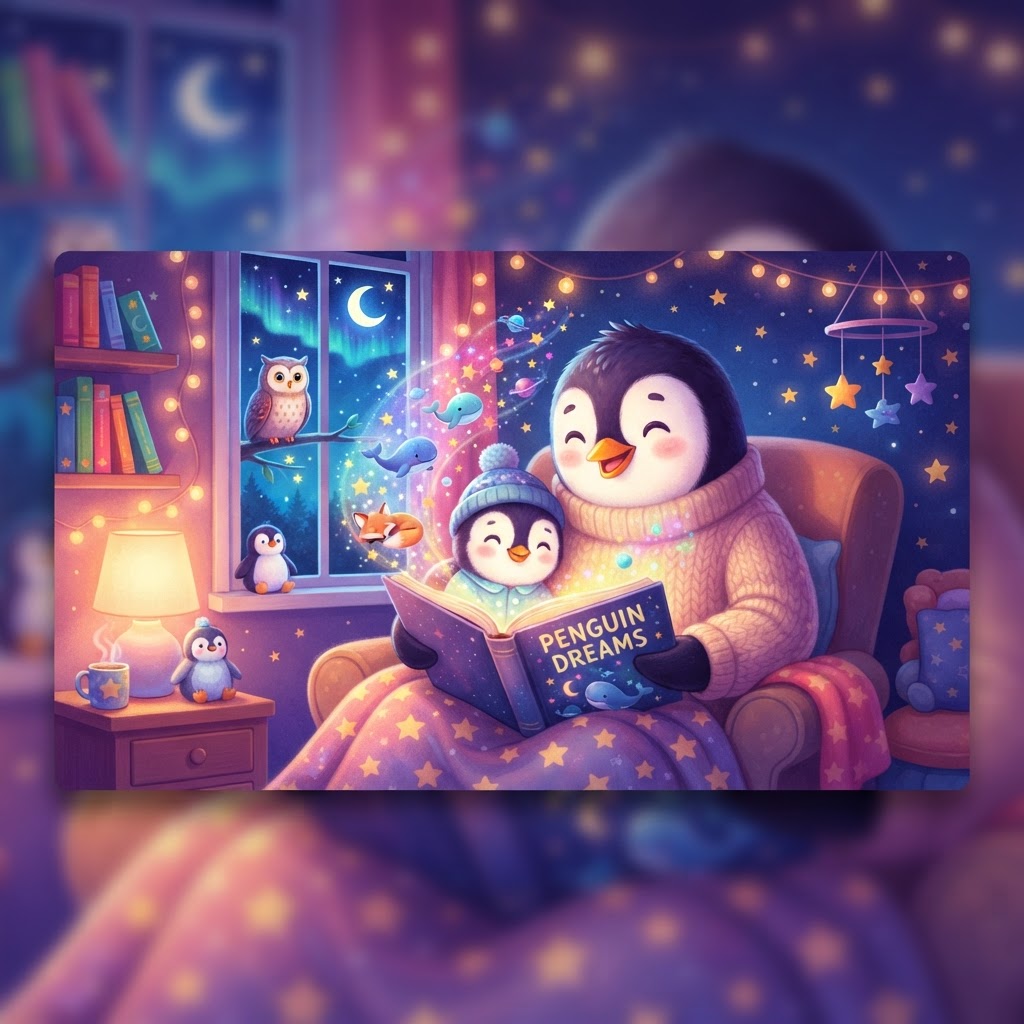
Few animals feel more bedtime-ready than penguins. They waddle, huddle, keep close to family, and live in a world of soft snow, moonlit skies, and gentle flurries. That makes cute penguins bedtime stories for children a wonderful choice when you want a calm, affectionate story that helps little ones settle down.
Parents often look for stories that are sweet without being overstimulating. The best penguins bedtime stories for kids do exactly that: they offer cozy adventure, emotional safety, and a peaceful rhythm children can follow. If your child loves animals, this guide will help you choose or create bedtime stories about penguins that feel soothing, warm, and easy to revisit night after night.
Why are penguins stories so soothing at bedtime?
Penguin stories are comforting at bedtime because they naturally combine safety, closeness, and quiet imagery. Their world is full of huddles, bedtime snuggles, soft snow, and gentle journeys home, which makes them a strong fit for a calming nighttime routine.
From a child development perspective, predictable stories help children feel secure. Research on bedtime routines, including work by Mindell et al., has shown that consistent bedtime patterns support better sleep and easier settling for young children (PubMed). A familiar animal character, especially one who returns to a parent, home, or cozy nest, adds to that sense of safety.
Penguins also model connection. Many species are known for close caregiving and huddling behavior, which children intuitively understand as love and protection. That emotional tone matters. The Center on the Developing Child at Harvard University emphasizes that warm, responsive relationships help children build security and regulation (Harvard Center on the Developing Child).
There is also a sensory reason penguins work so well in stories for sleep:
- Snowy settings feel quiet and uncluttered
- Gentle waddling creates a slow story pace
- Repetition fits naturally into penguin movement and routines
- Family huddles reinforce warmth, comfort, and belonging
That is why penguins stories for children often feel softer than stories with roaring, chasing, or high-stakes danger.
What makes penguins bedtime stories for kids feel calm rather than exciting?
The calmest penguin stories use small problems, gentle language, and a reassuring ending. A bedtime story should help children wind down, not wake up their nervous system with too much suspense.
When I recommend animal stories for sleep, I suggest keeping the emotional stakes low. A lost scarf, a drifting snowflake, a sleepy search for the brightest star, or a baby penguin learning to settle into the huddle all work better than storms, predators, or dramatic rescues.
The most effective cute penguins stories often include these elements:
- A clear bedtime goal: get home, get cozy, say goodnight
- Repetition: phrases like “waddle, wiggle, snuggle”
- Soft sensory details: snowy wind, glowing moon, warm feathers
- Emotional reassurance: a caregiver, sibling, or friend nearby
- A gentle ending: rest, sleep, stars, cuddles, or lullabies
This kind of structure supports attention without overstimulation. It also aligns with what many pediatric experts recommend for healthy sleep habits: a predictable, calming routine before bed. The CDC notes that children need enough sleep and benefit from routines that help them transition toward rest (CDC sleep guidance).
If your child enjoys other animal sleep tales too, you might also like gentle bear bedtime stories or cozy cat sleep stories.
Which cute penguins stories are best for bedtime?
The best penguin bedtime story ideas are simple, tender, and easy to imagine. They should give children a peaceful emotional arc: a little curiosity, a little comfort, and a sleepy ending.
Here are five gentle story concepts you can use right away.
-
The Little Penguin Who Couldn’t Find the Sleepiest Snowflake
A young penguin searches for the softest snowflake to wish goodnight to. Along the way, each friend points out something quieter than the last: a moonbeam, a sleepy seal, a whispering breeze, and finally the warm family huddle waiting at home. -
Pip and the Moonlit Waddle
Pip takes a short nighttime walk with a parent penguin to say goodnight to the stars, the ice, and the ocean. Nothing scary happens; the story is all about rhythm, noticing calm details, and returning to bed feeling safe. -
The Huddle That Sang a Lullaby
On an especially chilly night, a group of penguins hums a soft tune to help the youngest chick relax. This works beautifully for toddlers because the repeated lullaby line can become part of your real bedtime routine. -
The Penguin Who Packed a Dream Pillow
A penguin child fills an imaginary pillow with happy things from the day: one giggle, one snow sparkle, one cuddle, and one yawn. This idea supports emotional reflection and can help children practice gratitude in a very simple, age-appropriate way. -
The Sleepy Slide Home
After a day of tiny adventures, a penguin slides gently across the snow back to the huddle. The story focuses on body cues like heavy eyelids, slow feet, and quiet breathing, which can help children notice their own readiness for sleep.
These kinds of bedtime stories about penguins work especially well for ages 2-8, but older children often enjoy them too when the language is a little richer. If your child likes a broader animal collection, soft elephant stories can offer the same calm, nurturing feel.
What does a gentle bedtime story about penguins sound like?
A good penguin bedtime story sounds slow, warm, and reassuring. The language should feel musical enough to soothe, but simple enough for a sleepy child to follow.
Here is a short sample excerpt you can read aloud:
“Pico the little penguin stood on the silver snow and looked up at the moon.
‘I think the moon looks sleepy tonight,’ he whispered.
Mama Penguin smiled and tucked one warm flipper around him.
Together they waddled past the quiet rocks, past the whispering ice, and past the sea that hummed its soft, shimmery song.‘One step, two steps, snuggle in tight,’ Mama said.
‘One star, two stars, sleepy tonight,’ Pico repeated.When they reached the family huddle, Pico felt the warmest thing of all: everyone he loved, close around him. He gave one tiny yawn, one tiny wiggle, and one tiny blink. Then the snow, the moon, and Pico all seemed to whisper the same word: goodnight.”
Notice what makes this excerpt work:
- The plot is simple
- The repetition is easy to echo
- The caregiver is present
- The imagery is quiet and cozy
- The ending clearly signals sleep
This is the sweet spot for penguins bedtime stories for kids. Children do not need a lot of action before bed. They need calm patterns, loving connection, and a gentle bridge from wakefulness to rest.
How can families use InstaTales’ lullaby type with animal characters?
InstaTales’ lullaby type is ideal for turning penguin characters into soft, sleepy stories with a musical rhythm. It helps parents create personalized tales that feel more like a winding-down ritual than a high-energy adventure.
A good approach is to start with one simple emotional goal: helping your child feel safe, seen, and ready for sleep. Then choose penguin characters, a snowy setting, and a very gentle story arc.
Here is an easy formula to follow when you create your own personalized bedtime story:
- Choose the lullaby story type
- Pick animal characters, such as a baby penguin, parent penguin, or penguin friends
- Add your child’s name for instant familiarity
- Use a cozy setting like moonlit ice, snowy hills, or a warm huddle
- Ask for repetition, soft rhyme, and a peaceful ending
Helpful prompt ideas include:
- “Write a lullaby-style bedtime story about a little penguin named Ava who finds the sleepiest snowflake.”
- “Create a gentle penguin story for a 4-year-old with repeated calming phrases and a warm family ending.”
- “Tell a short sleepy story about penguin friends saying goodnight to the stars.”
If you want a faster starting point, browse the built-in story templates. Once you find a version your child loves, save it in your story library so you can reread it as part of a consistent bedtime routine.
This can also support literacy in simple, practical ways. Repeated bedtime reading helps children become familiar with vocabulary, sequencing, and story rhythm. For more family reading ideas, you can explore the InstaTales blog. And if your child loves comparing animal characters, gentle lion stories or sweet dog bedtime stories can add variety while keeping the same cozy tone.
How can parents make penguins stories for children part of a healthy bedtime routine?
Penguin stories work best when they become one calm step in a predictable bedtime sequence. The story itself matters, but the routine around it matters just as much.
Try this simple order:
- Bath or wash-up
- Pajamas
- Low lights
- One short penguin story
- One repeated goodnight phrase
- Sleep
Keep your reading voice slow and warm. Pause often. Let your child join in on repeated lines, but avoid turning the story into a high-energy performance right before bed.
If your child is very young, shorter is usually better. A one- to three-minute story can be enough for toddlers. Older children may enjoy a longer story or a short series with the same penguin character each night.
Above all, follow your child’s cues. Some children want whispery stories full of cuddles. Others like a tiny bit of discovery first, then a calm return home. The best cute penguins stories are the ones your child asks for again because they associate them with comfort.
Frequently Asked Questions
Why are penguins such a good choice for bedtime stories?
Penguins naturally fit bedtime because they are gentle, family-centered, and easy to imagine in quiet snowy settings. Their waddles, huddles, and cozy homes create a calm emotional tone that helps children relax.
What age are penguins bedtime stories for kids best for?
They work especially well for ages 1-10, with the style adjusted by age. Toddlers usually enjoy short repetition, while older children may like slightly longer penguins stories for children with more description and feeling.
How long should bedtime stories about penguins be?
For bedtime, shorter is often better. Aim for 2-5 minutes for toddlers and 5-10 minutes for preschoolers and early elementary children, unless your child clearly settles with longer stories.
What should I avoid in cute penguins stories before bed?
Avoid chase scenes, loud conflict, big emotional scares, or complicated plots. The best penguins bedtime stories for kids keep the stakes small and end with warmth, safety, and sleep.
Can I personalize penguin stories for my child?
Yes, and personalization often makes stories more effective. Adding your child’s name, favorite color, sibling, or bedtime object can make cute penguins bedtime stories for children feel familiar and emotionally reassuring.
How can InstaTales help with penguins bedtime stories for children?
InstaTales lets you create custom lullaby-style stories with animal characters, including penguins. You can choose a calm tone, add personal details, and save favorites for easy rereading in your bedtime routine.
Ready to Create a Personalized Bedtime Story?
Use our free AI bedtime story generator to create a personalized illustrated story for your child in 30 seconds — no credit card needed.
Popular story types:
Maya Rodriguez
Lead Content Editor & Early Literacy Specialist
Maya is a former early childhood educator and literacy specialist with over a decade of experience helping children develop a love of reading. She leads content at InstaTales, where she writes about the science of storytelling, child development, and how families can use personalized AI stories to build literacy and emotional resilience.
instatales.ai