1 Year Old Development: Milestones and Story Guide
What developmental milestones can you expect at age 1, and how do stories support each one? A parent's guide to age 1.
✦ Key Takeaways
- •At age 1, most children are learning through movement, repetition, and relationships.
- •Stories support language by giving 1-year-olds repeated, meaningful words in a warm social setting.
- •Stories build cognitive skills by helping 1-year-olds notice patterns, remember what comes next, and connect actions with outcomes.
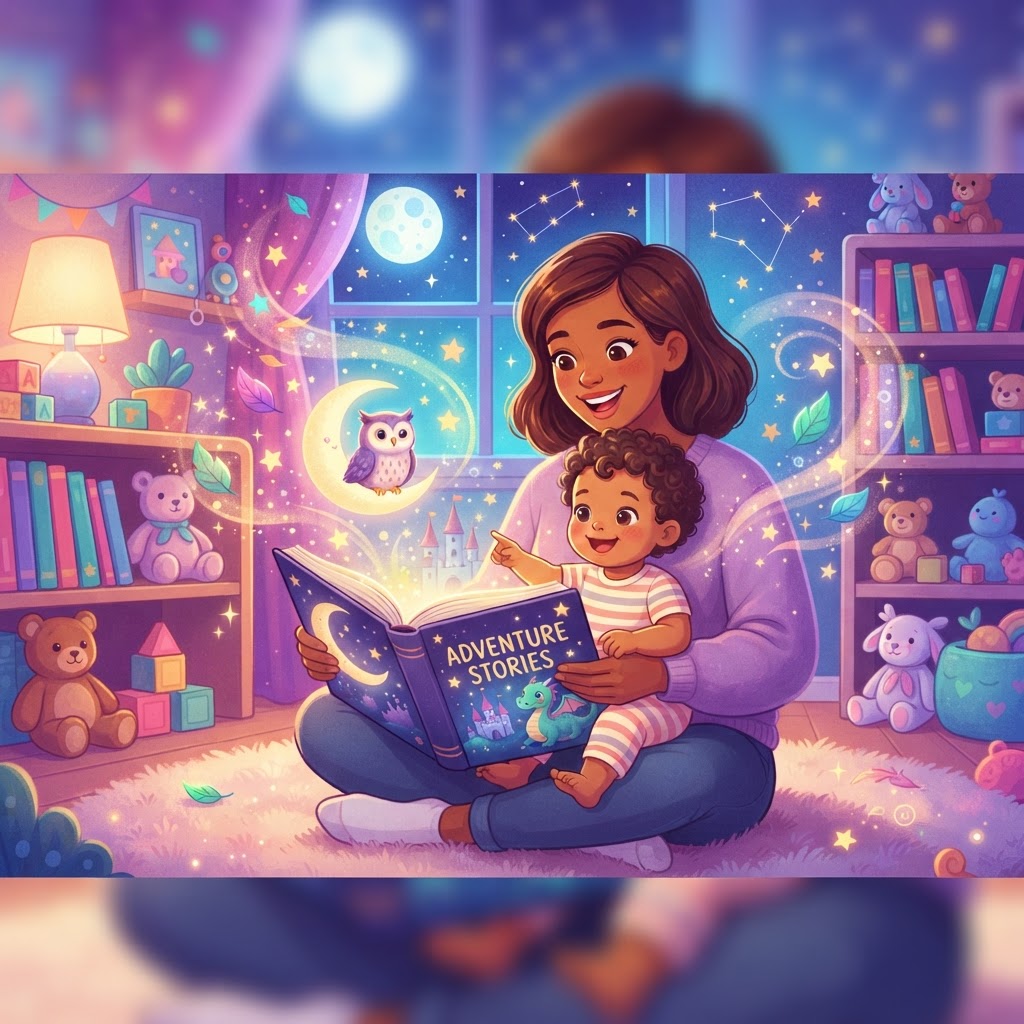
At age 1, children are changing fast. 1 year old development often includes first words, stronger memory, more movement, bigger feelings, and a growing interest in people, routines, and repetition. The right stories for 1 year olds can support these changes in gentle, playful ways by building language, attention, connection, and emotional security.
Parents often ask what is “normal” at this age. The short answer is that development varies, but many 1 year old milestones cluster around communication, cognitive learning, social interaction, and emotional bonding. Research from the CDC, the American Academy of Pediatrics, and Zero to Three shows that responsive interaction—talking, singing, reading, and repeating familiar words—helps young children learn best.
What does 1 year old development usually look like?
At age 1, most children are learning through movement, repetition, and relationships. They are not ready for long plots, but they are very ready for simple, warm, predictable stories.
Common 1 year old milestones often include:
- Language: babbling with meaning, saying a few simple words, turning to familiar names, understanding common words like “bye-bye” or “ball”
- Cognitive: exploring cause and effect, looking for hidden objects, noticing routines, copying actions
- Social: smiling, showing preferences for familiar adults, enjoying turn-taking games, watching other children
- Emotional: seeking comfort, reacting strongly to separation, expressing joy, frustration, or surprise more clearly
The CDC’s milestone guidance reminds us that children develop on a range, not a strict timetable. If a child is not yet speaking words, stories still help because listening, pointing, and shared attention all build the foundation for later language and learning.
How do stories support language development at age 1?
Stories support language by giving 1-year-olds repeated, meaningful words in a warm social setting. The best story time for this age sounds simple, rhythmic, and familiar.
When you read or tell a short story, your child hears:
- repeated words and phrases
- the music of language
- labels for people, actions, and objects
- pauses that invite pointing, clapping, or babbling back
This matters because early language grows through back-and-forth interaction. The AAP has long encouraged reading aloud from infancy because shared reading supports vocabulary, attention, and caregiver bonding. At 1, even a story as simple as “Baby sees the moon. Baby waves goodnight” is useful because it connects words to real life.
To strengthen language during stories for 1 year olds:
- name what your child sees: “dog,” “cup,” “mama”
- pause for them to point or make a sound
- repeat favorite lines
- use expressive tone and facial expression
- connect the story to daily routines like bath, meals, or bedtime
If your child enjoys themes like discovery and first experiences, these curious bedtime stories for 1-year-olds can give you simple language patterns to reuse at home.
How can stories build cognitive skills for 1-year-olds?
Stories build cognitive skills by helping 1-year-olds notice patterns, remember what comes next, and connect actions with outcomes. At this age, learning is concrete, sensory, and strongly tied to repetition.
A 1-year-old does not follow complex plot twists, but they do understand simple sequences:
- the duck splashes in water
- the ball rolls away
- the baby looks for the teddy
- the sun goes down and it is time to sleep
These tiny story events support memory and early problem-solving. Research on early development, including work shared by Harvard’s Center on the Developing Child, shows that responsive, repeated interactions help build the brain’s early architecture.
Look for developmental stages stories that include:
- predictable order
- one main idea per page or scene
- familiar objects
- simple cause and effect
- chances to point, imitate, or anticipate
For example, a story about finding a missing sock is cognitively rich for a 1-year-old. It supports object permanence, attention, and the pleasure of “I know what happens next.”
How do stories nurture social and emotional growth?
Stories nurture social and emotional growth by helping 1-year-olds recognize feelings, feel safe in routines, and connect with caring adults. At this age, the relationship around the story is just as important as the story itself.
One-year-olds are developing trust, attachment, and early empathy. They are starting to notice expressions and tone. A simple story about a sleepy bunny, a sad bear, or a happy toddler gives them early practice hearing emotional language in a calm, manageable way.
Stories can support social and emotional development by:
- naming feelings: happy, sad, mad, calm
- modeling comfort: a parent hugs, a friend shares, a caregiver helps
- showing routines that feel safe
- giving children repeated chances to hear that small problems can end well
This is especially helpful at bedtime, when many children process separation and tiredness. If you want gentle examples, kind bedtime stories for 1-year-olds and sharing stories for 1-year-olds can introduce simple prosocial themes without overwhelming detail.
What should parents look for in stories for 1 year olds?
The best stories for 1 year olds are short, rhythmic, repetitive, and emotionally safe. They should match how toddlers actually learn: through sound, routine, pictures, and connection.
Here is what to look for:
- Very simple language: one short sentence or idea at a time
- Repetition: repeated words, sounds, or phrases build memory and comfort
- Familiar themes: bedtime, animals, family, peekaboo, food, bath time
- Warm emotional tone: gentle tension is fine, but avoid scary or chaotic scenes
- Interactive moments: pointing, waving, making animal sounds, clapping
- Clear resolution: the story ends with comfort, sleep, reunion, or calm
For this age, less is more. A good story might only last two to five minutes. Re-reading the same story is not a problem—it is often exactly what supports 1 year old development best.
If you want to create your own personalized bedtime story, choose simple prompts and everyday settings. Personalized stories work well when the child hears their own name, favorite animal, or bedtime routine woven into a calm, predictable narrative.
What are five good story ideas for 1-year-olds?
The best story ideas for 1-year-olds are familiar, sensory, and easy to repeat. Each idea below supports a different part of development.
1. The Missing Teddy
A toddler looks under the blanket, behind the chair, and inside the basket before finding their teddy. This supports memory, object permanence, and anticipation.
2. Night-Night, Little Bunny
A bunny says goodnight to the moon, stars, bed, and family. This supports bedtime routine, emotional security, and language through repetition.
3. Splash, Splash, Duck
A duck splashes, shakes, and waddles home to dry off. This supports action words, sound play, and cause and effect.
4. My Red Ball Rolls Away
A ball rolls under the table, then comes back with help. This supports tracking, problem-solving, and simple social interaction.
5. Baby Shares the Blocks
Two little friends build, knock down, and rebuild together. This supports turn-taking, early empathy, and social understanding.
For parents who want more values-based inspiration, you can browse brave bedtime stories for 1-year-olds or find more age-based reading ideas on the InstaTales blog.
How do InstaTales age settings work for age 1?
InstaTales’ age setting for 1-year-olds is designed to make stories simpler, gentler, and more developmentally appropriate. In practice, that means stories can be shaped around short sentences, familiar routines, repetition, and soothing emotional arcs.
For age 1, a well-set personalized story should usually include:
- simple words and clear actions
- one small idea at a time
- familiar people, animals, or objects
- calm pacing
- a safe, comforting ending
This matters because a story for a 6-year-old may include longer plot lines or more abstract emotions, while a 1-year-old benefits from sensory language and predictability. If you make personalized stories often, saving favorites in your story library can help because children this age love hearing the same story again and again.
A helpful approach is to keep customization focused. Pick one theme—bedtime, bath time, a favorite toy, or a first adventure—and let the age setting guide the structure. You can also start from ready-made story templates if you want a quicker way to create developmentally appropriate stories.
Frequently Asked Questions
How many words should a story for a 1-year-old have?
Short is best. Many 1-year-olds do well with just a few lines per page or a story that lasts two to five minutes.
Is it normal if my 1-year-old wants the same story every night?
Yes. Repetition helps toddlers build language, memory, and emotional security, so repeated reading is a healthy part of learning.
Can stories help a 1-year-old who is not talking yet?
Yes. Even before first words, stories build listening, joint attention, and understanding of sounds and routines. Pointing, smiling, and babbling during reading all count as early communication.
What themes are best for stories for 1 year olds?
The best themes are familiar and gentle, such as bedtime, animals, family, bath time, toys, and simple feelings. Stories should feel safe and easy to follow.
Should screens replace reading aloud at this age?
No. Live, responsive reading with a caregiver is more powerful for development than passive screen viewing. The interaction around the story is a big part of what helps children learn.
When should parents ask about delayed development?
If you have concerns about your child’s language, social connection, movement, hearing, or overall development, speak with your pediatrician or early intervention service. Trust your instincts—early support can make a real difference.
Explore More Stories
Ready for more? - free AI bedtime story generator
Get a new bedtime story every week
Free, personalized, and delivered to your inbox. No spam, ever.
Ready to Create a Personalized Bedtime Story?
Use our free AI bedtime story generator to create a personalized illustrated story for your child in 30 seconds — no credit card needed.
Popular story types:
Maya Rodriguez
Lead Content Editor & Early Literacy Specialist
Maya is a former early childhood educator and literacy specialist with over a decade of experience helping children develop a love of reading. She leads content at InstaTales, where she writes about the science of storytelling, child development, and how families can use personalized AI stories to build literacy and emotional resilience.
instatales.ai