Diwali Stories for Kids: 7 Magical Tale Ideas
Celebrate Diwali with these magical stories for kids — festive, fun, and perfect for the season.
✦ Key Takeaways
- •Diwali is an excellent story theme because it combines bright sensory details with big, child-friendly ideas like kindness, courage, hope, and family.
- •The simplest way to explain Diwali is this: it is a festival of lights that celebrates goodness, hope, and the triumph of light over darkness.
- •The best Diwali stories for kids blend tradition with imagination.
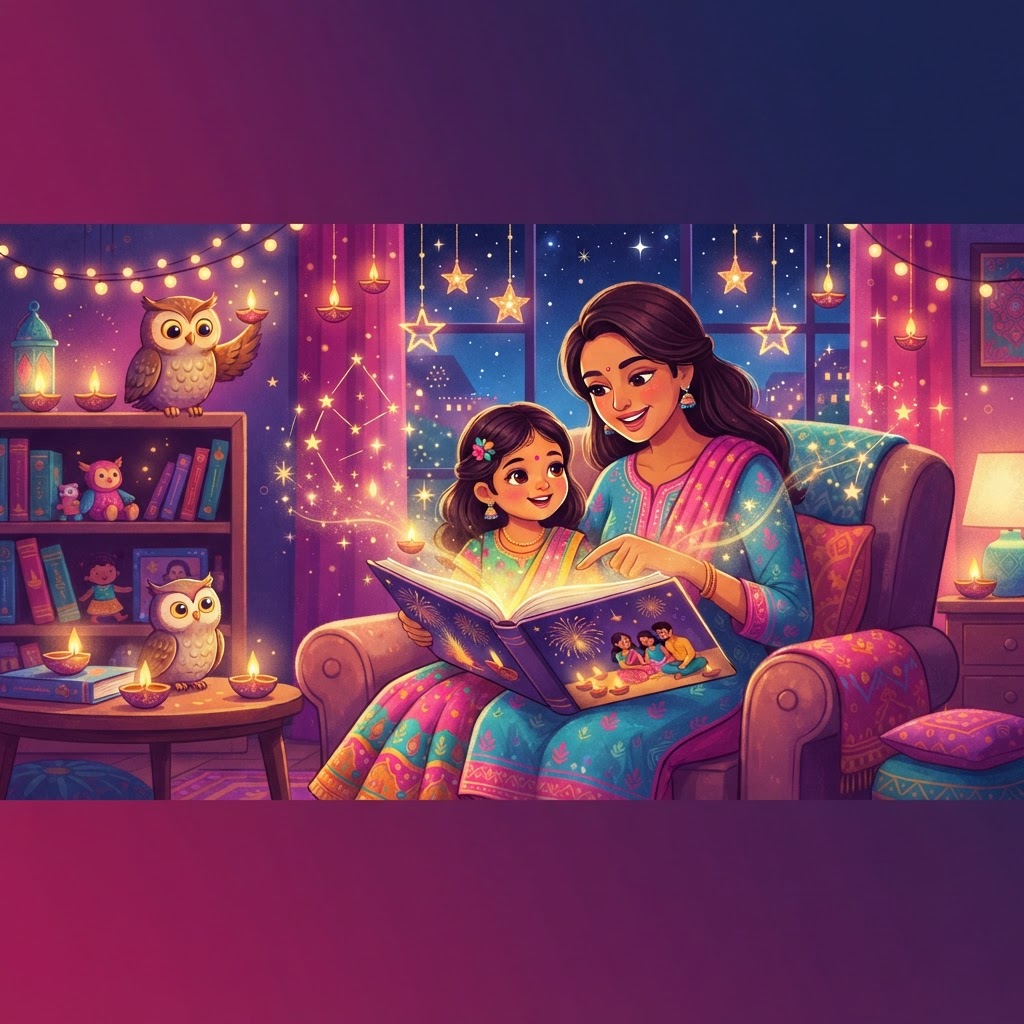
Diwali is full of light, color, family traditions, and wonder, which makes it perfect for storytelling. If you are looking for Diwali stories for kids, this guide shares simple ways to explain the festival, creative Diwali bedtime stories ideas, and tips for making each story feel personal, comforting, and memorable.
Stories help children make sense of celebrations. In early childhood, familiar routines, repeated phrases, and meaningful family traditions support language growth and emotional connection. Organizations like the Harvard Center on the Developing Child and the National Association for the Education of Young Children both emphasize that warm, shared storytelling experiences build vocabulary, memory, and social understanding.
What makes Diwali such a rich theme for children’s stories?
Diwali is an excellent story theme because it combines bright sensory details with big, child-friendly ideas like kindness, courage, hope, and family. Children naturally connect with lamps, sweets, rangoli patterns, fireworks, and celebrations that feel magical.
For young listeners, Diwali stories children enjoy most usually include:
- A clear good-hearted hero
- A small problem that feels safe to solve
- Repetition, rhythm, or a cozy bedtime tone
- Festive details like diyas, lanterns, music, and sweets
- A warm ending centered on love, gratitude, or light
That is why kids Diwali tales work so well at bedtime, in classrooms, and during family gatherings. They let children experience the joy of the festival while learning values in a gentle way.
How can you explain the meaning of Diwali to kids?
The simplest way to explain Diwali is this: it is a festival of lights that celebrates goodness, hope, and the triumph of light over darkness. For children, that means even when things feel scary, sad, or confusing, kindness and courage can help us find our way.
Diwali is celebrated by many families in different ways across India and around the world. Some people connect it to the story of Lord Rama returning home after defeating Ravana, while others celebrate different traditions linked to Lakshmi, Krishna, or the new year. If you want a child-friendly overview of Hindu festivals and traditions, Britannica Kids can be a useful starting point for older children.
For ages 3-7, try language like this:
- Diwali is a special time when families light little lamps called diyas.
- The lights remind us to be brave, kind, and hopeful.
- People celebrate with family meals, prayers, decorations, new clothes, and sweets.
- Many families also tell stories about goodness winning in the end.
Keeping the explanation simple is developmentally appropriate. The American Academy of Pediatrics often highlights that young children learn best through warm conversations, repeated language, and real-life family experiences.
What are some magical Diwali story ideas for kids?
The best Diwali stories for kids blend tradition with imagination. Here are seven festive ideas that work beautifully for toddlers, preschoolers, early readers, and family read-aloud time.
1. The Little Diya Who Was Afraid to Shine
A tiny clay lamp worries its light is too small to matter. On Diwali night, it learns that even the smallest glow can help someone feel safe, welcome, and loved.
2. The Lost Rangoli Colors
A child wakes up to find that all the rangoli powders have disappeared. With help from a squirrel, a grandmother, and the morning sun, they discover that color can be found in flowers, spices, and nature.
3. Maya and the Moonlit Sweet Box
A box of festival sweets seems ordinary until it whispers family stories each time it is opened. Every treat reveals a memory about sharing, gratitude, and celebrating together.
4. The Firefly Diwali Parade
When clouds cover the sky on Diwali evening, a group of fireflies decides to create its own glowing parade. This makes a lovely gentle story for younger children who enjoy soft lights more than loud fireworks.
5. Arjun and the Doorway of Light
A nervous child is asked to place diyas along the doorstep before guests arrive. As each lamp is lit, Arjun feels braver and learns that welcoming others is its own kind of magic.
6. Lakshmi’s Trail of Kindness
Instead of searching for the brightest house, Goddess Lakshmi follows acts of kindness through a neighborhood. She finds children helping grandparents, sharing sweets, and including a shy new friend.
7. The Night the Stars Joined Diwali
A child wishes the whole sky could celebrate too. That night, the stars begin twinkling in rangoli shapes and guide the child on a dreamy journey above a glowing city.
If your family enjoys seasonal reading all year, you can also explore cozy Thanksgiving tales or magical Hanukkah story ideas for other festive moments.
What does a Diwali bedtime story sound like?
A good Diwali bedtime story feels calm, vivid, and reassuring. It should keep the sparkle of the festival while ending in a soft, safe emotional place so children can settle to sleep.
Here is a short sample excerpt:
On the night of Diwali, Meera carried a tiny diya in both hands. Its flame danced like a golden firefly.
“Do not worry,” Grandma said as they placed the lamp by the window. “Even a small light can do a big job.”
Meera looked outside. Every doorstep on the street glowed. Orange marigolds swayed in the evening breeze, and somewhere nearby, cardamom and sugar filled the air.
Then Meera noticed one dark corner at the end of the lane. A little kitten sat there, trembling.
“I know,” Meera whispered.
She picked up her diya and walked carefully toward the kitten. The warm light reached the shadows first. The kitten blinked, then stepped forward, following Meera all the way home.
Grandma smiled. “See? Your light knew exactly where to go.”
Meera tucked herself into bed that night thinking of tiny flames, brave hearts, and how even the darkest corners can change when someone shares a little glow.
This kind of excerpt works because it uses sensory details, emotional safety, and a clear value. Research on shared reading and dialogic reading, including work by Grover Whitehurst and colleagues, shows that stories become more powerful when adults pause, ask simple questions, and connect the events to a child’s own life.
How can you create personalized Diwali stories with InstaTales?
Personalized stories often hold children’s attention longer because they hear their own name, interests, and feelings reflected in the plot. That makes Diwali bedtime stories feel especially meaningful during family celebrations.
With InstaTales, you can create your own personalized bedtime story by choosing details such as:
- Your child’s name and age
- Favorite colors, animals, or festival foods
- A gentle bedtime tone or a funny adventure tone
- A lesson like sharing, bravery, or gratitude
- Diwali elements like diyas, rangoli, sweets, music, or family gatherings
You can also start faster with themed story templates and save favorites in your story library to read again next year. Re-reading matters: children often build comprehension and confidence through familiar stories, especially when favorite lines repeat.
For educators, Diwali stories can support cultural learning, sequencing, vocabulary, and creative writing. If you are planning a classroom celebration or literacy activity, InstaTales for teachers offers a practical way to generate age-appropriate stories for groups.
How can parents and teachers use Diwali stories in age-appropriate ways?
The key is to match the story to the child’s age, sensitivity, and attention span. Young children usually do best with simple plots and gentle emotions, while older children can enjoy more history, symbolism, and character growth.
Here are a few practical guidelines:
- Ages 1-3: Use very short stories with repeated phrases like “shine, shine, little diya.”
- Ages 4-6: Focus on one clear problem and one warm solution.
- Ages 7-10: Add richer festival meaning, family traditions, and cultural context.
- For sensitive children: Emphasize lamps, decorations, and togetherness rather than loud fireworks.
- For classrooms: Invite children to compare traditions respectfully and share family celebrations in their own words.
This is also a good moment to build broader cultural literacy. On the InstaTales blog, families can find other seasonal story ideas and reading inspiration throughout the year.
Frequently Asked Questions
What age are Diwali stories for kids best suited for?
Diwali stories can work for ages 1-10 when the language and length match the child’s stage. Toddlers need very short, repetitive tales, while older children enjoy fuller plots and cultural details.
What should a Diwali bedtime story include?
A strong Diwali bedtime story usually includes light, family warmth, and a gentle message like kindness or courage. For sleep time, keep the ending calm and comforting rather than exciting or noisy.
Are Diwali stories only about Rama and Sita?
No. Many families include the story of Rama and Sita, but Diwali is celebrated in different ways across regions and traditions. Children can also enjoy stories about diyas, rangoli, Lakshmi, community, gratitude, and family celebration.
How do personalized Diwali stories help children?
Personalized stories can increase attention, emotional connection, and language engagement because the child hears familiar details woven into the tale. They also make family traditions feel more meaningful and memorable.
Can teachers use Diwali stories in the classroom?
Yes. Diwali stories are useful for literacy, listening comprehension, sequencing, and cultural awareness. The best classroom stories are respectful, age-appropriate, and open the door to discussion rather than stereotypes.
Get a new bedtime story every week
Free, personalized, and delivered to your inbox. No spam, ever.
Ready to Create a Personalized Bedtime Story?
Use our free AI bedtime story generator to create a personalized illustrated story for your child in 30 seconds — no credit card needed.
Popular story types:
Maya Rodriguez
Lead Content Editor & Early Literacy Specialist
Maya is a former early childhood educator and literacy specialist with over a decade of experience helping children develop a love of reading. She leads content at InstaTales, where she writes about the science of storytelling, child development, and how families can use personalized AI stories to build literacy and emotional resilience.
instatales.ai