Explorers Stories for Kids: 7 Adventure Ideas
Exciting explorers stories for kids — adventures, lessons, and imagination with your child's favorite characters.
✦ Key Takeaways
- •Explorers stories for kids are appealing because they match how children naturally learn: by wondering, imagining, and testing ideas.
- •The best explorers bedtime stories feel adventurous without becoming overstimulating.
- •The most engaging explorers stories for kids combine a vivid setting, a meaningful mission, and a child-friendly lesson.
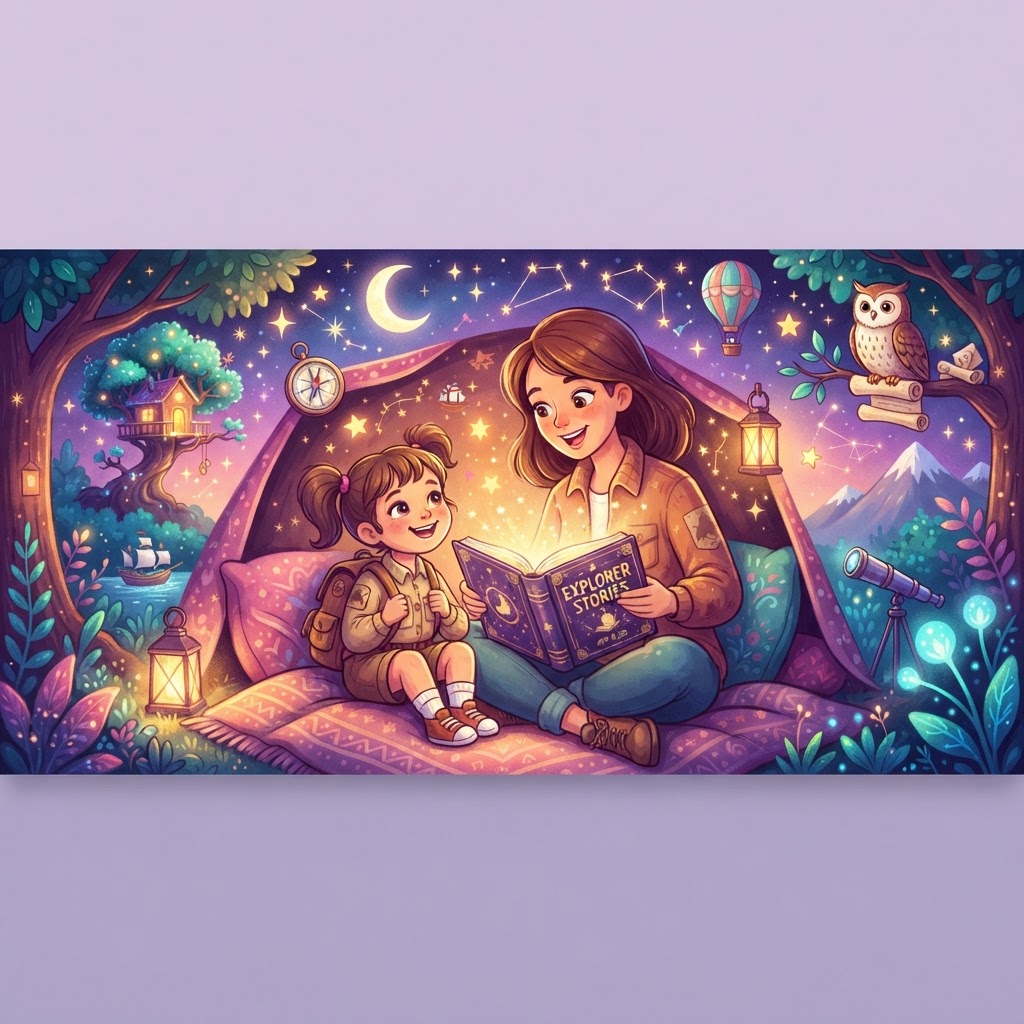
Few story themes capture childhood wonder like explorers stories for kids. They invite children to climb misty mountains, follow secret maps, and discover new places from the safety of a cozy bed. For parents and teachers, they are especially useful because they blend adventure with problem-solving, courage, empathy, and curiosity—all key skills in early childhood.
Whether you want gentle explorers bedtime stories for winding down or exciting stories about explorers that fuel daytime play, this guide will help you choose the right themes, shape memorable characters, and create personalized adventures your child will want to hear again and again.
Why are explorers stories for kids so appealing?
Explorers stories for kids are appealing because they match how children naturally learn: by wondering, imagining, and testing ideas. They let kids explore big questions in a safe, structured way while giving them a hero they can relate to.
Young children are driven by curiosity. A story about an explorer crossing a jungle path or searching for a hidden star turns that curiosity into a meaningful journey. Instead of passively listening, children begin predicting what happens next, noticing clues, and imagining solutions.
There is also strong developmental value here. The American Academy of Pediatrics encourages shared reading because it supports language, connection, and emotional growth. The Harvard Center on the Developing Child also highlights how imaginative play and responsive conversation help build memory, self-control, and flexible thinking.
Children often love explorer tales because they include:
- A clear mission or mystery
- New places to imagine
- A few manageable obstacles
- Brave choices with safe outcomes
- A satisfying discovery at the end
That mix of structure and surprise is exactly why explorers tales children enjoy often become favorites at bedtime and beyond.
What makes explorers bedtime stories calm enough for sleep?
The best explorers bedtime stories feel adventurous without becoming overstimulating. They offer discovery, but they keep the emotional tone warm, predictable, and reassuring.
For bedtime, the explorer does not need to outrun danger. A softer rhythm works better: find a map, meet a helpful guide, solve a simple challenge, and return home safely. This lets children enjoy the journey without ending the night in a heightened emotional state.
A strong bedtime explorer story usually includes:
- One main goal, not too many plot twists
- Gentle suspense instead of scary danger
- Friendly companions, like an animal guide or sibling
- Rich but soothing settings, such as moonlit forests or glowing caves
- A comforting ending with rest, homecoming, or gratitude
If you are creating your own story, pre-made story templates can help you keep that balance between excitement and calm. They are especially helpful when you want fresh stories about explorers without reinventing the structure every night.
Which explorers stories for kids inspire the biggest imagination?
The most engaging explorers stories for kids combine a vivid setting, a meaningful mission, and a child-friendly lesson. Below are seven story ideas that work beautifully for ages 1-10.
1. The Map in the Mango Tree
A child finds a tiny rolled-up map hidden in a backyard tree. The journey leads to garden “landmarks” like pebble bridges, butterfly meadows, and a secret snack picnic. This story teaches observation and confidence.
2. The Moonlight Star Explorer
An explorer travels across the night sky to return a lost star to its constellation. Along the way, they meet sleepy cloud creatures and a wise owl. This is one of the gentlest explorers bedtime stories, ideal for younger children.
3. The Coral Reef Rescue Mission
A child explorer dives beneath bright blue waves to help sea creatures find their way home after a storm. The adventure introduces teamwork, kindness, and basic ocean awareness. It is a great choice for kids who also love magical sea tales.
4. The Snow Compass Adventure
In a quiet snowy forest, an explorer follows a glowing compass to find a missing winter lantern. The journey includes tracks in the snow, helpful woodland friends, and a lesson in persistence. This setting works well in seasonal storytelling.
5. The Museum Time Explorer
A child visits a museum and suddenly steps into the past through a magical exhibit. They may meet an ancient navigator, a desert guide, or an early inventor. This type of story blends imagination with real-world learning.
6. The Tiny Backyard Safari
An explorer shrinks to the size of an ant and discovers an entire world in the grass. Ladybugs become neighbors, puddles become lakes, and leaves become giant canopies. This idea is especially good for preschoolers because it makes familiar places feel brand new.
7. The Friendship Trail Expedition
A young explorer must cross several lands to deliver invitations to a celebration. At each stop, they solve a problem by listening, sharing, or helping someone else. This kind of story gently builds social-emotional skills.
If your child likes adventures with puzzles as well as travel, pairing explorer themes with detective-style stories can be a great way to keep reading fresh.
How can parents build strong explorer characters that children remember?
Children remember explorer characters when they feel brave, believable, and emotionally clear. A great child hero does not need to be perfect; they need a simple goal, a relatable feeling, and room to grow.
Start with motivation. Why is this explorer setting out? Maybe they want to help a friend, return a treasure, learn about the stars, or prove to themselves that they can be brave. A clear reason makes the story feel grounded.
Then add one small challenge inside the character, not just outside. For example:
- An explorer who is curious but impatient
- An explorer who is brave but shy with new friends
- An explorer who gets nervous in the dark
- An explorer who wants to lead but must learn to listen
This is where character development really happens. As the child hero solves problems, they also practice patience, courage, empathy, or resilience.
A few educator-tested tips help a lot:
- Keep traits simple. Younger children connect best with one or two defining qualities.
- Use repeated strengths. If the explorer is kind, show that kindness more than once.
- Include helpers. A guide, animal friend, or sibling gives the hero chances to cooperate.
- Let choices matter. Even small decisions help children understand cause and effect.
- End with growth. The explorer should learn something about the world or themselves.
The CDC’s child development guidance also reminds us that children learn through relationships, routines, and age-appropriate challenges. Stories become more powerful when they reflect those real developmental needs.
How can you create personalized stories about explorers with InstaTales?
Personalized explorer stories work best when they reflect your child’s interests, comfort level, and stage of development. That is exactly why custom storytelling can be so effective: the child sees themselves in the adventure.
With InstaTales, you can create your own personalized bedtime story by choosing details that matter to your child. A familiar name, favorite animal, beloved grandparent, or cherished stuffed toy can instantly make the story more engaging.
A simple formula works well:
- Choose the setting: jungle, ocean, snowy mountain, moon, museum, or backyard
- Pick the mission: find, deliver, rescue, return, or discover
- Add a companion: fox, robot, mermaid, teacher, sibling, or dragon
- Decide the tone: cozy bedtime, funny adventure, or learning quest
- Finish with comfort: homecoming, celebration, bedtime cuddles, or a peaceful sky
For example, instead of a generic jungle tale, you might create a story about Maya and her red rain boots exploring a glowing forest with her pet rabbit to find a lost music box. That specificity makes the story feel magical.
It also helps to save favorites in your story library, especially when children ask for the same adventure again with small changes. Re-reading familiar stories supports vocabulary, sequencing, and emotional security.
How can families and teachers use explorer stories for learning?
Explorer stories can support learning because they naturally invite questions, prediction, mapping, and reflection. With just a few simple follow-up activities, stories about explorers become rich literacy experiences.
At home, try:
- Asking, “What do you think the explorer should do next?”
- Drawing the map from the story afterward
- Naming one feeling the explorer had during the journey
- Comparing two settings, such as desert and ocean
- Creating a sequel with a new destination
In classrooms, explorers themes work well for geography, vocabulary, sequencing, and social-emotional learning. Teachers can build writing prompts around routes, clues, weather, habitats, and teamwork. For group story creation and lesson ideas, InstaTales for teachers can help turn imaginative reading into practical classroom activities.
Explorer stories also pair nicely with other genres. A child who loves sea adventures may enjoy magical underwater worlds, while another may prefer brave quests with capes and missions. You can find more themed inspiration in the InstaTales blog, or branch into other favorites like superhero and fairy adventures on future reading nights.
Frequently Asked Questions
What age are explorers stories for kids best for?
Explorer stories can work for ages 1-10 when the plot and language match the child’s stage. Younger children do best with simple journeys and repetition, while older children enjoy clues, maps, and more complex missions.
Are explorers bedtime stories too exciting before sleep?
Not if the story is paced well. Choose gentle suspense, friendly helpers, and a calm ending so the adventure feels soothing rather than stimulating.
What lessons do stories about explorers teach?
They often teach curiosity, resilience, empathy, observation, and problem-solving. Many also support vocabulary growth and conversation skills during shared reading.
How can I make explorers tales children love feel personal?
Use your child’s name, favorite places, preferred animals, and real-life interests. Small personal details make the adventure more emotionally meaningful and memorable.
Can explorer stories be educational as well as fun?
Yes. Explorer stories can introduce geography, nature, history, sequencing, and emotional skills in a playful format. They are especially effective when adults ask open-ended questions after the story.
How often should I reuse the same explorer story?
As often as your child enjoys it. Repetition helps children build language, confidence, and deeper understanding, especially when you add small new details each time.
Get a new bedtime story every week
Free, personalized, and delivered to your inbox. No spam, ever.
Ready to Create a Personalized Bedtime Story?
Use our free AI bedtime story generator to create a personalized illustrated story for your child in 30 seconds — no credit card needed.
Popular story types:
Maya Rodriguez
Lead Content Editor & Early Literacy Specialist
Maya is a former early childhood educator and literacy specialist with over a decade of experience helping children develop a love of reading. She leads content at InstaTales, where she writes about the science of storytelling, child development, and how families can use personalized AI stories to build literacy and emotional resilience.
instatales.ai