Detectives Stories for Kids: 7 Clever Adventures
Exciting detectives stories for kids — adventures, lessons, and imagination with your child's favorite characters.
✦ Key Takeaways
- •Children love detective stories because mysteries turn reading into a game.
- •Detective stories support thinking, language, and social-emotional growth.
- •The best detective plots for bedtime are light, curious, and comforting.
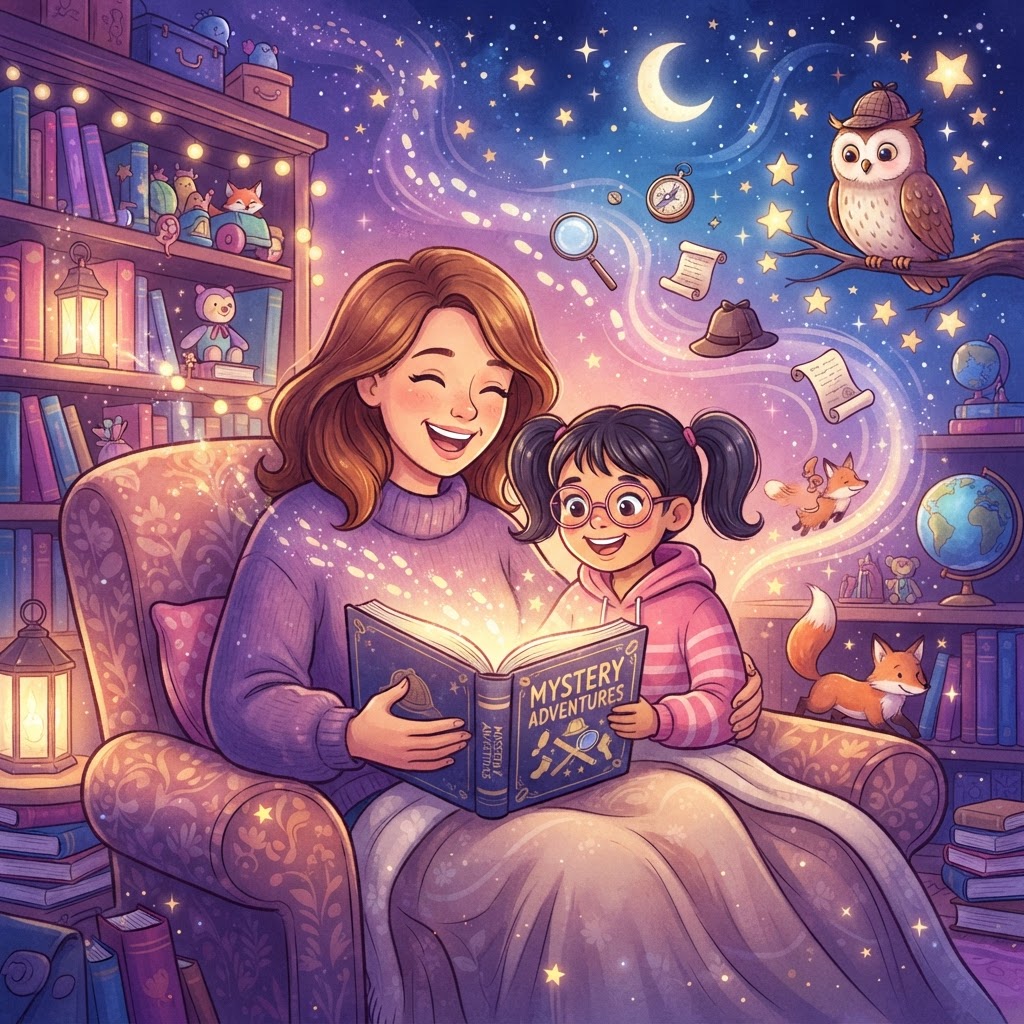
Few themes hook young readers as quickly as a good mystery. Detectives stories for kids invite children to notice clues, ask questions, and imagine themselves as brave problem-solvers. Better still, these stories can be warm, funny, and bedtime-friendly—full of curiosity without feeling too intense. If your child loves puzzles, hidden messages, or helping characters solve little problems, detective adventures are a wonderful fit.
Why are detectives stories so appealing to children?
Children love detective stories because mysteries turn reading into a game. A child is not just listening—they are predicting, noticing details, and trying to solve the case alongside the hero.
That active role matters. In many stories about detectives, children get a safe challenge: something is missing, confusing, or unexplained, and the main character uses observation and kindness to figure it out. That structure feels exciting without being overwhelming.
Detective themes also match how young children naturally learn. They are already little investigators in daily life, constantly asking “why?” and testing ideas. Research from the Center on the Developing Child at Harvard University highlights the importance of executive function skills like attention, memory, and flexible thinking—all skills children practice when they follow clues in a story.
For many families, detectives bedtime stories work especially well because they offer:
- A clear beginning, middle, and end
- Gentle suspense with a satisfying solution
- Chances for children to join in by guessing
- Reassurance that problems can be solved
In short, detective stories make children feel clever, capable, and involved.
What learning benefits can detectives bedtime stories offer?
Detective stories support thinking, language, and social-emotional growth. When chosen well, they help children practice reasoning while still feeling playful and cozy.
As a child development specialist would expect, mysteries encourage several useful skills at once:
- Inference: “What do these clues mean?”
- Sequencing: “What happened first, next, and last?”
- Vocabulary: words like clue, suspect, evidence, trail, and discover
- Perspective-taking: “Why did that character act that way?”
- Emotional regulation: waiting for the answer and handling uncertainty
Shared reading itself also matters. The American Academy of Pediatrics recommends reading aloud regularly because it supports early literacy, language, and parent-child connection. Detective tales add another layer by prompting conversation: “What do you think happened?” and “How would you solve it?”
For younger children, keep the mystery simple and concrete. For older children, you can add red herrings, coded notes, or a twist ending. Either way, the best detectives tales children enjoy are those that reward careful listening rather than fear.
Which detectives stories for kids make the best bedtime adventures?
The best detective plots for bedtime are light, curious, and comforting. They should include a mystery, a few clues, and a happy resolution that helps children settle down feeling safe.
Here are 7 story ideas you can use right away:
1. The Case of the Missing Teddy
A favorite stuffed animal disappears before bedtime. A child detective follows fuzzy clues from the bedroom to the laundry basket and solves the mystery with a laugh.
2. The Moonlight Garden Mystery
Someone has been leaving tiny shiny pebbles in the garden each night. The detective discovers a helpful hedgehog building a sparkly path for lost fireflies.
3. The Library Clue Trail
A note tucked inside a picture book leads to three more clues around the house or classroom. This idea works especially well for reading routines and can be extended with story templates for quick custom versions.
4. The Robot Who Lost Its Beep
A friendly toy robot can no longer make its bedtime sound. The detective interviews toys, finds a loose battery cover, and saves the night—perfect for children who also enjoy robot adventures.
5. The Fairy Footprints on the Window
Tiny glowing footprints appear by the window after sunset. The detective learns that a shy fairy was returning a borrowed button, blending mystery with the charm of fairy bedtime stories.
6. The Classroom Snack Sleuth
At school, fruit slices keep vanishing before snack time. The detective discovers a misunderstood class pet or a very hungry bird near the windowsill, making this a fun choice for InstaTales for teachers.
7. The Sleepy Star Map Secret
A child detective notices that the stars outside seem to form a pattern. Following the clues leads to a hidden message from Grandma, turning the mystery into a gentle story about love and family.
These examples show why stories about detectives are so flexible. You can make them funny, magical, school-based, or seasonal. If your child loves mixing genres, detective plots also pair beautifully with themes like mermaids, giants, or space explorers from the InstaTales blog.
How can you create personalized stories about detectives with InstaTales?
Personalized detective stories are often more engaging because the child becomes part of the mystery. When the hero has your child’s name, favorite toy, or real-life neighborhood, the story feels immediate and memorable.
With InstaTales, you can create your own personalized bedtime story in just a few steps:
- Choose your child as the detective hero
- Add a favorite setting, like home, school, or Grandma’s garden
- Pick a gentle mystery, such as a missing object or secret note
- Set the tone to calm, funny, magical, or adventurous
- Include familiar sidekicks like siblings, pets, or beloved characters
This is especially helpful for bedtime. You can control the intensity and make sure the mystery ends with comfort, not worry. For example, instead of a “thief,” you might use a forgetful dragon, a sleepy puppy, or a helpful fairy who misplaced something.
To make the most of personalized detectives bedtime stories, try these educator-approved tips:
- Keep one main mystery per story
- Use three clear clues children can remember
- Let the child detective solve the case through observation, not danger
- End with connection: hugs, laughter, or a bedtime routine
If your child wants to hear the same mystery again, save it in your story library. Re-reading supports comprehension, and many children enjoy spotting new details the second time through.
How do you build a memorable child detective character?
A great child detective is curious, kind, and believable. Children connect best with heroes who solve problems by noticing, thinking, and caring—not by being perfect.
When creating your detective, give them:
- A signature strength: sharp eyes, good listening, or clever questions
- A comforting companion: a pet, grandparent, sibling, or toy
- A simple tool: notebook, magnifying glass, flashlight, or map
- A gentle flaw: they forget things, jump to conclusions, or feel shy
- A positive motive: they want to help, not show off
Character development matters because children learn from what the hero values. The National Association for the Education of Young Children often emphasizes that playful learning helps children make meaning through relationships and imagination. A detective who is patient, honest, and empathetic teaches more than clue-solving alone.
For younger readers, keep the character traits very clear. For older children, add a bit more complexity, such as learning not to accuse too quickly or realizing that misunderstandings happen.
How can adults keep detective stories calming at bedtime?
Bedtime detective stories should feel satisfying, not overstimulating. The easiest way to do that is to choose small mysteries, cozy settings, and reassuring endings.
A few practical guidelines help:
- Avoid frightening villains or real danger
- Use familiar places like bedrooms, gardens, or classrooms
- Keep suspense gentle and brief
- End with safety, warmth, and a solved problem
- Let the detective ask for help when needed
This balance is why detective tales work so well before sleep. They offer just enough excitement to hold attention, then enough resolution to help the body relax.
If your child loves adventure but gets wound up easily, blend mysteries with softer themes. A detective can solve a puzzle in a castle, a spaceship, or even a cloud kingdom—much like the imaginative setups found in space story ideas.
Frequently Asked Questions
What age are detectives stories for kids best for?
Detective stories can work well from toddlerhood through age 10. For younger children, choose simple missing-item mysteries; for older children, add more clues and a trickier plot.
Are detectives bedtime stories too exciting before sleep?
Not if the mystery is gentle and the ending is calm. Bedtime-friendly detective stories should avoid scary danger and focus on comfort, problem-solving, and reassurance.
What makes a good detective story for children?
A good story has one clear mystery, a few easy-to-follow clues, and a satisfying solution. The best ones also give the child detective a kind motive and a relatable personality.
How can I make personalized stories about detectives for my child?
Start with your child’s name, favorite place, and a simple problem to solve. Then add a sidekick, three clues, and a cozy ending, or use InstaTales to generate the story quickly.
Can detective stories help with learning?
Yes. They can support attention, memory, sequencing, vocabulary, and inference. They also encourage discussion, especially when adults pause and ask children what clue they noticed.
Can teachers use detective tales in the classroom?
Absolutely. Detective stories are great for prediction, comprehension, and group discussion. Teachers can use short mysteries for read-alouds, writing prompts, or collaborative clue hunts.
Get a new bedtime story every week
Free, personalized, and delivered to your inbox. No spam, ever.
Ready to Create a Personalized Bedtime Story?
Use our free AI bedtime story generator to create a personalized illustrated story for your child in 30 seconds — no credit card needed.
Popular story types:
Maya Rodriguez
Lead Content Editor & Early Literacy Specialist
Maya is a former early childhood educator and literacy specialist with over a decade of experience helping children develop a love of reading. She leads content at InstaTales, where she writes about the science of storytelling, child development, and how families can use personalized AI stories to build literacy and emotional resilience.
instatales.ai