Fall Equinox Stories for Kids: 7 Activities
Celebrate the fall equinox with these story-based activities for kids — harvest stories, nature tales, and equinox adventures.
✦ Key Takeaways
- •Fall equinox stories for kids are meaningful because they help children make sense of seasonal change through imagination.
- •A leaf walk becomes a story hunt when children collect details from nature and turn them into characters, settings, and plot ideas.
- •A harvest basket rescue story gives children a clear problem to solve, which makes sequencing easier to understand.
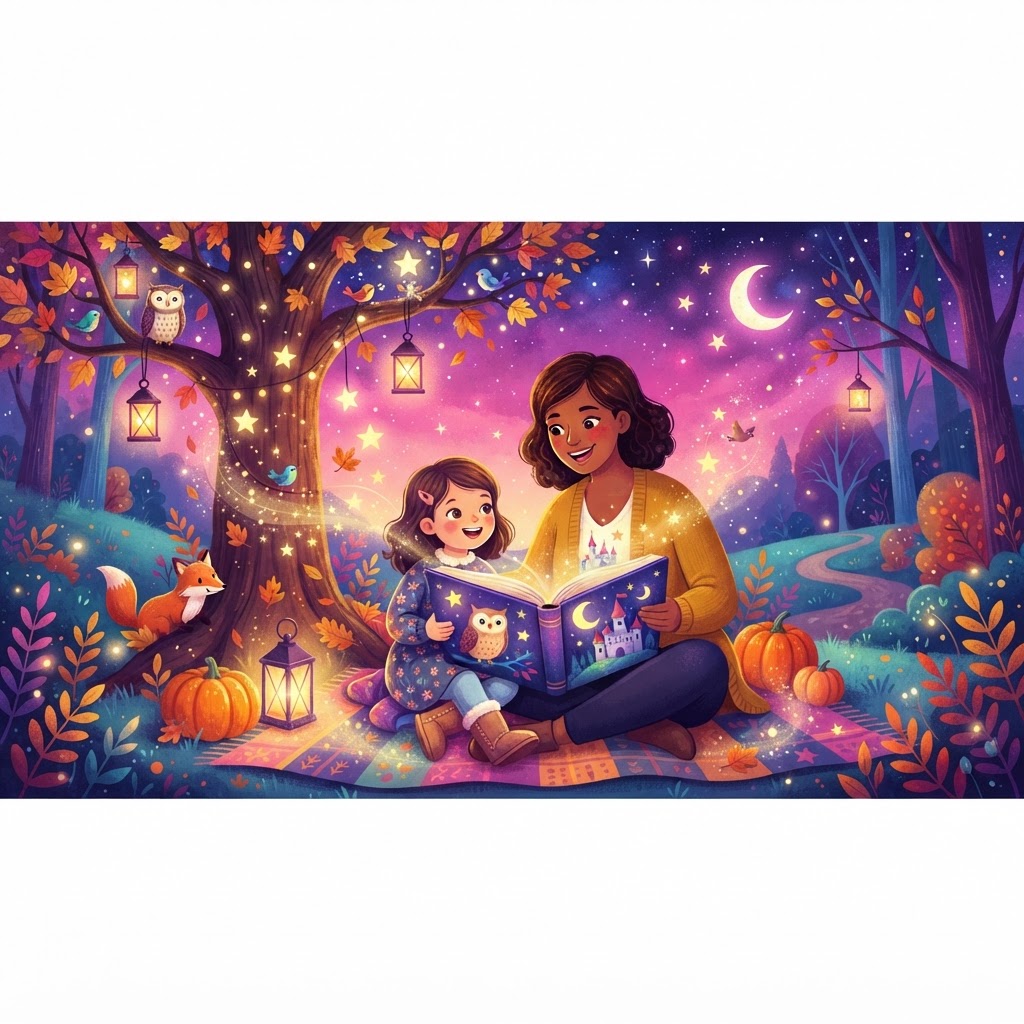
The fall equinox is a lovely moment to slow down, notice nature, and tell stories together. If you are looking for fall equinox stories for kids, these simple, story-based activities help children explore changing leaves, harvest time, animals, gratitude, and the balance of day and night in ways that feel playful and memorable.
Seasonal storytelling is more than cute fun. Shared stories build vocabulary, sequencing, emotional understanding, and connection. Organizations like the Center on the Developing Child at Harvard University and NAEYC both emphasize the importance of warm, interactive experiences for early learning, and classic dialogic reading research by Grover Whitehurst shows that back-and-forth storytelling supports language growth. These autumn equinox story activities are designed to be easy at home, adaptable for classrooms, and gentle enough for ages 1-10 with simple age-based tweaks.
If you also enjoy planning around seasonal milestones, you might like these summer solstice story ideas for another nature-rich celebration.
Why are fall equinox stories for kids so meaningful?
Fall equinox stories for kids are meaningful because they help children make sense of seasonal change through imagination. The equinox gives you natural themes children can see and feel: cooler air, shorter evenings, harvest foods, animal behavior, and the idea of balance between light and dark.
From a science point of view, the equinox marks a time when day and night are close to equal in length, which NASA explains clearly in its child-friendly overview of the seasons and equinoxes. From a child development point of view, stories turn that abstract concept into something concrete: “The sun and moon take turns,” “the squirrel is getting ready for winter,” or “the garden shares its last apples.”
That is why harvest themed stories work so well in September and early October. They link observation, emotion, and language in one cozy activity.
How can a leaf walk become a fall equinox story hunt?
A leaf walk becomes a story hunt when children collect details from nature and turn them into characters, settings, and plot ideas. This is one of the easiest autumn equinox story activities because the season provides the props for you.
Story prompt
“A tiny red leaf is afraid to fall. Who helps it find the perfect windy day?”
Materials
- A small bag or basket
- Fallen leaves in different colors
- Crayons or markers
- Paper or a notebook
Instructions
- Go on a short walk and invite your child to collect 3-5 safe natural items, such as leaves, seed pods, or small sticks.
- Ask simple story questions as you walk:
- Which leaf is the bravest?
- Which one is the funniest?
- Where are they going?
- Back home, place the items in order and create a beginning, middle, and end.
- Younger children can name colors and feelings. Older children can write a sentence for each item.
This activity supports observation and sequencing. It also works beautifully as a pre-writing exercise for children who are not ready to write full stories yet.
How can a harvest basket rescue story build early sequencing skills?
A harvest basket rescue story gives children a clear problem to solve, which makes sequencing easier to understand. When kids decide what happened first, next, and last, they practice narrative structure without it feeling like a lesson.
Story prompt
“The farmer’s harvest basket tips over, and the pumpkin, apple, and corn cob roll off in different directions. Can the garden friends bring everything back before sunset?”
Materials
- A basket or bowl
- Play food, real fruit and vegetables, or paper cutouts
- A blanket or floor space
- Optional: toy animals
Instructions
- Scatter the harvest items around the room.
- Tell the opening line, then pause and let your child choose what happens next.
- Encourage them to move each object as the story unfolds.
- After the story, retell it using sequencing words:
- First
- Then
- Next
- Finally
For toddlers, keep the plot very simple: one missing apple, one helper, one happy ending. For ages 5-8, add obstacles like mud, wind, or a sleepy scarecrow.
How can a shadow tale help kids understand the autumn equinox?
A shadow tale helps kids understand the autumn equinox by turning the balance of light and dark into a visual story. Children often grasp science ideas better when they can act them out.
Story prompt
“On equinox day, Sun and Moon decide to share the sky fairly. But when a cloud drifts by, their plan changes. How do they work together?”
Materials
- Flashlight or lamp
- Toy figures, paper cutouts, or hands for shadow play
- A blank wall or sheet
- Optional: chalk for tracing shadows outside
Instructions
- Briefly explain that the fall equinox is when day and night are nearly the same length.
- Use a flashlight to cast shadows and move characters across the wall.
- Let your child make the “sun,” “moon,” “cloud,” or “owl” voices.
- End by asking, “What does nighttime help us do? What does daytime help us do?”
This activity blends science, imaginative play, and emotional learning. It is especially useful for children who are curious about darkness or changing bedtime routines.
How can an apple-print story lab turn science into storytelling?
An apple-print story lab turns science into storytelling by inviting children to investigate a fruit, notice patterns, and imagine a character’s journey. It is hands-on, sensory, and perfect for harvest season.
Story prompt
“Inside every apple is a tiny hidden star. One child finds it and follows it into an autumn orchard adventure.”
Materials
- Apples cut in half by an adult
- Washable paint
- Paper
- Smock or old shirt
- Tray or table cover
Instructions
- Show your child the inside of the apple and point out the star-like shape in the center.
- Make apple prints on paper.
- Ask your child to choose one print as the “magic apple.”
- Build a short story around it:
- Who found it?
- What wish did it grant?
- Where did it lead?
For ages 6-10, add descriptive words like crisp, tart, golden, and orchard. This naturally strengthens vocabulary, which is one reason shared reading and storytelling are recommended by the American Academy of Pediatrics.
How can a gratitude lantern circle inspire harvest themed stories?
A gratitude lantern circle inspires harvest themed stories by helping children connect abundance with kindness, memory, and community. It is a gentle way to talk about what the season gives us: food, warmth, family, helpers, and home.
Story prompt
“A lantern glows brighter every time someone shares a thankful story from the harvest moon festival.”
Materials
- Battery tea light or flashlight
- Jar or paper cup lantern
- Small paper slips
- Pencil or crayons
Instructions
- Sit in a circle and place the lantern in the center.
- Invite each child to name one thing they are thankful for this season.
- Turn each thankful thought into a story seed: “Who helped grow it?” “Who shared it?” “What happened next?”
- Write or draw one idea per paper slip and place it in the lantern jar.
This is one of the best harvest themed stories activities for siblings or classrooms because everyone can contribute at their own level. Teachers can also adapt it for morning meeting or literacy centers with support from InstaTales for teachers.
How can a woodland sleepover story support calm bedtime routines?
A woodland sleepover story supports calm bedtime routines by matching the season’s cozy energy with predictable, soothing story structure. It works especially well for younger children who benefit from repetition and reassurance.
Story prompt
“A hedgehog, owl, and fox are getting ready for the first chilly autumn night. What do they need before they can sleep peacefully?”
Materials
- Stuffed animals or simple drawings
- A blanket
- Dim light
- Optional: soft nature sounds
Instructions
- Set up three woodland friends under a blanket “forest.”
- Give each animal one bedtime need:
- A warm nest
- A goodnight song
- A glowing moon
- Repeat the same story pattern for each character.
- End with a slow, quiet closing line such as, “And the forest grew still.”
Repetition helps children anticipate what comes next, which can lower bedtime stress. If your child enjoys milestone-based storytelling too, these cozy routines pair nicely with first-day-of-school story activities when routines are shifting again.
How can InstaTales make equinox storytelling easier for families and teachers?
InstaTales makes equinox storytelling easier by helping you personalize seasonal stories in minutes. Instead of starting from a blank page, you can generate age-appropriate tales that match your child’s interests, reading level, and favorite autumn details.
A simple way to begin is to create your own personalized bedtime story using a prompt like: “Write a gentle fall equinox story for a 5-year-old about Maya, a squirrel, golden leaves, and the balance of day and night.” You can make it even richer by adding sensory details, a learning goal, or a comforting ending.
Here are a few helpful tips:
- Use seasonal keywords in your prompt:
- fall equinox
- harvest moon
- orchard
- migrating geese
- crisp leaves
- Match the structure to age:
- Ages 1-3: short, rhythmic, repetitive
- Ages 4-6: simple problem and solution
- Ages 7-10: deeper plot, teamwork, science facts
- Start fast with story templates if you want a ready-made structure.
- Save favorite stories in your story library so children can revisit and retell them later.
For classroom use, a teacher might generate one shared equinox story, then invite students to change the setting, helper, or ending. That kind of retelling supports oral language, comprehension, and creativity all at once.
Frequently Asked Questions
What is the fall equinox in kid-friendly terms?
The fall equinox is the time when day and night are almost the same length. For kids, you can explain it as a day when sunlight and darkness take nearly equal turns.
What age are these fall equinox stories for kids best for?
These activities can be adapted for ages 1-10. Younger children do best with short sensory stories, while older children can add writing, prediction, and science details.
How long should an autumn equinox story activity take?
Most activities work well in 10-20 minutes. If your child is especially engaged, you can extend them into art, dramatic play, or a bedtime retelling.
How do I make harvest themed stories less scary for sensitive children?
Keep the tone warm, gentle, and predictable. Focus on helpers, home, sharing, and cozy endings rather than storms, darkness, or getting lost.
Can I use these autumn equinox story activities in a classroom?
Yes, many of them work well for small groups, literacy centers, circle time, or seasonal writing lessons. Choose simple materials, assign roles, and keep prompts open-ended so every child can participate.
Ready to Create a Personalized Bedtime Story?
Use our free AI bedtime story generator to create a personalized illustrated story for your child in 30 seconds — no credit card needed.
Popular story types:
Maya Rodriguez
Lead Content Editor & Early Literacy Specialist
Maya is a former early childhood educator and literacy specialist with over a decade of experience helping children develop a love of reading. She leads content at InstaTales, where she writes about the science of storytelling, child development, and how families can use personalized AI stories to build literacy and emotional resilience.
instatales.ai