China Folktales for Kids: Stories and Lessons
Discover the magic of China through its folktales — traditional stories that teach, delight, and transport kids to another culture.
✦ Key Takeaways
- •Folktales from China are valuable because they help children build empathy, language, and cultural understanding at the same time.
- •The most common themes in China folktales for kids are wisdom, kindness, family loyalty, harmony with nature, courage, and perseverance.
- •The best way to share China tales respectfully is to present them as part of a real, diverse culture—not as exotic curiosities.
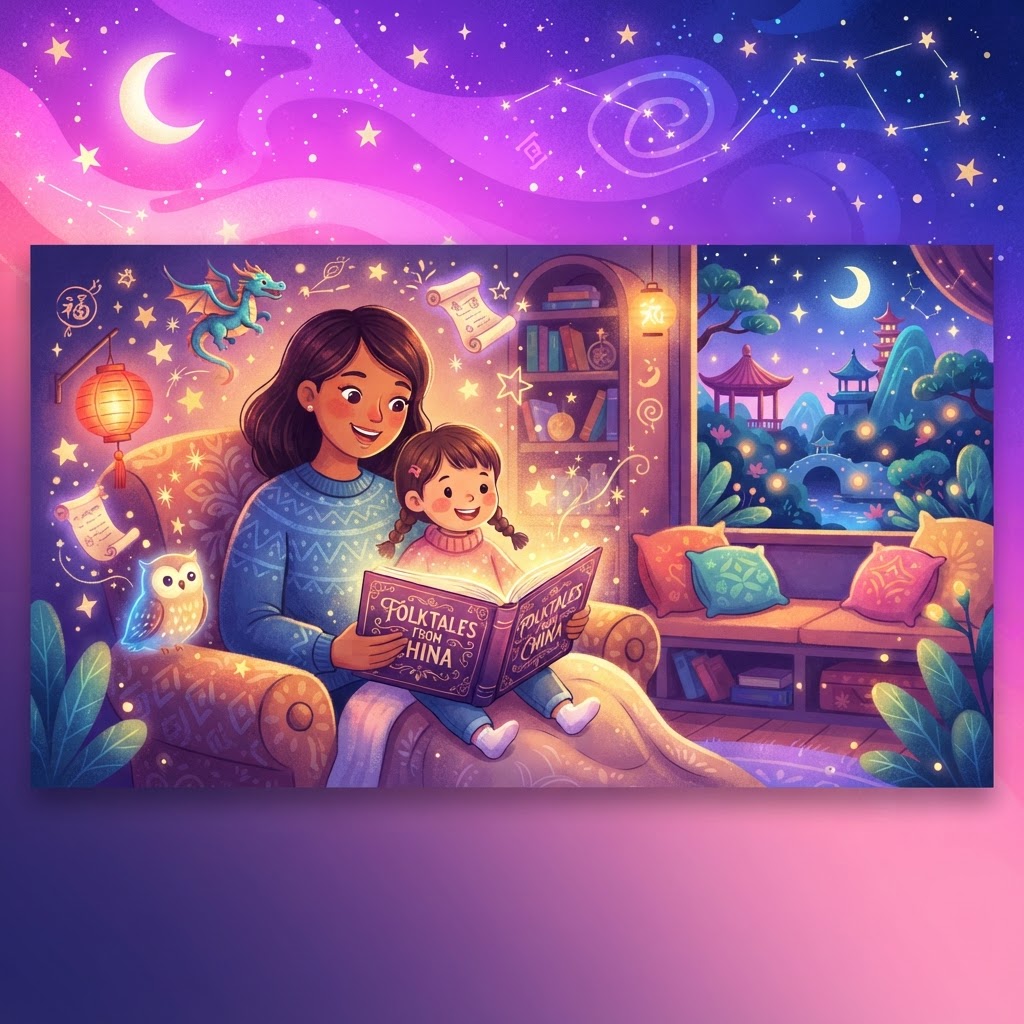
A great bedtime story can do more than help children wind down. It can also open a door to another culture. China folktales for kids are especially rich because they blend wonder, humor, family values, nature, and big emotions in ways children understand. From moonlit legends to brave village tales, folktales from China help kids explore a vast and diverse culture through story.
For parents and educators, these traditional tales are also practical teaching tools. The best China stories children remember are not just magical—they carry clear lessons about kindness, perseverance, honesty, and respect. If you want to introduce China tales at home or in the classroom, start with themes children can relate to and build from there.
Why are folktales from China so valuable for children?
Folktales from China are valuable because they help children build empathy, language, and cultural understanding at the same time. They give kids a safe way to think about courage, family, fairness, and problem-solving through memorable characters and vivid settings.
Reading stories aloud is strongly supported by child development research. The American Academy of Pediatrics recommends shared reading from infancy because it supports language, relationships, and early literacy, while the Center on the Developing Child at Harvard University highlights how rich back-and-forth language experiences help build healthy brain architecture.
Chinese folktales also broaden a child’s world. China is not one single story or tradition. It is a large country with many regions, languages, and cultural histories, so sharing traditional stories can help children see that every culture contains many voices and values.
If your child enjoys global storytelling, it can be lovely to compare these tales with stories from Japan or folktales from India. That kind of comparison helps children notice both universal lessons and unique cultural details.
What themes appear most often in China folktales for kids?
The most common themes in China folktales for kids are wisdom, kindness, family loyalty, harmony with nature, courage, and perseverance. These themes appear again and again because they connect deeply with children’s everyday social and emotional growth.
Here are six traditional themes to look for:
-
Wisdom can be stronger than size or force.
Many Chinese tales celebrate clever thinking over brute strength. Stories about quick-witted heroes or trickster figures, including tales linked to the Monkey King tradition, show children that using your mind matters.
Lesson: Think before you act.
How to share it: Pause and ask, “What else could the character do?” This builds problem-solving skills. -
Kindness often brings help in return.
In tales like The Magic Paintbrush, generous or honest characters are often rewarded, while greedy ones create trouble. This makes the moral easy for children to grasp.
Lesson: Use gifts and talents to help others.
How to share it: After the story, ask your child how they could use one of their own strengths kindly. -
Family love and responsibility matter.
Many China stories children hear center on caring for parents, siblings, or elders. The exact values may be expressed differently than in modern Western stories, but the emotional core—love, sacrifice, and belonging—is familiar to kids everywhere.
Lesson: Families care for one another.
How to share it: Keep the conversation balanced. You can say, “In this story, helping family is important. What does helping family look like in our home?” -
Nature deserves respect.
Dragons in Chinese tradition are often connected with rain, water, and good fortune rather than simple destruction. Moon stories, mountain legends, and river tales show children a world where people live in relationship with the natural world.
Lesson: Humans are part of nature, not separate from it.
How to share it: Pair the story with a simple activity like drawing clouds, rivers, or the moon. -
Communities become brave together.
Stories related to the New Year monster Nian show that fear can be faced through courage, planning, and cooperation. These are excellent China folktales for kids because the action is exciting without needing to be too frightening.
Lesson: Working together makes people stronger.
How to share it: Let children join in repeated phrases, drum sounds, or pretend lantern-lighting. -
Perseverance changes what seems impossible.
Traditional tales such as Yu Gong Moves the Mountains teach that steady effort matters, even when a goal feels huge. Older children especially connect with this theme.
Lesson: Big change can begin with small, repeated steps.
How to share it: Link the moral to real life: learning to read, practicing a skill, or being patient with mistakes.
These themes make folktales from China especially useful for bedtime, classroom discussion, and social-emotional learning. They are memorable because the morals are woven into the plot rather than preached.
How can parents and teachers share China stories with children respectfully?
The best way to share China tales respectfully is to present them as part of a real, diverse culture—not as exotic curiosities. A little context helps children enjoy the story while learning accurate, age-appropriate cultural information.
A respectful approach includes a few simple habits:
- Say where the story comes from when you know its origin.
- Avoid phrases like “Chinese people believe…” as if one story represents everyone.
- Mention that China has many regional traditions and ethnic groups.
- Keep visuals thoughtful: lanterns, mountains, rivers, robes, and festivals can add context, but avoid turning culture into costume.
It also helps to connect the story to real learning. You might show China on a map, listen to traditional music, or discuss a holiday such as Lunar New Year. Asia Society offers helpful cultural education resources that can support families and schools.
If you teach a world folklore unit, InstaTales for teachers can help you turn one folktale theme into age-appropriate writing prompts, read-alouds, or compare-and-contrast activities.
Which folktales from China work best for different age groups?
Different ages enjoy different kinds of Chinese folktales, so it helps to match the story’s length, emotion, and complexity to the child. Younger children usually do best with repetition and clear morals, while older children can handle layered plots and symbolism.
A simple guide:
- Ages 1-3: Choose very short retellings with rhythm, animals, moon imagery, or repeating sounds.
- Ages 4-6: Try stories like Nian, the Moon Rabbit, or kind-hearted magic tales with one clear problem and one clear resolution.
- Ages 7-10: Introduce longer adventures, trickster tales, family duty themes, or legends with deeper moral questions.
This matches what early childhood educators often observe: children learn best when stories are just challenging enough to stretch attention without causing confusion. For bedtime, shorter is usually better, even for older kids.
How can you create China-inspired bedtime stories with InstaTales?
You can use InstaTales to create original bedtime stories inspired by Chinese folklore themes while keeping them age-appropriate and personal. This works well when you want the warmth of traditional motifs with your child as the hero.
A simple method is to create your own personalized bedtime story using details drawn from folklore themes rather than copying a traditional tale word for word. For example, you might include:
- a child hero crossing a moonlit bridge
- a wise dragon who brings rain
- a village preparing for New Year
- a magic brush used to help others
- a lesson about patience, courage, or generosity
You can also start with ready-made story templates and adapt the setting, characters, and moral for your child’s age. For a toddler, keep the plot gentle and repetitive. For older children, add quests, riddles, or a community problem to solve.
The most meaningful stories usually balance cultural inspiration with personal relevance. That means using respectful details—lanterns, mountains, bamboo groves, family celebrations, river journeys—while making sure the story still feels like it belongs to your child.
Where can families learn more about Chinese culture through stories?
Families can learn more by pairing folktales with trusted cultural resources, not just random retellings online. This helps children enjoy the story while grounding it in real art, history, and tradition.
Look for museum, education, and nonprofit resources that explain symbols, festivals, and regional traditions in child-friendly ways. The Asia Society is a strong starting point for cultural learning, especially if you want to extend storytelling into art, classroom discussion, or holiday study.
Frequently Asked Questions
What is a good first Chinese folktale for preschoolers?
A great first choice is a simple retelling of the Nian story or the Moon Rabbit legend. Both offer clear images, easy plots, and strong emotional anchors for ages 3-6.
Do all folktales from China include dragons?
No. Dragons are important in many traditional stories, but they are only one part of a much larger storytelling tradition. Chinese folktales also feature children, animals, ancestors, mountains, spirits, scholars, and village communities.
Are Chinese dragons scary for children?
Usually, not in the same way as Western dragons. In many Chinese traditions, dragons are linked with rain, power, protection, and good fortune, which makes them easier to present positively to kids.
How can I make sure a China-inspired story is respectful?
Use real cultural details thoughtfully, avoid stereotypes, and remember that one story does not represent all of China. It also helps to pair fictional storytelling with a trusted educational source.
Can I use InstaTales to make a personalized story based on Chinese folklore themes?
Yes. You can build an original bedtime story using themes like bravery, kindness, moon legends, or wise dragons, then tailor the language and length to your child’s age and interests.
Ready to Create a Personalized Bedtime Story?
Use our free AI bedtime story generator to create a personalized illustrated story for your child in 30 seconds — no credit card needed.
Popular story types:
Maya Rodriguez
Lead Content Editor & Early Literacy Specialist
Maya is a former early childhood educator and literacy specialist with over a decade of experience helping children develop a love of reading. She leads content at InstaTales, where she writes about the science of storytelling, child development, and how families can use personalized AI stories to build literacy and emotional resilience.
instatales.ai