Japan Folktales for Kids: Stories and Lessons
Discover the magic of Japan through its folktales — traditional stories that teach, delight, and transport kids to another culture.
✦ Key Takeaways
- •Yes, Japan tales are one of the best gentle introductions to Japanese culture for young children.
- •The best Japan folktales for kids are stories with clear action, strong emotions, and a lesson children can talk about afterward.
- •Classic Japan stories children enjoy often teach social-emotional lessons just as much as cultural knowledge.
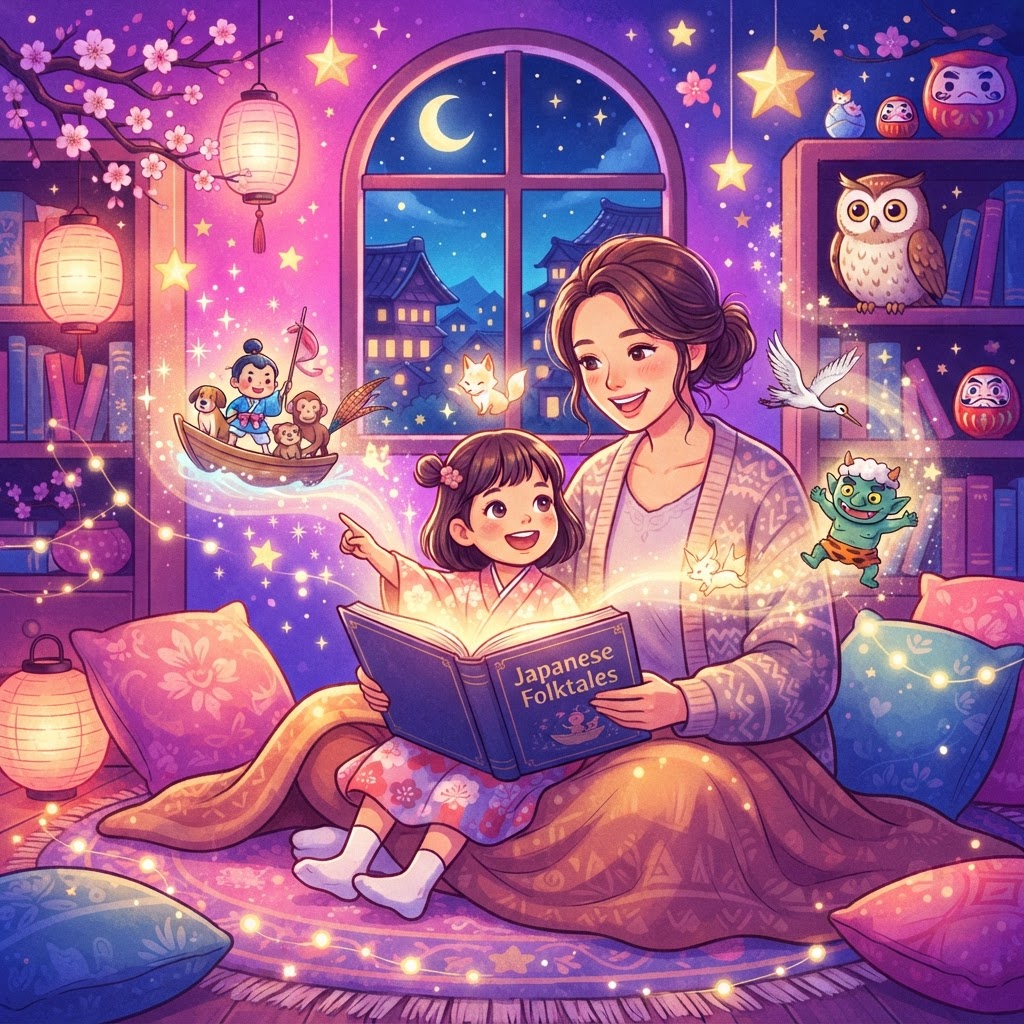
Japan folktales for kids open a door to a rich world of peach-born heroes, clever fox spirits, grateful animals, and moonlit mysteries. These folktales from Japan do more than entertain: they help children explore values like kindness, courage, respect, and curiosity while learning about another culture in a memorable way.
For parents and teachers, Japan stories children can understand are especially useful because they combine strong story patterns with vivid imagery. That matters for learning. Research on shared reading and conversation around stories, including work highlighted by the Center on the Developing Child at Harvard University, shows that children build language, emotional understanding, and background knowledge when adults talk with them about what they read.
Why are folktales from Japan such a wonderful way to teach culture?
Yes, Japan tales are one of the best gentle introductions to Japanese culture for young children. They present ideas children can grasp—family, nature, bravery, promises, and fairness—through memorable characters and symbols.
Many traditional Japanese stories reflect deep cultural themes: respect for elders, attention to seasons, gratitude for help, and the idea that nature deserves care. A simple tale about a crane, sparrow, or bamboo stalk can lead to conversations about Japanese art, festivals, animals, foods, and landscapes. If you want reliable cultural background, Asia for Educators at Columbia University offers strong context for families and educators.
Another reason these stories work so well is their rhythm. Children often respond to repetition, magical transformations, and clear cause-and-effect lessons. That makes folktales from Japan both culturally meaningful and easy to retell at bedtime or in the classroom.
Which Japan folktales for kids are the best place to start?
The best Japan folktales for kids are stories with clear action, strong emotions, and a lesson children can talk about afterward. Start with well-known themes rather than trying to explain every historical detail at once.
Here are seven classic themes that work especially well for children:
-
Bravery and teamwork — Momotaro (Peach Boy)
A boy born from a peach goes on a journey to face troublemakers with the help of animal friends.
Lesson: Courage grows when people work together. -
Kindness and gratitude — The Grateful Crane
A man helps an injured crane, and a mysterious girl later repays his kindness.
Lesson: Good deeds matter, and gratitude is powerful. -
Honesty and humility — The Tongue-Cut Sparrow
A kind old man and a greedy old woman make very different choices, with very different results.
Lesson: Greed often brings trouble, while gentleness brings reward. -
Perseverance and resourcefulness — Issun-boshi
A tiny hero, no bigger than a thumb, uses wit and bravery to overcome challenges.
Lesson: Small size does not limit big potential. -
Respect for nature and wonder — The Tale of the Bamboo Cutter
A radiant child is found inside bamboo, connecting everyday life with mystery and beauty.
Lesson: Nature can be sacred, surprising, and deeply meaningful. -
Promises and consequences — Urashima Taro
A fisherman visits an enchanted undersea world after helping a turtle, then faces the cost of ignoring a warning.
Lesson: Choices matter, and time can change everything. -
Trickery and hidden truth — Kitsune and tanuki tales
Foxes and raccoon dogs are often clever shape-shifters who test human behavior.
Lesson: Appearances can mislead, so wisdom matters.
You do not need to tell every version exactly as written. Some original tellings are bittersweet or strange for younger listeners. It is completely appropriate to soften details for preschoolers while keeping the heart of the story.
What lessons do classic Japan tales teach children?
Classic Japan stories children enjoy often teach social-emotional lessons just as much as cultural knowledge. Their biggest strength is that the lesson feels woven into the plot, not tacked on at the end.
These stories commonly support:
- Empathy: Helping an animal or stranger leads to connection.
- Self-control: Curious or greedy choices often bring problems.
- Resilience: Small, overlooked, or ordinary characters still succeed.
- Respect: Elders, promises, and the natural world are treated seriously.
- Perspective-taking: Magical characters challenge children to think beyond first impressions.
This is one reason folktales are so useful in child development. Decades of dialogic reading research, including work by Dr. Grover Whitehurst, shows that children learn more when adults pause, ask questions, and discuss motives, feelings, and predictions. With folktales from Japan, you can ask simple but powerful questions like:
- Why did the character make that choice?
- Was that action kind or selfish?
- What would you have done?
- How did nature help or warn the character?
Those conversations build comprehension and moral reasoning at the same time.
How can you share folktales from Japan in age-appropriate ways?
The best way to share Japan tales with kids is to match the story to the child’s age and sensitivity level. Younger children usually need shorter plots and softer endings, while older children can handle more mystery and mixed emotions.
Here is a simple guide:
-
Ages 1-3:
Use very short retellings with animals, sounds, and repetition. Focus on one idea, like “kindness helps friends.” -
Ages 4-6:
Choose stories like Momotaro or Issun-boshi. Keep the adventure, trim scary parts, and ask one or two questions afterward. -
Ages 7-10:
Introduce more layered stories like Urashima Taro or The Bamboo Cutter. Talk about symbolism, promises, and how stories from different cultures sometimes end in thoughtful, not purely happy, ways.
It also helps to give children a little context before reading. Show Japan on a map, mention cherry blossoms or bamboo, and explain that every culture tells stories to pass along values. For more cultural background and arts resources, The Japan Foundation is a helpful place to explore.
If you are teaching a class, story comparison works especially well. You might pair a Japanese animal tale with one from another region, or compare a hero story like Momotaro with a tale from your own family tradition. Educators can also adapt these ideas with InstaTales for teachers for literacy, social studies, or creative writing lessons.
How can InstaTales help you create Japan-inspired stories for children?
InstaTales can help you turn the spirit of folktales from Japan into fresh, age-appropriate bedtime stories. The best approach is to borrow themes, settings, and values—without trying to copy a traditional tale word for word.
You can create your own personalized bedtime story by choosing:
- your child’s age
- a gentle Japanese-inspired setting, like a bamboo grove, mountain village, or lantern festival
- one clear theme, such as bravery, gratitude, or honesty
- familiar folktale elements, like an animal guide or a magical object
A strong prompt might look like this:
Write a calming bedtime story for a 6-year-old inspired by Japanese folklore. Include a kind fox guide, a moonlit forest, and a lesson about keeping promises. Keep the ending warm and reassuring.
If you want a faster start, use story templates and adapt them with Japanese-inspired details. Afterward, save favorites in your story library so children can revisit the same tale again and again, which supports comprehension and confidence.
This approach is especially useful when a child loves a theme but is not ready for the complexity of the original version. You can keep the cultural flavor while adjusting length, language, and emotional intensity.
If your family enjoys exploring world traditions through stories, you can also compare these tales with ancient Egyptian folktales for kids. Cross-cultural reading helps children notice both shared human values and beautiful differences in storytelling.
What should parents and teachers remember when using Japan stories with children?
The most important thing to remember is to share these stories with respect, curiosity, and flexibility. You do not need to be a Japan expert to begin; you just need to present the stories as part of a real culture, not as “strange” or exotic entertainment.
A few best practices help:
- Name the story’s origin clearly.
- Avoid stereotypes about “all Japanese people” thinking or living one way.
- Explain that folktales change over time and may have many versions.
- Adapt with care for age, but keep the core lesson intact.
- Invite questions about culture, symbols, and feelings.
When adults do this well, Japan folktales for kids become more than bedtime reading. They become a warm, memorable path into empathy, literacy, and global understanding.
Frequently Asked Questions
What are the most famous Japan folktales for kids?
Popular choices include Momotaro, The Grateful Crane, Urashima Taro, Issun-boshi, and The Tongue-Cut Sparrow. These stories are well known because they are vivid, meaningful, and easy to adapt for different ages.
Are folktales from Japan too scary for bedtime?
Some original versions can feel intense or bittersweet, especially for younger children. Parents can shorten scenes, soften consequences, and choose reassuring endings while keeping the main lesson.
What moral lessons do Japan tales usually teach?
Many Japan tales teach kindness, honesty, bravery, gratitude, respect for nature, and the importance of wise choices. They often show that actions have consequences, which makes them useful for social-emotional learning.
How can I make Japan stories children understand more easily?
Use simple language, explain unfamiliar words, and give one piece of cultural context before you start. After the story, ask a few questions about feelings, choices, and what the child noticed.
Can I use AI to create stories inspired by Japanese folklore?
Yes, as long as you use AI thoughtfully. It works best to create original stories inspired by themes, values, and settings from folktales from Japan rather than copying a traditional story too closely.
What age is best for Japan folktales for kids?
Children as young as toddlers can enjoy simplified animal and nature tales. Ages 4-10 are ideal for fuller retellings because children can follow the plot and discuss the lesson afterward.
Ready to Create a Personalized Bedtime Story?
Use our free AI bedtime story generator to create a personalized illustrated story for your child in 30 seconds — no credit card needed.
Popular story types:
Maya Rodriguez
Lead Content Editor & Early Literacy Specialist
Maya is a former early childhood educator and literacy specialist with over a decade of experience helping children develop a love of reading. She leads content at InstaTales, where she writes about the science of storytelling, child development, and how families can use personalized AI stories to build literacy and emotional resilience.
instatales.ai