Nordic Lands Folktales for Kids: Magic & Meaning
Discover the magic of Nordic lands through its folktales — traditional stories that teach, delight, and transport kids to another culture.
✦ Key Takeaways
- •The Nordic lands usually refer to Denmark, Finland, Iceland, Norway, and Sweden.
- •The most common themes in Nordic lands folktales for kids are trolls, clever children, nature magic, winter endurance, brave journeys, helpful strangers, and the importance of keeping promises.
- •Nordic lands tales teach practical, memorable lessons.
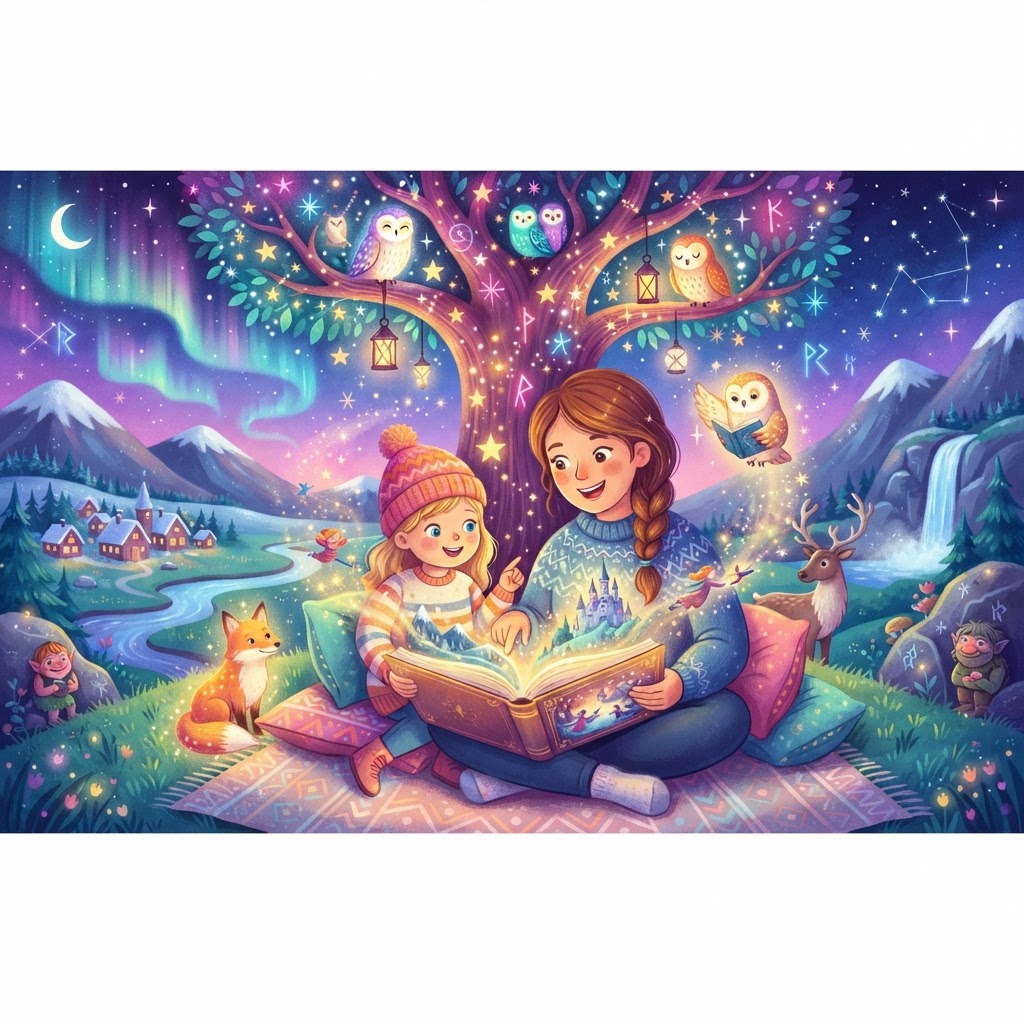
Snowy forests, bright northern skies, deep fjords, and cozy firesides make folktales from Nordic lands especially memorable for children. These traditional stories carry wonder, but they also offer something deeper: lessons about courage, kindness, nature, and using your wits when life feels hard.
For families looking for Nordic lands folktales for kids, these tales can be a gentle way to explore culture while building language, imagination, and empathy. Below, you’ll find the most common story themes, the values they teach, and practical ways to share Nordic lands stories children can truly enjoy.
What are the Nordic lands, and why do their folktales captivate kids?
The Nordic lands usually refer to Denmark, Finland, Iceland, Norway, and Sweden. Their folktales captivate children because they mix everyday life with dramatic landscapes, magical beings, and heroes who win through bravery or clever thinking rather than pure strength.
Many Nordic lands tales grew from oral storytelling traditions in farming villages, fishing communities, and long winter evenings. That background matters. Children can feel the setting in these stories: icy mountains, dark forests, rough seas, and small homes filled with warmth and hope.
Another reason kids love them is that the magic feels close to ordinary life. A troll may live under a bridge, a hidden person may dwell in a hill, or a poor child may meet a talking animal on the road. The wonder feels believable inside the story world, which makes it easier for children to enter.
If you want a child-friendly cultural starting point, the National Nordic Museum offers helpful context about Nordic history, traditions, and everyday life.
Which traditional story themes appear in Nordic lands folktales for kids?
The most common themes in Nordic lands folktales for kids are trolls, clever children, nature magic, winter endurance, brave journeys, helpful strangers, and the importance of keeping promises. These repeating ideas help children recognize patterns and understand the values behind the stories.
Here are seven classic themes to look for:
-
Trolls, giants, and hidden beings
Trolls are some of the best-known figures in folktales from Nordic lands. They often represent danger, greed, or foolishness, while the child hero represents quick thinking and courage. -
The clever youngest child
In many Nordic stories, the youngest child is overlooked at first but solves the problem in the end. Norwegian tales about Askeladden are a great example of how curiosity and persistence can beat status or strength. -
Brave girls on impossible journeys
Not all heroes are princes. Some of the most loved Nordic lands stories children remember feature determined girls who travel far, break enchantments, and rescue loved ones through endurance and heart. -
Kindness to strangers and animals
A poor traveler, old woman, bird, or farm animal often becomes the helper later. The message is simple and strong: when you act kindly, the world may answer with help. -
Winter, darkness, and the return of light
Because Nordic life includes long, dark winters, many stories focus on waiting, hoping, and finding light again. These tales can be especially comforting at bedtime or during seasonal transitions. -
Respect for forests, mountains, and the sea
Nature in Nordic folklore is beautiful, powerful, and never something to treat carelessly. Children hear that humans are part of nature, not rulers over it. -
Promises, truth, and consequences
Bargains, secret names, and broken promises appear often. These plots help older children think about honesty, responsibility, and what happens when choices have lasting effects.
If your child enjoys comparing cultures through stories, it can also be fun to pair these themes with tales from other places, such as Greek folktales for kids.
What moral lessons do Nordic lands stories teach children?
Nordic lands tales teach practical, memorable lessons. Most of all, they show children that courage, kindness, patience, and clever thinking matter more than power or wealth.
Here are the big lessons parents and educators can highlight:
-
Use your mind when things feel big.
Many heroes face trolls, storms, or impossible tasks. They win by noticing details, asking for help, and trying again. -
Kindness has real power.
In story after story, a child who shares food, helps an animal, or speaks gently receives help later. This supports prosocial thinking and empathy. -
Hard times do not last forever.
Winter stories remind children that darkness can pass. That idea can support emotional resilience in a simple, age-appropriate way. -
Nature deserves respect.
The sea, forest, and mountains are not just backgrounds. They shape the story and teach humility, observation, and care for living things. -
Small people can do important things.
Children often connect deeply with heroes who are underestimated. That can build confidence and a healthy sense of agency.
From a development perspective, shared storytelling supports language growth, emotional connection, and narrative understanding. The American Academy of Pediatrics encourages regular shared reading through HealthyChildren.org because it supports both literacy and bonding.
How can parents share folktales from Nordic lands in age-appropriate ways?
Parents can share folktales from Nordic lands successfully by simplifying the language, softening the scary parts when needed, and making the reading interactive. The best version is not the most exact version; it is the version your child can understand, enjoy, and discuss.
Try these age-based approaches:
-
Ages 1-3:
Keep stories very short. Focus on rhythm, repeated phrases, animal sounds, and one clear feeling such as “brave,” “cold,” or “kind.” -
Ages 4-6:
Choose simple plots with one problem and one solution. Ask easy questions like, “What do you think is behind the hill?” or “Was that a kind choice?” -
Ages 7-10:
Introduce fuller tales with richer morals. Talk about setting, compare different versions, and discuss what the child would have done in the hero’s place.
A few practical tips help a lot:
- Explain unfamiliar words like fjord, troll, or midwinter
- Use a map to show where the story comes from
- Swap graphic details for suspense if your child is sensitive
- End with a calming sentence before bed
This kind of back-and-forth storytelling is especially powerful. Research on dialogic reading by Grover Whitehurst and colleagues shows that children learn more when adults ask questions and invite participation. The Center on the Developing Child at Harvard University also emphasizes that responsive, warm conversation helps build strong early learning foundations.
How can teachers use Nordic lands stories for culture-rich learning?
Teachers can use Nordic lands folktales for kids to combine literacy, geography, social studies, and art in one engaging lesson. These stories are especially useful because they are rich in setting, theme, and discussion-worthy choices.
In the classroom, try activities like these:
- Map the story world by locating Denmark, Finland, Iceland, Norway, and Sweden
- Compare climates and ask how winter affects daily life and storytelling
- Study character choices by tracking moments of courage, kindness, or trickery
- Create visual responses such as trolls, northern lights, longboats, forests, or sea cliffs
- Retell from another viewpoint like the troll’s, the animal helper’s, or the youngest child’s
For educators who want ready-made support, InstaTales for teachers can help turn cultural themes into reading prompts, creative writing tasks, and differentiated classroom story activities.
How can you create Nordic-inspired bedtime stories with InstaTales?
You can create Nordic-inspired bedtime stories by combining key folklore elements with your child’s name, age, interests, and comfort level. This is one of the easiest ways to make Nordic lands stories children will actually want to hear again and again.
A simple formula works well:
- Choose a setting: snowy village, fjord, pine forest, island, or mountain
- Add one folklore element: troll, hidden folk, talking raven, enchanted wind, or sea spirit
- Pick a feeling goal: calming, brave, funny, cozy, or adventurous
- Include a gentle lesson: kindness, patience, honesty, or problem-solving
With InstaTales, you can create your own personalized bedtime story using those details in minutes. If you want an easier starting point, browse story templates and adapt them with Nordic-inspired settings, characters, and morals.
Once you find stories your child loves, save them in your story library for easy rereading. That matters because repetition supports comprehension, vocabulary, and comfort, especially for younger children.
A good prompt might look like this:
“Write a cozy bedtime story about a six-year-old child visiting a snowy village in Norway, meeting a friendly troll, and learning that kindness brings unexpected help.”
Frequently Asked Questions
What age are Nordic lands folktales best for?
They can work for ages 1-10 with the right adaptation. Younger children do best with short, gentle retellings, while older kids can enjoy fuller plots and deeper moral lessons.
Are trolls and giants too scary for young children?
Not necessarily. Keep the tone playful, reduce intense details, and choose endings that feel safe and reassuring.
Are Nordic folktales the same as Viking myths?
No. Viking myths focus more on gods and legendary figures, while folktales usually center on ordinary people, magical beings, and life lessons passed through oral tradition.
What values appear most often in Nordic lands tales?
Common values include courage, kindness, patience, honesty, and respect for nature. Many stories also show that clever thinking matters more than physical strength.
How can I make a Nordic-style story feel personal for my child?
Use your child’s name, favorite setting, and a comfort level that fits their age. Then add one folklore element and one simple lesson, such as bravery in winter or kindness to a stranger.
Get a new bedtime story every week
Free, personalized, and delivered to your inbox. No spam, ever.
Ready to Create a Personalized Bedtime Story?
Use our free AI bedtime story generator to create a personalized illustrated story for your child in 30 seconds — no credit card needed.
Popular story types:
Maya Rodriguez
Lead Content Editor & Early Literacy Specialist
Maya is a former early childhood educator and literacy specialist with over a decade of experience helping children develop a love of reading. She leads content at InstaTales, where she writes about the science of storytelling, child development, and how families can use personalized AI stories to build literacy and emotional resilience.
instatales.ai