Greece Folktales for Kids: Stories & Lessons
Discover the magic of Greece through its folktales — traditional stories that teach, delight, and transport kids to another culture.
✦ Key Takeaways
- •Folktales from Greece are especially engaging for children because they combine vivid adventure with clear moral lessons.
- •The best Greece tales for kids usually return to a small set of powerful themes.
- •Greek folktales help children understand culture by showing how people live, what they value, and how they explain the world.
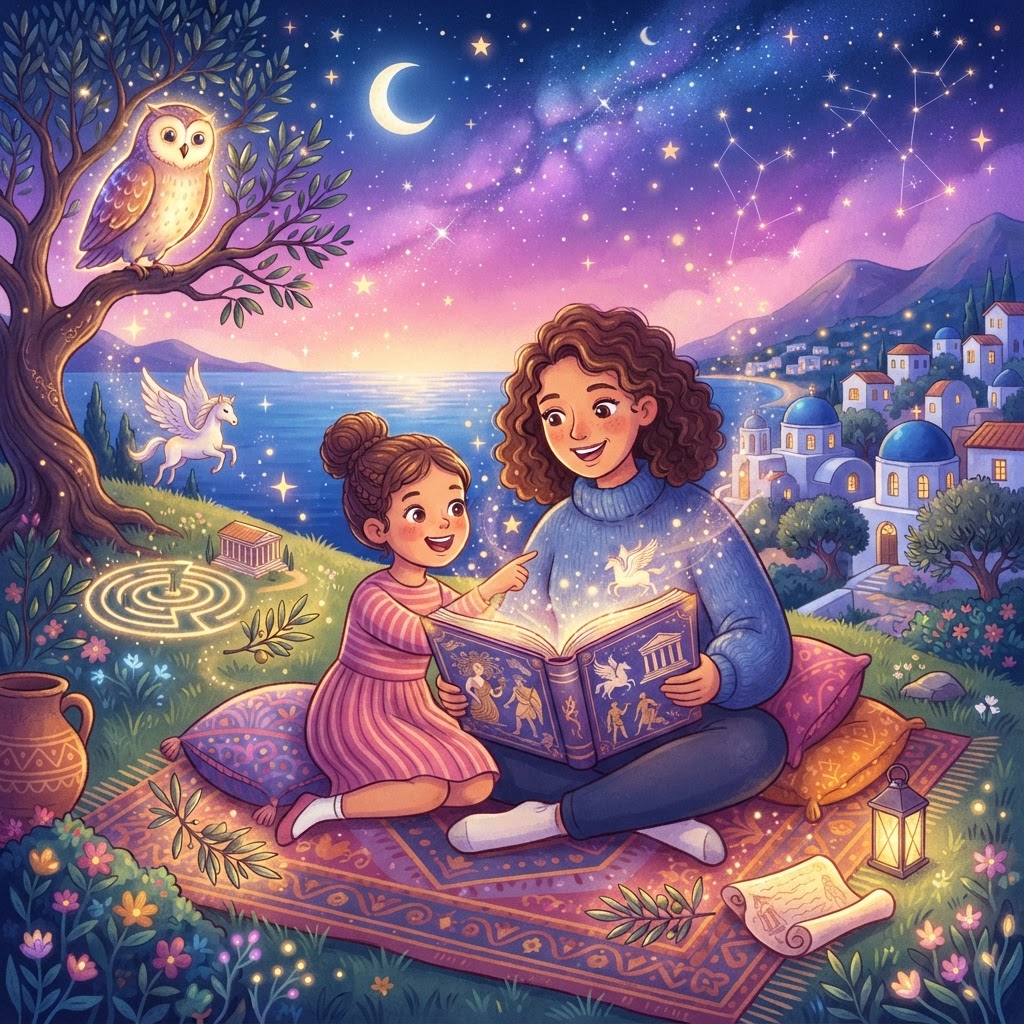
When families think of Greece, they often picture whitewashed islands, olive trees, and ancient ruins. But Greece folktales for kids offer something even richer: a living window into the values, humor, fears, and hopes of everyday Greek life. These traditional stories blend magic, nature, bravery, and family wisdom in ways children can understand.
For parents and teachers, folktales from Greece are a wonderful way to introduce culture without turning story time into a lecture. Kids hear about clever shepherds, dangerous seas, magical beings, and kind strangers—and they also absorb timeless lessons about honesty, courage, and respect. If your child already enjoys stories from around the world, Greece tales make a beautiful next stop.
What makes folktales from Greece so special for kids?
Folktales from Greece are especially engaging for children because they combine vivid adventure with clear moral lessons. They help kids explore big ideas like fairness, courage, cleverness, and hospitality through memorable plots and strong imagery.
Unlike formal history lessons, Greek folktales feel close to everyday life. Many are set in villages, on islands, by the sea, or in mountain landscapes. Children can imagine fishermen, travelers, grandmothers, and shepherds facing magical problems that still connect to real emotions: fear, jealousy, kindness, and hope.
It also helps that Greek storytelling sits at the crossroads of myth, religion, and local tradition. While many families know the gods of ancient myth, Greece stories children hear in folktale form often focus more on ordinary people making difficult choices. For helpful cultural context, The Met’s overview of ancient Greece offers a strong starting point.
Which Greece tales teach the strongest lessons for children?
The best Greece tales for kids usually return to a small set of powerful themes. These themes are easy for children to follow and full of teachable moments for home or classroom discussions.
Clever heroes and talking animals
Many Greek folktales reward the character who thinks before acting. A shepherd, poor villager, or fox may outwit someone bigger and stronger.
- Lesson: Intelligence, patience, and problem-solving matter.
- How to share it: Pause before the ending and ask, “What smart choice could the character make now?”
Hospitality and kindness to strangers
Greek culture has a long tradition of valuing welcome and generosity. In folktales, a traveler may turn out to be magical, wise, or in need of help.
- Lesson: Treating others with kindness matters, even when you do not know who they are.
- How to share it: Ask children how they can make a new classmate or guest feel welcome.
Respect for the sea and nature
Because Greece is shaped by islands and coastlines, many stories feature storms, fishermen, sea creatures, winds, and hidden coves. The sea is often beautiful, but never fully tame.
- Lesson: Nature deserves wonder and respect.
- How to share it: Connect the story to real life by talking about water safety, weather, or caring for the environment.
Brave children, youngest siblings, and humble heroes
In many Greece folktales for kids, the hero is not the strongest or richest person. It may be the youngest child, a poor girl, or a quiet boy who succeeds because they are honest and brave.
- Lesson: Character matters more than status.
- How to share it: Invite kids to name a time when someone small or overlooked did something important.
Dragons, monsters, and magical beings
Greek folklore includes dragons, ogres, nereids, and other mysterious beings. These figures give children a safe way to explore fear, danger, and courage.
- Lesson: Fear can be faced with help, wisdom, and persistence.
- How to share it: For younger children, soften the scary parts and focus on the rescue, solution, or protection.
Wishes, promises, and consequences
Some Greek stories center on magical gifts, rash promises, or a choice that cannot be undone. Children quickly see that every action has results.
- Lesson: Think carefully, tell the truth, and keep your word.
- How to share it: After the story, ask, “What would have happened if the character had chosen differently?”
These are the kinds of Greece stories children love because the stakes feel exciting, but the lessons stay clear. If your family enjoys comparing how different cultures teach similar values, you might also like exploring Japanese folktales for kids or Indian folktales for kids.
How do Greece stories for children build cultural understanding?
Greek folktales help children understand culture by showing how people live, what they value, and how they explain the world. A story about a fisherman, village feast, mountain path, or island wind teaches culture through details, not just facts.
This matters because children learn best when meaning is attached to emotion and narrative. A child may forget a list of Greek landmarks, but they will remember the kind old woman who shares bread, or the sailor who learns to respect the sea. That emotional memory helps cultural learning stick.
Storytelling also supports development beyond cultural knowledge. The American Academy of Pediatrics has highlighted the value of reading aloud for language growth, connection, and early literacy. And the Harvard Center on the Developing Child emphasizes that back-and-forth conversation helps build strong brain architecture. In simple terms: when you read a folktale and talk about it, you are supporting both learning and attachment.
How can adults share folktales from Greece in age-appropriate ways?
Parents and teachers can make Greece tales more meaningful by matching the story to the child’s age and keeping discussion simple. You do not need to explain every cultural detail at once; one strong image or lesson is enough.
Here are a few practical ways to share folktales from Greece well:
- Ages 1-3: Use simple retellings with repetition, clear emotions, and gentle endings.
- Ages 4-6: Focus on one moral lesson, like kindness or bravery.
- Ages 7-10: Talk about motives, consequences, and cultural values such as hospitality or respect for nature.
A few educator-tested tips help, too:
- Keep scary elements short and purposeful.
- Explain unfamiliar words like “village,” “island,” or “traveler.”
- Ask open questions: “Why did the hero help?” or “Was that a wise choice?”
- Invite drawing, acting, or map-based follow-up activities.
For classroom use, teachers can turn a Greek folktale into a geography, art, or character-education lesson. Students might compare the setting to their own community, retell the story from another character’s view, or identify the central moral. That is one reason culturally rooted storytelling works so well in literacy blocks and social studies alike.
How can InstaTales turn Greek folklore into personalized bedtime stories?
InstaTales can help you create original stories inspired by Greek folklore while keeping them age-appropriate and personal. This is useful when you want the feeling of a traditional Greek tale but with your child’s name, interests, and comfort level included.
You can create your own personalized bedtime story using details like:
- a child hero visiting a Greek island
- a brave little fisherman or shepherd
- a friendly sea spirit instead of a frightening monster
- a lesson about honesty, courage, or hospitality
- favorite bedtime elements like stars, cats, boats, or family members
A simple prompt might be:
“Write a gentle bedtime story inspired by Greek folklore about Maya, age 6, who visits a sunny island and learns the value of kindness after helping a mysterious traveler.”
If you want a faster start, browse the story templates and adapt one with a Greek village, sea journey, or mountain setting. Afterward, save favorites in your story library so children can revisit beloved stories and notice new cultural details each time.
This approach works especially well for families who want more diverse bedtime reading and for teachers building multicultural units. The goal is not to replace traditional Greece tales, but to use them as inspiration for fresh stories children feel part of.
Frequently Asked Questions
What is the difference between Greek myths and Greek folktales?
Greek myths usually focus on gods, heroes, and the ancient sacred world. Greek folktales are more often everyday community stories about villagers, travelers, animals, magical helpers, and moral choices.
Are Greece folktales for kids too scary?
Some can be intense, especially those with dragons or magical dangers. For younger children, choose softened retellings and focus on the problem-solving, protection, and happy resolution.
What morals do folktales from Greece usually teach?
Common lessons include kindness to strangers, respect for nature, honesty, clever thinking, and bravery. Many stories also show that humble people can do extraordinary things.
How can I use Greece stories children will understand at different ages?
Start simple for younger kids and add discussion for older ones. A preschooler may enjoy the adventure, while an older child can talk about consequences, fairness, and cultural values.
Can I create my own Greek-inspired bedtime story?
Yes. You can use traditional themes like sea journeys, clever heroes, or village hospitality and retell them in a gentle, child-friendly way. Personalized tools like InstaTales make it easier to match the story to your child’s age and interests.
Ready to Create a Personalized Bedtime Story?
Use our free AI bedtime story generator to create a personalized illustrated story for your child in 30 seconds — no credit card needed.
Popular story types:
Maya Rodriguez
Lead Content Editor & Early Literacy Specialist
Maya is a former early childhood educator and literacy specialist with over a decade of experience helping children develop a love of reading. She leads content at InstaTales, where she writes about the science of storytelling, child development, and how families can use personalized AI stories to build literacy and emotional resilience.
instatales.ai